








 Contact Platform Support
 Help Center
Food Grade 304 Stainless Steel Locker — Washdown Rated for HACCP Food Processing Changing Rooms
Product Spotlights



Related Products
-
 Stainless Steel Operating Theatre Locker 304 — Ventilated Door for Surgical Gowning RoomsUS$ 90 - 300MOQ: 10 Pieces
 -
Hengna Durable Stainless Steel 2-Door Locker for Office & Industrial Use – High-Security Personal StorageUS$ 95 - 220MOQ: 5 Combos
-
High-quality Modern Multi-Door Stainless Steel Locker – Strong, Secure, and Breathable for Offices and Public AreasUS$ 95 - 220MOQ: 5 Combos
-
Commercial Stainless Steel Locker With– Multi-Door Units for Schools, Gyms, and Public Spaces-Customizable Locker OptionsUS$ 95 - 220MOQ: 5 Combos
-
High-Grade Multi-Door Stainless Steel Locker With Ventilation Holes – Space-Saving Storage for Personal BelongingsUS$ 95 - 220MOQ: 5 Combos
Food Grade 304 Stainless Steel Locker
Washdown Rated · HACCP · Food Processing Changing Rooms
Why Food Processing Plants Need a Different Locker
Most lockers are designed for dry offices. Food processing is the opposite.
Walk into any meat plant, seafood facility, or dairy factory changing room. The floor gets hosed down twice a shift. The air carries steam from the processing floor. Uniforms come back damp, sometimes dripping. Sanitizers and chlorine-based cleaners are sprayed on every surface.
Standard powder-coated lockers do not survive this environment. The coating gets scratched by carts and boots, moisture seeps in, and within months the steel underneath starts rusting from the bottom up. The coating peels, the rust spreads, and the locker becomes a hygiene issue — rust particles can flake into clean uniforms.
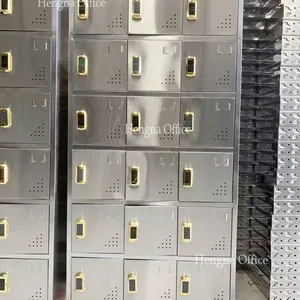
A food grade 304 stainless steel locker removes the problem at the material level. There is no coating to fail. The metal itself resists corrosion from moisture, cleaning chemicals, and the acidic conditions common in food processing environments.
What "Food Grade 304" Actually Means
304 stainless steel contains 18 percent chromium and 8 percent nickel. The chromium forms a passive oxide layer on the surface that repairs itself when scratched. If a worker scrapes the door with a metal cart, the exposed surface re-oxidizes and does not rust.
For food plants, this matters because:
HACCP audits require changing room surfaces to be corrosion-resistant and easy to clean. Rust is a non-conformance.
Daily washdown with pressure hoses and chemical sanitizers destroys painted or coated surfaces over time. Stainless steel handles it without degradation.
No flaking or chipping. Unlike powder coating that peels after impact, stainless steel is monolithic. What you see is what the material is — all the way through.
201 grade stainless steel is a lower-cost alternative. It resists rust in normal indoor conditions. For food processing changing rooms where water exposure is daily and cleaning chemicals are aggressive, 304 is the specification that passes audits and lasts.
Ventilated Door — Not Optional in a Food Plant
Food workers come off the processing floor in damp uniforms. Those uniforms go straight into the locker. In a sealed compartment, moisture has nowhere to go. Within days, the compartment smells. Within weeks, mildew forms.
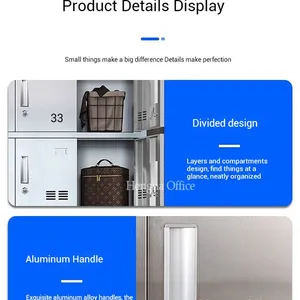
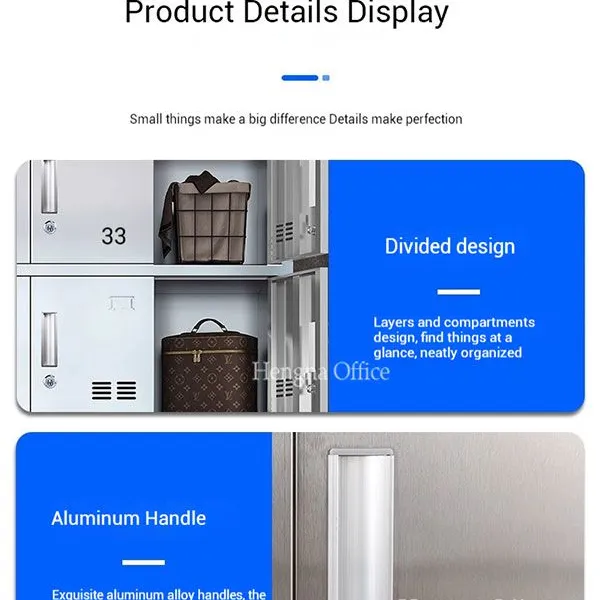
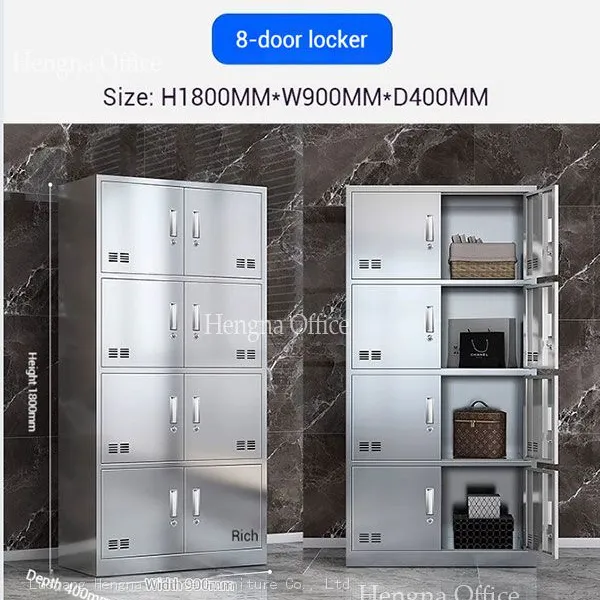
The ventilation pattern on this locker runs across the upper half of the door — louvered slots that let air move through the compartment while keeping the structure secure. Damp clothes dry faster. Odor does not accumulate. For shift workers who share lockers on alternating schedules, this makes a measurable difference.
Sealed steel doors trap moisture. Ventilated doors let it escape. It is not a minor feature — it determines whether a locker bank smells fresh or sour after six months of use.
Hanging Rod — Standard
Each compartment comes with a stainless steel hanging rod. It is welded in place at the factory, not a add-on that can be lost during assembly.
For food plant staff, this means uniforms hang full-length and air out. Balling a damp uniform at the bottom of a compartment guarantees odor. A hanging rod eliminates that problem.
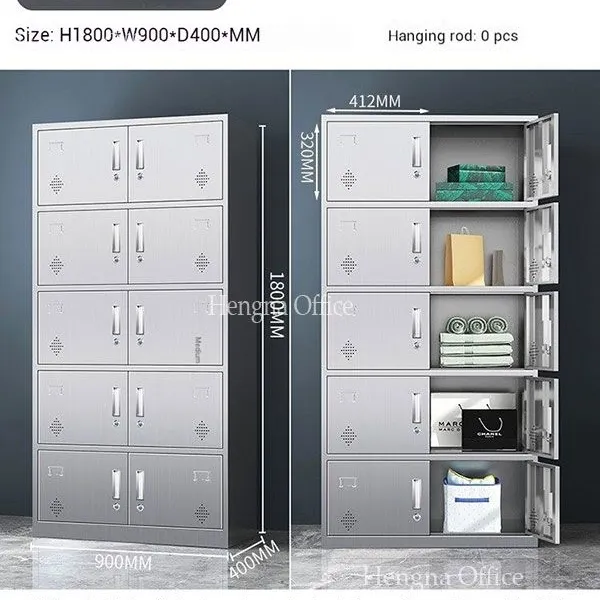
Single-tier compartments give a full-length hang. Multi-tier configurations give a half-hang — sufficient for jackets, smocks, and pants that food workers typically store.
Assembled Delivery — Open Box, Put in Place
These lockers ship fully assembled from the factory. Doors are fitted, rods are welded, locks are installed and tested before packing.
There is no flat-pack assembly. No missing screws. No "which panel faces which way."
For a food plant ordering 30 units for a shift change area, this skips the labor cost of assembly. A 15-unit bank can be positioned and ready for use within hours of delivery.
Lock Options
Food plants run different access policies. The locker supports these without door modification:
Padlock hasp — Workes with standard padlocks. Staff bring their own. No key management.
Combination lock — Mechanical dial. No batteries. Code resets by facilities.
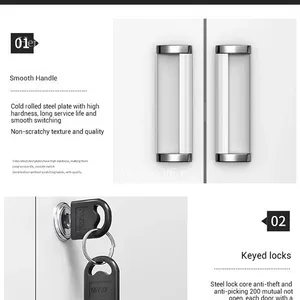
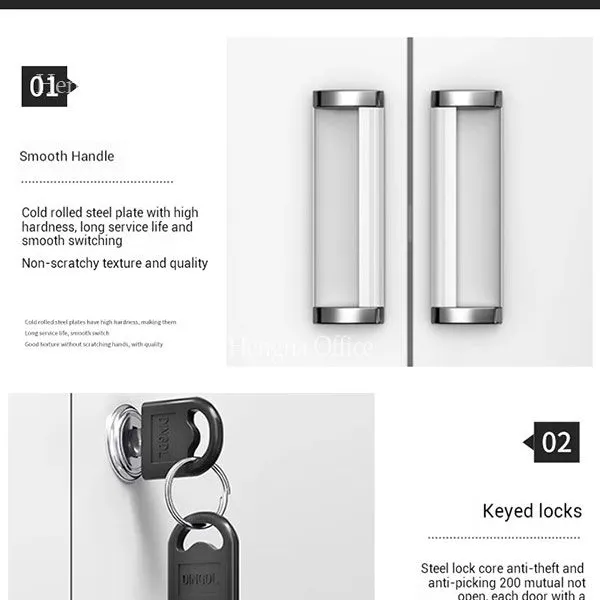
Key lock — Standard key-and-lock set. Two keys per compartment, master key option available.
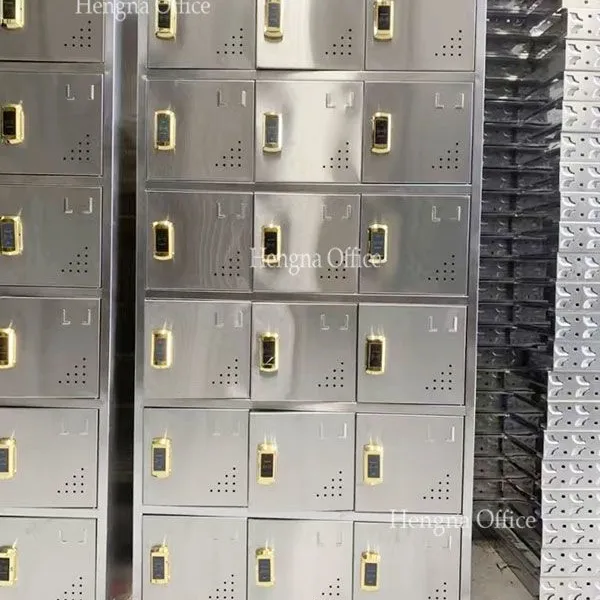
RFID lock — Compatible with staff ID cards for hands-free access.
Locks are factory-installed and tested before shipment.
Sizing
| Configuration | Doors | Each Compartment (W×D×H) | Best For |
|---|---|---|---|
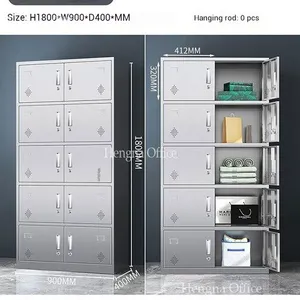
| Single tier | 1 | 380×450×1800mm | Supervisors, managers |
| Double tier | 2 | 380×450×900mm | Most food plant staff |
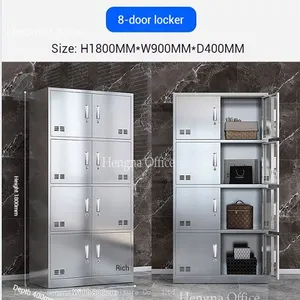
| 4-door | 4 | 380×450×450mm | High-density areas |
| 6-door | 6 | 250×450×300mm | Visitor lockers |
| 12-door | 12 | 190×450×300mm | High-turnover areas |
Custom sizes available. Non-standard widths, depths, or compartment counts can be produced to order.
How It Compares to Coated Steel
Many food plants we work with are replacing lockers that lasted less than two years.
The failure pattern is consistent:
Daily washdown creates standing water at the base of the locker.
The powder coating gets scratched by boots, mop handles, or cleaning carts.
Moisture enters the scratch. The cold-rolled steel underneath rusts.
Rust spreads under the coating, causing it to bubble and peel.
The locker becomes unsightly, unsanitary, and flagged during internal audits.
A 304 stainless steel locker in the same location shows no base corrosion after years of use. The material does not depend on a coating. There is nothing to peel, chip, or bubble.
Installation
Each locker has adjustable feet at all four corners. These level the unit on uneven concrete floors and raise the base 100mm off the ground. In a food plant where floors are hosed down, that gap matters — standing water does not reach the metal.
Pre-drilled anchor holes at the base allow floor mounting in high-traffic areas. Anchor bolts are selected based on the floor type. Units can be bolted together side-by-side to form continuous banks.
Packaging and Shipping
Each locker is bubble-wrapped, boxed in corrugated cardboard, and strapped to a wooden pallet. For container shipments:
20ft container: 40–50 single-tier units
40ft container: 100–120 units
Shipping terms: EXW, FOB, or CIF. Samples ship via air express.
FAQ
What is the minimum order quantity? 1 unit. Samples are available with credit against a volume order.
What is the warranty? 1 year against manufacturing defects — weld integrity, door alignment, lock function. 304 stainless steel corrosion is not a warranty item because it does not rust under normal food plant conditions.
Is this locker HACCP compliant? Yes. The 304 stainless steel surface is non-porous, corrosion-resistant, and easy to sanitize. The ventilated door prevents moisture buildup. The raised base allows floor washing without water contact.
Can we get material certificates? Yes. Mill test reports with chemical composition are available with the shipment.
What is lead time? 15 days for standard sizes after confirmed order. 20–25 days for custom sizes or non-standard locks.
Do you offer OEM? Yes. Logo silk-screening, custom lock supply, and custom compartment layouts are available.
How do I pick between 201 and 304? If the changing room is dry and climate-controlled, 201 is sufficient. If there is daily water exposure, washdown cleaning, or high humidity, 304 is the recommended grade.
About the Manufacturer
Luoyang Hengna Office Furniture Co., Ltd. manufactures stainless steel lockers for industrial and commercial use. 9 years in production. CE certified. Direct factory supply to distributors and end users. OEM and ODM accepted.

Send Inquiry to This Supplier


You May Also Like
-
Multi-Functional Commercial Stainless Steel Locker With Hanging Rod – Ideal for Storing Clothes and Personal Items-ODM/OEMUS$ 95 - 220MOQ: 5 Combos
-
Space-Saving Premium Stainless Steel Locker With Ventilation Holes– Secure Storage for Employees, Students, and Gym MembersUS$ 95 - 220MOQ: 5 Combos
-
Stainless Steel Locker for Gym & School | Secure Storage for Personal ItemsUS$ 50 - 200MOQ: 2 Pieces
-
2-Door Stainless Steel Locker for Gym Changing Rooms – Durable and Rust-Resistant Storage SolutionUS$ 50 - 80MOQ: 2 Pieces
-
4-Door Stainless Steel Employee Locker for Factories – Secure Personal Storage for Industrial Workplaces SupplierUS$ 49 - 99MOQ: 2 Pieces
-
8-Door Stainless Steel Locker for Schools – Perfect for Student Storage and Classroom OrganizationUS$ 50 - 200MOQ: 2 Pieces
-
Hengna 10-Door Metal Locker for Medical Facilities – Hygienic and Easy-to-Clean Storage for Healthcare WorkersUS$ 59 - 299MOQ: 2 Pieces
-
15-Door Stainless Steel Personal Locker for Office Employees – Compact Multi-Unit Design for Workspace EfficiencyUS$ 69 - 319MOQ: 2 Pieces
-
18-Door Stainless Steel Locker for Swimming Pools and Sports Venues – Moisture-Proof and Secure Storage ManufacturerUS$ 69 - 319MOQ: 2 Pieces
-
Hengna Customizable Stainless Steel Locker - Multi-Door 304 Gym Storage CabinetUS$ 49 - 319MOQ: 2 Pieces


