








 Contact Platform Support
 Help Center
SPCC Nickel Plated Steel Strip 0.1-0.3mm Double-Sided For 18650 Battery Spot Welding
Product Spotlights
0.1-0.3mm



Related Products
-
 Corrosion Resistant Pure Nickel Strip for Alkaline Electrolysis and Chemical Processing IndustryNegotiableMOQ: 10 Kilograms
 -
Customized Thickness Pure Nickel Strip GB/T N6NegotiableMOQ: 10 Kilograms
-
High Conductivity Pure Nickel Strip Exporter for EV Battery and Renewable Energy ProjectsNegotiableMOQ: 20 Kilograms
-
Bright Surface Nickel 200 Strip for Resistance Welding and Electrical ConnectorsNegotiableMOQ: 15 Kilograms
-
Nickel 201 Low Carbon Pure Nickel Sheet ASTM B162 for Caustic Evaporators & Chemical EquipmentNegotiableMOQ: 20 Kilograms
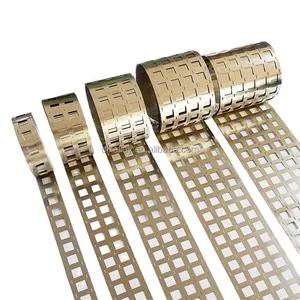
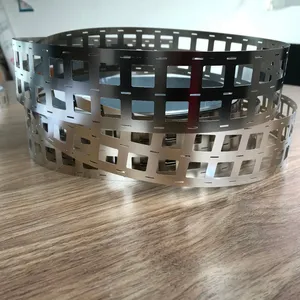
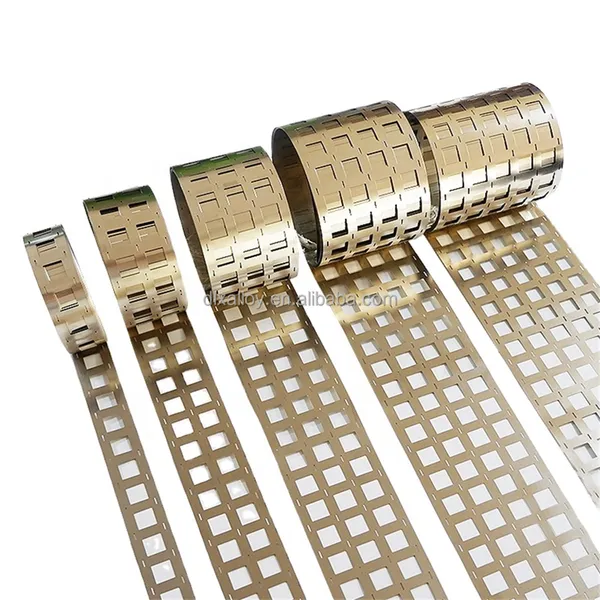
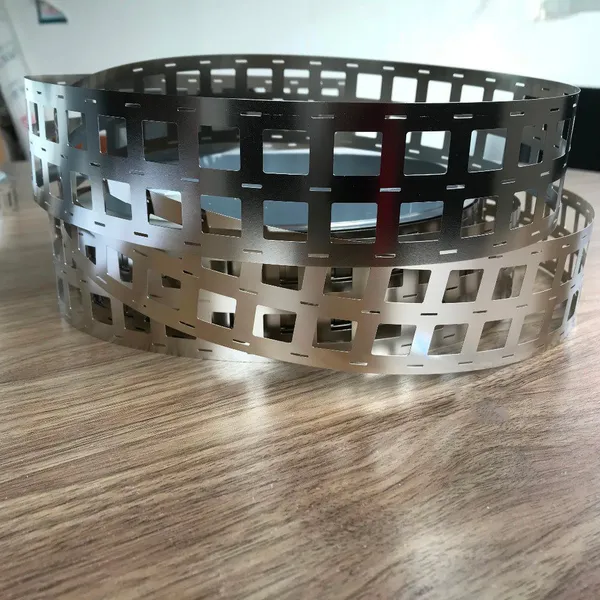
SPCC nickel plated steel strip is widely used in lithium battery pack assembly, especially for 18650 battery spot welding applications. From our DLX perspective, this material is designed to combine the strength of cold rolled steel (SPCC substrate) with the excellent conductivity and corrosion resistance of a nickel coating. The double-sided nickel plating structure improves welding consistency, reduces contact resistance, and enhances long-term reliability in battery modules.
With thickness options ranging from 0.1mm to 0.3mm, this strip is commonly used in battery connection systems where stable current flow and mechanical strength are both critical. In modern energy storage and power battery industries, this material has become a standard choice for battery pack assembly lines.
Material Structure Explanation
This product is not just a simple steel strip. It is a layered composite material:
Base material: SPCC cold rolled steel
Coating layer: High-purity nickel plating on both sides
Surface condition: Smooth, low roughness for stable spot welding
Thickness range: 0.1mm – 0.3mm
The SPCC base provides mechanical strength and flexibility, while the nickel coating improves electrical conductivity and corrosion resistance. This combination is essential for battery pack safety and performance stability
From DLX production experience, this nickel plated steel strip is mainly used in:
18650 lithium battery pack connections
Power tools battery packs (drills, saws, etc.)
Electric bicycle battery modules
Energy storage systems (ESS)
Portable power banks
Battery tabs and busbar connections
In all these applications, spot welding reliability directly affects battery performance and safety.
Industry Trends
The demand for SPCC nickel plated strips is growing fast due to the expansion of:
Electric vehicles (EV) supply chains
Renewable energy storage systems
High-capacity consumer electronics
Industrial backup power systems
Manufacturers are now shifting from traditional nickel strips to cost-optimized nickel plated steel strips. This trend is driven by cost pressure and performance balancing. Pure nickel strips are expensive, while SPCC nickel plated steel provides a more economical solution without sacrificing core welding performance.
At DLX, we see increasing demand for double-sided plating because it improves welding stability and reduces rejection rates in automated production lines.
Real Problems in Production
In real battery manufacturing environments, customers often face the following issues:
Weak spot welding strength
If the nickel coating is uneven or too thin, welding points can easily fail under vibration.High electrical resistance
Poor plating quality increases internal resistance, reducing battery efficiency.Corrosion in humid environments
Without proper nickel coverage, steel base material can rust over time.Inconsistent thickness tolerance
Even small deviations in thickness can affect welding machine calibration.Poor batch stability
Some suppliers cannot maintain consistent plating thickness across large rolls.
DLX addresses these issues through controlled plating processes and strict dimensional inspection systems.
Parameter Explanation
Understanding key parameters helps buyers choose the right specification:
Thickness (0.1–0.3mm): Affects mechanical strength and welding energy requirement
Nickel coating thickness: Determines corrosion resistance and conductivity
Tensile strength: Ensures strip does not break during forming or winding
Surface roughness: Impacts welding consistency and contact quality
Width tolerance: Important for automated cutting and battery assembly lines
In battery pack manufacturing, even small deviations in these parameters can significantly impact final performance.
Technical Parameter Comparison Table
| Parameter | Typical Market Supplier | DLX Nickel Plated Steel Strip |
|---|---|---|
| Base material quality | Standard SPCC | High-purity controlled SPCC |
| Nickel coating uniformity | Uneven in batch production | Stable double-sided plating |
| Thickness tolerance | ±0.02–0.05mm | Tighter control ±0.01–0.02mm |
| Surface finish | Basic smooth | Ultra-clean surface, low roughness |
| Welding performance | Inconsistent spots | Stable and high bonding strength |
| Corrosion resistance | Medium | Enhanced due to uniform plating |
| Coil consistency | Variable | High consistency across full coil |
| Production control | Basic inspection | Full-process quality monitoring |
Company Comparison Perspective
From a general market perspective, many suppliers focus mainly on cost and mass production. However, DLX focuses on process stability and application performance.
Typical suppliers often prioritize output volume, which can lead to variations in nickel plating thickness and inconsistent welding results. In contrast, DLX focuses on:
Controlled electroplating process parameters
Continuous coating thickness monitoring
Strict surface defect elimination
Batch-to-batch stability assurance
This difference becomes especially important for high-end battery applications where failure is not acceptable.
From our DLX manufacturing experience, we understand that battery manufacturers are not just buying a metal strip—they are buying stability in production.
Our advantages include:
Stable double-sided nickel plating for consistent conductivity
Better welding yield rate in automated spot welding systems
Reduced production downtime caused by material inconsistency
Improved battery pack safety due to uniform resistance distribution
Custom thickness and width support for different battery designs
In real production environments, these advantages translate into lower rejection rates and higher assembly efficiency.
Industry Outlook
As battery energy density increases and pack designs become more compact, material requirements are also becoming stricter. Future trends include:
Thinner but stronger strips (below 0.1mm in advanced designs)
Higher precision plating control
Lower resistance connection materials
Eco-friendly and recyclable battery materials
DLX continues to invest in process optimization to meet these evolving requirements.
About Us:
Our 12,000㎡ factory is equipped with complete capabilities for research, production, testing, and packaging. We strictly adhere to ISO 9001 standards in our production processes, with an annual output of 1,200 tons. This ensures that we meet both quantity and quality demands. Furthermore, all products undergo rigorous simulated environment testing including high temperature, high pressure, and corrosion tests before being dispatched, ensuring they meet customer specifications.
For all our clients, we offer timely and multilingual after-sales support and technical consulting, helping you resolve any issues swiftly and efficiently.
Q1: What is SPCC nickel plated steel strip used for?
It is mainly used for battery pack connections, especially in 18650 lithium battery spot welding applications.
Q2: Why not use pure nickel strip instead?
Pure nickel is more expensive. Nickel plated steel offers a better cost-performance balance for most battery packs.
Q3: Is double-sided plating necessary?
Yes, it improves welding stability and ensures better conductivity from both contact surfaces.
Q4: Can it be used in high current applications?
Yes, within design limits. Proper thickness selection is important for high current loads.
Q5: What thickness is most commonly used?
0.15mm and 0.2mm are the most common choices for 18650 battery packs.
Q6: Does it rust over time?
With proper nickel coating, corrosion resistance is significantly improved compared to bare steel.
Q7: Can DLX customize size and thickness?
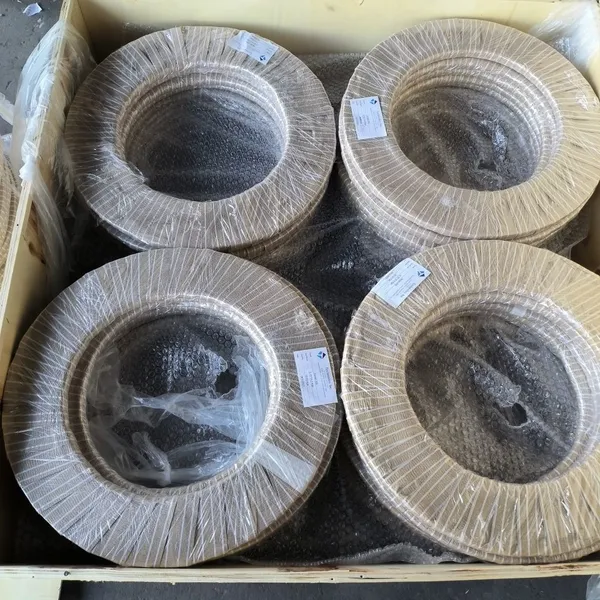
Yes, DLX provides customized width, thickness, and packaging according to customer requirements.
Q8: Is it suitable for automated spot welding machines?
Yes, it is designed for stable performance in automated battery production lines.
Final Note
We can provide custom solutions.

Send Inquiry to This Supplier


You May Also Like
-
Custom Cut Pure Nickel Plate for Aerospace, Medical, and Semiconductor IndustriesNegotiableMOQ: 5 Kilograms
-
High Conductivity Pure Nickel Plate for Electrical, Thermal, and Shielding SolutionsNegotiableMOQ: 20 Kilograms
-
Pure Nickel Plate for Electrochemical, Catalyst, and Electrolysis ApplicationsNegotiableMOQ: 20 Kilograms
-
Low Carbon Nickel 201 Plate for High-Temperature and Hydrogen Service EnvironmentsNegotiableMOQ: 20 Kilograms
-
Corrosion-Resistant Nickel 200 Plate for Caustic Soda, Marine, and Energy SectorsNegotiableMOQ: 10 Kilograms
-
Corrosion Resistant Nickel 201 Tube DIN 2.4068 for Hydrogen and Chemical Processing EquipmentNegotiableMOQ: 50 Kilograms
-
Industrial Grade Pure Nickel Pipe UNS N02200 for Oil & Gas and Offshore ApplicationsNegotiableMOQ: 20 Kilograms
-
Nickel 201 Welded Tube for High Temperature Alkali and Acid Handling SystemsNegotiableMOQ: 50 Kilograms
-
Nickel 200 Seamless Tube for Caustic Soda Evaporators and Chlor-Alkali PlantsNegotiableMOQ: 50 Kilograms
-
JIS NW 2200 / NW 2201 Pure Nickel Tube for Marine and Power Plant SystemsNegotiableMOQ: 80 Kilograms


