








 Contact Platform Support
 Help Center
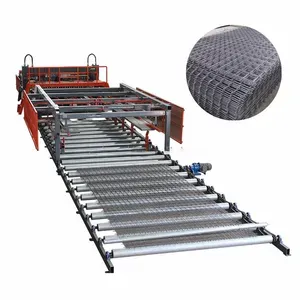
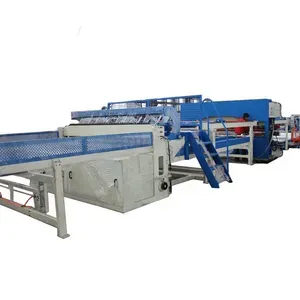
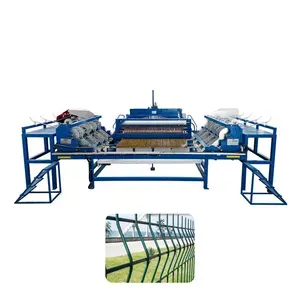
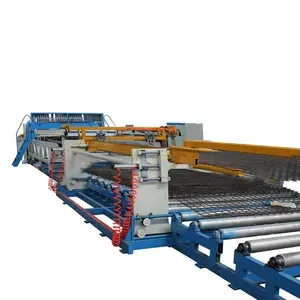
High-Speed Fully Automatic Fence Welding Line With 30 Panels/Minute Output
Product Spotlights


Related Products
-
 Fully Automatic Fence Welding Line for 304 Stainless Steel Wire MeshNegotiableMOQ: 1 Unit
 -
Fully Automatic Fence Welding Line for Agricultural and Livestock Fencing ApplicationsNegotiableMOQ: 1 Unit
-
24h Continuous Work Fence Machine, 15 Meters/Min SpeedNegotiableMOQ: 1 Unit
-
Fence Machine for Continuous Operation, Onsite Training IncludedNegotiableMOQ: 1 Unit
-
Fence Machine for Continuous Panel Production in ConstructionNegotiableMOQ: 1 Unit
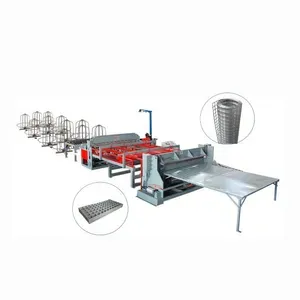
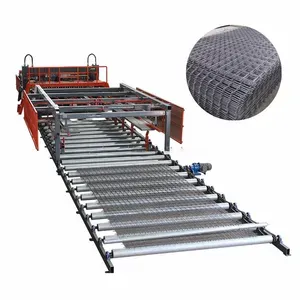
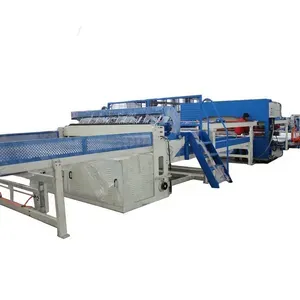
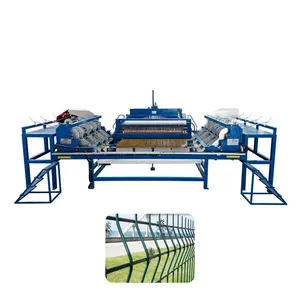
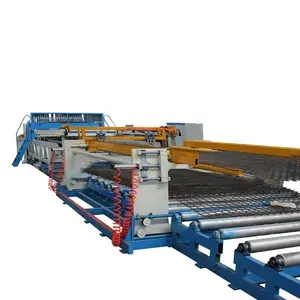
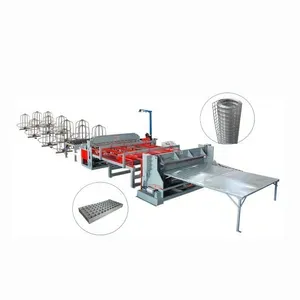
As a specialized manufacturer and global exporter based in Hengshui, Hebei, Hebei Jinlongyu Import And Export Trade Co., Ltd. is proud to introduce our flagship industrial solution: the High-Speed Fully Automatic Fence Welding Line. Engineered for mass production environments, this line is designed to transform raw wire into high-quality welded mesh fence panels with remarkable speed, consistency, and minimal manual intervention. We understand that for fence manufacturers, wholesalers, and large-scale construction projects, productivity and reliability are non-negotiable. This machine directly addresses these core needs by delivering a robust output of up to 30 panels per minute, ensuring your operation meets demanding deadlines and scales efficiently. By integrating advanced automation, we help you reduce labor costs, minimize material waste, and achieve a superior, uniform product quality that strengthens your market competitiveness.
This welding line represents a significant leap in fence manufacturing technology. Its core strength lies in a seamlessly integrated, fully automated process that handles wire straightening, feeding, welding, and cutting with precision. The system is built around a heavy-duty, reinforced steel frame that ensures stability and longevity even under continuous, high-cycle operation. At the heart of the machine is a sophisticated Programmable Logic Controller (PLC) paired with a user-friendly Human-Machine Interface (HMI) touchscreen. This allows operators to easily set and store parameters for different panel sizes, wire gauges, and mesh patterns, enabling quick changeovers and flexible production runs.
The primary technical advantage is its high-speed resistance welding system. Equipped with durable, copper-alloy electrodes and a precisely calibrated transformer, it creates strong, consistent weld points at every wire intersection without burning or weakening the material. The automatic wire feeding and straightening mechanism ensures a continuous, tension-controlled supply of wire, which is critical for maintaining panel dimensional accuracy. Following welding, a high-precision hydraulic or pneumatic cutting system cleanly severs the completed panel from the grid, ready for framing or further processing.
Key Technical Specifications & Configurable Options:
| Parameter | Specification / Range |
| Maximum Theoretical Output | Up to 30 panels per minute* |
| Standard Welding Wire Diameter | 2.0 mm – 6.0 mm (customizable) |
| Mesh Opening (Customizable) | e.g., 50mm x 50mm, 50mm x 100mm, 75mm x 150mm |
| Maximum Panel Width | Typically up to 3 meters (customizable) |
| Control System | PLC with Color Touchscreen HMI |
| Main Power Requirement | 3-Phase, 380V/415V 50Hz (or as requested) |
| Machine Footprint (Approx.) | Varies with configuration; detailed layout provided |
*Actual output depends on wire diameter, mesh size, and panel dimensions.
Tangible Benefits for Your Business:
- Substantial Labor Cost Reduction: The fully automatic operation requires minimal supervision, typically needing only 1-2 operators for loading wire coils and monitoring, freeing up skilled labor for other tasks.
- Enhanced Product Consistency: Automated precision eliminates human error, producing every panel with identical mesh spacing, weld strength, and dimensions, leading to higher customer satisfaction.
- Superior Operational Efficiency: The high cycle speed drastically increases daily output, allowing you to fulfill large orders faster and take on more business without expanding floor space proportionally.
- Reduced Material Waste: Precise wire feeding and cutting mechanisms optimize material usage, and consistent welding minimizes reject rates due to poor-quality welds.
- Improved Workplace Safety: Enclosed moving parts and automated processes reduce direct operator contact with welding points and cutting areas, creating a safer working environment.
Our commitment to quality and global service is demonstrated through our established export channels. Hebei Jinlongyu routinely ships heavy machinery like this welding line from Tianjin Port to diverse and demanding markets including South America, Southeast Asia, Africa, and across Europe. This global footprint is built on providing reliable, industrial-grade equipment that performs in various operational conditions. We support our clients with comprehensive technical documentation, remote assistance, and can facilitate connections with local service partners. Investing in this High-Speed Fully Automatic Fence Welding Line is an investment in the future scalability and profitability of your fencing business. Contact us today to discuss your specific production requirements, request a detailed quotation, or arrange a virtual demonstration. Let us help you build a stronger, more efficient production foundation.
Frequently Asked Questions (FAQ)
Q1: What is the actual, sustainable production speed I can expect in a real-world factory setting?
A1: While the machine is capable of cycles up to 30 panels per minute, the sustainable output depends on your specific configuration. Factors like thicker wire (e.g., 5mm-6mm), larger mesh sizes, and panel dimensions will slightly reduce the cycle rate compared to thinner wire and smaller mesh. A realistic average for common configurations is between 18-25 panels per minute during continuous operation, which still represents a very high output.
Q2: Can this line produce different styles of mesh, or is it limited to standard square mesh?
A2: The standard configuration is optimized for producing rectangular or square welded mesh panels, which is the most common type for fencing. However, the machine's programming flexibility allows for the production of certain non-standard patterns, such as rectangular mesh (e.g., 50x100mm). Major changes in the fundamental mesh pattern may require mechanical adjustments. It's best to discuss your desired mesh specifications with our engineers for confirmation.
Q3: How difficult is it to change the production setup for a different panel size or wire gauge?
A3> Changeovers are designed to be relatively straightforward. The most common adjustments—changing the mesh spacing (wire spacing)—are done digitally through the HMI screen by calling up a saved recipe. Physical changes, like adjusting the wire straightener rollers for a new diameter or setting the cutting length, require manual tooling but are facilitated by ergonomic design and clear刻度. With trained operators, a changeover can typically be completed within 30-60 minutes.
Q4: What kind of after-sales support and training do you provide?
A4> We provide a comprehensive support package that includes detailed operation and maintenance manuals (in English), wiring diagrams, and a list of spare parts. We offer remote video support for troubleshooting and can dispatch engineers for on-site installation and training, subject to agreement. We also supply a recommended list of critical spare parts to keep on hand for minimal downtime.
Q5: What are the main power and factory utility requirements for installing this line?
A5> The machine requires a stable 3-phase industrial power supply, commonly 380V/415V 50Hz, with sufficient amperage for the welding transformer and motors. Your factory needs to have a solid, level concrete foundation. You will also need a compressed air supply for the pneumatic systems (if equipped) and adequate space for material handling (wire coil loading) and finished panel removal. We provide detailed foundation and utility layout drawings prior to shipment.
Q6: Is the machine suitable for working with galvanized wire or PVC-coated wire?
A6> Yes, the line is well-suited for both galvanized and PVC-coated (green) wires. The welding electrodes are designed to penetrate the coating to create a solid metal-to-metal weld. For PVC-coated wire, there may be some minor smoke/residue at the weld points, so adequate ventilation in the workshop is recommended. The welding parameters can be fine-tuned to optimize results for different coatings.
Q7: How does the automatic cutting system work, and how accurate is it?
A7> The cutting system is synchronized with the welding grid movement. Once a panel of the programmed length is completed, a hydraulic or pneumatic guillotine cutter cleanly severs the cross wires. The accuracy is very high, typically within ±2mm, ensuring all finished panels are uniform in length, which is crucial for subsequent framing or installation.
Q8: What is the lead time for such a machine, and what is included in the FOB price?
A8> The standard production lead time is approximately 30-45 days after order confirmation, subject to factory schedule. Our standard FOB Tianjin Port quotation typically includes the main welding line machine, the electrical control cabinet, a basic set of tools, and technical documentation. Optional accessories like extra wire feeding racks, specific spare parts, or on-site services are quoted separately. We handle all export documentation and deliver the machine to the port, ready for loading onto your chosen vessel.

Send Inquiry to This Supplier



You May Also Like
-
Automatic Fence Machine With 24 Hour Runtime, IP54 ProtectedNegotiableMOQ: 1 Unit
-
24h Continuous Work Fence Machine With 380V PLC Control SystemNegotiableMOQ: 1 Unit
-
Heavy Duty Fence Machine for Continuous Production, 220V InputNegotiableMOQ: 1 Unit
-
Stainless Steel Fence Machine for 24/7 Operation, 5kW PowerNegotiableMOQ: 1 Unit
-
Fence Machine With 24/7 Duty Cycle, Mill Test Report ProvidedNegotiableMOQ: 1 Unit
-
Low Noise Fence Welding Machine With 380V 3-Phase Power SupplyNegotiableMOQ: 1 Unit
-
24h Continuous Work Fence Machine With 12-Month WarrantyNegotiableMOQ: 1 Unit
-
Automatic Low Noise Welder for Wire Mesh Fences, 1500mm Max WidthNegotiableMOQ: 1 Unit
-
Semi-Automatic Low Decibel Fence Welder With Servo Drive SystemNegotiableMOQ: 1 Unit
-
PLC Controlled Fence Welding System With Reduced Operational NoiseNegotiableMOQ: 1 Unit


