








 Contact Platform Support
 Help Center
304 Stainless Steel Workbench for Pharma-Grade Cleanroom – Chemical-Resistant, Modular, Factory Direct

Product Spotlights



Related Products
-
 Hengna Industrial Production Work Table|Heavy Duty Solid Wood Workbench for WorkshopUS$ 300 - 800MOQ: 2 Cases
 -
Commercial Workbench Supplier |Multi Metal Work Bench With Drawers OMDUS$ 300 - 800MOQ: 2 Cases
-
Multi Metal Work Benches Electrical Workshop Workbench|US$ 300 - 800MOQ: 2 Cases
-
Heavy Duty Workbench for Garage & Workshop | Industrial Strength WorkbenchesUS$ 200 - 600MOQ: 5 Sets
-
Modular Workbench With Pegboard for Tool OrganizationUS$ 600 - 1200MOQ: 5 Combos
1. A Pharma Cleanroom Is Not a Food Factory
A food processing bench gets wiped down at the end of a shift. Maybe hosed off. A pharmaceutical GMP cleanroom bench has a different standard — it has to be verifiable. What disinfectant was used. How much residue remains. When the last surface swab test was done and what the result was.
The difference between these two use cases isn't the material grade. It's whether the bench design can pass a cleaning validation protocol.
If a workbench surface in a pharma cleanroom has weld seams, recessed screws, or exposed fastener heads, cleaning validation gets complicated. Bacteria colonize those crevices. Disinfectants might not reach deep enough. A swab test from a seam hits a different colony count than one from a flat surface. That's the kind of inconsistency that costs a batch.
HNJUNTO 304 stainless steel workbenches aren't designed to look clean. They're designed to verifiably stay clean. Smooth surfaces. No exposed fasteners on the work area. Simple structure with nowhere for contamination to hide.
2. 304 Stainless Steel — Why 201 Doesn't Cut It Here
Pharma and GMP cleanrooms use disinfectants that food plants generally don't. The chemical exposure is different — and more aggressive.
Common GMP disinfectants include 70% isopropyl alcohol, vaporized hydrogen peroxide, quaternary ammonium compounds, sodium hypochlorite, and peracetic acid. Application frequency ranges from once per shift to two or three times daily in high-touch zones.
201 stainless steel, under repeated exposure to these chemicals, develops pitting. You won't see it in the first month. By month six, the surface turns rough in patches. Swab tests start showing inconsistent colony counts. You run root cause analysis and end up chasing the bench surface — which is the last place anyone wants to look.
304 stainless steel has a higher nickel content — 8 to 10.5% — and 18 to 20% chromium. This alloy composition stays inert against acidic disinfectants and chloride-based cleaners. The material itself doesn't react. It's not about wiping it clean. It's about the surface not degrading in the first place.
3. The Worktop — 1mm 304 Stainless, But It's Not Just a Sheet of Metal
The worktop isn't a flat 304 plate bolted onto a frame. It's a three-layer bonded composite designed to stay flat and sealed.
| Layer | Material | What It Does |
|---|---|---|
| Surface | 1mm 304 stainless steel sheet | The only surface that contacts disinfectants. Full corrosion resistance. |
| Core | High-density fiberboard | Impact absorption, maintains flatness under load, dampens vibration |
| Edge | 304 stainless wrap-over | The surface sheet extends down over the fiberboard edge. No seam. No glue line. |
The entire top is one piece. The stainless surface wraps around all four edges and covers the fiberboard core completely. No joints. No exposed substrate. Disinfectant applied from above runs off without seeping into anything underneath.
The surface finish is an industrial sanitary grade — smooth enough to pass microbial swab testing, but not mirror-polished to the point of glare interfering with bench work.
4. Frame Design — Fewer Parts, Easier Validation
There's a cleanroom principle worth stating plainly: every extra component is another potential contamination source. Every screw head. Every recessed joint. Every gap where a panel meets a frame.
HNJUNTO keeps the frame simple on purpose.
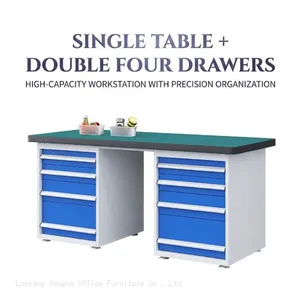
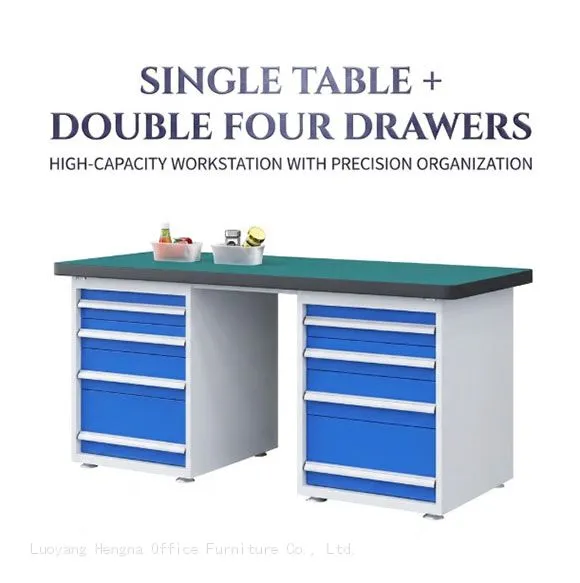
The frame is SPCC cold-rolled steel with electrostatic powder coating. Cabinet bodies are gray-white. Drawer fronts are 304 stainless steel — same material as the worktop, same visual consistency.
Design choices made specifically for cleanroom use:
Frame bolts are on the inside of cabinets, not exposed above the work surface
Cabinet-to-frame connections are flat-faced. No grooves, no channels where residue can collect
The back panel sits far enough from the wall to reach behind for cleaning
Horizontal surfaces have a slight radius at the edges — not a drain slope, just enough of an angle to prevent liquid pooling
| Spec | Value |
|---|---|
| Width | 1200mm / 1500mm / 1800mm / 2100mm |
| Depth | 750mm |
| Work surface height | 800mm |
| Overall height (no light) | 1700mm |
| Overall height (with light) | 1950mm |
All units ship KD — knocked down, flat-packed. Assembly happens on-site inside the cleanroom, which avoids the risk of transporting an assembled unit through uncontrolled environments. English manual and video guide included.
5. Drawers and Storage — Stainless Fronts, Contamination-Aware Layout
Drawer fronts are 304 stainless steel, matching the worktop. Slides are heavy-duty ball-bearing with full extension and anti-tip stops.
In a GMP cleanroom, drawers don't hold random junk. They hold batch records, cleaning logs, disposable gloves, sampling tools. These need to be stored separately — clean tools on one side, used tools awaiting sterilization on the other, documentation in between.
The drawer interiors support divider boxes and partitioned inserts for this kind of segregation. Each cabinet locks independently — one key, all drawers secured, end of shift.
6. Pegboard and Accessories — Depends on Your Cleanroom Class
Pegboards and power modules aren't automatically right for every cleanroom. It depends on the classification.
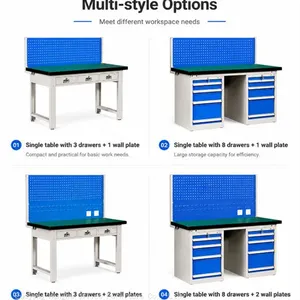
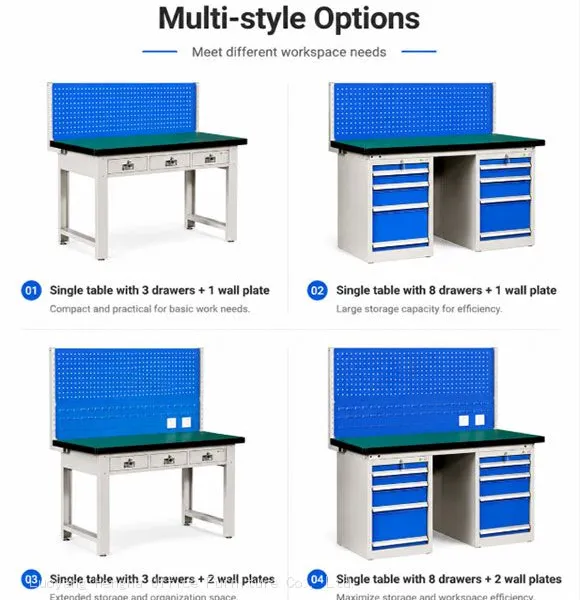
ISO 7 / Class 10,000 and cleaner: Pegboards add vertical surface area, which increases particle settling zones. In these environments, the cleaner choice is often a bench with drawer storage only — no pegboard.
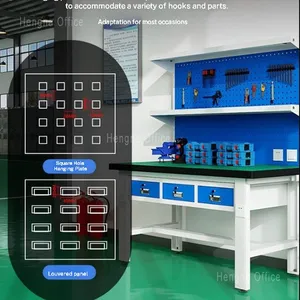
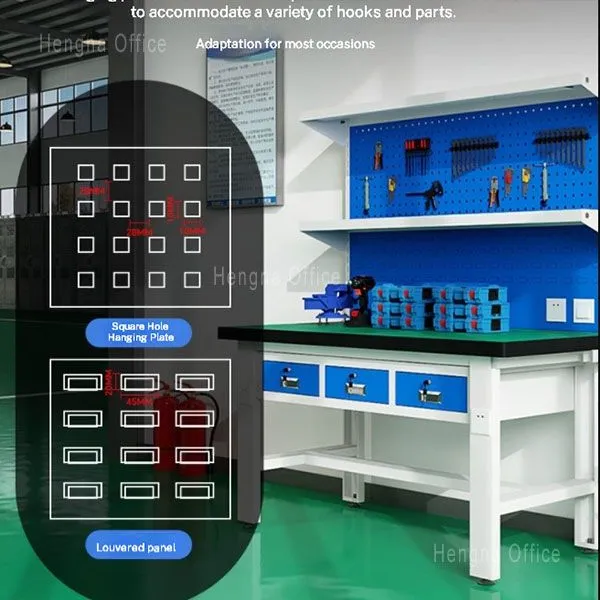
ISO 8 / Class 100,000 and above (more relaxed): Double pegboard systems are usable. Square-hole pegboard for hanging utensils, louver panel for consumable bin boxes.
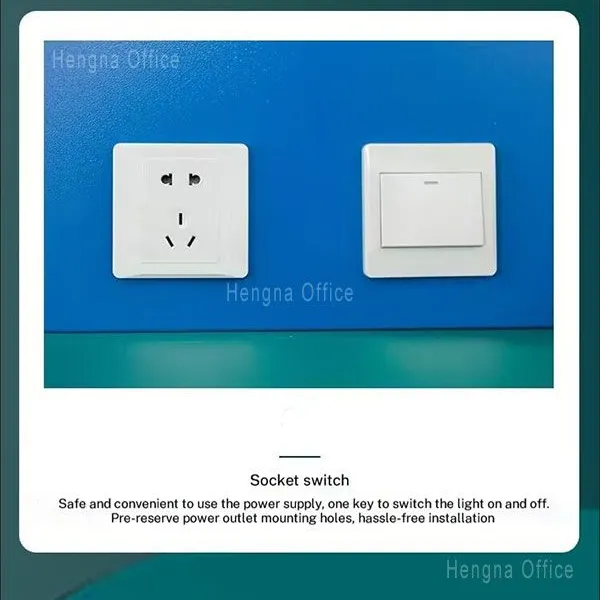
The power outlet module is optional. If you need one, spec it with a waterproof cover to prevent splash ingress.
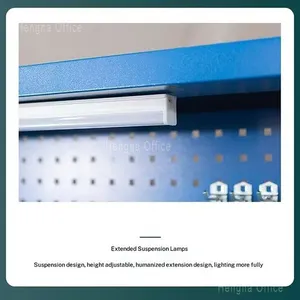
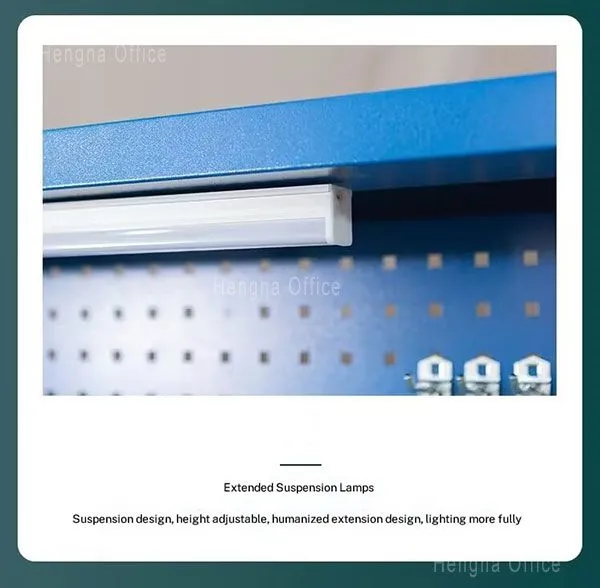
The light stand is standard. LED tubes are optional. In a cleanroom, good overhead light often eliminates the need for task lighting — one less piece of equipment to validate.
Talk to us about your cleanroom classification and we'll help match the configuration. No point paying for accessories you'll have to remove later.
7. Sourcing
HNJUNTO, Luoyang, Henan, China. Nine years exporting steel workstations.
304 stainless worktop and drawer fronts, powder-coated steel frame
CE certification available
OEM: logo, custom colors, custom packaging — yes
MOQ: 1 unit. Mix configurations in container loads
Quote response: within 24 hours
Packaging: moisture barrier wrap, corner guards, bundled components. Export-ready
Assembly: English manual + QR-linked video. On-site assembly inside your cleanroom
Factory-direct. No middleman markup.
8. FAQ
Q: 201 or 304 for a GMP cleanroom? A: 304. 201 develops surface pitting under repeated exposure to common GMP disinfectants, which compromises cleaning validation consistency. In a cleanroom, there's no reason to choose 201.
Q: Which disinfectants can the surface handle? A: Standard GMP disinfectants — 70% isopropyl alcohol, vaporized hydrogen peroxide, quaternary ammonium compounds, diluted sodium hypochlorite, peracetic acid. After long exposure, rinse with purified water to remove residue.
Q: Can you provide material certification? A: A 304 stainless steel composition report ships with the order. Additional certification documents available on request.
Q: Is the entire bench made of 304 stainless? A: No. The worktop and drawer fronts are 304 stainless. The frame and cabinet bodies are SPCC cold-rolled steel with powder coating. The frame doesn't contact product or disinfectants directly, and powder coating is sufficient for cleanroom environments.
Q: Will KD assembly generate particles inside the cleanroom? A: Assembly itself doesn't generate significant particulate — you're bolting pre-assembled modules, not cutting or drilling. That said, we recommend completing assembly before the cleanroom goes operational, and including the bench surface in your routine swab testing during qualification.
Q: Can I get the frame in full stainless steel? A: Custom requests are reviewed case by case. Contact sales with your requirements.
9. Closing
A pharma cleanroom workbench isn't just a table with a stainless top. The surface has to tolerate chemical disinfectants. The design has to leave nowhere for contamination to settle. And when the auditor asks for validation data, the surface swabs need to come back consistent.
HNJUNTO builds these benches with 304 stainless worktops, a contamination-minimizing frame design, and a modular system that lets you configure storage around your workflow — not the other way around.
GMP cleanroom, pharma production line, medical device assembly — one workbench designed for environments where clean isn't a claim, it's a test result.

Send Inquiry to This Supplier


You May Also Like
-
Heavy-Duty Automotive Workbench - 1000 Lbs Capacity Steel Workbench for Car Repair ShopsUS$ 200 - 600MOQ: 5 Sets
-
Industrial Steel Workbench for Manufacturing - Heavy-Duty Assembly Workstation With StorageUS$ 200 - 600MOQ: 5 Sets
-
Hengna Welding Workbench Heavy-Duty - Fire-Resistant Steel Workbench for Metal FabricationUS$ 200 - 600MOQ: 5 Sets
-
Hengna Professional Woodworking Workbench - Heavy-Duty Bench With Vise for Carpenter ShopsUS$ 200 - 600MOQ: 5 Sets
-
Portable Heavy Workbench for Construction - Folding Steel Workbench for Job Sites SupplierUS$ 200 - 600MOQ: 5 Sets
-
Hengna Maintenance Workbench Heavy-Duty - Industrial Repair Bench With Tool Storage DistributorUS$ 200 - 600MOQ: 5 Sets
-
Hengna Educational Heavy Workbench - Student Steel Workbench for Vocational Training CentersUS$ 200 - 600MOQ: 5 Sets
-
Hengna Supplier Home Garage Blue Heavy Workbench - Professional Steel Workbench for DIY ProjectsUS$ 200 - 600MOQ: 5 Sets
-
Hengna Aviation Maintenance Workbench - Precision Heavy-Duty Bench for Aircraft RepairUS$ 200 - 600MOQ: 5 Sets
-
Machine Shop Heavy Workbench - Precision Steel Workbench for Tool RoomsUS$ 200 - 600MOQ: 5 Sets

