








 Contact Platform Support
 Help Center
Coastal Stainless Steel Shelving — 304 Grade Salt Spray Resistant | Factory Direct
Product Spotlights



Related Products
-
 Hengna Durable Stainless Steel 2-Door Locker for Office & Industrial Use – High-Security Personal StorageUS$ 95 - 220MOQ: 5 Combos
 -
High-quality Modern Multi-Door Stainless Steel Locker – Strong, Secure, and Breathable for Offices and Public AreasUS$ 95 - 220MOQ: 5 Combos
-
Commercial Stainless Steel Locker With– Multi-Door Units for Schools, Gyms, and Public Spaces-Customizable Locker OptionsUS$ 95 - 220MOQ: 5 Combos
-
High-Grade Multi-Door Stainless Steel Locker With Ventilation Holes – Space-Saving Storage for Personal BelongingsUS$ 95 - 220MOQ: 5 Combos
-
Multi-Functional Commercial Stainless Steel Locker With Hanging Rod – Ideal for Storing Clothes and Personal Items-ODM/OEMUS$ 95 - 220MOQ: 5 Combos
Coastal Stainless Steel Shelving — 304 Grade Salt Spray Resistant
What salt spray does to ordinary shelving
Salt does two things to metal, and it does both of them slowly enough that you don't notice until the damage is already done.
First, salt particles in coastal air settle on every exposed surface. You don't see them. They're microscopic. But they're there — on the shelf surface, in the weld joints, around the foot of every upright. Salt is hygroscopic — it pulls moisture out of the air. So wherever a salt particle lands, a tiny droplet of highly concentrated saltwater forms.
Second, that droplet attacks the passive layer that protects stainless steel. On low-nickel grades like 201, the passive layer is thin to begin with. Saltwater breaches it within months. Once the layer is compromised, the steel underneath starts pitting. You see the first dark spots at edges and weld seams. Then they spread. Then the shelf face gets rough. Then the rack starts looking like it belongs in a scrapyard, not a working facility.
This happens faster the closer you are to the coast. Within 500 meters of the ocean, it happens fastest. Within 5 kilometers, still fast enough that 201 stainless becomes a recurring expense.
The only thing that reliably slows this process is higher nickel content. That's 304.
Why 304 stands up to salt spray
The difference between 201 and 304 in a coastal environment comes down to one number: nickel percentage.
201 stainless steel contains 3–5% nickel. That's enough for indoor use. It's enough for dry storage. It is not enough for salt-laden coastal air.
304 stainless steel contains 8% or more nickel. That extra 3–5% doesn't sound like much. But in metallurgical terms, it's the difference between a passive chromium oxide layer that holds and one that breaks down under sustained chloride attack. Salt is sodium chloride. That's the chloride. And that's what eats through 201 over time.
304's passive layer is denser, more stable, and reforms faster if scratched. In salt spray testing — the industry standard way to measure corrosion resistance — 304 lasts roughly 3 to 5 times longer than 201. Not 3 to 5 percent longer. Three to five times.
For a coastal installation — a warehouse near a port, a marina workshop, a seaside restaurant's dry storage — 304 isn't an upgrade. It's the correct specification.
It's not just the grade. It's the whole design.
Salt exploits weakness. So the design removes as many weak points as possible.
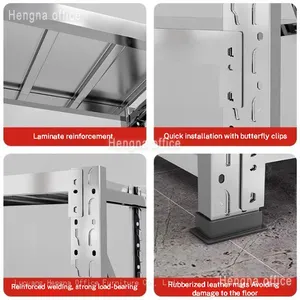
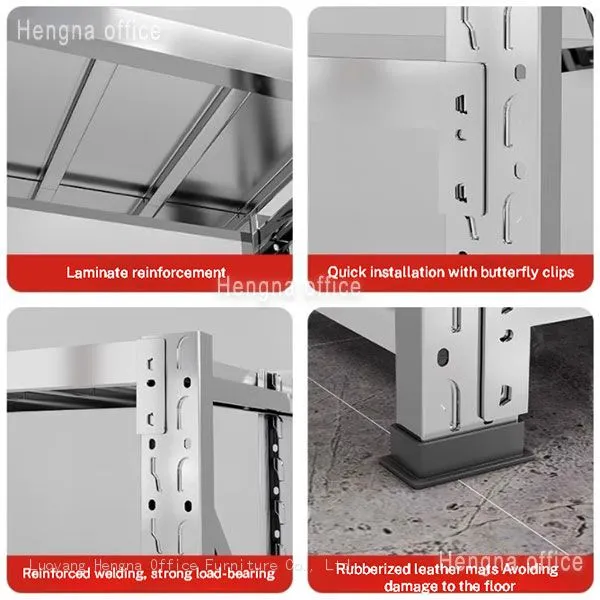
Zero exposed fasteners. Butterfly clip assembly — no screws, no bolts, no rivets. Fasteners are where saltwater concentrates and corrosion starts. Eliminate the fasteners, eliminate the starting point.
Smooth brushed surface. The shelf face is a continuous plane. No texture where salt particles can lodge. No ridges where salt-laden moisture can sit. Wipe it down and it's clean.
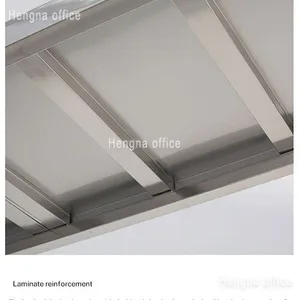
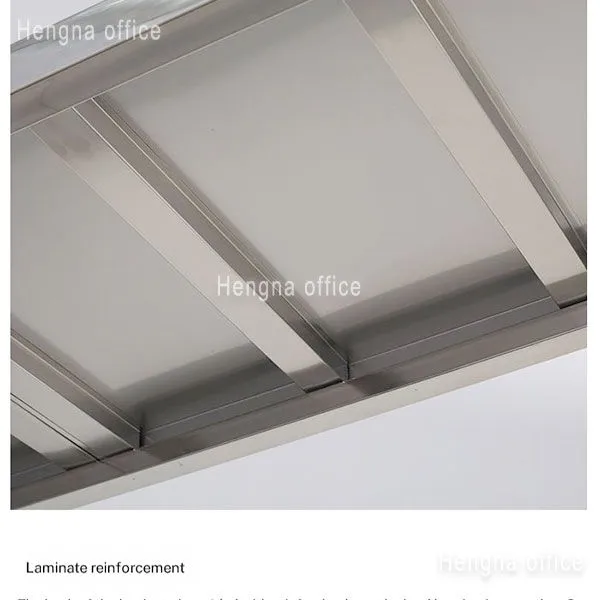
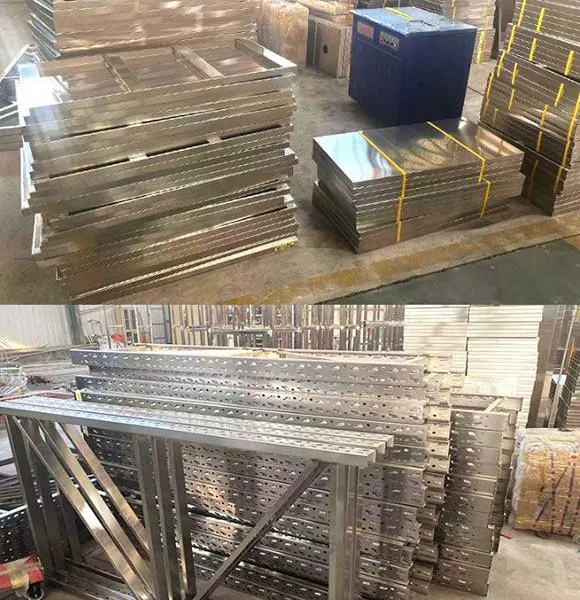
Pressed-in ribs, not tack-welded strips. Fewer welds means fewer places for saltwater to attack. The double reinforcement ribs under each shelf are pressed in as a single piece. The back support bar runs the full shelf width. Everything that needs to be strong is strong — and every strength point is integrated, not added on.
Enclosed structural connections. Butterfly clips engage inside the upright slots. The engagement point is shielded from direct salt spray exposure. It's a small detail. In a coastal environment, the small details add up.
Specifications
| Item | Detail |
|---|---|
| Material | 304 stainless steel (coastal standard) / 201 stainless steel (inland only) |
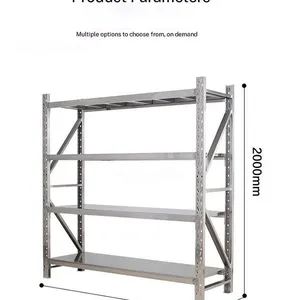
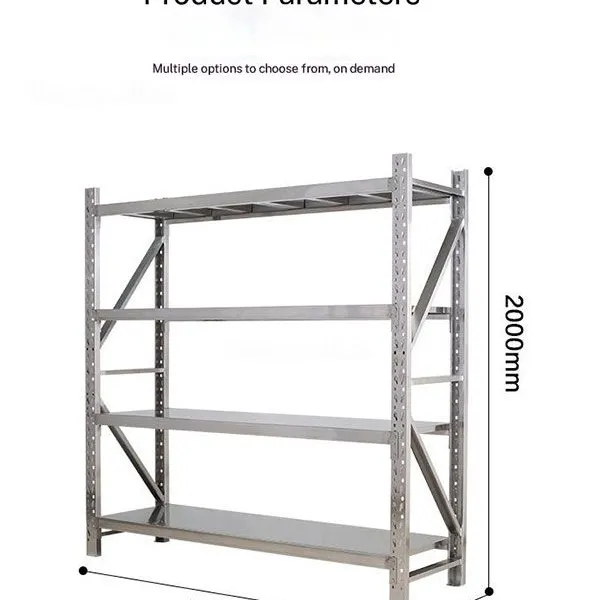
| Height | 2000mm (fixed) |
| Width options | 400mm / 500mm / 600mm |
| Depth options | 1000mm / 1200mm / 1500mm / 1800mm / 2000mm |
| Shelves | 4 standard, custom 3–5 tiers available |
| Load per shelf | 200kg sustained |
| Surface finish | Brushed — continuous plane, no particle traps |
| Assembly | Butterfly clip — zero exposed fasteners, tool-free |
| Feet | Sealed rubber pads — salt-resistant compound |
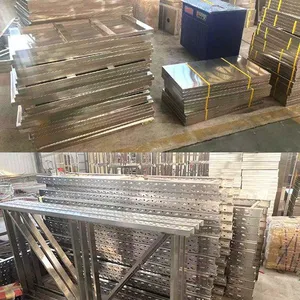
| Shipping | KD knock-down — individually wrapped, moisture-barrier packed |
Coastal facilities tend to have high ceilings and open layouts — depth of 1800–2000mm is common for warehouses near ports or harbors. For marina workshops or seaside restaurant storage, 1200–1500mm depth keeps the footprint manageable while maximizing shelf space.
Expand without replacing
Coastal operations grow over time. A marina adds service bays. A port warehouse expands cold storage. A beachfront resort builds out its kitchen.
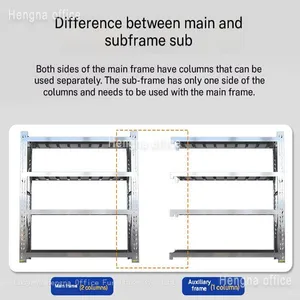
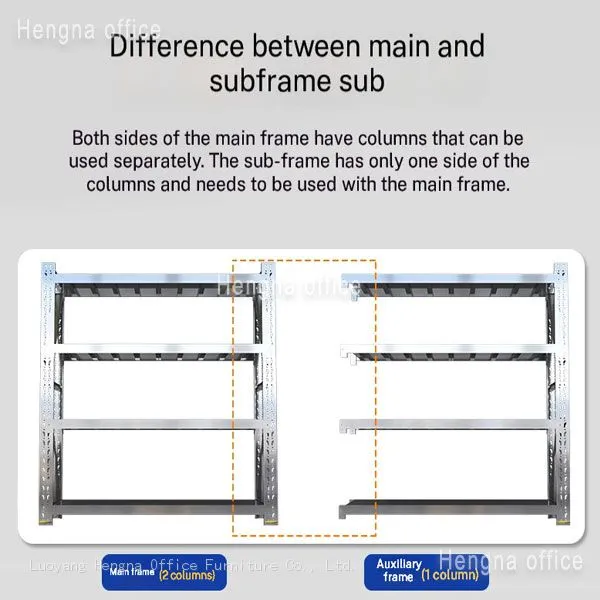
Our starter-plus-add-on system means you don't have to replace existing shelving to add capacity. The main frame is independent. Add-ons share the middle uprights. The cost per bay drops as you scale — and the 304 grade stays consistent across every section.
Packing that keeps salt out before installation
Coastal shelving has to arrive in corrosion-free condition. Salt exposure doesn't just happen after installation — it can happen during transit if packaging isn't moisture-sealed.
Every KD part gets individually bubble-wrapped. Cartons are sealed against humidity ingress. The pallet is wrapped and treated. We run ISTA 3A testing — 48 hours of vibration plus humidity cycling — before any coastal-bound shipment leaves. If moisture gets through during testing, the packaging gets redesigned until it doesn't.
FCL and LCL shipping. We optimize routing per order to keep freight costs down.
FAQ
Q: How close to the coast do I need to worry about salt spray? A: Within 500 meters of the ocean — 304 is non-negotiable. Within 5 kilometers — 304 is strongly recommended, especially if your facility has open bay doors or ventilation that brings in outside air. Beyond 5 kilometers — 201 may be adequate depending on local humidity and exposure.
Q: Is 304 completely immune to salt corrosion? A: No stainless steel is completely immune. Salt will eventually affect any steel. The question is timeline. 304 lasts 3–5 times longer in salt spray conditions than 201. That's the difference between replacing shelves every 2 years and replacing them every 8–10 years.
Q: What about marine-grade 316 stainless steel — do you offer that? A: 316 is available on request for extreme marine exposure (direct ocean spray, offshore platforms). For most coastal facilities — warehouses, workshops, kitchens — 304 is the right balance of cost and corrosion resistance. We'll help you decide based on your actual distance from saltwater and exposure conditions.
Q: Won't the butterfly clips rust? A: Butterfly clips are made from the same 304 stainless steel as the shelving. No dissimilar metal contact. No galvanic corrosion. The clip engagement point is enclosed inside the upright slot, protected from direct salt spray.
Q: MOQ? A: 1 unit. Sample orders welcome — built to your coastal facility dimensions.
Q: Lead time? A: Standard sizes: 7–15 days. Custom dimensions: 15–30 days.
Q: Can you print our marina or warehouse brand logo? A: Yes. Silk screen logo, custom packaging, custom manuals. We supply distributors and facility operators under their own brand.
Try a sample first
Coastal shelving is about your specific exposure — distance from the ocean, prevailing wind direction, whether your facility is open-sided or enclosed. Photos don't tell you what a year of salt-laden air will do.
So start with a sample. One unit, your dimensions, shipped direct. Put it in your coastal facility. If it holds up the way it should, scale up. If not, no loss on your end.
We've shipped coastal samples to ports, marinas, and seaside facilities in a dozen countries. 99% came back for bulk. Because when the shelving survives the first rainy season without a rust spot, the decision makes itself.
The bottom line
If you're within 5 kilometers of saltwater and buying stainless steel shelving, buy 304. It's not about spending more — it's about not spending twice.
We build shelving specifically for coastal environments. 304 grade throughout. Salt spray resistant design. No exposed fasteners, no particle traps, no shortcuts.
Talk to us. Dimensions first, then pricing. If everything lines up, we'll ship you a sample.
Contact us below. We reply within 24 hours.

Send Inquiry to This Supplier



You May Also Like
-
Space-Saving Premium Stainless Steel Locker With Ventilation Holes– Secure Storage for Employees, Students, and Gym MembersUS$ 95 - 220MOQ: 5 Combos
-
Stainless Steel Locker for Gym & School | Secure Storage for Personal ItemsUS$ 50 - 200MOQ: 2 Pieces
-
2-Door Stainless Steel Locker for Gym Changing Rooms – Durable and Rust-Resistant Storage SolutionUS$ 50 - 80MOQ: 2 Pieces
-
4-Door Stainless Steel Employee Locker for Factories – Secure Personal Storage for Industrial Workplaces SupplierUS$ 49 - 99MOQ: 2 Pieces
-
8-Door Stainless Steel Locker for Schools – Perfect for Student Storage and Classroom OrganizationUS$ 50 - 200MOQ: 2 Pieces
-
Hengna 10-Door Metal Locker for Medical Facilities – Hygienic and Easy-to-Clean Storage for Healthcare WorkersUS$ 59 - 299MOQ: 2 Pieces
-
15-Door Stainless Steel Personal Locker for Office Employees – Compact Multi-Unit Design for Workspace EfficiencyUS$ 69 - 319MOQ: 2 Pieces
-
18-Door Stainless Steel Locker for Swimming Pools and Sports Venues – Moisture-Proof and Secure Storage ManufacturerUS$ 69 - 319MOQ: 2 Pieces
-
Hengna Customizable Stainless Steel Locker - Multi-Door 304 Gym Storage CabinetUS$ 49 - 319MOQ: 2 Pieces
-
Heavy Duty Stainless Steel Locker Cabinet | Industrial Metal Locker for Workplace Storage SupplierUS$ 49 - 199MOQ: 2 Pieces


