








 Contact Platform Support
 Help Center
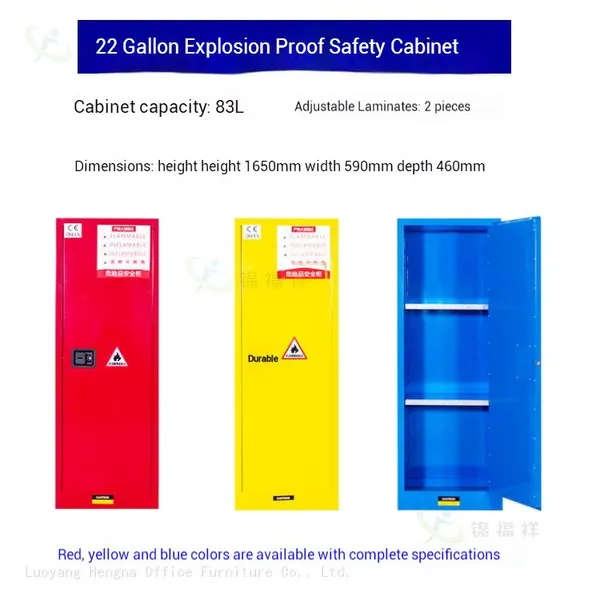
22 Gallon Flammable Storage Cabinet | NFPA 30 Compliant | Galvanized Shelves | 590mm Wide | Yellow — Compact Compliance For Tight Lab Spaces

Product Spotlights



Related Products
-
 Corrosive Acid Storage Cabinet | CE OSHA Certified | Grounding Wire | 3-Point Locking | Blue | 1650mm — Acids Deserve Their Own Fire BarrierUS$ 60 - 700MOQ: 5 Combos
 -
Combustible Liquid Storage Cabinet | Ships Assembled | Dual Lock Security | Red | 1650mm — Combustibles Need Their Own Red CabinetUS$ 60 - 700MOQ: 5 Combos
-
45 Gallon Double Wall Flammable Cabinet | 40mm Fire Barrier — Built to Contain Flames and FumesUS$ 60 - 700MOQ: 5 Combos
-
45 Gallon Flammable Safety Cabinet — OSHA NFPA Compliant, Built for Shops That Actually Get InspectedUS$ 60 - 700MOQ: 5 Combos
-
Lithium Battery Fire Safety Cabinet for EV Plants — FCL384 Fire-Rated Storage With Custom OEMUS$ 60 - 700MOQ: 5 Combos
22 Gallon Flammable Storage Cabinet | NFPA 30 Compliant | Galvanized Shelves | 590mm Wide | Yellow — Compact Compliance For Tight Lab Spaces
Lab space is always tight. Compliance is not negotiable.
The most expensive thing in a lab isn't the equipment — it's the square footage.
Twenty square meters floor to two analyzers, a workbench, and a fume hood. You're out of wall space before you know it. But storing alcohol, acetone, and solvents on open shelves isn't an option — OSHA 1910.106 and NFPA 30 both require flammable liquids to be stored in dedicated safety cabinets.
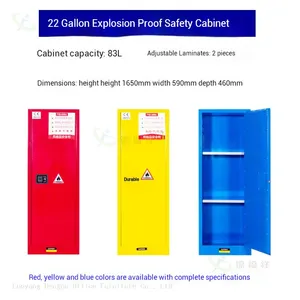
This 22-gallon safety cabinet was designed for exactly this problem. Just 590mm wide — narrow enough to slide under a standard lab bench or fit between equipment gaps. No floor space sacrificed. No aisle blocked. All the safety features you need, in a footprint that works where others won't.
Specifications
| Parameter | Value |
|---|---|
| Type | 22 Gallon Flammable Liquid Storage Cabinet |
| Body Material | Cold Rolled Steel, Double Wall Construction |
| Fire Barrier | 40mm Insulated Air Space |
| Color | Yellow (Flammable Liquids) |
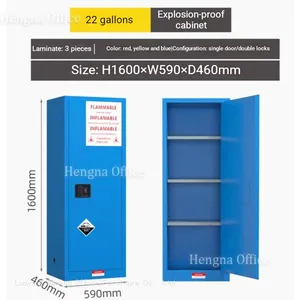
| External Dimensions | H1650 × W590 × D460 mm |
| Internal Dimensions | H1500 × W507 × D370 mm |
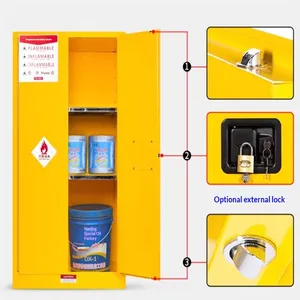
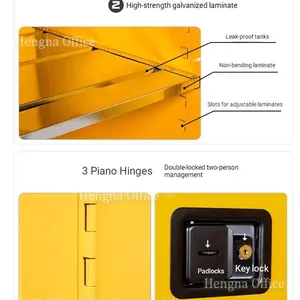
| Shelves | 3 Galvanized Adjustable Shelves |
| Spill Containment | Built-in Sump |
| Locking System | 3-Point Lock (4 locking points), Dual Key Lock |
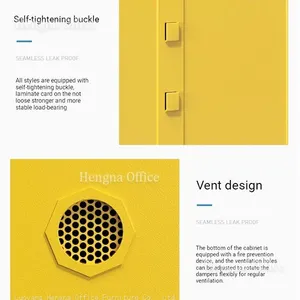
| Vents | Adjustable Flame-Arresting Vents (lower left + upper right) |
| Shipping | Fully Assembled, Ready to Use |
| Compliance | NFPA 30 / OSHA 1910.106 |
Why the 22-Gallon Cabinet Belongs in Your Lab
Three common lab scenarios where this cabinet is the right fit:
Under the benchtop. Most standard lab benches measure 600–750mm deep. The 22-gallon cabinet is 590mm wide — it slides right under without sticking out. At 1650mm tall, it sits flush with the benchtop height. Everyday solvents stay within arm's reach, no bending or searching required.
Alongside analytical instruments. GCs, HPLCs, and spectrometers all need wash solvents and reference standards nearby. This narrow cabinet tucks in beside the instrument frame without blocking airflow or aisle access. Three shelves let you organize: bulk solvents on the bottom, working standards on the middle shelf, infrequent items on top.
In that awkward corner gap. Every lab has them — the space between two cabinets, the wall behind a door, the bay that's too narrow for a standard storage unit. 590mm fits. That one underutilized corner becomes a dedicated flammable storage zone.
Bottom line: The 22-gallon cabinet delivers roughly 83 liters of storage capacity — enough for a typical lab's weekly solvent consumption — without consuming the floor space a larger cabinet would demand.
Safety Construction — Through the Lab Lens
Double Wall Steel + 40mm Insulated Air Space
A lab and a factory have different fire dynamics. Factories deal with large open areas and high fuel loads. Labs have narrower evacuation routes, denser personnel occupancy, and more sensitive equipment in adjacent rooms. The 40mm insulated air gap between the two steel layers isn't meant to replace the sprinkler system or the fire alarm — it buys time. The time between "detect" and "evacuate" might only be 60 to 90 seconds in a lab scenario. That air gap stretches it.
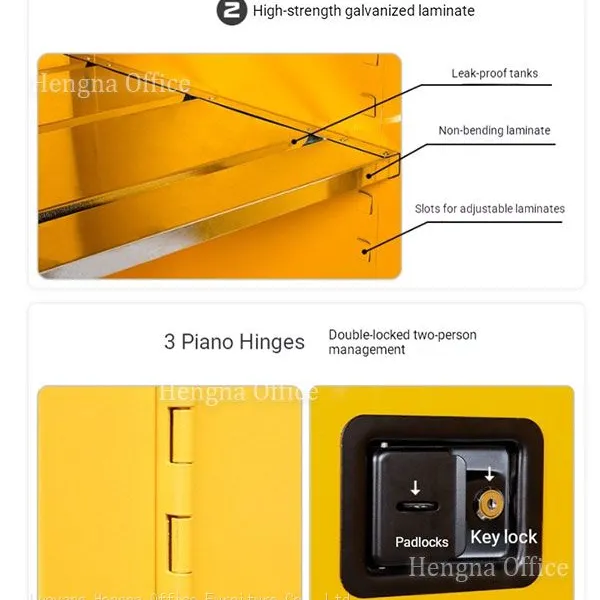
Three Galvanized Adjustable Shelves — More Shelves For A Reason
The 22-gallon cabinet comes with three shelves — more than any other size in the range. That's intentional and it's driven by how labs actually store chemicals.
A factory stores one type of solvent in bulk: 50 drums of acetone, all the same thing. A lab stores dozens of different reagents in small quantities: 500ml of HPLC-grade methanol here, 250ml of isopropyl alcohol there, a few bottles of analytical-grade ethanol on the next shelf over. Three shelves mean you can sort by chemical class — alcohols on one shelf, solvents on another, consumables on a third. Everything stays accessible without digging through a single crowded space. The shelves are galvanized for corrosion resistance, which matters in a lab environment where the air itself carries chemical vapors.
Spill Containment Sump
Lab workers handle containers constantly — pouring, measuring, transferring. A dropped bottle or a loose cap is a realistic scenario, not a rare accident. The recessed sump at the bottom of the cabinet catches the liquid before it reaches the floor. In a lab, that spill containment means the difference between a quick cleanup inside the cabinet and a flooded benchtop area where electrical cords, data cables, and equipment power supplies are running underneath.
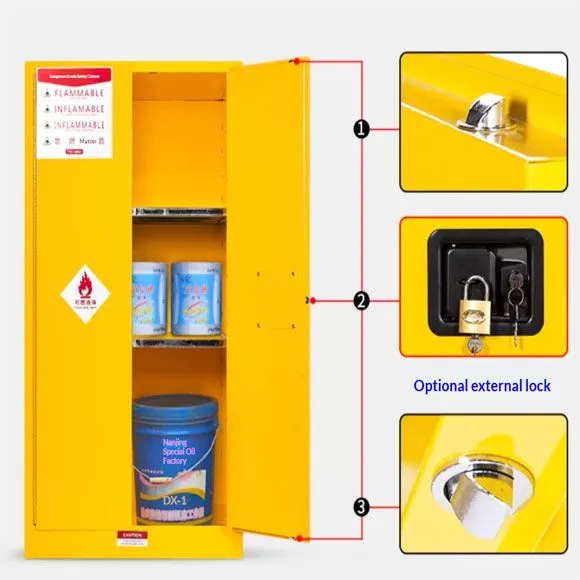
Three-Point Locking + Dual Key Management
Chemical inventory controls are tightening in labs worldwide. The 22-gallon cabinet locks at three points — top, center, and bottom — with four locking surfaces total. The dual key system means two keys are required to open the door, which maps directly to ISO 17025 lab accreditation requirements for chemical storage access control. Keys held by two authorized personnel means every container withdrawal is logged by default.
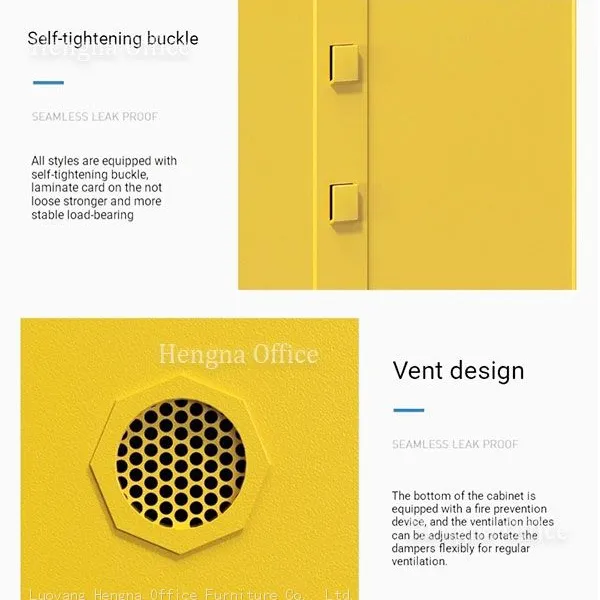
Adjustable Vents + Grounding Wire
NFPA 30 and OSHA 1910.106 spell out two specific requirements that lab safety inspectors check first: proper ventilation and static grounding. The cabinet ships with two adjustable flame-arresting vents (one low, one high, opposite sides) and a grounding lug with wire attached. Connect the wire to your lab's earth terminal — it takes two minutes and it's the single most cost-effective fire prevention measure in the room. Miss this during a lab audit, and it's an automatic non-compliance finding.
Continuous Piano Hinge + Reflective Warning Labels
A lab cabinet door is opened and closed many times per day — every time a sample is prepped, every time a batch is tested. The continuous hinge running the full height of the door prevents sagging and misalignment over years of this use. The reflective warning labels on the door remain visible in low-light or power-failure conditions — a detail that lab emergency drills specifically test for.
NFPA 30 / OSHA 1910.106 Compliance
Every safety cabinet used for flammable liquid storage in a lab setting must meet:
NFPA 30 — National Fire Protection Association standard for flammable and combustible liquids
OSHA 1910.106 — Occupational Safety and Health Administration regulation for flammable liquid storage
Both standards require: dedicated safety cabinet construction, fire-resistance rated steel structure, spill containment capacity, and static grounding. The 22-gallon cabinet is built to these specifications and ships fully compliant.
Three Common Mistakes When Storing Flammables in Labs
Even in well-run labs, the same three mistakes keep showing up during safety audits. Knowing what they are is the first step to avoiding them.
Mistake #1: Using the wrong color cabinet for the wrong chemical class.
Yellow cabinets are for flammable liquids — alcohol, acetone, solvents. Blue is for corrosives — acids, bases. Red is for combustible liquids — paint, ink, oils. Yet a surprising number of labs store acids in yellow cabinets because "that's what we had available." NFPA 30 requires color-coded separation. Mixing chemical classes in the same cabinet not only violates code but also creates reaction risks if containers leak. If you're storing acids, get a blue cabinet. If you're storing flammables and combustibles, keep them in separate cabinets by class.
Mistake #2: Sealing the vents.
Safety cabinet vents exist for a reason: vapor buildup. Even sealed solvent containers breathe — temperature changes cause expansion and contraction, and vapors escape. Over time, the concentration inside the cabinet can climb above the lower explosive limit. Open vents allow natural circulation that keeps vapor levels in check. Some lab managers seal the vents thinking "if it's closed, it's safer." It's not. It's more dangerous. The vents are flame-arresting — they let air pass while preventing flame entry. Leave them open unless your local fire code specifically requires exhaust ducting.
Mistake #3: Skipping the grounding wire.
Static discharge is one of the most common ignition sources in lab fires. A simple action — opening a cabinet door, pouring a solvent from one container to another — can generate enough static charge to ignite a vapor cloud. The grounding wire included with every cabinet is there to dissipate that charge. But many labs either don't install it or don't test it after installation. OSHA 1910.106 is explicit: flammable liquid cabinets must be grounded. A five-minute installation and an annual continuity check are all it takes. Skip this, and you're running your lab without one of the most basic fire prevention measures available.
Getting these three things right — correct color classification, open vents, and proper grounding — eliminates the majority of flammable storage violations found in lab audits. The cabinet itself does the heavy lifting. These three choices make sure it can do its job.
Why Buy From Luoyang Hengna
Luoyang Hengna Office Furniture Co., Ltd. supplies CE and OSHA certified safety storage cabinets for industrial labs, R&D centers, and chemical facilities. Each unit ships fully assembled with a factory inspection report.
Best suited for: Laboratories, analytical testing centers, hospital pathology, teaching labs Delivery: Fully assembled, ready to use upon arrival Custom: OEM support — custom logo printing and packaging available
Lab space is always tight, but compliance isn't optional. Contact us for a spec sheet — every lab layout is different, and we can help confirm the right fit.

Send Inquiry to This Supplier



You May Also Like
-
Flammable Liquid Safety Cabinet for Automotive Factories — FCL384 Fire-Rated, CE Certified, 24h QuoteUS$ 60 - 700MOQ: 5 Combos
-
Paint Mixing Room Cabinet – Fire-Rated Flammable Storage for Auto Body Shops | Stops Paint FiresUS$ 60 - 700MOQ: 5 Combos
-
Formaldehyde & Xylene Cabinet – Fire-Rated Steel Storage for Pathology Labs | Fumes Stay SealedUS$ 60 - 700MOQ: 5 Combos
-
90 Gallon Flammable Liquid Cabinet – Industrial Steel Storage | Self-Latching | Welded SumpUS$ 60 - 700MOQ: 5 Combos
-
Laboratory Furniture| Modern Industrial Metal Safety Cabinet| 12 Gal Chemicals Storage CabinetUS$ 68 - 400MOQ: 2 Combos
-
60Gal/227L Laboratory Acid Chemicals Safety Storage Cabinet Manufacturers You Can TrustUS$ 68 - 400MOQ: 2 Combos
-
60Gal/227L Laboratory Acid Chemicals Safety Storage Cabinet Manufacturers You Can TrustUS$ 68 - 400MOQ: 2 Combos
-
45 Gal Flammable Dangerous Goods Chemical Laboratory Safety Storage CabinetUS$ 68 - 400MOQ: 2 Combos
-
Wholesale Dangerous Goods Safety Storage Cabinets for Laboratory and IndustryUS$ 68 - 400MOQ: 2 Combos
-
Explosion-proof Storage Cabinet for Chemical @Luoyang Hengna Office FurnitureUS$ 68 - 400MOQ: 2 Combos

