








 Contact Platform Support
 Help Center
PTFE Semi-permeable Membrane Fermentation of Organic Fertilizer From Household Waste

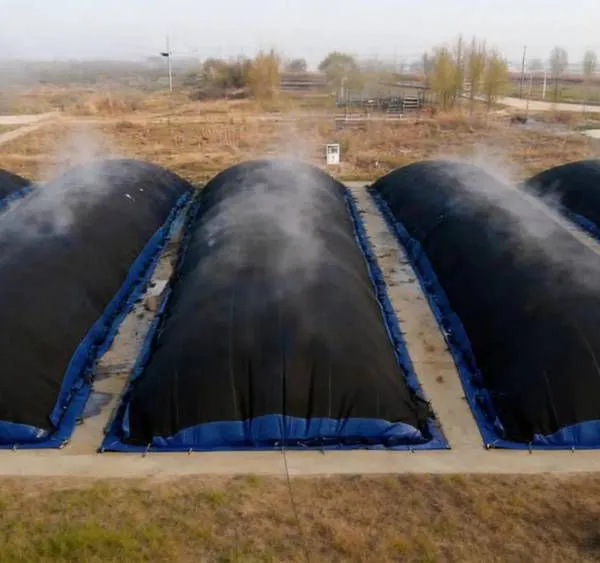
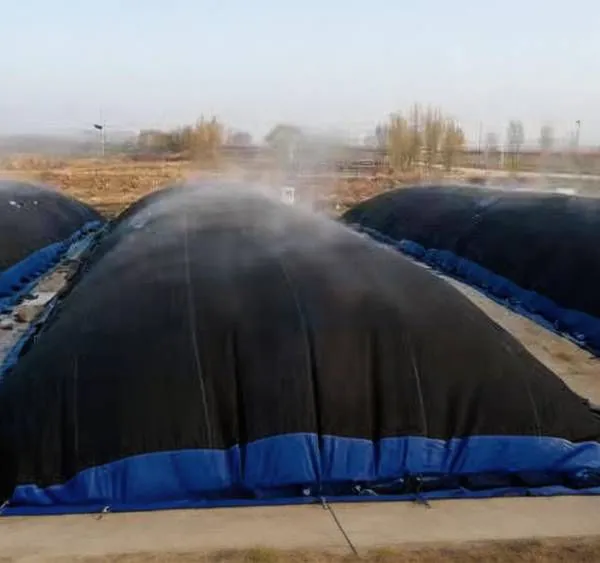
Product Spotlights



Related Products
-
 Aerobic Fermentation of Domestic Waste Using PTFE Semi-permeable MembraneUS$ 5000MOQ: 1 Set
 -
Aerobic Fermentation of Domestic Waste Using PTFE Semi-permeable Membrane of GegoodUS$ 5000MOQ: 1 Set
-
Gegoodtech Aerobic Fermentation of Domestic Waste Using PTFE Semi-permeable MembraneUS$ 5000MOQ: 1 Set
-
Gegoodtech Aerobic Fermentation of Domestic Waste Using PTFE Semi-permeable MembraneUS$ 5000MOQ: 1 Set
-
Aerobic Fermentation of Domestic Waste Using PTFE Semi-permeable Membrane go reUS$ 5000MOQ: 1 Set
I. Company Introduction
Qingdao Jiguang Environmental & Energy Technology Co., Ltd. (hereinafter referred to as Jiguang Technology) was established on January 30, 2019 and is located in Laoshan District, Qingdao. Since its establishment, the company has been committed to the R & D, technical optimization and promotion of China's "membrane-covered fermentation technology". It has successively reached cooperation with nearly 100 enterprises and institutions such as New Hope Liuhe, Yili, Changchun Agricultural Machinery Research Institute, Agricultural Expo Park, Nanjing Tech University, etc., and is responsible for the implementation of projects. During this period, a total of more than 1,200 sets of equipment have been promoted, installed and debugged, and projects in Malaysia and the Philippines have also been implemented. Through nearly 6 years of technical promotion and application, the "membrane-covered fermentation technology" has become a widely accepted aerobic fermentation technology in China. With its technical characteristics of low investment, simple operation, low energy consumption and "zero" maintenance, it has been widely used in China and is being promoted as a key agricultural technology in various places.
Scope of application: Livestock and poultry manure (chicken manure, pig manure, cow manure, duck manure), sludge, domestic waste, straw waste, etc.
System composition: e - PTFE composting membrane ·· Intelligent control system ·· Micro - pressure air supply system ·· Monitoring system
II. Technology Introduction
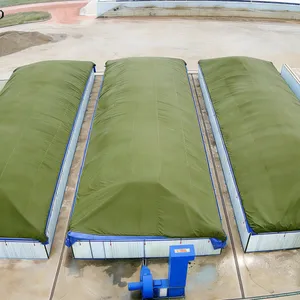
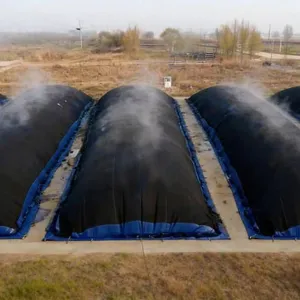
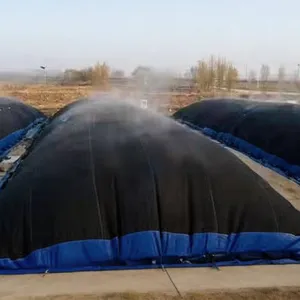
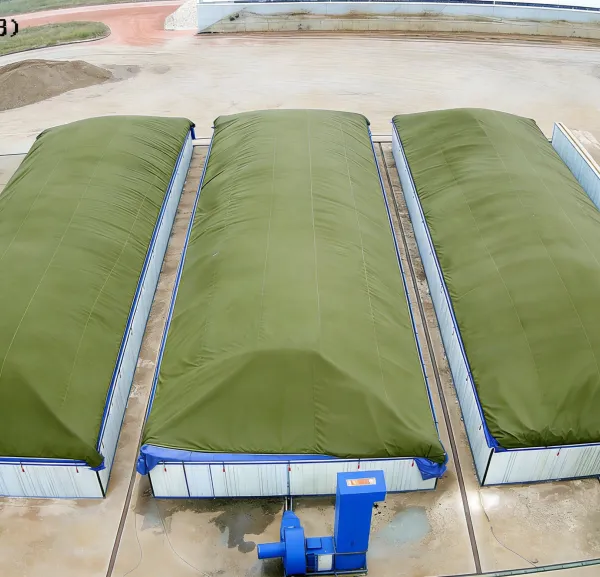
The e - PTFE membrane - covered aerobic composting technology adopted by Jiguang Technology is a process technology that uses a special functional membrane as a covering for the aerobic fermentation treatment of pig manure. The core of this process technology is a functional membrane with special micropores. Its semi - permeable function can achieve a relatively constant climate environment. Under the action of blowing air, a micro - high - pressure inner cavity can be formed in the fermentation body, making the oxygen supply of the pile uniform and sufficient, and the temperature distribution uniform. It creates a suitable environment for aerobic fermentation. Water vapor and carbon dioxide can diffuse out through the microporous structure of the functional membrane, maintaining the air flow balance inside and outside the fermentation pile membrane, ensuring more thorough aerobic fermentation and effectively killing pathogenic microorganisms to ensure the hygienic level of the fermented products.
III. Process Features
1. Environment - friendly, no odor emission.
2. Simple operation, intelligent and unattended.
3. Low energy consumption. It uses low-voltage and low-energy-consuming fans to operate intermittently. It only costs 7 yuan in electricity to ferment one ton of organic fertilizer.
4. "Zero" failure, no need for maintenance, and simple system.
5. High product quality. Through long-time high-temperature fermentation, the organic fertilizer has a high degree of decomposition and good sterilization.
gegood@hotmail.com
+8618866229302
Fermentation of Household Waste Using PTFE Semi-permeable Membrane for Treatment
1. Overview
PTFE semi-permeable membrane aerobic fermentation is an eco-friendly domestic waste disposal technology targeting kitchen-based household waste, the dominant organic fraction of municipal domestic waste. Conventional open compost of household waste is plagued by malodorous leakage, leachate runoff, long decomposing period and seasonal interference from rainfall or low temperature. Covering waste piles with microporous PTFE composite membrane builds a semi-closed fermentation system to realize harmless treatment, volume reduction and resource recycling of organic household waste.
2. Core Working Principle of PTFE Semi-permeable Membrane
The functional layer is expanded PTFE (e-PTFE) with uniform micro-pores (0.1~0.3 μm), compounded with protective base fabric for mechanical strength, featuring selective gas permeability:
Permeable: Small-molecule water vapor, CO₂ produced by microbial aerobic degradation penetrate outward smoothly to drain redundant moisture inside piles and avoid anaerobic rotting.
Barrier: Macromolecular odorous gases (NH₃, H₂S, volatile organic compounds), leachate mist, dust and pathogenic bacteria are trapped inside the membrane cover, blocking odor escape and rainwater infiltration from outside.
Heat preservation: The sealed covering retains metabolic heat generated by microbes, sustaining thermophilic temperature at 55–70 ℃ stably to kill pathogens, weed seeds and parasitic ova inside household waste.
With bottom forced aeration supplying oxygen continuously, aerobic flora dominates the degradation process to avoid putrefactive anaerobic fermentation.
3. Standard Treatment Process
3.1 Pre-treatment of household waste
Sort raw domestic waste to remove inorganic impurities (plastic, glass, metal). Crush leftover fruits, vegetables, food residues, yard trimmings. Blend with straw, sawdust as carbon regulators to adjust moisture to 55%–62% and C/N ratio 25:1~30:1, eliminating excessive water from high-moisture kitchen scraps.
3.2 Pile construction & membrane covering
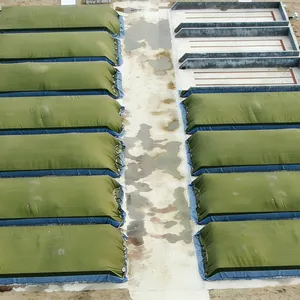
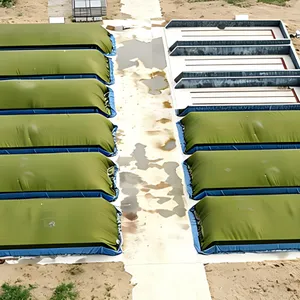
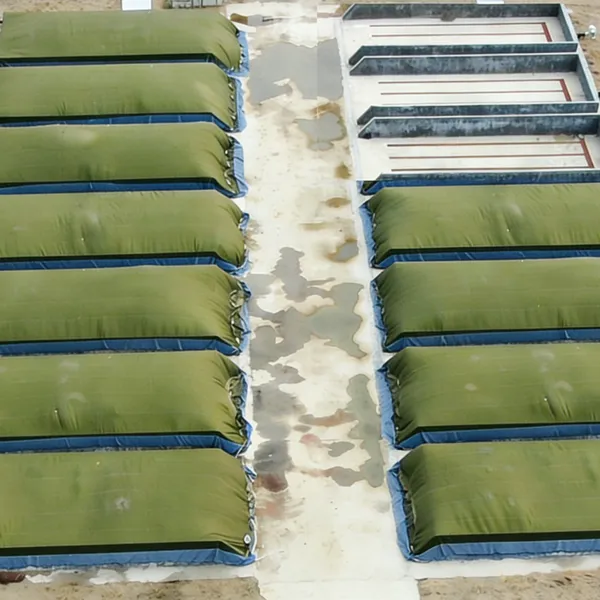
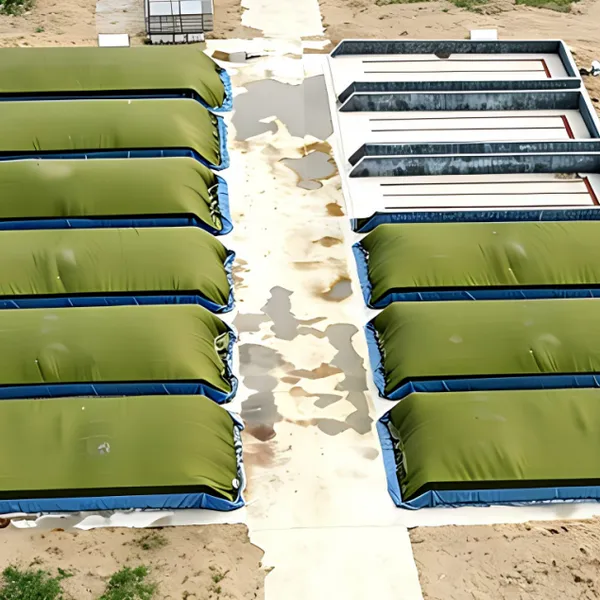
Build strip-shaped fermentation piles on aeration pipeline paving ground. After pile shaping, fully wrap and seal the whole stockpile with PTFE semi-permeable membrane to isolate internal fermentation space from ambient environment.
3.3 Intelligent controlled aerobic fermentation
An automatic aeration system adjusts air volume based on real-time pile temperature, oxygen and humidity data. No frequent mechanical turning required unlike traditional open compost. Normal fermentation cycle: 20–35 days, much shorter than open compost (60–90 days). High-temperature stage lasts over 7 consecutive days to complete sanitation harmlessness.
3.4 Post-processing and resource utilization
After primary fermentation, materials enter ripening phase for further stabilization. Mature substrates can be screened and processed into organic soil, horticulture substrate or commercial organic fertilizer for landscaping, home planting and farmland application; non-recyclable inorganic residues go to centralized landfill.
4. Technical Advantages
Excellent odor & leachate control: PTFE membrane intercepts over 95% of odor emissions; rain cannot seep into piles to generate excess leachate, greatly lowering secondary pollution risk.
Strong climate adaptability: Operate stably in rainy, cold or high-temperature seasons without weather shutdown, suitable for decentralized community waste disposal and centralized waste treatment stations.
Low operating cost: Cancel regular pile-turning work to cut labor and machine expense; PTFE membrane is corrosion-resistant, anti-aging with long service life.
High reduction rate: Aerobic decomposition reduces household waste volume by 40%~60%, easing landfill occupancy pressure.
5. Application Scenarios & Prospect
This technology fits decentralized waste treatment for residential communities, villages, food markets and small domestic waste transfer stations. Under the promotion of waste classification and circular economy policies, PTFE membrane fermentation becomes a mainstream decentralized organic household waste disposal route, realizing waste-to-resource and promoting zero-waste community construction.

Send Inquiry to This Supplier


You May Also Like
-
go re Aerobic Fermentation of Domestic Waste Using PTFE Semi-permeable Membrane go reUS$ 5000MOQ: 1 Set
-
Gegoodtech Cover Aerobic Fermentation of Domestic Waste Using PTFE Semi-permeable MembraneUS$ 5000MOQ: 1 Set
-
Cover Aerobic Fermentation of Domestic Waste Using PTFE Semi-permeable Membrane go reUS$ 5000MOQ: 1 Set
-
go re Cover Aerobic Fermentation of Domestic Waste Using PTFE Semi-permeable MembraneUS$ 5000MOQ: 1 Set
-
Aerobic Fermentation of Domestic Waste Using PTFE Semi-permeable Membrane of Gegood CoverUS$ 5000MOQ: 1 Set
-
Gegoodtech Cover Aerobic Fermentation of Domestic Waste Using PTFE Semi-permeable MembraneUS$ 5000MOQ: 1 Set
-
Ferment Organic Fertilizer From Household Waste Using PTFE Semi-permeable Membrane Gegood CoverUS$ 5000MOQ: 1 Set
-
Ferment Organic Fertilizer From Household Waste Using PTFE Semi-permeable Membrane CoverUS$ 5000MOQ: 1 Set
-
Ferment Organic Fertilizer From Household Waste Using PTFE Semi-permeable Membrane of CoverUS$ 5000MOQ: 1 Set
-
Gegood Ferment Organic Fertilizer Using PTFE Semi-permeable Membrane CoverUS$ 5000MOQ: 1 Set


