








 Contact Platform Support
 Help Center
Shenzhen Packaging Box Customization Manufacturer




Product Spotlights


Related Products
-
 Folding Box Design and Printing Integrated ManufacturerUS$ 6 - 6.4MOQ: 1000 Units
 -
Design, Printing Process and Production of Foreign Trade Gift Box PackagingNegotiableMOQ: 1000 Units
-
Professional Guide to Gift Box Packaging DesignUS$ 2 - 2.6MOQ: 1000 Units
-
Book-shaped Box Packaging Design, Printing Materials, Processes and PrecautionsUS$ 0.85 - 0.89MOQ: 1000 Units
-
Design, Printing, Color, Material, Process and Compliance Precautions for Color Box PackagingNegotiableMOQ: 1000 Units
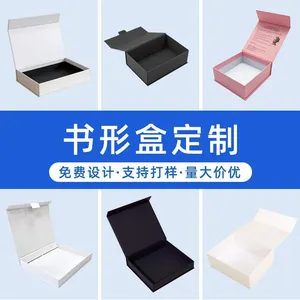
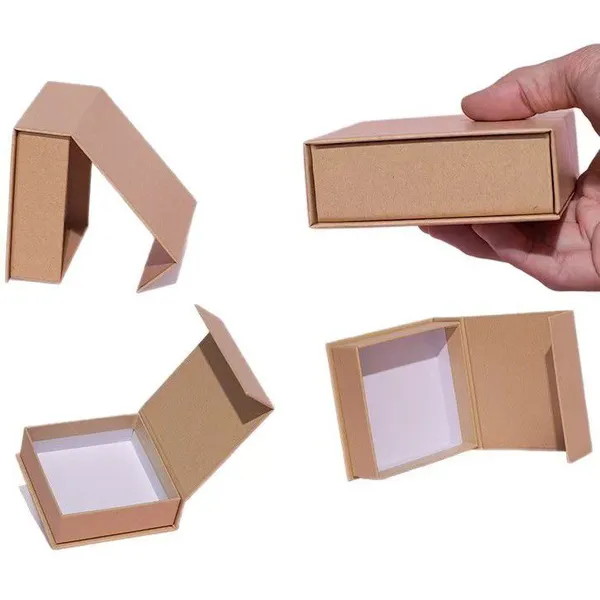
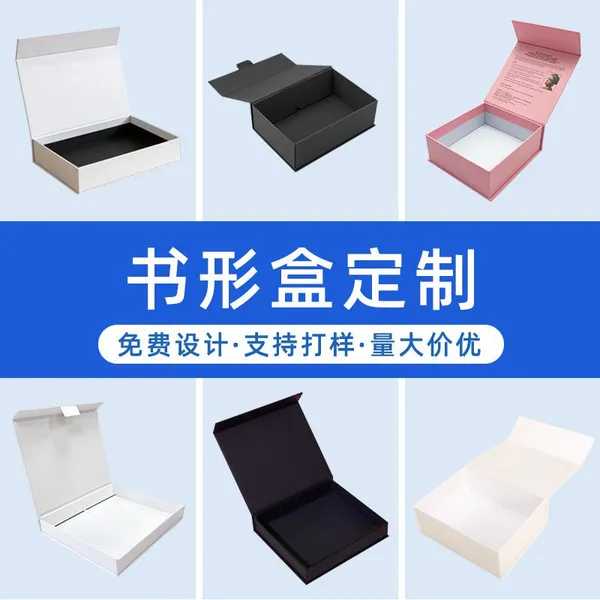
The book-style box, also known as a flip-top book-style gift box or hardcover book-style packaging, is the preferred choice for high-end customization, brand display, cross-border gifts, and premium retail applications in international export packaging. Featuring symmetrical flap design, spine closure mechanism, standardized structure, and luxurious texture, it is widely used in categories such as cosmetics, jewelry, 3C electronics, luxury leather goods, cultural souvenirs, and premium food products. Compared to conventional flat-top boxes or folding color boxes, book-style boxes offer superior protection, ceremonial appeal, and brand communication effectiveness. They not only meet stringent transportation requirements for long-distance shipping (maritime, air, and land transport) but also precisely align with overseas customers' expectations for premium packaging aesthetics and quality – making them one of the most specialized and meticulously designed packaging solutions in international trade. For export companies, implementing book-style boxes requires comprehensive standardization across six critical dimensions: export compliance, cross-border logistics, printing accuracy, material durability, manufacturing precision, and customs clearance safety, to prevent common issues like color discrepancies, edge tearing, deformation, adhesive failure, customs obstacles, and customer rejection.
-
Core Structural Design Specifications for Foreign Trade Book Cases: A book case adopts a hardcover rigid structure, comprising six components—case body, flap, spine connection point, back cover, inner support, and closure mechanism. The design focuses on precise structure, smooth opening/closing, pressure resistance, impact durability, and dimensional compatibility, rather than mere visual aesthetics.
Foreign trade-specific design must strictly adhere to standardized layout requirements: all die pattern drawings must be created as vector files with complete annotations of crease lines, bleed areas, die-cutting edges, bonding lines, and clearance zones; the use of bitmap images for direct layout production is strictly prohibited. For cross-border long-distance transportation, the fit gap between the flap and the box body must be controlled within 0.5 mm to ensure smooth opening/closing while preventing lid displacement or product shaking caused by transport vibrations. The spine connection area serves as the structural core of the entire box and requires reinforced flanges and durable adhesive bonding to prevent fracture or adhesion failure after repeated opening/closing cycles.
In terms of dimensional design, foreign trade book-type boxes must adhere to the principle of prioritizing internal dimensions: first determine the dimensions of the export product in bare packaging, the space occupied by inner padding, and the required moisture-proof cushioning margin; then calculate the outer diameter while reserving sufficient clearance for stacking during overseas storage and container handling. The standard outer diameter tolerance must be strictly controlled within ±0.3 mm to prevent issues such as excessive gaps, stacking collapse, or wasted container space during bulk packaging. Additionally, the design must incorporate reserved areas for barcodes, certification labels, ingredient information, traceability codes, and multilingual warnings, without covering manufacturing processes, creases, or adhesive lines, thereby complying with labeling requirements across various international markets including Europe, the United States, Southeast Asia, and the Middle East.
II. Special Printing Standards and Requirements for Foreign Trade The core printing requirements for foreign trade packaging include cross-border color consistency, batch uniformity, export-friendly environmental compliance, and wear-resistant color retention. All printing processes must differ fundamentally from those used in domestic standard packaging and strictly adhere to overseas customers' visual acceptance criteria.
First, printing must uniformly employ CMYK four-color printing; the use of RGB screen colors for direct output is strictly prohibited. RGB colors are only suitable for design previews and cannot be used for actual printing, as this often leads to significant color discrepancies between online images and physical products for overseas clients, resulting in order rework. For small-batch high-end export orders, additional spot-color printing can be incorporated for brand logos, standard colors, and key visual elements to enhance color purity and recognizability, making it ideal for luxury and beauty export products.
For printing applications, offset printing is the preferred choice for large-volume foreign trade orders due to its stable color reproduction, fine dot density, suitability for large-area solid colors and intricate patterns, and optimal cost-effectiveness. Digital printing is suitable for small-batch samples or quick-response orders, as it eliminates plate-making requirements and offers rapid delivery; however, its color saturation and durability are slightly inferior to those of offset printing, making it unsuitable for mass production.
Foreign trade printing must reserve a standard 3 mm bleed; for localized irregular patterns, this can be extended to 5 mm, completely eliminating issues of exposed white areas or missing edges during cutting. Additionally, a safety margin of 3–5 mm should be maintained, with core text, logos, and barcodes positioned away from die cuts and creases to prevent content damage after die-cutting. Given the high humidity and temperature conditions during maritime transport, environmentally friendly inks resistant to friction, folding, and bleeding must be used to prevent pattern blurring, color fading, or box adhesion after long-distance shipping.
III. Color Control: Key Quality Assurance Aspects for Foreign Trade Exports Color serves as the primary criterion for inspecting export book boxes and is a frequent source of cross-border order disputes. Therefore, a comprehensive color control system covering the entire process—from design to finished product—must be established.
The design team must uniformly employ the internationally recognized Pantone color chart to specify spot colors, with precise color values indicated for the CMYK four-color system. Oral descriptions, screen-based color selection, or vague color determination based on reference samples are strictly prohibited. Prior to mass production, internationally standardized digital or paper-based spot color samples must be provided and confirmed in writing by overseas clients before sample sealing and layout initiation. Three copies of the sample drafts shall be retained—by the foreign trade department, factory quality control team, and client—as documentation for final product inspection.
Color variation control adheres to stringent international standards, with an overall color difference ΔE value ≤ 3 and a ΔE value for the core logo and brand standard colors ≤ 2, fully meeting the quality inspection requirements of overseas supermarkets and brand owners. Additionally, risks associated with cross-border transportation color variations must be mitigated: for matte surfaces and special paper materials, pre-production samples made from identical materials and using the same manufacturing process are required; given prolonged exposure to light and humidity during maritime transport, light-resistant and color-stable inks should be employed to prevent yellowing, color deviation, or fading of the entire shipment upon arrival in the destination country.
Furthermore, it is essential to consider the color preferences of different overseas markets: European and American markets favor low-saturation Morandi tones, minimalist black-and-white schemes, and natural wood colors; Middle Eastern markets prefer bold, luxurious hues such as gold, navy blue, and burgundy; while Southeast Asian markets prefer vibrant, bright colors. Custom designs should align with the target market's aesthetic preferences to enhance product acceptance.
IV. Material Selection for Foreign Trade Book Boxes: Match materials precisely according to export grades. Materials directly determine the box's hardness, stiffness, moisture resistance, transport safety, and cost controllability. Material selection must be strictly tailored based on product positioning, transportation methods, destination country conditions, and environmental requirements, avoiding both excessive use of high-end materials that waste costs and overly thin materials that may cause transport damage. Framework substrate (core load-bearing layer of the box): The framework substrate determines the box's compressive strength. High-density gray board paper is commonly used for international shipments, with thickness and grammage precisely matched to specific transportation requirements: -Economy export: 1.5 mm/1200 g gray board, suitable for lightweight small commodities, routine domestic sales transitioning to exports, and short-distance cross-border transport; offers cost control and uniform shape. -Standard international shipment: 2.0–2.5 mm/1500 g gray board, a versatile choice for best-selling products; provides sufficient hardness, resistance to compression and deformation, and is suitable for all maritime and air transport scenarios—ideal for cosmetics, electronics, and health supplements exports. -Premium luxury category: 3.0–3.5 mm/1800–2000 g gray board, ideal for jewelry, watches, high-end leather goods, and gift sets; delivers a substantial feel and superior texture, aligning with the positioning of premium international brands.
The use of low-density slurry-based plaster boards is strictly prohibited, as these materials tend to soften, deform, or collapse when exposed to moisture, making them completely unsuitable for long-distance cross-border transportation.Paper Material (Print Surface Layer) The paper surface directly impacts printing quality and tactile feel. Mainly used options for international trade include: -157g–200g coated paper: Excellent color reproduction, ideal for full-page color printing and high-definition patterns; offers optimal cost-effectiveness and is suitable for premium export products; -250g–300g white cardstock/dull powder paper: Superior stiffness and a sophisticated matte finish without glare, enhancing brand image; -Special papers (polished paper, textured paper, tactile paper, kraft paper): Suitable for high-end exports with fine texture and unique surface characteristics that highlight quality without complex processing; textured paper is waterproof and scratch-resistant, making it ideal for high-humidity maritime shipping routes; -Food-grade materials: For exporting premium food products and oral health supplements, use food-grade paper and adhesives compliant with GB 4806.8 standards as well as EU FDA and LFGB certifications to meet customs clearance requirements.
Inner Pads and Auxiliary Materials: The inner pads prioritize product protection, utilizing commonly used foreign trade materials such as EVA flocking, pearl cotton, cardstock thermoforming, and wet-pressed pulp; eco-friendly biodegradable pulp pads are particularly compliant with EU and North American environmental regulations. Auxiliary materials primarily include environmentally friendly hot melt adhesives, strong magnetic fasteners, ribbons, and cotton ropes, avoiding inferior or odorous adhesives to prevent customs detention due to environmental or odor concerns in destination countries.
Specialized Foreign Trade Surface Treatments: To ensure export compliance, the book box design enhances packaging quality, but foreign trade treatments must prioritize practicality, avoid transportation issues, and comply with environmental standards—excluding designs that are overly decorative, prone to detachment or scratching.
Basic film coating processes (essential for international trade) include glossy film, matte film, scratch-resistant film, and tactile film – all indispensable for cross-border transportation. Glossy film features vibrant colors, water resistance, and wear resistance; matte film offers a subtle, premium appearance without glare; scratch-resistant tactile film is the preferred choice for high-end international trade, offering fingerprint resistance, wear resistance, and a smooth texture that effectively prevents shipping-related scratches.
-
Hot stamping (gold/silver/colored) is used for brand logos and title text to enhance luxury appeal. Commonly employed colors in international trade include gold, silver, rose gold, and laser embossing. The temperature is strictly controlled between 110–130°C to ensure durable impressions without burrs or detachment. Oxidizing stamping materials are strictly prohibited to prevent rusting and color fading under marine salt spray conditions.
Local UV printing, embossed relief patterns, and embossing techniques: Local UV printing highlights the core visual elements, creating a striking contrast between the matte base and glossy UV finish; embossed relief patterns and embossing employ ink-free processes that are environmentally compliant, offer a premium tactile experience, are suitable for minimalist designs of international brands, and eliminate ink smudging issues.
Foreign Trade Process Restrictions: Avoid using large-area thick-layer adhesive application, fragile heat-sealed diamonds, three-dimensional patching, and similar techniques, as these methods are highly susceptible to detachment, scratching, or damage during container stacking and long-distance transportation, directly leading to customer rejection. All process auxiliary materials must comply with EU REACH regulations and California 65 environmental standards, meeting all export customs clearance requirements.
VI. Key Considerations for Foreign Trade Book Box Production and Shipping 1. Strict compliance with pre-press documentation: All files must be in AI or PDF vector format, including converted curved text, embedded images, CMYK color values, Pantone spot colors, bleed areas, and cutting line markings to prevent character corruption, font loss, or color deviation during overseas printing.Create samples before mass production: All foreign trade orders must include complete mass-production samples covering material, printing, manufacturing process, inner lining, and closure components; batch production may only commence after client approval of the sealed samples. Direct production without prior sample verification is strictly prohibited.
Strictly control environmental protection and customs clearance qualifications: Prioritize the use of eco-friendly soybean-based inks, odorless hot-melt adhesives, and biodegradable materials; proactively obtain material testing reports and environmental certification documents to meet stringent customs inspection requirements in markets such as those of the EU, North America, Japan, and South Korea.
-
Strengthen transportation protection: Use moisture-resistant and heat-shrinkable packaging for finished products; install waterproof honeycomb partitions on outer boxes; and affix warning labels indicating moisture resistance, sun protection, and stacking precautions throughout the container. For maritime shipments along high-humidity routes, additionally apply moisture-proof desiccants to prevent mold growth, adhesive detachment, or deformation of packaging boxes.

Send Inquiry to This Supplier


You May Also Like
-
High-end Premium Box Customization ManufacturerNegotiableMOQ: 1000 Units
-
Customized Manufacturer of Book-shaped Box Hardcover BoxesNegotiableMOQ: 1000 Units
-
Customized Drawer Box ManufacturerUS$ 1.2 - 1.7MOQ: 1000 Units
-
Customized Manufacturer of Cosmetic Packaging BoxesNegotiableMOQ: 1000 Units
-
Customized Manufacturer of Export Packaging Boxes for Foreign TradeNegotiableMOQ: 1000 Units
-
Shenzhen Gift Box Packaging ManufacturerNegotiableMOQ: 1000 Units
-
Manufacturers Specializing in Custom-made Gift Boxes for High-end Electronic ProductsNegotiableMOQ: 1000 Units
-
Shenzhen High-end Drawer Box Custom ManufacturerNegotiableMOQ: 1000 Units
-
Product Packaging Box Gift Box Craftsmanship, Materials, FunctionsUS$ 0.64 - 0.69MOQ: 1000 Combos
-
China Packaging Box ManufacturerUS$ 4.2 - 4.6MOQ: 1000 Units
