








 Contact Platform Support
 Help Center
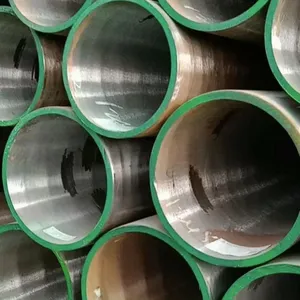
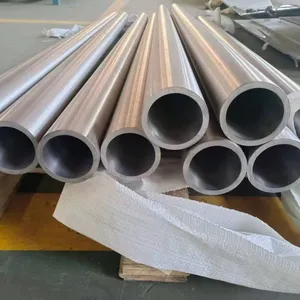
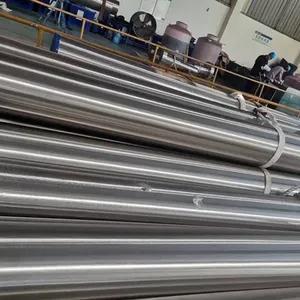
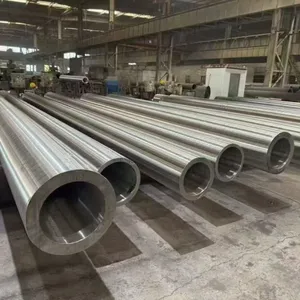
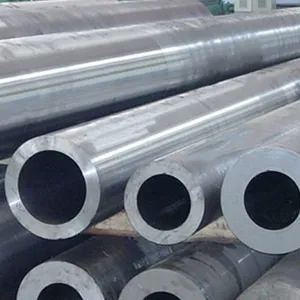
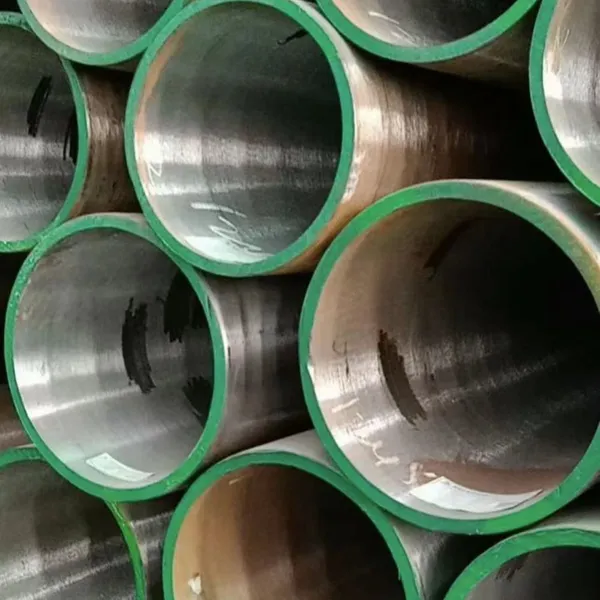
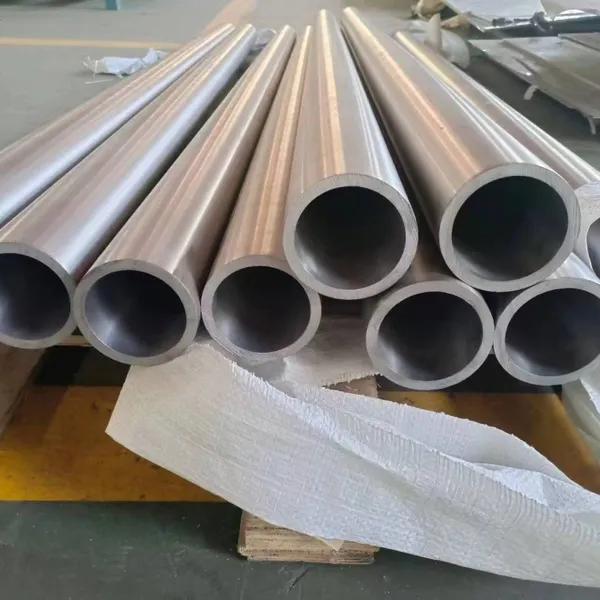
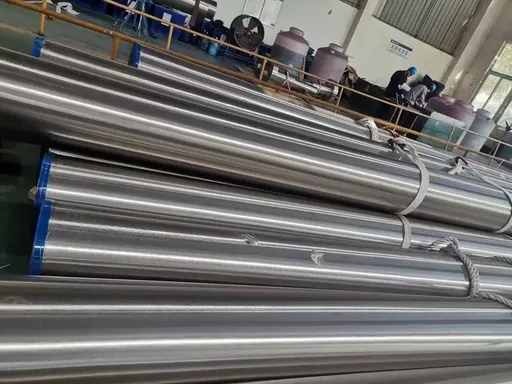
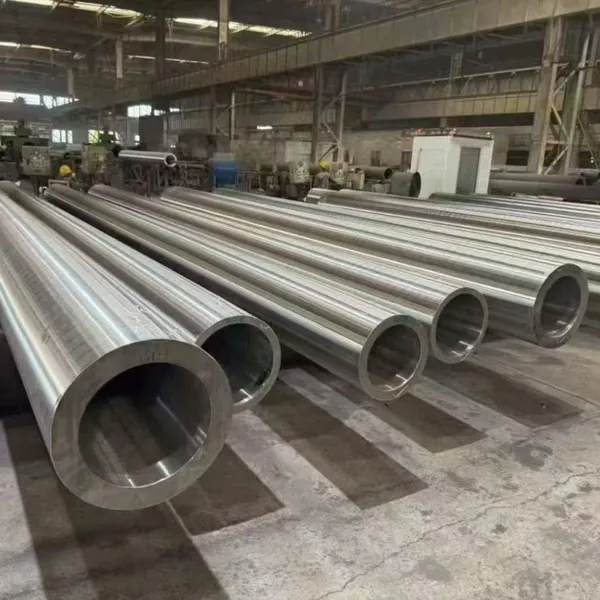
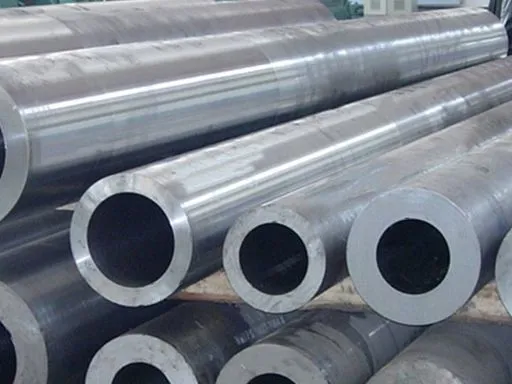
Steel Pipe & Tube & Alloy Steel Pipe,15CrMo、12Cr1MoVG、1Cr5Mo、A335 P11、A335 P22、A335 P91


Related Products
-
 Steel Pipe & Tube & Alloy Steel Pipe,15CrMo、12Cr1MoVG、1Cr5Mo、A335 P11、A335 P22、A335 P91NegotiableMOQ: 5 Metric Tons
 -
Steel Pipe & Tube & Alloy Steel Pipe,15CrMo、12Cr1MoVG、1Cr5Mo、A335 P11、A335 P22、A335 P91NegotiableMOQ: 5 Metric Tons
-
Steel Pipe & Tube & Alloy Steel Pipe,15CrMo、12Cr1MoVG、1Cr5Mo、A335 P11、A335 P22、A335 P91NegotiableMOQ: 5 Metric Tons
-
Steel Pipe & Tube & Alloy Steel Pipe,15CrMo、12Cr1MoVG、1Cr5Mo、A335 P11、A335 P22、A335 P91NegotiableMOQ: 5 Metric Tons
-
Steel Pipe & Tube & Alloy Steel Pipe,15CrMo、12Cr1MoVG、1Cr5Mo、A335 P11、A335 P22、A335 P91NegotiableMOQ: 5 Metric Tons
Alloy Steel Pipe Product Specification
Alloy steel pipes are seamless steel pipes manufactured by adding chromium (Cr), molybdenum (Mo), nickel (Ni), vanadium (V) and other alloying elements to carbon steel. Featuring high strength, high temperature resistance, corrosion resistance and creep resistance, they serve as core materials for industrial high-end piping systems and are widely used in petroleum, chemical, electric power, boiler and other harsh working conditions.
1. Definition & Classification
1.1 Definition
The total content of alloying elements in alloy steel pipes is generally no less than 1%, and up to 5% - 20% for high-performance grades. Alloying optimizes the crystal structure, delivering much better performance than ordinary carbon steel pipes. The product is 100% recyclable and eco-friendly.
1.2 Classification
By Manufacturing Process
Hot-rolled alloy steel pipe: Outer diameter 168mm-660mm with uniform wall thickness, applied to main pipelines in petrochemical and power industries.
Cold-drawn / Cold-rolled alloy steel pipe: Outer diameter 6mm-168mm, featuring high dimensional accuracy and smooth surface, suitable for instrument and hydraulic systems.
Hot-extruded alloy steel pipe: Large outer diameter up to 1200mm, customized for special thick-wall and high-alloy materials.
By Application
Structural alloy steel pipe: Comply with GB/T8162, used for mechanical manufacturing, bridges and building load-bearing structures.
Fluid transportation alloy steel pipe: Comply with GB/T8163, for conveying high-temperature, high-pressure and corrosive media.
High-pressure boiler alloy steel pipe: Comply with GB5310 and ASME SA213, applied to superheaters and reheaters of utility boilers.
High-pressure chemical alloy steel pipe: Comply with GB6479 and GB9948, for chemical reactors and high-temperature pipelines.
2. Material Grade & Chemical Composition
2.1 Main Steel Grades (China & International Standards)
| Standard | Steel Grade | Main Composition | Operating Temperature |
|---|---|---|---|
| GB | 15CrMo | Cr: 0.8-1.2%, Mo: 0.4-0.55% | ≤550℃ |
| GB | 12Cr1MoVG | Cr: 0.9-1.2%, Mo: 0.25-0.35%, V: 0.15-0.3% | ≤580℃ |
| GB | 1Cr5Mo | Cr: 4-6%, Mo: 0.45-0.6% | ≤560℃ (Good resistance to sulfide corrosion) |
| ASTM | A335 P11 | Cr: 1.0-1.5%, Mo: 0.44-0.65% | ≤593℃ |
| ASTM | A335 P22 | Cr: 2.0-2.5%, Mo: 0.9-1.1% | ≤600℃ |
| ASTM | A335 P91 | Cr: 8.0-9.5%, Mo: 0.85-1.05%, V: 0.18-0.25% | ≤650℃ |
2.2 Functions of Main Alloying Elements
Chromium (Cr): Forms dense oxide film to improve high-temperature oxidation resistance and corrosion resistance.
Molybdenum (Mo): Strengthens crystal lattice and greatly enhances high-temperature strength and creep resistance.
Vanadium (V): Refines grain structure, improves toughness, stress rupture strength and fatigue resistance.
Nickel (Ni): Stabilizes austenite structure and improves low-temperature toughness and acid resistance.
3. Key Performance Parameters
3.1 Mechanical Properties (Typical Values)
Tensile Strength: 440-2000MPa, 30%-50% higher than carbon steel pipes
Yield Strength: ≥295MPa (15CrMo), ≥415MPa (P91)
Elongation: ≥20%; Impact toughness at -40℃: ≥34J
Hardness: HB 120-220 (Annealed), HB 200-280 (Quenched & Tempered)
3.2 Heat & Corrosion Resistance
High temperature resistance: Long-term service at 500℃-650℃, peak temperature resistance up to 700℃ temporarily.
Oxidation resistance: Stable Cr₂O₃ protective film forms above 600℃ to prevent wall thickness reduction.
Corrosion resistance: Resistant to sulfide, acid, alkali and oil & gas corrosion. 1Cr5Mo is ideal for high-temperature sulfur-containing environments.
3.3 Dimensional Parameters
Outer Diameter: 6mm-1200mm (Customized up to 2500mm)
Wall Thickness: 1.5mm-100mm (Thin wall: 0.5-5mm; Thick wall: ≥6mm)
Length: Standard fixed lengths 6m, 9m, 12m; customized lengths available
Tolerance: Outer diameter ±0.5%~±1%, Wall thickness ±10%, Length ±5mm
4. Executive Standards
4.1 Domestic Standards
GB/T8162-2008: Seamless steel pipes for structural purposes
GB/T8163-2008: Seamless steel pipes for liquid service
GB5310-2008: Seamless steel pipes for high-pressure boilers
GB6479-2000: Seamless steel pipes for high-pressure chemical fertilizer equipment
GB9948-2006: Seamless steel pipes for petroleum cracking
4.2 International Standards
ASTM A335: Seamless ferritic alloy steel pipes for high-temperature service
ASME SA213: Seamless alloy steel tubes for boilers, superheaters and heat exchangers
DIN 17175: German standard for high-temperature and high-pressure steel pipes
EN 10216-2: European standard for seamless steel tubes for pressure purposes
5. Manufacturing Process
Steel Making: Produced from selected scrap steel and alloy materials via electric furnace or converter smelting, followed by LF/VD refining. Impurity content is strictly controlled (S≤0.02%, P≤0.025%).
Pipe Billet Preparation: Continuous cast or forged round billets, inspected by flaw detection and surface grinding to remove defects.
Forming
Hot rolling: Heat pipe billets to 1100-1250℃, then perform piercing, pipe rolling, sizing and straightening.
Cold drawing: Hot-rolled pipe billets go through pickling, phosphating and saponification, then multi-pass cold drawing for precise dimension control.
Heat Treatment: Annealing, normalizing & tempering, quenching & tempering to eliminate internal stress and optimize mechanical properties.
Finishing: Cutting, chamfering, sandblasting / pickling for rust removal, non-destructive testing (UT/MT/RT), marking and packaging.
6. Surface Treatment & Delivery Condition
6.1 Surface Treatment
Black paint / Anti-rust oil: General anti-corrosion treatment for dry indoor environments.
Sandblasting / Shot blasting: Remove oxide scale and improve adhesion for subsequent coating.
Galvanizing / Nickel plating: Enhance corrosion resistance for humid and mildly corrosive environments.
Polishing: Smooth inner and outer surface for conveying high-purity media in food and pharmaceutical industries.
6.2 Delivery Condition
Annealed: Softened status for further processing such as cold bending and welding.
Normalized & Tempered: Excellent comprehensive mechanical properties for boilers and pressure vessels.
Quenched & Tempered: High strength and toughness for high-pressure and heavy-load working conditions.
7. Application Fields
Power Industry: Superheaters, reheaters and steam pipelines of power station boilers (P11/P22/P91)
Petrochemical Industry: High-temperature cracking furnaces, hydrogenation units and oil & gas transmission pipelines (1Cr5Mo/15CrMo)
Coal Chemical Industry: Gasifier, syngas pipelines and high-pressure heat exchanger tubes
Mechanical Manufacturing: Hydraulic cylinders, high-pressure gas cylinders, bearings and gear blanks
Aerospace Industry: High-temperature structural parts and hydraulic pipelines (High-precision cold-drawn pipes)
Nuclear Power Industry: Cooling pipelines and heat transfer tubes of steam generators in nuclear islands
8. Quality Inspection & Acceptance
Chemical Composition Analysis: Spectral analysis or chemical titration to verify alloy element content.
Mechanical Performance Test: Tensile test, impact test and hardness test to meet standard requirements.
Non-Destructive Testing (NDT)
Ultrasonic Testing (UT): Detect internal cracks and inclusions.
Magnetic Particle Testing (MT): Detect surface and near-surface defects of ferritic steel.
Radiographic Testing (RT): Detect internal pores and slag inclusions.
Dimension & Visual Inspection: Use calipers and micrometers for dimensional measurement; visually check for cracks, scars and folds.
Hydrostatic Test: Keep pressure for 30 seconds under 1.5-2 times of design pressure, no leakage or deformation allowed.
9. Packaging & Transportation
Packaging: Plastic end caps installed at both ends; bundled with steel strips and woven bags to prevent collision and rust.
Storage & Transportation: Store in dry and ventilated warehouses, avoid dampness and rain. Fix pipes firmly during transportation to prevent severe impact.
10. Selection Guide
By operating temperature: Choose 15CrMo for service temperature ≤550℃; 12Cr1MoVG for 550-580℃; P22/P91 for temperature above 600℃.
By pressure grade: Select pipes complying with GB/T8163 for medium and low pressure (≤5.88MPa); GB5310 for high pressure (≥9.8MPa).
By medium property: Adopt 1Cr5Mo for sulfur-containing corrosive media; high-chromium or nickel-based alloy pipes for acid and alkali environments.

Send Inquiry to This Supplier



You May Also Like
-
Steel Pipe & Tube & Alloy Steel Pipe,15CrMo、12Cr1MoVG、1Cr5Mo、A335 P11、A335 P22、A335 P91NegotiableMOQ: 5 Metric Tons
-
Steel Pipe & Tube & Alloy Steel Pipe,15CrMo、12Cr1MoVG、1Cr5Mo、A335 P11、A335 P22、A335 P91NegotiableMOQ: 5 Metric Tons
-
Steel Pipe & Tube & Alloy Steel Pipe,15CrMo、12Cr1MoVG、1Cr5Mo、A335 P11、A335 P22、A335 P91NegotiableMOQ: 5 Metric Tons
-
Steel Pipe & Tube & Alloy Steel Pipe,15CrMo、12Cr1MoVG、1Cr5Mo、A335 P11、A335 P22、A335 P91NegotiableMOQ: 5 Metric Tons
-
Steel Pipe & Tube & Galvanized Steel Pipe,GB/T 3091‑2024、GB/T 13793、GB/T 21835NegotiableMOQ: 5 Metric Tons
-
Steel Pipe & Tube & Galvanized Steel Pipe,GB/T 3091‑2024、GB/T 13793、GB/T 21835NegotiableMOQ: 5 Metric Tons
-
Steel Pipe & Tube & Galvanized Steel Pipe,GB/T 3091‑2024、GB/T 13793、GB/T 21835NegotiableMOQ: 5 Metric Tons
-
Steel Pipe & Tube & Galvanized Steel Pipe,GB/T 3091‑2024、GB/T 13793、GB/T 21835NegotiableMOQ: 5 Metric Tons
-
Steel Pipe & Tube & Galvanized Steel Pipe,GB/T 3091‑2024、GB/T 13793、GB/T 21835NegotiableMOQ: 5 Metric Tons
-
Steel Pipe & Tube & Galvanized Steel Pipe,GB/T 3091‑2024、GB/T 13793、GB/T 21835NegotiableMOQ: 5 Metric Tons


