








 Contact Platform Support
 Help Center
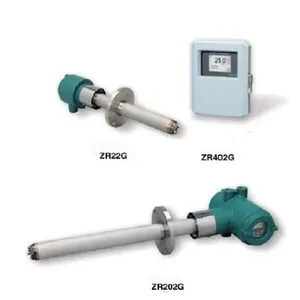
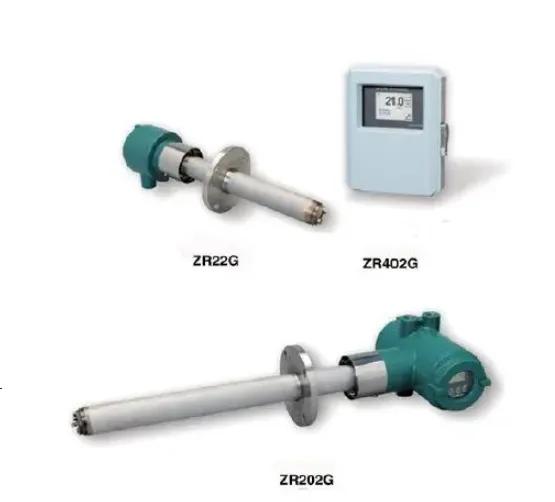
YOKOGAWA ZR22G DIRECT IN SITU ZIRCONIA OXYGEN ANALYZER
Product Spotlights


Related Products
-
 AAI135 YOKOGAWA Analog Input Module AAI135NegotiableMOQ: 1 Piece
 -
Yokogawa Pessure Transmitters EJA110A-DMS4A-22DC/KF1 Original Yokogawa Japan Pessure Transmitters EJA110ANegotiableMOQ: 1 Piece
-
Yokogawa AAI143-H53 AAI143-H00 AAI143-H03 Analog Input Module AAI143 DCS Modules In StockNegotiableMOQ: 1 Piece
-
YOKOGAWA ABSOLUTE PRESSURE TRANSMITTER EJA310A-DMS4A-92DN/KU2 ORIGINAL JAPAN TRANSMITTERNegotiableMOQ: 1 Piece
-
Yokogwa Differential Pressure Transmitter & Absolute and Gauge Pressure TransmittersNegotiableMOQ: 1 Piece
As a trusted supplier in the process instrumentation field, Rossonix is proud to offer the YOKOGAWA ZR22G Direct In-Situ Zirconia Oxygen Analyzer. This analyzer represents a reliable and accurate solution for continuous oxygen measurement in demanding industrial environments. With over a decade of experience since our establishment in 2011 and a strong export footprint across continents from North America to Europe and Asia, we understand the critical need for precise process control. The ZR22G is engineered to deliver stable, long-term performance, helping you optimize combustion efficiency, ensure safety, and reduce operational costs.
The core of the ZR22G analyzer is its advanced zirconium oxide sensor, which provides a direct and rapid response to oxygen concentration changes. Unlike extractive systems, this direct in-situ design minimizes sample handling delays, offering a more representative and real-time measurement. This is crucial for applications where immediate feedback is necessary for control loops. The analyzer is built to withstand harsh conditions, featuring a robust probe construction suitable for insertion directly into process streams like flue gases, furnaces, or kilns.
Key Features and Technical Advantages:
High Accuracy and Stability: The zirconia cell technology ensures precise measurements over a wide range of oxygen concentrations, contributing to consistent process quality.
Fast Response Time: The in-situ measurement principle eliminates the lag associated with sample transport lines, allowing for quicker control adjustments.
Robust Construction: Designed for durability in high-temperature and corrosive environments, reducing maintenance frequency and costs.
Low Maintenance Requirements: The sensor is known for its longevity and stability, requiring less calibration and intervention compared to other technologies.
Versatile Applications: Ideal for combustion control in boilers, heaters, and industrial furnaces, as well as for process monitoring in chemical plants and incinerators.
Easy Integration: Provides standard output signals for seamless connection to Distributed Control Systems (DCS), Programmable Logic Controllers (PLC), or data loggers.
The technical specifications of the YOKOGAWA ZR22G can be tailored to specific process needs. Below is a general overview of typical configurable parameters:
| Parameter | Description / Typical Range |
| Measurement Principle | Zirconium Oxide Electrochemical Cell |
| Measurement Range | Widely customizable (e.g., 0-25% O2 common) |
| Probe Insertion Length | Available in various lengths to suit duct or stack dimensions |
| Process Temperature | Compatible with high-temperature gases; specific limits depend on probe model |
| Output Signals | Analog (4-20mA) and/or digital communication options |
| Power Supply | Standard voltages available (e.g., 100-240V AC) |
| Enclosure | Industrial-grade housing for protection |
Implementing the ZR22G analyzer brings tangible benefits to your operation. It enables precise control of air-fuel ratios, leading to optimal combustion efficiency. This directly translates to significant fuel savings and a reduction in greenhouse gas emissions (like NOx), supporting both economic and environmental goals. Furthermore, by preventing overly rich or lean conditions, it helps protect equipment from corrosion or damage and enhances overall process safety. The reliability of the YOKOGAWA design minimizes unplanned downtime, ensuring continuous production.
Rossonix stands behind the quality of the products we supply. Our operations are guided by a commitment to quality management, and we facilitate the supply of instruments from reputable manufacturers. With an annual export value in the range of US$5-10 Million and a team of 11-50 dedicated professionals, we have established a robust logistics network. We ship efficiently from major ports including Shenzhen and Hong Kong, serving a diverse global market that spans North America, Europe, Asia, and beyond. This global reach and experience mean we can reliably support your procurement needs. Choose the YOKOGAWA ZR22G for a dependable, accurate, and efficient solution to your oxygen analysis challenges. Contact us today to discuss your specific application requirements and to receive detailed configuration support.
Frequently Asked Questions (FAQ)
Q1: What is the main advantage of a direct in-situ analyzer like the ZR22G over an extractive system?
A: The primary advantage is response time. An in-situ analyzer measures oxygen directly within the process stream, providing a real-time reading. Extractive systems require pumping a gas sample to a remote analyzer, which introduces a time delay and potential for sample conditioning issues, making in-situ ideal for fast control loops.
Q2: In what types of applications is the ZR22G most commonly used?
A: It is extensively used in applications involving combustion processes. This includes monitoring and controlling oxygen levels in the flue gas of industrial boilers, process heaters, furnaces (for steel, glass, ceramics), and waste incinerators to optimize efficiency and emissions.
Q3: How does the zirconia sensor work, and what does it require to function?
A: The sensor uses a zirconium oxide electrochemical cell that becomes conductive at high temperatures. It generates a voltage signal based on the difference in oxygen partial pressure between the process gas and a reference gas (usually air). Therefore, it requires heating to an elevated operating temperature (typically above 600°C) to function, which is integrated into the probe design.
Q4: What is the typical lifespan of the zirconia sensor, and how often does it need calibration?
A: Zirconia sensors are known for their durability. With proper installation and in suitable applications, the sensor element can last for several years. Calibration frequency depends on the application severity but is generally less frequent than other technologies; it might be recommended on a semi-annual or annual basis to ensure ongoing accuracy.
Q5: Can the ZR22G analyzer handle wet or corrosive gas streams?
A: The standard probe is designed for typical combustion flue gases. For applications with highly corrosive components (e.g., high sulfur, acids) or significant moisture/condensation, special probe materials or configurations (like filters or protective shrouds) may be required. It's important to discuss your specific gas composition during the selection process.
Q6: What kind of output signals and communication protocols does it support?
A: The analyzer typically provides standard analog outputs like a 4-20mA signal proportional to the oxygen concentration. Many models also offer digital communication options for integration with modern plant networks, which can be specified based on your system requirements.
Q7: Is the installation complex, and what utilities are needed at the mounting point?
A: Installation involves inserting the probe into a pre-installed mounting flange or boss on the duct/stack. The main utilities required are electrical power for the analyzer and heater. Compressed air for reference air may be needed for certain configurations. Proper installation following the manufacturer's guidelines is key for optimal performance.
Q8: Do you provide technical support for installation and commissioning?
A: As your supplier, Rossonix can provide detailed installation manuals and product documentation. For complex installations, we can facilitate access to technical guidance. Our role is to ensure you receive the correct product and information for a successful application.

Send Inquiry to This Supplier


You May Also Like
-
YASKAWA A1000 Inverter CIMR-AC4A0414AAA 185kWNegotiableMOQ: 1 Piece
-
YOKOGAWA Gauge Pressure Transmitter EJA530A-DCS4N-02DENegotiableMOQ: 1 Piece
-
Yokogawa Model VF701 Style S1 Net Interface CardNegotiableMOQ: 1 Piece
-
Yokogawa SCP451-53 Processor Module Yokogawa SCP451-53NegotiableMOQ: 1 Piece
-
YOKOGAWA EJA120E Draft Range Differential Pressure TransmitterNegotiableMOQ: 1 Piece
-
SCP401-11 Processor Module YOKOGAWA SCP401-11 ProcessorNegotiableMOQ: 1 Piece
-
ORIGINAL YOKOGAWA EJA110A DIFFERENTIAL PRESSURE TRANSMITTERNegotiableMOQ: 1 Piece
-
EJA118 Diaphragm Sealed Differential Pressure TransmittersNegotiableMOQ: 1 Piece
-
Yokogawa Temperature Transmitters YTA110 YTA310 YTA320NegotiableMOQ: 1 Piece
-
Zirconia Oxygen/Humidity AnalyzerNegotiableMOQ: 1 Piece


