








 Contact Platform Support
 Help Center
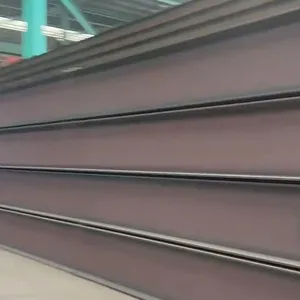
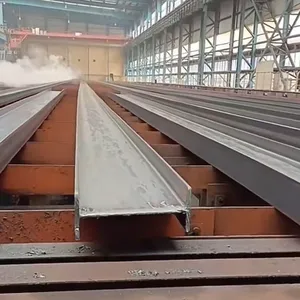
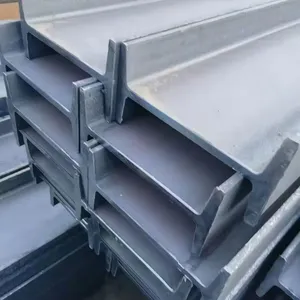
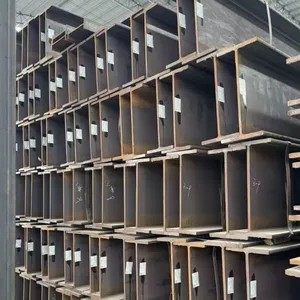
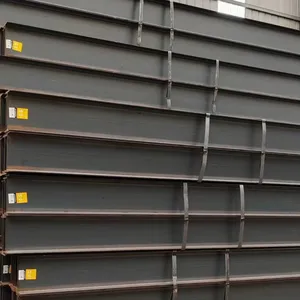
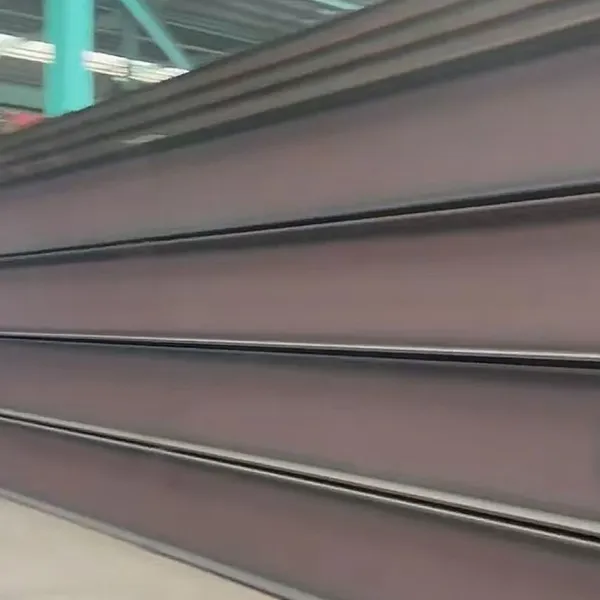
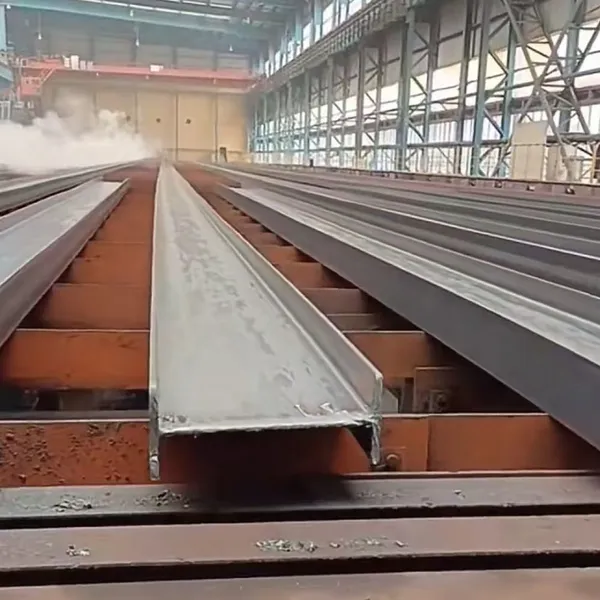
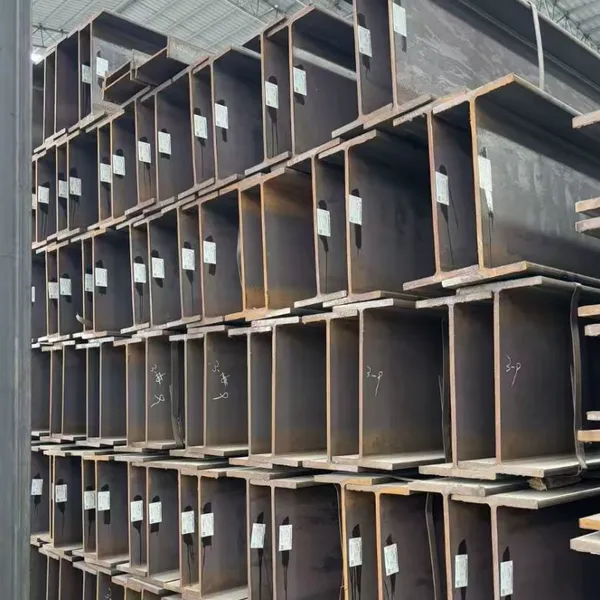
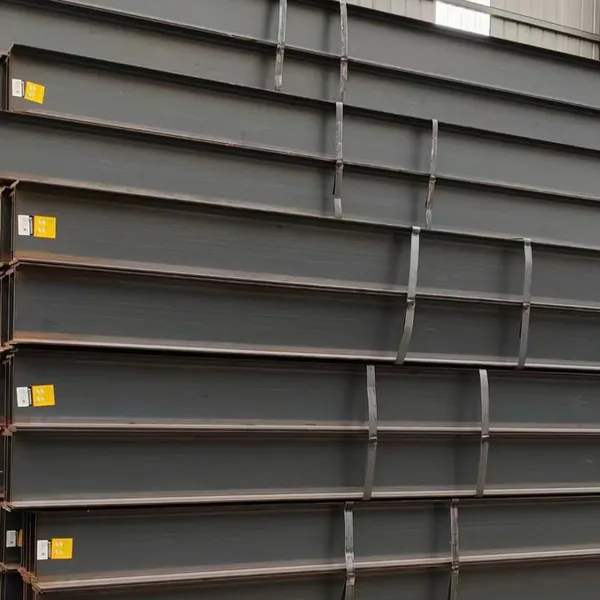
High Frequency H Beam & H Beam,GB/T 11263-2017、S235JR、S355JR


Related Products
-
 High Frequency H Beam & H Beam,GB/T 11263-2017、S235JR、S355JRNegotiableMOQ: 5 Metric Tons
 -
Flat Steel ,Galvanized Flat Steel,Q235B, Q355B, 10#, 20#, 45#,NegotiableMOQ: 2 Metric Tons
-
Steel Angle & Angle Steel In Stock,Q235B、Q355BNegotiableMOQ: 5 Metric Tons
-
Flat Steel ,Flat Steel、- Q235B - Q355B - S235JR - S355JR - A36 - SS400NegotiableMOQ: 2 Metric Tons
-
Steel Angle & Angle Steel In Stock,Q235B、Q355BNegotiableMOQ: 5 Metric Tons
Detailed Description of H-Beam Products
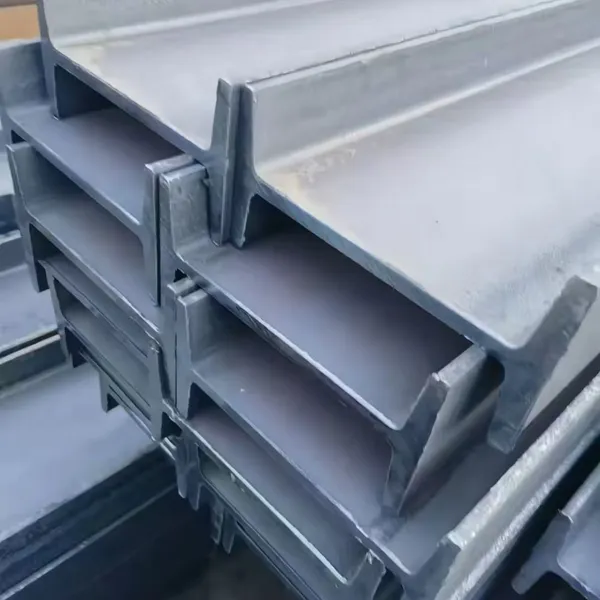
H-beam is an efficient and economical section steel with an "H"-shaped cross-section, composed of a web and upper and lower flanges. It gets its name because its cross-sectional shape is highly consistent with the English letter "H". As one of the most commonly used core profiles in steel structure engineering, H-beam is widely used in various construction, engineering and industrial fields by virtue of its reasonable cross-sectional mechanical design, excellent load-bearing performance and convenient processing and installation characteristics, and is an indispensable key material in the modern steel structure system. Delivery cycle: 5-7 days.
I. Core Definition and Structural Characteristics of the Product
The core structure of H-beam consists of three parts: parallel flanges on both sides (upper flange and lower flange) and a vertical web in the middle. The three are integrally formed by welding or hot rolling process to form a symmetrical and uniform cross-sectional structure. Compared with traditional I-beams, H-beams have wider flanges, thinner webs and larger section moment of inertia. Under the same weight, their bending resistance, shear resistance and compression resistance are better, which can effectively reduce material loss and realize the engineering demand of "light weight and high strength".
Its core structural advantages are reflected in: the flanges bear longitudinal pressure and tension, the web mainly bears shear force, the cross-section division of labor is clear, and the mechanical performance is balanced. The flange width, web thickness and cross-section height can be flexibly adjusted according to engineering needs to adapt to different load-bearing scenarios.
II. Product Classification (By Production Process & Standard)
(I) Classification by Production Process
Hot-Rolled H-Beam: Formed in one time by high-temperature hot rolling process, it has regular cross-sectional size, smooth surface, uniform internal grain structure and stable mechanical performance, and can be directly used without secondary processing. It is characterized by high production efficiency and low cost, and is suitable for large-batch and standardized engineering scenarios. It is currently the most widely used type of H-beam in the market.
Welded H-Beam: Welded by steel plates (flanges and webs) through submerged arc welding, gas shielded welding and other processes, it can be customized to any cross-sectional size according to actual engineering needs (especially large-size and non-standard sizes), with extremely strong flexibility. It is characterized by good adaptability and can meet the personalized needs of special projects, but the production cycle is relatively long and the cost is slightly higher than that of hot-rolled H-beams.
(II) Classification by Implementation Standard
GB Standard H-Beam: Implements GB/T 11263-2017 standard, which is a commonly used standard in domestic engineering. Its cross-sectional size, material and mechanical performance all comply with domestic construction and engineering specifications, and it is suitable for most domestic steel structure projects, such as factories, office buildings, bridges, etc.
European Standard H-Beam: Implements EN 10025 standard (such as S235JR, S355JR materials). Its cross-sectional design focuses more on light weight and corrosion resistance, and it is widely used in export projects, foreign-related projects and high-end scenarios with high requirements for steel performance.
Other Standards: According to project needs, other international standard H-beams such as American standard and Japanese standard can be provided to meet the engineering specification requirements of different countries and regions.
III. Core Materials and Specification Parameters
(I) Core Materials
The materials of H-beam are mainly carbon structural steel and low-alloy high-strength structural steel. Different materials correspond to different mechanical properties and adapt to different load-bearing scenarios. The commonly used materials are as follows:
Carbon Structural Steel: The representative material is Q235B, which has moderate strength, good toughness and low cost. It is suitable for scenarios bearing medium loads, such as ordinary factories, civil buildings, support structures, etc., and is currently the most widely used H-beam material.
Low-Alloy High-Strength Structural Steel: The representative material is Q355B (formerly Q345B). Compared with Q235B, it has higher strength and better corrosion resistance, and is suitable for scenarios bearing large loads and complex working conditions, such as high-rise buildings, bridges, heavy equipment supports, port machinery, etc.
Other Materials: According to needs, high-strength materials such as S235JR, S355JR (European standard), Q450, Q550 can be provided, as well as special materials after galvanizing and anti-corrosion treatment to improve the corrosion resistance and service life of the product.
(II) Specification Parameters
The specification of H-beam is expressed as "height × width × web thickness × flange thickness" (unit: mm). The conventional specification range is as follows, and special specifications can be customized according to needs:
Section Height (H): 100mm - 1000mm
Flange Width (B): 50mm - 500mm
Web Thickness (t1): 4mm - 30mm
Flange Thickness (t2): 6mm - 50mm
Length: Conventional 6m, 9m, 12m, and custom fixed-length can be made according to engineering needs (up to 18m)
Supplementary Note: The theoretical weight of H-beam can be calculated according to the cross-sectional size (unit: kg/m). A slight deviation is allowed in the actual weight, and the deviation range meets the requirements of the corresponding standard.
IV. Core Characteristics and Advantages of the Product
Excellent Mechanical Performance: Reasonable cross-sectional design, strong bending resistance, shear resistance and compression resistance. Under the same weight, the load-bearing capacity is far superior to traditional profiles such as I-beams and channel steels, which can effectively reduce the structural dead weight and reduce the engineering material consumption and cost.
Convenient Processing and Installation: The cross-section is regular, and it can be directly cut, welded, drilled and other processing without complex pre-treatment; it can be fixed by bolt connection or welding during installation, with high construction efficiency and short engineering cycle.
Wide Application Range: It can be flexibly adapted to different scenarios according to process, material and specification. Whether it is civil buildings, industrial factories, bridges, tunnels or heavy equipment, it can meet the load-bearing and structural needs.
Outstanding Economy: Hot-rolled H-beams are mass-produced with low cost; welded H-beams can be customized in size to reduce material waste, which can reduce the comprehensive engineering cost as a whole, and have both practicality and economy.
Strong Expandability: It can be treated by galvanizing, painting, anti-corrosion coating, etc., to improve corrosion resistance and oxidation resistance, and is suitable for humid, open-air and highly corrosive environments (such as ports, chemical plants, etc.) to extend the service life.
V. Main Application Scenarios
(I) Construction Field
As the core profile of steel structure buildings, it is widely used in: high-rise building frames, office buildings, shopping malls, convention and exhibition centers, civil residences (steel structure residences), factories, warehouses, etc., undertaking the main load-bearing and frame support functions, especially suitable for large-span and large-space architectural design.
(II) Engineering Field
Suitable for various municipal engineering and transportation engineering, such as: bridge main beams, pier supports, tunnel supports, highway guardrails, urban rail transit platform structures, etc., which can bear complex loads and harsh working conditions.
(III) Industrial Field
Used for heavy equipment supports, mechanical manufacturing bases, workshop production line frames, port crane structures, chemical equipment supports, etc., adapting to high-strength and high-stability industrial needs.
(IV) Other Scenarios
It can also be used for temporary facilities (such as scaffolding, construction supports), landscape engineering (such as landscape corridors, steel structure sculptures), container skeletons, etc., covering multiple industries.
VI. Product Quality Standards and Inspection
The H-beams produced by our company strictly follow the corresponding national standards (GB/T 11263-2017) or international standards (EN 10025, etc.). Each batch of products has undergone strict inspection. The inspection items include: cross-sectional size deviation, surface quality (no cracks, pores, inclusions and other defects), mechanical properties (tensile strength, yield strength, elongation), chemical composition, etc., to ensure that the product quality meets the engineering use requirements. Each batch of products is provided with a quality inspection report.
VII. Storage and Transportation Notes
Storage: It should be placed in a dry, ventilated and flat site to avoid moisture, rain and exposure to prevent steel rust; when stacking, it should be placed separately by specification and material, and the stacking height should not be too high to avoid bending deformation.
Transportation: Use flatbed trucks for transportation. When stacking, use skids to separate to prevent collision and scratch on the surface; do a good job in rainproof and moisture-proof measures during long-distance transportation to ensure that the products are intact when they arrive at the site.
This product can provide customized specifications, materials and surface treatment services according to customer needs, and fully cooperate with customers to complete engineering adaptation and selection, ensuring that the products accurately match the project needs and provide reliable material support for various steel structure projects.

Send Inquiry to This Supplier



You May Also Like
-
Steel Wire,Binding WireNegotiableMOQ: 2 Metric Tons
-
Steel Angle & Angle Steel In Stock,Q235B、Q355BNegotiableMOQ: 5 Metric Tons
-
Steel Angle & Angle Steel In Stock,Q235B、Q355BNegotiableMOQ: 5 Metric Tons
-
Flat Steel & Custom Size Flat Bar,Q235A、Q235B、Q355A、Q355B、Q355CNegotiableMOQ: 5 Metric Tons
-
Flat Steel & Custom Size Flat Bar,Q235A、Q235B、Q355A、Q355B、Q355CNegotiableMOQ: 5 Metric Tons
-
Flat Steel & Custom Size Flat Bar,Q235A、Q235B、Q355A、Q355B、Q355CNegotiableMOQ: 5 Metric Tons
-
Flat Steel & Custom Size Flat Bar,Q235A、Q235B、Q355A、Q355B、Q355CNegotiableMOQ: 5 Metric Tons
-
Steel Wire & Common Steel Wire,GB/T 343-2015、GB/T 4357-2009NegotiableMOQ: 5 Metric Tons
-
Steel Wire & Common Steel Wire,GB/T 343-2015、GB/T 4357-2009NegotiableMOQ: 5 Metric Tons
-
Steel Wire & Common Steel Wire,GB/T 343-2015、GB/T 4357-2009NegotiableMOQ: 5 Metric Tons


