








 Contact Platform Support
 Help Center
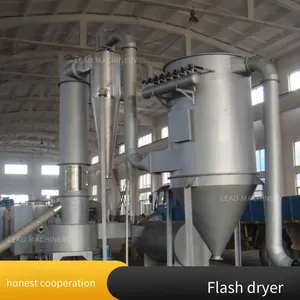
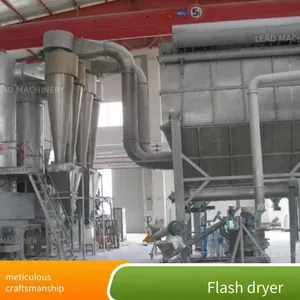
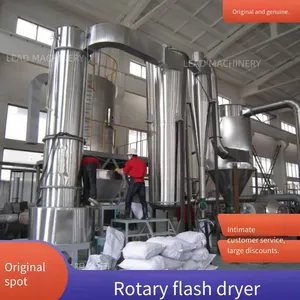
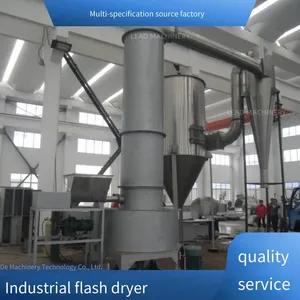
Calcium Carbonate Rotary Flash Dryer, Lide Machinery, Professional Manufacturer
Product Spotlights


Related Products
-
 Starch Rotary Flash Dryer, Special Flash Drying Equipment for StarchNegotiableMOQ: 0 Unit
 -
Strain Powder Rotary Flash Dryer, High - Efficiency Production, Stable OperationNegotiableMOQ: 0 Unit
-
Bentonite Rotary Flash Dryer, Quality Assurance From Original ManufacturerNegotiableMOQ: 0 Unit
-
Konjac Polysaccharide Centrifugal Spray Dryer, Health Product Centrifugal Spray DryerNegotiableMOQ: 0 Unit
-
Flash Dryer for Refractory Materials, Professionally Designed, Quality GuaranteedNegotiableMOQ: 0 Unit
General description of Spin flash dryer:
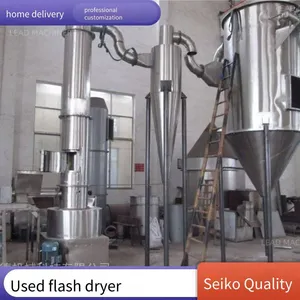
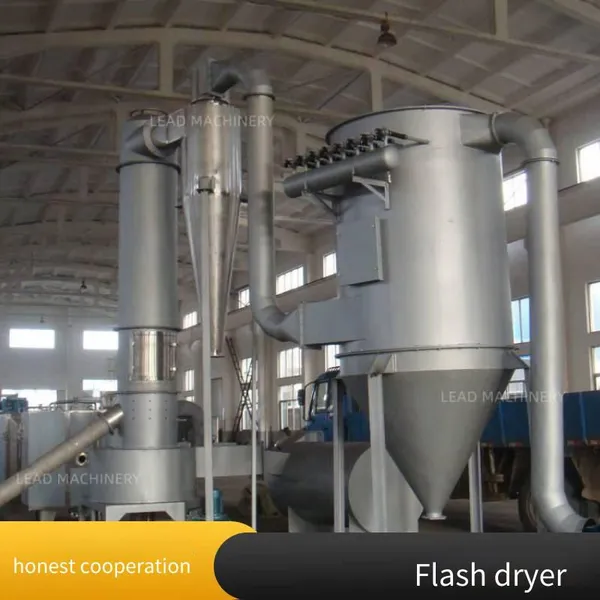
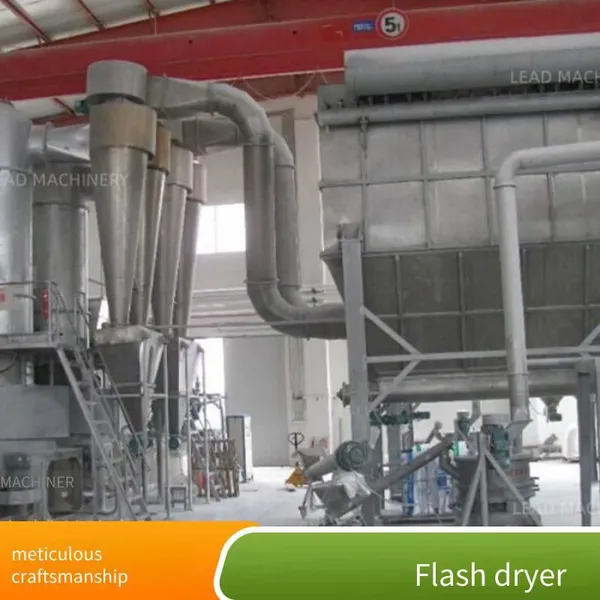
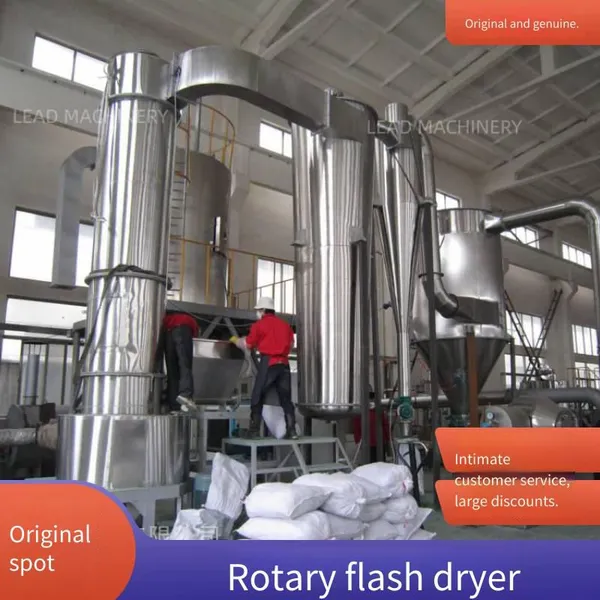
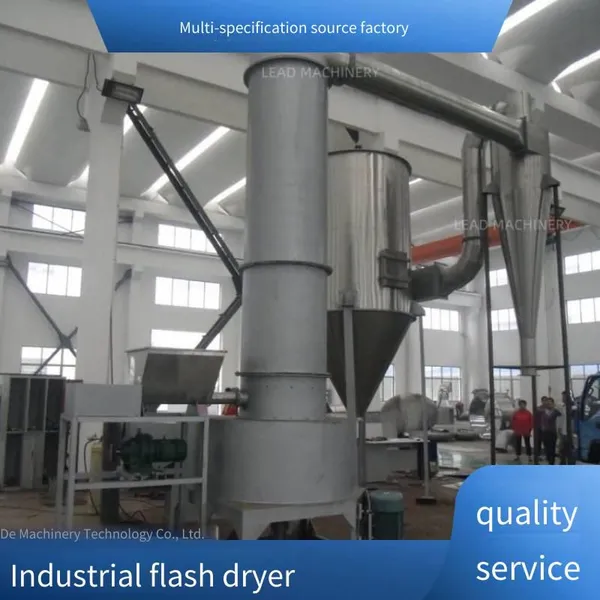
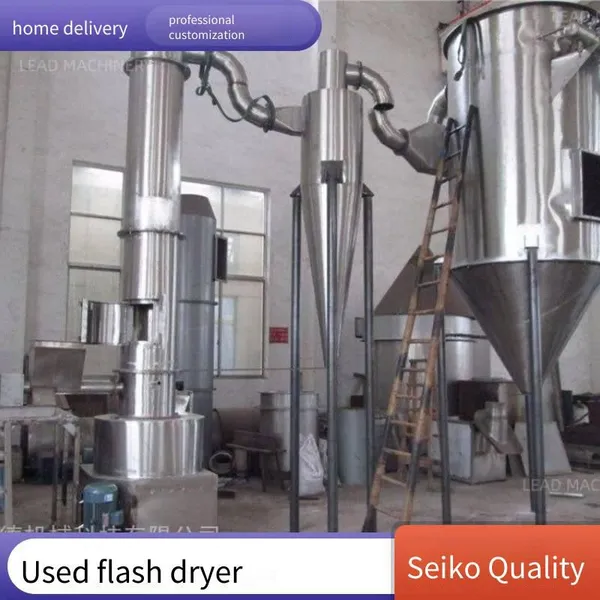
Spin flash dryer (also known as rotary flash dryer or instant dryer) is a high-efficiency, continuous drying equipment specially designed for processing difficult-to-dry materials such as paste, filter cake, and high-viscosity liquids.
The flash dryer cleverly combines fluidized bed, pneumatic drying, and crushing technologies. Its core working principle is as follows: The wet material is fed into the bottom of the drying chamber and meets the high-speed rotating crushing agitator at the bottom, where it is instantly dispersed and crushed. Meanwhile, the high-temperature hot air rising at high speed (usually 400 - 700°C) is fully mixed with these dispersed tiny wet material particles. The material is suspended, fluidized, and completes the heat and mass transfer process within a very short time (usually a few seconds to dozens of seconds), and the moisture is rapidly evaporated. The dried fine powder is collected by the cyclone separator and bag filter with the airflow, and the tail gas is discharged.
This "bottom crushing + instant hot air convection" mode enables it to effectively solve the drying problems of high-moisture and high-viscosity materials.
Flow Chart of Rotary Flash Dryer System
Application of Spin Flash Dryer in the Drying Process of Calcium Carbonate:
The rotary flash dryer is the mainstream and preferred equipment in the drying process of calcium carbonate (especially light calcium carbonate and nano calcium carbonate), and is particularly suitable for large-scale, continuous industrial production.
Calcium carbonate is an extremely widely used inorganic filler, which is divided into heavy (ground) and light (chemically precipitated) according to the production process. Rotary flash drying is mainly applied to the post-treatment drying of light calcium carbonate (PCC) and nano calcium carbonate. After carbonization and activation, these materials are usually paste-like filter cakes with a moisture content of 30% - 50%, and have the following characteristics:
High viscosity: The filter cake is paste-like, highly viscous, and difficult to disperse.
Thermal sensitivity: Some varieties that have undergone surface modification (such as treatment with stearic acid) are sensitive to temperature. Excessively high temperature may cause the surfactant to lose its effectiveness or the material to turn yellow.
High requirements for product indicators: low moisture content (usually
The rotary flash dryer perfectly matches these requirements, and its advantages are as follows:
Powerfully disperse viscous filter cakes: The high-speed stirring teeth at the bottom can effectively break up high-viscosity paste materials, making them disperse instantly and laying the foundation for uniform drying.
Instant drying to protect activity: The material is dried in high-temperature hot air within seconds. Although the inlet air temperature is high, the actual temperature of the material is relatively low, which can effectively protect the surface modification layer, prevent "scorching" and deactivation, and maintain high whiteness.
Combined with crushing and classification functions: It can complete drying, depolymerization, and preliminary classification in one step, resulting in ultrafine powder with good fluidity and reducing the burden of subsequent grinding processes.
High efficiency, energy-saving, and continuous operation: The gas-solid mixing is intense, and the thermal efficiency is high. It is suitable for large-scale continuous production of over 10,000 tons per year with a high degree of automation.
Main advantages and features of the flash dryer:
Unique advantages in processing materials
No pre-treatment required: It can directly process high-viscosity and high-moisture materials such as paste, filter cakes, and slurries, eliminating the need for cumbersome pre-treatment processes such as dilution and granulation.
"One-step" drying: It integrates drying, crushing, and screening. While drying, the material is continuously crushed and classified by the crushing device at the bottom and high-speed airflow, ultimately obtaining a uniform fine-grained product.
High efficiency and energy saving
High drying intensity: Since the materials are highly dispersed and have a huge contact area with the high-temperature hot air, the heat and mass transfer rates are extremely fast, and the evaporation capacity per unit volume is large.
High thermal efficiency: The high-temperature gas is in co-current contact with the wet materials. The temperature difference at the inlet is large, the power consumption is relatively low, and the comprehensive thermal efficiency is high.
Good product quality
Controllable temperature, suitable for heat-sensitive materials: Although the inlet air temperature is very high, due to the rapid evaporation of moisture in the materials, a large amount of heat is taken away, and the residence time is extremely short. The actual temperature of the materials is much lower than the outlet air temperature, which can effectively avoid overheating and denaturation of the materials and maintain their activity.
Uniform product particle size and good fluidity: By adjusting the speed of the crusher and the air volume, the particle size and moisture of the final product can be controlled.
Convenient operation and control
Continuous automated production: It can realize the whole-process continuous automated operation from feeding, drying to powder collection, which is suitable for large-scale industrial production.
Negative pressure operation of the system: The whole system operates under a slight negative pressure. Dust is not easy to escape, the working environment is clean, and the safety is high.
Compact structure and relatively easy maintenance
The main body of the equipment is a vertical structure, which covers a small area.
-
The main moving part is the crushing agitator at the bottom, with a relatively simple structure and concentrated maintenance points.
Typical application fields of flash dryer:
Inorganic chemical industry:Calcium carbonate, kaolin, silica, aluminum hydroxide, various metal hydroxides, pigments, catalysts, etc.
Organic chemical industry:Dyes, pigment intermediates, pesticides (such as glyphosate), flame retardants, resins, etc.
Minerals and metallurgy: Ceramic raw materials, bentonite, various metal ore powders, sludge, etc.
Food and feed:Starch, soy protein, corn syrup, yeast, distillers' grains, etc. (food-grade configuration and heat source are required).
Technical parameter table of flash dryer:

Send Inquiry to This Supplier


You May Also Like
-
Ganoderma Lucidum Polysaccharide Centrifugal Spray Dryer, Polysaccharide Material Spray DryerNegotiableMOQ: 0 Unit
-
Amino Acid Rotary Flash Dryer. Flash Drying Equipment for the Food IndustryNegotiableMOQ: 0 Unit
-
Continuous High-efficiency Rotary Flash Dryer for Kaolin Clay, Powerful Manufacturer, Easy to OperateNegotiableMOQ: 0 Unit
-
Soybean Meal Rotary Flash Dryer, Continuous Flash Dryer for the Feed IndustryNegotiableMOQ: 0 Unit
-
Lentinan Centrifugal Spray Dryer, Plant Extract Spray DryerNegotiableMOQ: 0 Unit
-
Aluminum Hydroxide Rotary Flash Dryer, a Special Drying Equipment for Filter Cake MaterialsNegotiableMOQ: 0 Unit
-
Soybean Dregs Rotary Flash Dryer, Flash Dryer for the Feed Industry, High-efficiency ProductionNegotiableMOQ: 0 Unit
-
Sulfite Rotary Flash Dryer, Flash Dryer for Chemical Industry, Continuous Drying EquipmentNegotiableMOQ: 0 Unit
-
Terephthalic Acid Rotary Flash Dryer, Flash Drying Equipment for Chemical ProductsNegotiableMOQ: 0 Unit
-
High-efficiency Ternary Intermediate Rotary Flash Dryer, Continuous Flash Drying EquipmentNegotiableMOQ: 0 Unit


