








 Contact Platform Support
 Help Center
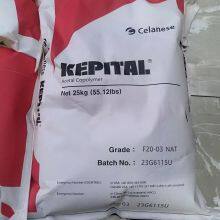
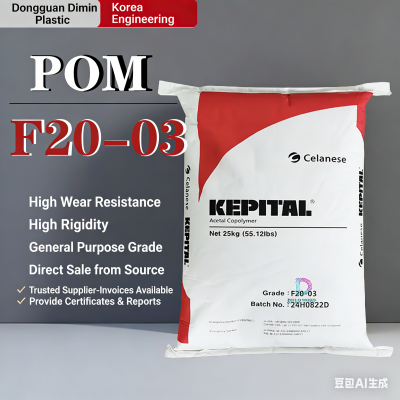
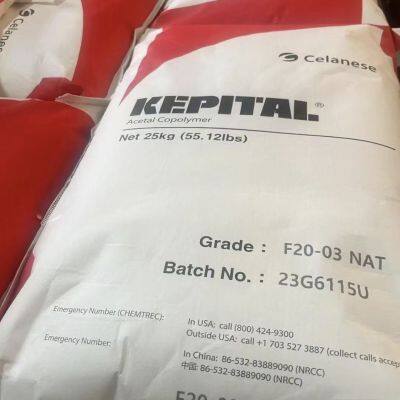
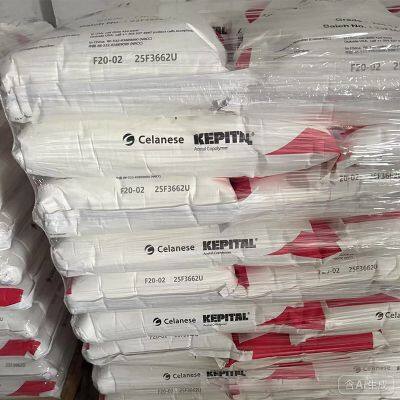
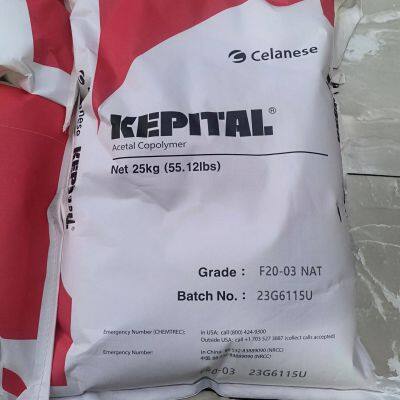
POM Raw Material, Korea Engineering Grades F20-03 and F30-03, Heat-stabilized & Wear-resistant POM Pellets for Automotive Components


Related Products
-
 Syndiotactic Polystyrene S135 Plastic for ChopsticksUS$ 6.5 - 7MOQ: 1 Bag
 -
HDPE M5370WC LyondellBasell Industries Insulation MaterialUS$ 3.5 - 4MOQ: 1 Bag
-
PC2805 Covestro PC2807 Spot Fire-retardant Flame Retardant V2 High Impact Resistant UV Transparent PC Plastic ParticlesNegotiableMOQ: 40 Bags
-
Raw Plastic Material for PCTG Eastman TX1001: High-Impact, Chemical-Resistant, Transparent Kitchenware, Space Cups, and JuicersUS$ 9.13 - 10.25MOQ: 1 Bag
-
Engineering Plastics Polyoxymethylene/POM/productsUS$ 1.5 - 1.99MOQ: 55 Pounds
Korea Engineering Plastics (KEP), a leading global manufacturer of polyoxymethylene (POM) under the brand KEPITAL®, offers two standard-grade copolyoxymethylene products—F20-03 and F30-03—widely utilized in automotive component manufacturing. These two grades exhibit distinct processing and mechanical properties, making them suitable for different automotive application scenarios.
1. Basic Property ComparisonThe core difference between F20-03 and F30-03 lies in melt flow rate (MFR), which directly affects their molding performance and application scope. Their key physical and mechanical properties are compared as follows:
| Property Item | F20-03 | F30-03 | Test Standard |
|---|---|---|---|
| Melt Flow Rate (230°C/2.16kg) | 9 g/10min | 27 g/10min | ISO 1133 |
| Density | 1.41 g/cm³ | 1.41 g/cm³ | ISO 1183 |
| Water Absorption (24h immersion, 23°C/50%RH) | 0.22% | 0.20% | ISO 62 |
| Mold Shrinkage Rate | 2.0% | 2.0% | KEP Method |
| Melting Temperature | 165°C | 165°C | ISO 11357 |
| Tensile Strength | 62 MPa | 65 MPa | ISO 527 |
| Tensile Modulus | 2,750 MPa | 2,850 MPa | ISO 527 |
| Elongation at Break | 35-50% | 25% | ISO 527 |
| Izod Notched Impact Strength (23°C) | 6.5 kJ/m² | 5.5 kJ/m² | ISO 179/1eA |
F20-03: Classified as a medium-viscosity grade, it features enhanced wear resistance (20% higher than standard POM) and better toughness (higher elongation at break and impact strength). It has a heat deflection temperature of 110°C, making it ideal for precision components requiring wear resistance and fatigue durability.
F30-03: A high-fluidity grade with excellent mold filling performance, it offers slightly higher rigidity (higher tensile modulus and flexural modulus) than F20-03. Its high MFR makes it suitable for thin-walled, complex-shaped parts and mass production with multi-cavity molds.
Both grades are copolyoxymethylene, which boasts better thermal stability and alkali resistance compared to homopolyoxymethylene. They also exhibit low water absorption, ensuring stable dimensional accuracy in automotive operating environments.
2. Chemical Resistance and Environmental AdaptabilityChemical ResistanceF20-03 and F30-03 demonstrate outstanding resistance to most chemicals encountered in automotive applications, including:
Hydrocarbons, alcohols, aldehydes, ethers, gasoline, and lubricating oils
Weak acids and alkalis
Automotive fluids such as engine oil, transmission fluid, and brake fluid
This chemical stability enables them to operate reliably in harsh environments like engine compartments with high temperatures and oil contamination.
Temperature and Weather ResistanceTemperature Range: Both grades can be used continuously at temperatures from -40°C to 100°C, with short-term peak temperature resistance up to 120°C, covering the full operating temperature range of automotive components.
Weather Resistance: Unmodified POM is susceptible to UV degradation, leading to reduced mechanical properties and surface cracking. However, KEP offers UV-stabilized variants for exterior automotive parts.
Low VOC Versions: To meet automotive interior environmental standards, KEP provides F20-03 LOF and F30-03 LOF with ultra-low volatile organic compound (VOC) emissions (formaldehyde emission <0.1mg/m³), eliminating irritating odors and ensuring compliance with vehicle interior air quality regulations.
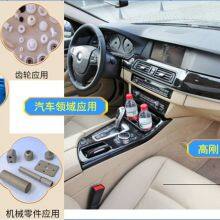
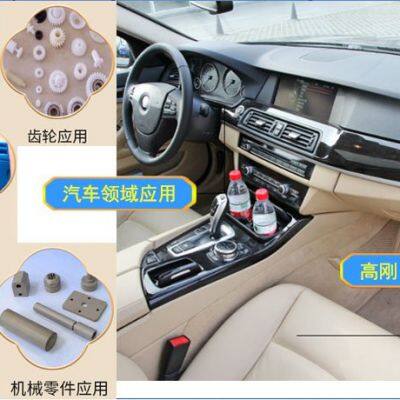
Leveraging their heat resistance, wear resistance, and chemical stability, both grades are widely used in engine peripheral components:
F20-03: Preferred for high-load wear-resistant parts such as timing gear components, cam followers, and bearing bushes, thanks to its superior wear resistance and fatigue strength (35MPa, 1.25 times that of PA and PC).
F30-03: Ideal for precision, complex-shaped parts like fuel pump impellers, oil pump gears, and sensor housings, benefiting from its high fluidity which ensures excellent mold filling and dimensional accuracy.
With the low VOC LOF variants, F20-03 and F30-03 are well-suited for interior parts with strict environmental and tactile requirements:
F20-03 LOF: Used in moving interior components such as seat adjuster gears, window regulator pulleys, and door lock mechanisms, due to its balance of wear resistance and low VOC emission.
F30-03 LOF: Applied to structural and decorative interior parts including seat belt buckles, dashboard brackets, interior clips, and control switch housings, taking advantage of its high fluidity for efficient mass production and good surface finish.
POM’s inherent self-lubricating properties (low friction coefficient of 0.10-0.20 against steel) and high rigidity make it a top choice for transmission and chassis parts:
F20-03: Employed in transmission system gears (e.g., manual transmission shift forks, differential gears) and chassis bearings, where wear resistance and fatigue durability are critical.
F30-03: Used for chassis structural components such as suspension bushings, steering system linkages, and wheel speed sensor brackets, leveraging its high rigidity and dimensional stability.
Electrical Components: Connectors, fuse boxes, and motor housings, thanks to POM’s excellent electrical insulation properties (volume resistivity of 1×10¹⁴ Ω·cm).
Exterior Accessories: Door handles, wiper components, and exterior trim clips (UV-stabilized grades required for exterior use).
Both grades share similar processing temperature ranges, with slight adjustments based on fluidity:
| Processing Parameter | F20-03 | F30-03 |
|---|---|---|
| Pre-drying Temperature | 80-100°C | 80-100°C |
| Pre-drying Time | 3-4 hours | 3-4 hours |
| Mold Temperature | 60-80°C | 80-120°C (optimized for surface finish and dimensional stability) |
| Barrel Temperature (Rear/Mid/Front) | 170-180°C / 180-190°C / 190-200°C | 170-180°C / 180-190°C / 190-200°C |
| Maximum Back Pressure | 20 bar | 20 bar |
Strict Temperature Control: POM has a narrow processing temperature window (190-215°C). Exceeding 220°C causes decomposition, releasing irritating formaldehyde gas.
Drying Requirement: Even with low water absorption, pre-drying is mandatory to prevent surface defects like bubbles and silver streaks.
Shrinkage Control: High mold shrinkage (2.0%) requires precise mold design to compensate for dimensional changes during cooling.
Mold Material Selection: Corrosion-resistant steel is recommended for molds, as POM decomposition products are slightly corrosive.
| Scenario | Recommended Grade | Rationale |
|---|---|---|
| Precision gears, bearings, high-wear parts | F20-03 | Superior wear resistance and toughness |
| Thin-walled, complex-shaped parts, mass production | F30-03 | High fluidity, excellent mold filling, high production efficiency |
| Automotive interior parts (low odor requirement) | F20-03 LOF / F30-03 LOF | Ultra-low VOC emissions, compliant with interior air quality standards |
| Exterior automotive parts | UV-stabilized variants of F20-03/F30-03 | Enhanced UV resistance to prevent aging |
Balanced Performance: Offers an optimal combination of strength, rigidity, wear resistance, and chemical stability, outperforming PA, PC, and ABS in wear-intensive applications.
Cost-Effectiveness: Provides metal-like performance at a fraction of the cost, supporting automotive lightweighting initiatives.
Environmental Compliance: Low VOC LOF grades meet global automotive interior environmental regulations (e.g., EU ELV, China GB/T 27630).
With the rise of electric vehicles and lightweight automotive design, KEPITAL® F20-03 and F30-03 are poised for broader applications in:
EV Components: Battery management system brackets, electric motor gears, and charging connector housings.
Lightweight Structures: Replacing metal parts in chassis and interior systems to reduce vehicle weight and improve energy efficiency.
High-Performance Modifications: Developing reinforced grades (e.g., glass fiber-reinforced POM) for higher strength and heat resistance.
KEPITAL® POM F20-03 and F30-03 are two high-performance copolyoxymethylene grades tailored for automotive applications. F20-03 excels in wear resistance and toughness, making it ideal for high-load moving parts; F30-03 stands out for high fluidity and rigidity, suitable for complex-shaped components and mass production. Their excellent chemical resistance, temperature adaptability, and low VOC variants ensure compliance with the stringent requirements of modern automotive manufacturing, positioning them as reliable material choices for automotive lightweighting and performance optimization.

Send Inquiry to This Supplier


You May Also Like
-
Celanese POM Hostaform POM C 9021 XAP POM Polyoxymethylene ResinUS$ 2.63 - 2.8MOQ: 25 Kilograms
-
POM Resin (POM) Copolymer M90-44 Polyoxymethylene POMNegotiableMOQ: 25 Kilograms
-
Factory Supply White Granular Polymer POM Polyoxymethylene Copolymer Grade Standard Synthetic Resin and PlasticUS$ 1.5 - 1.99MOQ: 55 Pounds
-
Polyoxymethylene Duracon POM W2320 0035 Injection Grade Engineering Plastics Plastic Raw Materials Pom Resin GranulesUS$ 1.5 - 1.99MOQ: 55 Pounds
-
Mitsubishi Iupital POM FL2020 POM Plastic Granule Polyoxymethylene Engineering PlasticsUS$ 1.5 - 1.8MOQ: 25 Kilograms
-
Engineering Plastic POM 10% 20%30% With Glass Fiber Raw Material Resin Polyoxymethylene Poly Acetal Original Virgin Hot SaleUS$ 1.5 - 1.99MOQ: 55 Pounds
-
Resin Pom Virgin Pom PolyoxymethylenUS$ 1 - 1.25MOQ: 55 Pounds
-
Engineering Plastics Raw Material TC3020 Granul Resin Polyoxymethylene Particles POM ManualidadesUS$ 1.5 - 1.8MOQ: 25 Kilograms
-
Celanese POM C 2521 Polyoxymethylene Resin Raw Material POM Granules POM Plastic Raw MaterialsUS$ 2.63 - 2.8MOQ: 25 Kilograms
-
Celanese POM Hostaform POM C 9021 GV1/10 POM Polyoxymethylene ResinUS$ 2.63 - 2.8MOQ: 25 Kilograms


