Home > Electrical & Electronics > Electrical Control System > MOTOROLA MVME705B 6-Channel Serial Transition Module

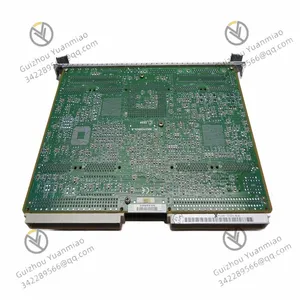
MOTOROLA MVME705B 6-Channel Serial Transition Module
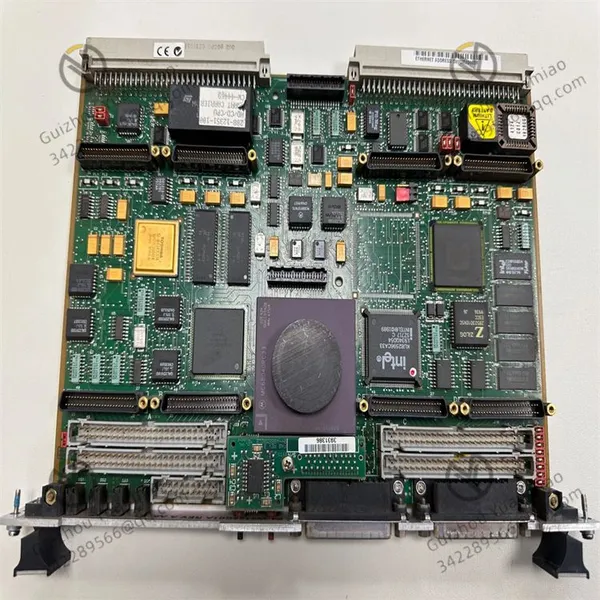
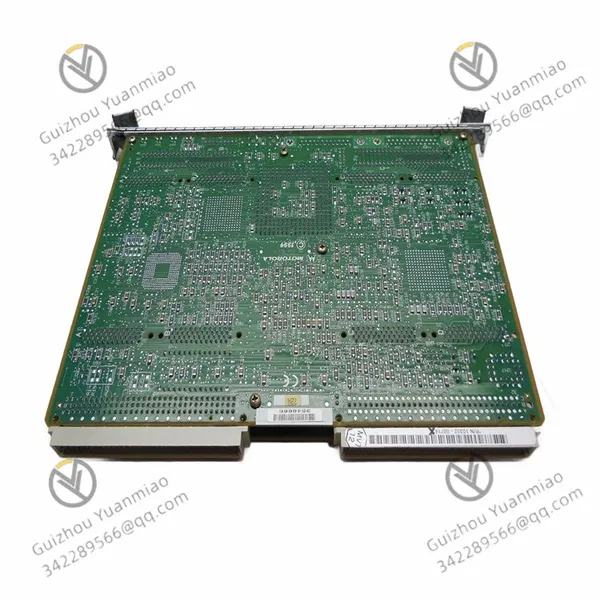
MOTOROLA MVME705B 6-Channel Serial Transition Module photo-1
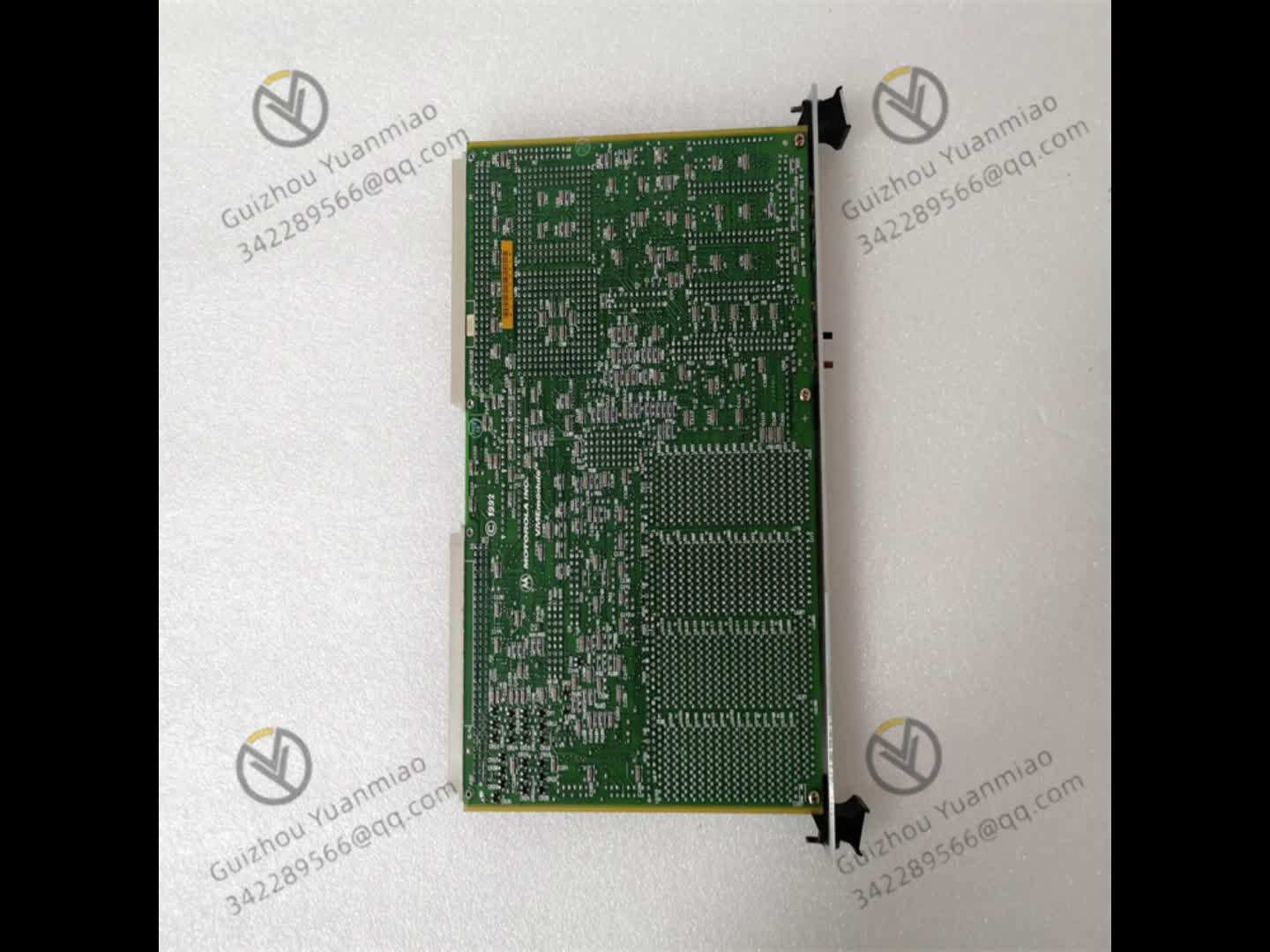
MOTOROLA MVME705B 6-Channel Serial Transition Module photo-2
Negotiable MOQ: 1 Piece (Price negotiable depending on order volume and customization)
Key Specifications
Get Latest Price
Material:
Other, Global universal model
Condition:
Other, Global universal model
Task:
Other, Global universal model

Payment & Shipping
Payment Methods:
Port of Shipment:
guizhou
Delivery Detail:
Delivery time depends on order quantity.
Material Other, Global universal model
Condition Other, Global universal model
Task Other, Global universal model
Mathematical Model Other, Global universal model
Signal Other, Global universal model
Customized Non-Customized
Structure Other, Global universal model
Operating Temperature -40℃~+70℃
Relative Humidity 5%~95% (non-condensing)
Dimensions 320mm × 160mm × 40mm
Storage Temperature -55℃~+85℃

I. Overview


The MOTOROLA MVME705B is a high-performance embedded Single-Board Computer (SBC) module belonging to the MVME (Motorola Versatile Modular Executive) series of high-end industrial control platforms. Its core positioning is "the core unit for central processing, data interaction, and collaborative control in large-scale distributed control systems under harsh industrial environments".


This module mainly serves fields with extremely high requirements for the computing performance, real-time performance, reliability, and scalability of control units, including process industry (e.g., distributed control of large petrochemical integrated plants, closed-loop regulation of multi-process parameters in fine chemical engineering)energy and power (main control systems for supercritical thermal power units, cluster dispatching control of new energy power stations)high-end manufacturing (numerical control systems for precision machining of aerospace components, control systems for semiconductor wafer manufacturing equipment), and transportation hubs (central control units for urban rail transit signal systems, control systems for fully automated loading and unloading equipment in large ports). It undertakes the full-process core tasks of "acquisition and fusion processing of multi-source heterogeneous data (analog, digital, pulse, and network data) - operation of complex control algorithms (multivariable predictive control, adaptive PID) and logic interlock judgment - generation and output of collaborative control commands for distributed nodes - global system status monitoring and fault diagnosis & early warning".


With the core advantages of "high-performance multi-core processing architecture + high-reliability industrial-grade hardware design + full-scenario expansion capability + wide-range environmental adaptation", the MOTOROLA MVME705B can not only meet the requirements of large-scale industrial control systems for "high computing power, low latency, and multi-node collaboration" but also be compatible with the upgrading and transformation of old MVME series systems. It effectively solves the four major pain points in industrial control: "low operation efficiency of complex algorithms", "large latency in multi-node collaborative control", "system instability under extreme environments", and "poor compatibility in function expansion". Through Motorola's customized PowerPC processor, triple hardware redundancy design, and standardized expansion interfaces, the module achieves a control cycle of ≤ 5ms and a Mean Time Between Failures (MTBF) of ≥ 300,000 hours, ensuring 24/7 continuous and stable operation of industrial systems and reducing production interruption losses caused by control unit failures (a single interruption can result in losses of up to millions of yuan).


MVME162-512A—04


II. Technical Parameters


(I) Core Hardware Parameters

Category Specific Parameters
Central Processing Unit (CPU) - Model: Motorola MPC750 32-bit PowerPC processor (industrial-grade customized version, based on PowerPC 603e architecture)
- Clock Speed: 300MHz (upgraded to 400MHz in some high-end versions)
- Coprocessor: Integrated Floating-Point Unit (FPU), supporting single-precision/double-precision floating-point operations to improve the operation efficiency of complex control algorithms (e.g., multivariable predictive control)
- Cache: Built-in 32KB L1 instruction cache + 32KB L1 data cache, supporting write-back/write-through mode switching; optional 256KB-1MB L2 cache (on-board expansion slot)
Storage System - Memory: Standard 64MB SDRAM (upgradeable to 256MB via expansion slots), adopting ECC (Error-Checking and Correction) memory technology, supporting multi-bit error detection and single-bit error automatic correction; on-board 128KB SRAM (high-speed cache for real-time data exchange and interrupt service routine operation)
- Storage Media: 512KB Flash ROM (solidifies system boot program, firmware, and basic control algorithm library, data retained permanently after power failure); supports external SCSI-2 interface hard disk (maximum capacity 160GB) or CompactFlash card (maximum capacity 32GB)
- Storage Controllers: Built-in SDRAM controller, Flash controller, and SCSI-2 controller, supporting hot-swapping of storage devices (requires matching system hot-swap management software)
Input/Output (I/O) Interfaces - Digital I/O: Integrates 32-channel isolated digital inputs (dry contact/wet contact compatible, input voltage 12-48V DC, response time ≤ 0.5ms) and 32-channel isolated digital outputs (transistor output, maximum load current 2A per channel, supporting software switching of NPN/PNP modes)
- Analog I/O: Reserves 4 groups of 16-channel analog input interfaces (compatible with 4-20mA current signals, 0-10V/±5V voltage signals, 16-bit resolution, sampling rate 100kS/s) and 4 groups of 8-channel analog output interfaces (4-20mA/0-10V/±5V optional, 16-bit resolution, output update rate 50kS/s), which need to be activated with MVME series analog expansion modules (e.g., MVME712 analog module)
- Pulse Interfaces: 8-channel high-speed pulse inputs (maximum counting frequency 1MHz, for collecting high-precision pulse signals such as rotational speed, flow rate, and displacement) and 8-channel pulse outputs (frequency adjustable 0.1Hz-100kHz, supporting PWM modulation, for precision control of servo motors and stepper motors)
Hardware Protection - Circuit Protection: Digital I/O channels adopt 3000Vrms electrical isolation; analog channels are equipped with surge suppression circuits (2kV differential mode, 4kV common mode) and EMI filter circuits; power input end is equipped with three-stage lightning protection circuits (complying with IEC 61000-4-5 standard, 2kV differential mode, 4kV common mode)
- Anti-Interference Design: The main board adopts 8-layer PCB design, with analog ground and digital ground separated; key components (processor, cache, bus controller) are encapsulated in metal shields; power module is equipped with EMI/EMC filter (common mode rejection ratio ≥ 100dB)
- Mechanical Structure: Adopts 6U standard VMEbus board size (320mm×160mm), with metal-reinforced housing, supporting both guide rail installation and rack installation fixing methods, and the housing has an IP40 protection rating

(II) Software and System Parameters

Category Specific Parameters
Operating System - Native Support: Motorola OS-9/PP Real-Time Operating System (RTOS), supporting Symmetric Multiprocessing (SMP), capable of managing up to 4 processor cores, task switching time ≤ 5μs; supporting real-time priority scheduling (256 levels of priority) and time-slice round-robin scheduling
- Compatible Systems: Adaptable to third-party real-time operating systems such as VxWorks 6.5 (Wind River) and QNX Neutrino 6.3; supporting Linux 2.6 embedded operating system (requires customized industrial-grade drivers)
Development Environment - Compilation Tools: Motorola PowerPC series cross-compiler (Version 4.5), supporting programming in C, C++, Ada, and assembly language; integrating GNU development toolchain (GCC, GDB)
- Debugging Tools: Equipped with MVME Debugger Pro software, supporting online breakpoint debugging, memory monitoring, register viewing, and task scheduling analysis; on-board JTAG debugging interface (compatible with IEEE 1149.1 standard) and BDM (Background Debug Mode) interface, supporting hardware-level fault localization and program burning
Control Functions - Algorithm Library: Built-in rich control algorithm library, including multi-loop PID (position-type, incremental-type, derivative-leading-type), fuzzy control, neural network control, multivariable predictive control, adaptive control, etc.; supporting user-defined algorithm development and integration
- Task Management: Supports up to 1024 concurrent tasks, supporting inter-task synchronization (semaphores, mutexes, message queues) and communication (shared memory, pipes); supporting interrupt nesting (32 levels of interrupts, dynamically assignable priority)
- Data Processing: Supports real-time data acquisition, filtering (Kalman filtering, moving average filtering), scaling transformation, trend analysis, and data storage; supports data interaction with third-party SCADA systems and MES systems (compatible with OPC DA 1.0/2.0 protocols)
System Management - Status Monitoring: Built-in hardware-level system monitoring chip (supporting real-time monitoring of voltage, temperature, and fan speed); Watchdog timer (timing range adjustable 1ms-60s, supporting manual reset and automatic reset); supporting remote status monitoring (real-time upload of system operating parameters via network interface)
- Fault Diagnosis: Supports hardware-level fault detection (processor abnormality, memory error, bus fault, I/O channel fault) and software-level fault diagnosis (task abnormality, communication interruption, algorithm operation timeout); built-in fault log (capable of recording the latest 200 pieces of fault information, including fault type, occurrence time, fault code, and impact scope), supporting local storage and remote export

(III) Communication and Expansion Parameters

Category Specific Parameters
Built-in Communication Interfaces - Serial Ports: 4 configurable RS-232/RS-422/RS-485 serial ports (mode switching via software), baud rate adjustable 300bps-115200bps, supporting hardware flow control (RTS/CTS) and software flow control (XON/XOFF)
- Ethernet Interfaces: 2 10/100Base-T adaptive Ethernet interfaces (compatible with IEEE 802.3 standard), supporting TCP/IP, UDP, IPX/SPX protocol stacks; supporting network redundancy (automatic main-standby link switching, switching time ≤ 10ms)
- Parallel Interface: 1 Centronics parallel interface (supporting ECP/EPP modes), used for connecting industrial printers and data acquisition terminals
- Other Interfaces: 1 USB 1.1 host interface (supporting external storage devices, keyboards, and mice); 1 VGA interface (resolution 1024×768, for local display of system status and debugging interface)
Bus Expansion - System Bus: Compatible with VMEbus standard (IEC 821 standard) and VME64 expansion standard, supporting 32-bit/64-bit data bus width, maximum bus rate 80MB/s; supporting VMEbus interrupt priority arbitration (16 levels of interrupts)
- Expansion Slots: 6 on-board VME standard expansion slots (P1/P2/P0 interfaces), supporting hot-swapping (requires matching system hot-swap management software); a single system can expand up to 16 MVME series modules (analog I/O modules, digital expansion modules, communication modules, motion control modules, etc.)
External Interconnection - Industrial Buses: Supports mainstream industrial bus protocols such as PROFIBUS DP/V1, Modbus RTU/TCP, DeviceNet, and CANopen via expansion modules; supports industrial Ethernet protocols (Profinet IO, EtherNet/IP, Modbus TCP)
- Synchronization Interfaces: 2 IEEE 1588 PTP (Precision Time Protocol) interfaces (supporting Class B synchronization, synchronization accuracy ≤ 100ns), used for multi-node clock synchronization in distributed systems
- Remote Communication: Supports remote data transmission and control via modem or GPRS/CDMA modules (requires external expansion modules)

(IV) Physical and Environmental Parameters

Category Specific Parameters
Physical Specifications - Dimensions: 320mm (length) × 160mm (width) × 40mm (height), conforming to 6U VMEbus board standard size
- Weight: Approximately 850g
- Installation Method: VME chassis guide rail installation (compatible with 19-inch standard industrial chassis), installation gap requirements: ≥ 25mm above and below (for heat dissipation), ≥ 15mm left and right (for wiring and ventilation), ≥ 20mm front and rear (for maintenance space)
Environmental Adaptability - Operating Temperature: -40℃~+70℃ (industrial wide temperature range), no preheating required for startup at -40℃ (startup time ≤ 20s)
- Storage Temperature: -55℃~+85℃
- Humidity: 5%~95% RH (non-condensing, conforming to IEC 60068-2-3 standard)
- Vibration Resistance: 15g (10Hz-2000Hz, conforming to IEC 60068-2-6), supporting sinusoidal and random vibration
- Shock Resistance: 100g (1ms pulse, conforming to IEC 60068-2-27), withstanding shocks during equipment handling, transportation, and accidents
- Electromagnetic Compatibility (EMC): Conforming to EN 55022 Class A, EN 55024, and IEC 61000-6-2 standards; ESD protection ±25kV (air discharge)/±15kV (contact discharge); radio frequency radiation immunity 30V/m (80MHz-1GHz); radio frequency conduction immunity 15V (150kHz-80MHz)

MVME162-520A—01


(V) Power Supply and Reliability Parameters

Category Specific Parameters
Power Supply Requirements - Supply Voltage: Three-channel power supply of +5V DC (±5%), ±12V DC (±10%), and +3.3V DC (±5%), input current: maximum 8A for +5V, maximum 2A for ±12V, maximum 5A for +3.3V
- Power Protection: Overvoltage protection (automatically cuts off input when +5V exceeds 5.5V, ±12V exceeds ±13.2V, and +3.3V exceeds 3.6V), overcurrent protection (triggers current limiting when +5V exceeds 10A, ±12V exceeds 3A, and +3.3V exceeds 6A), reverse connection protection (built-in diodes and self-recovering fuses to prevent reverse connection of power positive and negative poles), undervoltage protection (triggers alarm when +5V is lower than 4.5V, ±12V is lower than ±10.8V, and +3.3V is lower than 3.0V)
- Power Consumption: Typical power consumption ≤ 35W (under full configuration operation), maximum power consumption ≤ 50W; supporting power management (automatic frequency reduction during idle time, reducing power consumption to ≤ 15W)
Reliability Indicators - Mean Time Between Failures (MTBF): ≥ 300,000 hours (Telcordia SR-332 standard, under 25℃ environment, full configuration operation)
- Design Life: ≥ 15 years
- Key Components: Processors, caches, memories, bus controllers, etc., adopt military-grade wide-temperature models (operating temperature -40℃~+85℃), with gold-plated pins (corrosion resistance rate ≤ 0.05μm/year); connectors adopt industrial-grade high-density pin headers (plug-in life ≥ 1000 times)
- Redundancy Design: Supports dual-power redundancy (automatic main-standby power switching, switching time ≤ 1ms), dual-Ethernet interface redundancy, and key I/O channel redundancy (optional), improving system fault tolerance


III. Functional Features


(I) High-Performance Processing and Strong Real-Time Performance, Adapting to Complex Control Scenarios


Multi-Core-Level Computing Capability

Equipped with a Motorola MPC750 PowerPC processor (300-400MHz), integrated with a floating-point unit and multi-level cache (L1 + optional L2), it can execute 2-3 million instructions per second (MIPS) and achieve a floating-point operation performance of 50-80 MFLOPS. It can efficiently run complex algorithms such as multivariable predictive control and neural network control. A single module can simultaneously handle real-time control tasks of 64 analog channels and 128 digital channels, with a control cycle stably maintained at 2-5ms, meeting the high-precision closed-loop control requirements of large-scale industrial systems.


Hard Real-Time Scheduling and Task Management

Based on the OS-9/PP real-time operating system, it supports 256-level priority scheduling and 1024 concurrent tasks, with a task switching time of ≤ 5μs; it supports interrupt nesting (32 levels) and hardware-level interrupt response (response time ≤ 1μs), which can quickly process on-site emergency signals such as emergency stops and faults, ensuring delay-free execution of control commands and guaranteeing the safe operation of industrial systems.


(II) High Reliability and Redundancy Design, Ensuring Continuous and Stable Operation


Full-Link Hardware Redundancy

Adopting ECC memory (supporting multi-bit error detection and single-bit correction), dual-power redundancy (automatic main-standby switching), dual-Ethernet redundancy (link fault switching within 10ms), and key I/O channel redundancy (optional), it realizes fault tolerance in the full link from storage, power supply, and communication to control. Even if a single component fails, the system can still maintain an availability of over 99.99%.


Industrial-Grade Protection and Anti-Interference

With 8-layer PCB design (separated analog ground and digital ground), metal shield encapsulation for key components, three-stage EMI filtering and lightning protection circuits, combined with 3000Vrms electrical isolation (digital I/O) and 2kV surge suppression (analog channels), the module can control the annual failure rate within 0.05% in environments with strong electromagnetic interference (e.g., high-power frequency converters, motor groups), high salt spray (coastal chemical industry), and strong vibration (metallurgical rolling mills).
Product Tags: MVME705B

Send Inquiry to This Supplier

* Message
0/5000

Want the best price? Post an RFQ now!
Verified Business License
Business Type
Trading Company
Year Established
2014
Factory Size
1,000-3,000 square meters
Product Certifications
SA8000