Material
Other, Global universal model
Condition
Other, Global universal model
Task
Other, Global universal model
Mathematical Model
Other, Global universal model
Signal
Other, Global universal model
Customized
Non-Customized
Structure
Other, Global universal model
Operating Temperature
0℃~+50℃
Relative Humidity
5% - 95% (non-condensing)
Storage Temperature
-20℃~+60℃
Dimensions
64mm × 64mm × 30mm
I. Product Overview
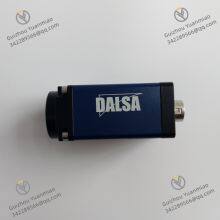
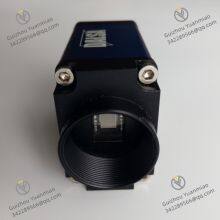
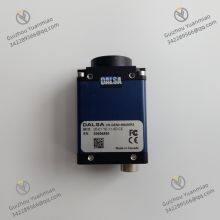
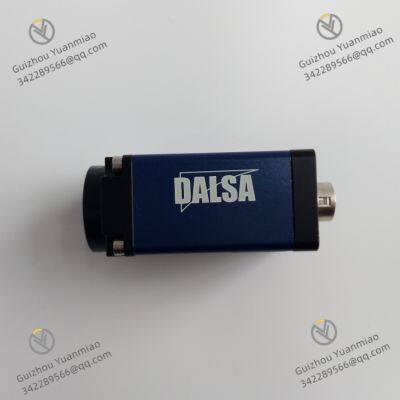
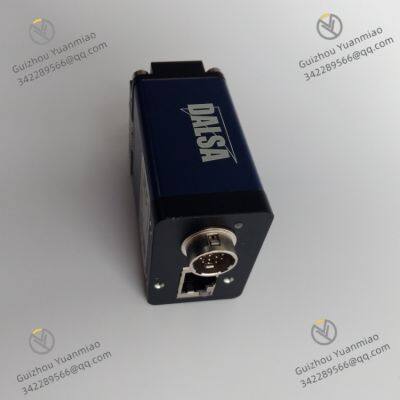
The DALSA CR-GEN0-M6400R3 is a high-performance industrial line scan camera, with its core positioning as the "high-precision image acquisition core" of industrial vision inspection systems. It is specifically designed to address the needs of surface defect detection, dimensional measurement, and printing quality control in high-speed, wide-width industrial scenarios (such as for films, metal sheets, paper, and textiles). Its core function is to capture continuous images of the inspected object in a line-by-line scanning manner through a high-resolution linear sensor. When combined with a light source and image processor, it enables accurate capture of micro-defects (such as scratches, stains, and pinholes) on the object surface and precise measurement of dimensional parameters (such as width and thickness). It is widely applicable to industries with strict requirements for inspection precision and speed, including printing and packaging, metallurgy, electronics, and textiles, and serves as a key equipment to ensure the consistency of industrial product quality.
As a representative line scan camera of DALSA for the mid-range industrial vision market, the CR-GEN0-M6400R3 integrates the core advantages of "high-resolution acquisition + high-frame-rate transmission + industrial-grade durability":
It is equipped with a 6400-pixel high-sensitivity linear sensor, with a single-pixel precision reaching the micrometer level, enabling the capture of micro-defects.
It supports high-frame-rate data output, meeting the real-time inspection needs of high-speed production lines (e.g., over 100m/min).
Meanwhile, it features wide-temperature adaptability, strong anti-interference capability, and dust-proof design, allowing stable and continuous operation in industrial sites with high dust levels, large temperature fluctuations, and strong electromagnetic interference.
Compared with area scan cameras, it has a more advantageous balance between resolution and cost in wide-width object inspection (e.g., 2m-wide films). Compared with high-end line scan cameras, it offers better cost-effectiveness and operational convenience, making it an ideal choice for medium-to-high-speed industrial inspection production lines.

II. Technical Specifications
(I) Core Imaging Parameters
(II) Data Transmission and Interface Parameters
Data Interfaces: 1 Camera Link interface (Base configuration, supporting 8/10/12-bit data output) with a transmission rate ≤2.048Gbps; 1 Gigabit Ethernet interface (RJ45, supporting GigE Vision protocol) with a transmission rate ≤1000Mbps, supporting packetized data transmission (maximum packet length: 1500 bytes)
Control Interfaces: 1 RS-232 interface (DB9 pin type, used for camera parameter configuration such as exposure time and gain); 1 trigger input interface (BNC type, supporting hardware triggering/software triggering with trigger delay ≤1μs); 1 flash synchronization output interface (BNC type, used to control the synchronous activation of the light source)
Data Formats: Supports output of RAW original data and 8/10/12-bit grayscale image formats; "continuous acquisition" or "triggered acquisition" mode can be selected via software

(III) Hardware and Power Supply Parameters
Processor: Built-in 32-bit image preprocessing chip, supporting real-time bad pixel correction, shading compensation, and gain equalization to reduce the pressure of subsequent image processing
Power Requirements: Powered by 12VDC±10%, operating current ≤300mA (@12VDC, full-resolution high-frame-rate mode), power consumption ≤3.6W (under full-load conditions); supports reverse power connection protection (no damage under reverse voltage ≤18V DC)
Physical Dimensions: 64mm (length) × 64mm (width) × 30mm (height), with a compact metal housing; compatible with standard C-mount/CS-mount lenses; weight approximately 200g
Protection Structure: Housing protection class IP30; internal circuit adopts dust-proof design to resist slight dust intrusion in the workshop; lens interface uses a metal latch to prevent lens loosening caused by vibration
(IV) Environmental and Reliability Parameters
Operating Temperature Range: 0℃~+50℃, supporting low-temperature startup (no preheating required in 0℃ environment, startup time ≤10s)
Storage Temperature Range: -20℃~+60℃, humidity range 10%~90% (no condensation, compliant with IEC 60068-2-3 standard)
Anti-Interference and Durability: Compliant with EN 61000-6-2 industrial immunity standard; Electrostatic Discharge (ESD) protection level ±8kV (contact)/±15kV (air); vibration resistance level 3g (10Hz~2000Hz, compliant with IEC 60068-2-6); shock resistance level 10g (11ms pulse, compliant with IEC 60068-2-27)
Certification Standards: CE (EN 61010-1), FCC (Part 15 Class A), RoHS 2.0

III. Functional Features
(I) High-Precision Wide-Width Imaging for Capturing Micro-Defects
The CR-GEN0-M6400R3 focuses on "high pixel density + high sensitivity" to achieve precise inspection in industrial scenarios:
High-Resolution Linear Acquisition: The 6400-pixel linear sensor can cover a wide inspection area (e.g., when matched with a 16mm lens, the inspection width is approximately 22mm; when matched with a 100mm lens, the inspection width is approximately 140mm). The single-pixel precision reaches 7μm (physical pixel size), and can be further improved to 0.5μm through sub-pixel interpolation, enabling the capture of micrometer-level defects. For example, in film inspection, it can detect pinholes with a diameter of 5μm (about the size of 1 pixel) or scratches with a width of 10μm (about the width of 2 pixels), preventing unqualified products from flowing downstream.
High Sensitivity and Dynamic Range: The high sensitivity of 18V/(lux・s) enables clear imaging under low light intensity (e.g., 500lux), and the 60dB dynamic range can simultaneously present details of bright and dark areas on the object surface. For example, in metal sheet inspection, where the sheet surface has reflective areas (bright areas) and oxidized dark spots (dark areas), the camera can clearly capture micro-scratches (10μm) in reflective areas and corrosion points (20μm) in dark spot areas without overexposure or underexposure.
Real-Time Image Preprocessing: The built-in preprocessing chip supports bad pixel correction (automatic shielding of invalid pixels), shading compensation (elimination of image brightness deviation caused by uneven light sources), and gain equalization (unification of sensitivity differences among pixels). For example, in paper inspection, the brightness of the edge area of the light source is low, resulting in dark image edges. The shading compensation function can automatically increase the brightness of the edge area, making the brightness of the entire image uniform and avoiding missed detection of defects in the edge area.
(II) High-Frame-Rate Transmission for Matching High-Speed Production Lines
To meet the needs of high-speed industrial inspection, the camera has been specially optimized for data acquisition and transmission:
High Line-Rate Acquisition: The maximum line rate of 12,000 lines/sec can match high-speed production lines. For example, in printed product inspection, if the printing machine speed is 100m/min (approximately 1.67m/s) and the inspection width is 50mm (each line of image covers a width of 50mm), the required line rate = 1.67m/s ÷ 0.05m/line = 33.4 lines/sec. The camera's line rate of 12,000 lines/sec is much higher than the requirement, leaving sufficient margin to cope with production line speed increases (e.g., up to 150m/min).
High-Speed Transmission via Dual Interfaces: The Camera Link interface (2.048Gbps) and Gigabit Ethernet interface (1Gbps) support high-speed data transmission. At full resolution (6400 pixels), the Gigabit Ethernet interface can meet the real-time transmission requirement of 12,000 lines/sec (data volume per line = 6400 pixels × 12 bits = 9600 bytes; the rate corresponding to 12,000 lines/sec = 9600×12,000 = 115,200,000 bytes/sec ≈ 110Mbps, which is lower than the 1Gbps bandwidth), with no data loss.
Trigger Synchronization Control: Supports hardware triggering (e.g., encoder triggering) and software triggering, with a trigger delay ≤1μs, enabling synchronization with production line movement. For example, in metal coil inspection, the encoder generates pulse signals when the coil moves, and the camera receives the pulses to trigger acquisition (1 line acquired per pulse), ensuring accurate alignment between the image and the coil position and avoiding image stretching or compression caused by fluctuations in coil speed.

(III) Industrial-Grade Reliability for Adapting to Harsh Working Conditions
In response to the complex environment of industrial sites, the camera has been enhanced in hardware design and stability:
Hardware Protection and Anti-Interference:
The metal housing and internal shielding design can resist electromagnetic interference. Near frequency converters (output power 50kW) or servo motors (10kW) (electromagnetic radiation ≥8V/m), the images captured by the camera have no noise or stripe interference, and the defect detection accuracy remains unchanged.
The power circuit adopts a "two-stage isolation (isolation voltage ≥2500Vrms)" design to suppress the impact of grid voltage fluctuations (e.g., 12VDC fluctuation ±10%) on the camera, ensuring no changes in image brightness and frame rate.
Wide-Temperature Adaptability and Durability: The operating temperature covers 0℃~+50℃. In high-temperature inspection workshops in summer (45℃) or unheated workshops in winter (5℃), the camera's imaging quality and transmission rate do not degrade. The metal housing supports continuous operation for more than 10,000 hours without component overheating or performance degradation.
Fault Self-Diagnosis: Supports monitoring of the camera's working status (e.g., temperature, power voltage, interface connection) via software (such as DALSA Sapera LT). When "low power voltage (<10.8V)" or "Camera Link interface disconnection" is detected, it outputs a fault signal to the upper system and saves the current configuration parameters to avoid parameter loss after restart. For example, if the production line suddenly loses power and then resumes, the camera automatically loads the previous parameters such as exposure time and gain, requiring no reconfiguration and enabling quick resumption of inspection.
(IV) Flexible Configuration and System Integration
The camera balances compatibility and ease of use to meet the needs of industrial scenarios:
Multi-Lens and Light Source Compatibility: Supports C-mount/CS-mount lenses; lenses with different focal lengths can be selected according to the inspection width (e.g., 8mm lens for narrow-width inspection, 100mm lens for wide-width inspection). It supports matching with various light sources (such as LED line light sources and laser line light sources), and controls the synchronous activation of the light source via the flash synchronization interface to improve image contrast. For example, when inspecting transparent films, matching with a 450nm blue LED line light source makes film defects (such as bubbles) show high contrast under blue light irradiation, allowing the camera to capture them accurately.
Compatibility with Multiple Software Platforms: Supports mainstream industrial vision software platforms, including DALSA Sapera LT, Halcon, VisionPro, etc., and can directly call the camera driver for parameter configuration and image acquisition. For example, in the inspection of electronic component pins, engineers use Halcon software to call the camera, configure an exposure time of 10μs and a gain of 0dB, capture pin images in real time, and perform dimensional measurement (such as pin width and spacing) with a measurement precision of ±1μm.
Batch Configuration and Upgrade: Supports batch configuration of parameters for multiple cameras via the Ethernet interface (e.g., configuring the exposure time and trigger mode for 10 cameras simultaneously) and supports online firmware upgrade. For example, a food packaging inspection line is equipped with 5 cameras; batch setting of "exposure time 20μs, line rate 5000 lines/sec" via software reduces the configuration time from 10 minutes to 1 minute. During firmware upgrade, there is no need to disassemble the camera; the new firmware (approximately 512KB) is uploaded via the network, and the upgrade time is ≤30s.