Material
Other, Global universal model
Condition
Other, Global universal model
Task
Other, Global universal model
Mathematical Model
Other, Global universal model
Signal
Other, Global universal model
Customized
Non-Customized
Structure
Other, Global universal model
Operating Temperature
-40°C to +70°C
Storage Temperature
-55℃ to 85℃
Relative Humidity
5% - 95% (non-condensing)
Dimensions
160mm×100mm×45mm
I. Product Overview
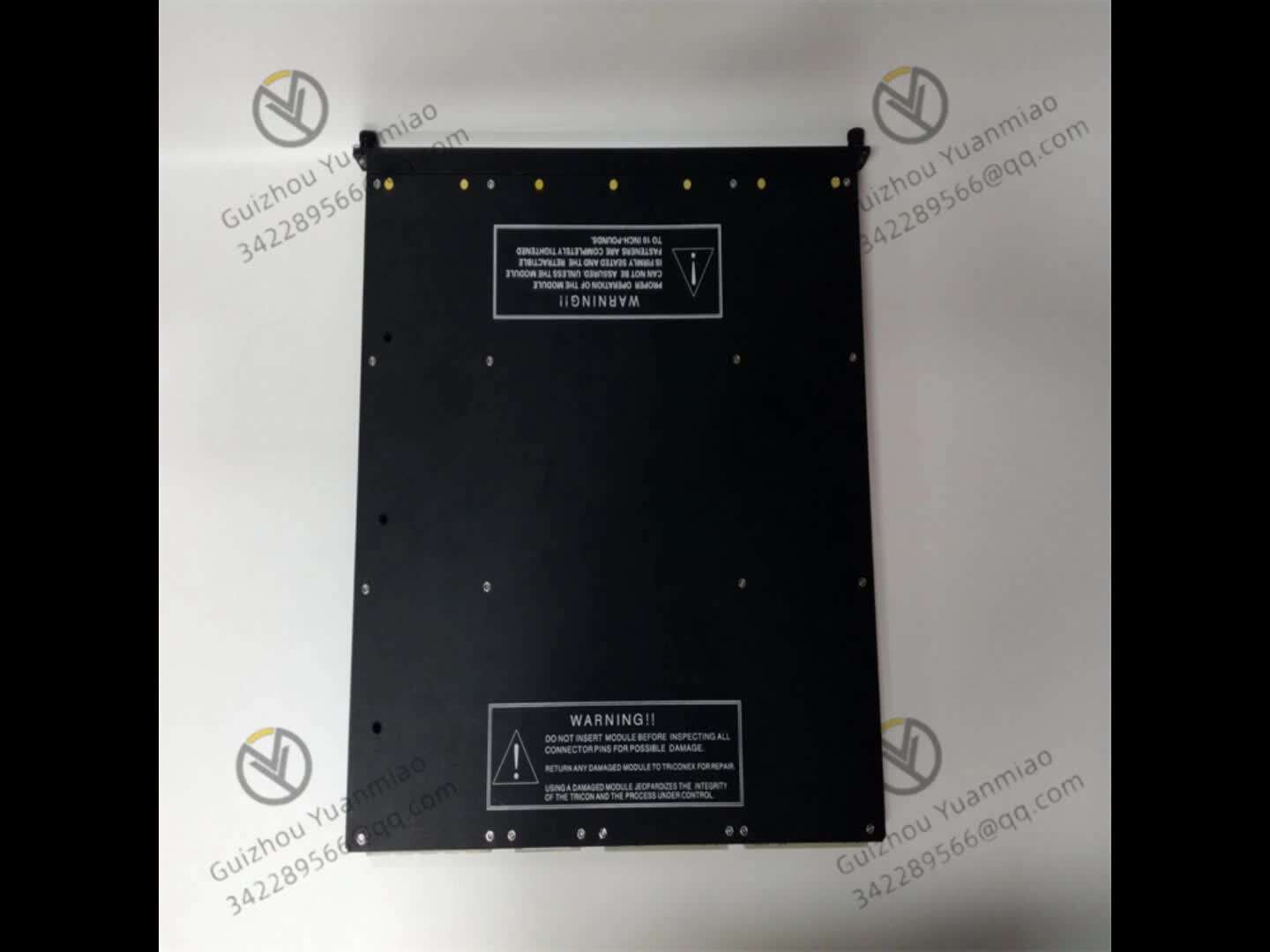
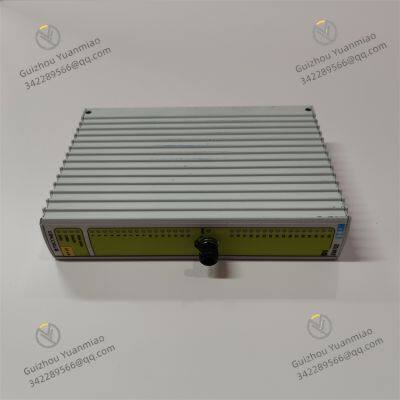
The TRICONEX AO3481S2 is a triple-redundant digital input module designed for industrial Safety Instrumented Systems (SIS). Its core positioning is to address key requirements in high-risk industrial scenarios, including accurate safety signal acquisition, triple-redundancy fault tolerance, stable operation in extreme environments, and rapid fault diagnosis. It provides an integrated solution of "signal isolation – redundant acquisition – fault diagnosis – safe transmission" for safety control systems in industries such as petrochemicals, nuclear power, oil and gas extraction, and pharmaceuticals (e.g., reactor overpressure interlock, tank farm fire alarm, and nuclear island cooling system fault shutdown). This ensures reliable acquisition and uninterrupted transmission of discrete safety signals (e.g., switch status, alarm contacts) in industrial sites, complies with the IEC 61508 SIL 3 safety standard, and reduces the risk of safety accidents caused by equipment failures.
In the hydrocracking unit of a large refinery, the AO3481S2 is used to acquire 16 channels of reactor pressure switch signals and high-temperature alarm contact signals. Each signal is synchronously collected through 3 independent channels. If data errors occur in one channel due to electromagnetic interference, the module automatically shields the faulty data using a "2-out-of-3" voting logic, ensuring normal transmission of valid signals and preventing erroneous unit shutdowns caused by single-point failures (each erroneous shutdown results in losses exceeding RMB 1 million). In the nuclear island auxiliary cooling system of the nuclear power industry, the module operates stably in a wide temperature range of -40℃ to 70℃, acquiring critical signals such as water pump start/stop status and valve switch feedback. Its Mean Time Between Failures (MTBF) is ≥300,000 hours, meeting the high reliability requirements of nuclear safety-grade equipment. In the wellhead shutdown system of an offshore oil and gas platform, the DI3301S2 resists corrosion in the high-humidity, high-salt marine environment through its IP20 protection and anti-salt spray coating design, operating continuously for 2 years without failure and ensuring reliable acquisition of emergency wellhead shutdown signals.
The TRICONEX AO3481S2 adopts an industrial-grade reinforced triple-redundant architecture, with dimensions of 160mm×100mm×45mm. It is compatible with standard 3U racks (10-slot/16-slot) of the TRICONEX Tricon series and supports parallel expansion of multiple modules (up to 16 units) to meet the signal acquisition needs of large-scale safety systems. Its core features a "3-channel independent acquisition + central voting" design: each input channel is equipped with an independent signal isolation circuit, AD converter, and redundant communication chip, enabling triple-redundancy throughout the "acquisition – transmission – diagnosis" chain. The housing is made of UL94 V-0 flame-retardant alloy material, with a built-in dust filter and anti-salt spray coating, achieving an IP20 protection rating to enhance resistance against dust and marine corrosion. It operates in a temperature range of -40℃ to 70℃ and a relative humidity of 5% to 95% (non-condensing), making it suitable for low-temperature polar oil and gas platforms and high-temperature refinery units. Internally, it uses a "channel-level independent isolation + module-level electromagnetic shielding" design: the isolation voltage between each input channel and the backplane bus is ≥2.5kVrms, and it provides ±8kV ESD protection (air discharge), effectively resisting strong electromagnetic interference in industrial sites (e.g., high-voltage frequency converters, large motor startup surges). With an MTBF of ≥300,000 hours (per Telcordia standards at 25℃), it is compatible with the TRICONEX TriStation 1131 programming software and supports seamless integration with Tricon SIS controllers, reducing system integration complexity.
II. Technical Specifications
1. Electrical & Input Parameters
2. Redundancy & Safety Parameters

3. Environmental & Reliability Parameters
4. Compatibility & Communication Parameters
III. Functional Features
1. Triple-Redundant Fault-Tolerance Design: Ensures Uninterrupted Signal Acquisition
Centered on "uninterrupted safety," the TRICONEX AO3481S2 addresses single-point failure risks through its triple-redundant architecture and intelligent voting logic:
3-Channel Independent Acquisition: Each of the 16 input signals is collected by 3 independent channels (equipped with separate AD converters, isolation circuits, and signal conditioning chips). The 3 channels synchronously acquire the same signal and transmit it to the central voting unit in real time. In hydrocracking units, if a pressure switch signal experiences temporary open circuit due to cable aging, the other 2 channels continue normal acquisition, and the module outputs valid signals via "2-out-of-3" voting to prevent erroneous unit shutdowns.
Flexible Voting Logic: Supports three voting modes—"2-out-of-3" (2oo3, high reliability), "1-out-of-3" (1oo3, high availability), and "3-out-of-3" (3oo3, ultra-high safety)—configurable via TriStation 1131 software. In nuclear power cooling systems, the "2-out-of-3" mode (action triggered only when 2 channels agree) reduces the risk of false operations; in oil and gas wellhead shutdown systems, the "1-out-of-3" mode (action triggered by 1 channel) improves emergency response speed.
Fault Self-Shielding & Alarm: When a single channel experiences open circuit, short circuit, or signal drift, the module automatically marks the faulty channel as "invalid" and excludes it from voting. Simultaneously, it uploads fault information (e.g., "Channel 5 short circuit fault") to the controller via the backplane bus, and the yellow LED on the module front panel illuminates. Maintenance personnel can locate faulty channels via HMI and replace modules without shutting down the system, increasing system availability to 99.9995%.
2. High-Precision Signal Acquisition: Adapts to Complex Industrial Scenarios
Targeting the "high interference, multi-type" characteristics of discrete signals in industrial sites, the AO3481S2 ensures accurate acquisition through hardware optimization and software configuration:
Low-Latency Rapid Response: With a signal response time of ≤5ms (typical 3ms)—far faster than traditional dual-redundant modules (≥10ms)—it meets the needs of emergency interlock scenarios. In reactor overpressure interlocks, when a pressure switch is triggered (switching from "normal" to "alarm"), the module acquires the signal and transmits it to the controller within 3ms, and the controller triggers pressure relief valve action within 5ms, resulting in a total response time of ≤8ms to prevent reactor overpressure accidents.
Adaptive Signal Types: Supports both dry contact (voltage-free) and wet contact (24V DC) inputs, with input types selectable via software (no additional hardware modifications required). In aseptic pharmaceutical workshops, it can simultaneously acquire 12 channels of dry-contact emergency stop button signals (voltage-free) and 4 channels of wet-contact high-temperature alarm signals (24V DC), simplifying system wiring.
Software-Configurable Debounce Time: Debounce time (1-200ms) is adjustable to adapt to different input devices. For mechanical contact switches (bounce time: 5-10ms), a 10ms debounce time prevents false alarms caused by contact bounce; for photoelectric sensors (bounce time: ≤1ms), a 1ms debounce time ensures rapid signal acquisition.
3. Extreme Environment Protection: Ensures Long-Term Stable Operation
Targeting the "strong electromagnetic interference, wide temperature range, high corrosion" conditions of high-risk industrial scenarios, the AO3481S2 achieves high reliability through reinforced hardware design:
Multi-Layer Electromagnetic Isolation: With inter-channel and channel-backplane isolation voltage of ≥2.5kVrms, plus ±8kV ESD protection, it resists strong electromagnetic interference. In blast furnace gas recovery systems of steel plants—where 10kV high-voltage frequency converters are present—the error of gas pressure switch signals acquired by the module is ≤0.1%, with no false signal triggers.
Wide-Temperature & Corrosion Resistance: Its -40℃ to 70℃ wide-temperature design uses industrial-grade components (e.g., capacitors with a temperature range of -55℃ to 125℃), ensuring consistent acquisition performance in outdoor oil and gas tank farms (-35℃ in northern winter) or refinery units (65℃ in southern summer). The anti-salt spray coating and IP20 dust protection enable 2 years of corrosion-free operation in the high-salt environment of offshore oil and gas platforms, complying with the ISO 12944-5 C5-M high-corrosion standard.
Vibration & Shock Resistance: With a vibration tolerance of 2g (10-500Hz) and shock tolerance of 15g (11ms), it avoids solder joint detachment or interface loosening in underground mine blasting environments, ensuring reliable acquisition of underground ventilation system fault signals.
4. Intelligent Diagnosis & Easy Maintenance: Reduces Management Costs
Through intelligent functions and user-friendly design, it lowers the difficulty of installation, commissioning, and maintenance:
Full-Chain Fault Diagnosis: Supports channel-level (open circuit, short circuit, overvoltage) and module-level (power, communication, voting unit) fault diagnosis, with a diagnosis coverage of ≥99.5%. When the module power supply voltage drops below 18V DC, it immediately outputs a "power undervoltage fault" signal to alert maintenance personnel to check rack power supply.
Intuitive Status Indication & Hot Swapping: The module front panel is equipped with 3 groups of LED indicators (Power: Green, Normal: Green, Fault: Red, Voting Abnormality: Yellow), allowing maintenance personnel to judge operation status without connecting software. It supports hot swapping (with hot-swap rack configuration), enabling replacement of faulty modules during system operation without interrupting signal acquisition.
Seamless System Integration: Compatible with all TRICONEX Tricon controllers, it enables data interaction via a proprietary backplane bus (no additional communication modules required). The TriStation 1131 software provides a graphical configuration interface for batch setting of input types, voting logic, and debounce time, and automatically generates test reports after configuration—shortening integration time by 40% compared to traditional modules.