








 Contact Platform Support
 Help Center
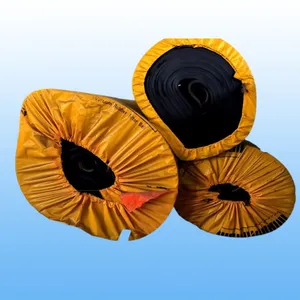
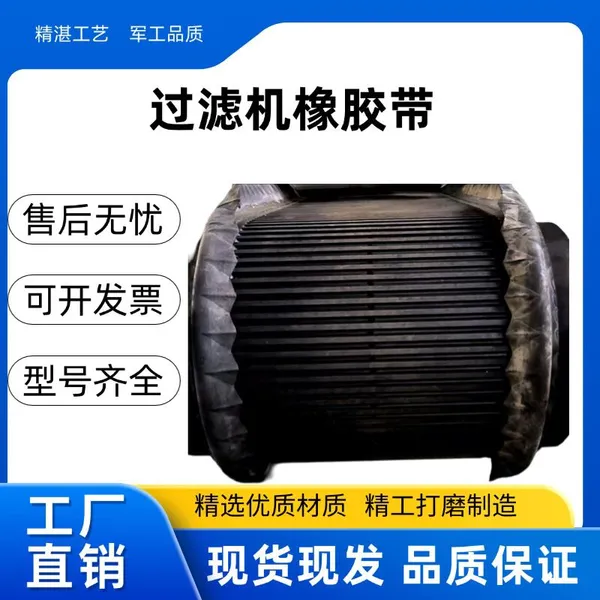
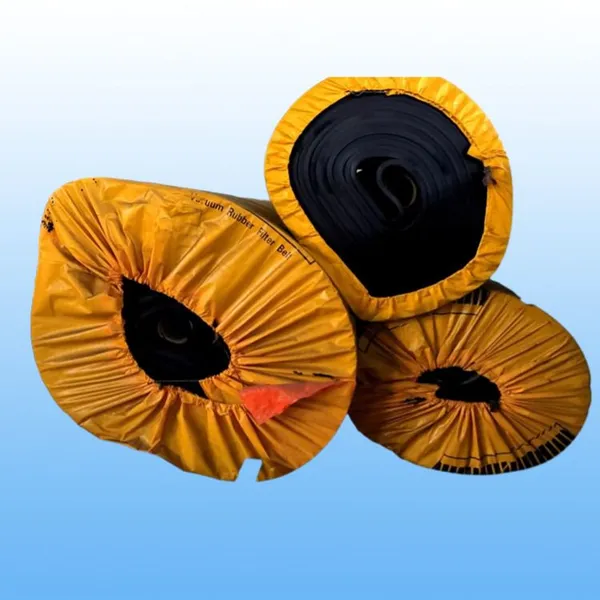
Rubber Belt;Rubber Filter Belt



Related Products
-
 Rubber SkirtNegotiableMOQ: 1 Piece
 -
Reducer;Speed Reducer;Gear ReducerNegotiableMOQ: 1 Piece
-
Rubber Air Spring;Deviation Correction AirbagNegotiableMOQ: 1 Piece
-
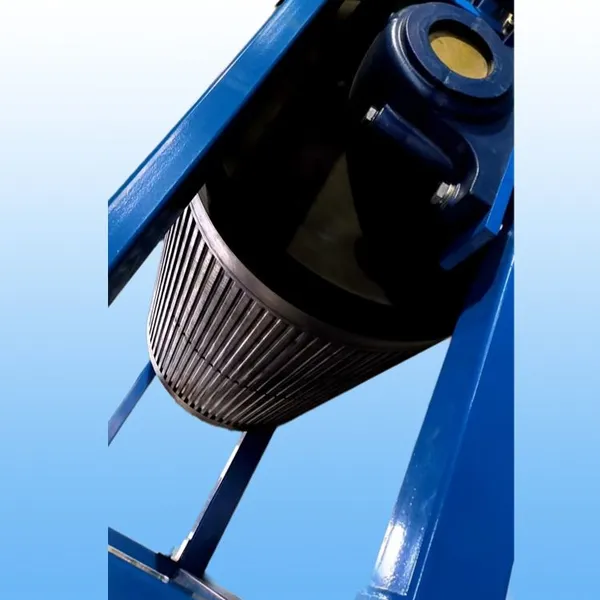
Rubber Covered Roller;redirecting Roller;tape Idler;driving Roller;driven Roller;filter Cloth Press Roller;gravity Roller;filter Cloth IdlerNegotiableMOQ: 1 Piece
-
Slide Table;plastic PlateNegotiableMOQ: 1 Piece
Structural design
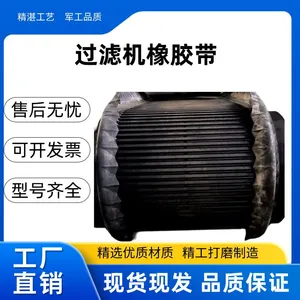
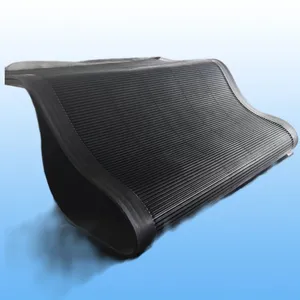
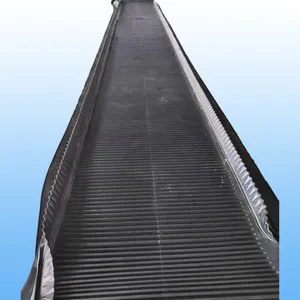
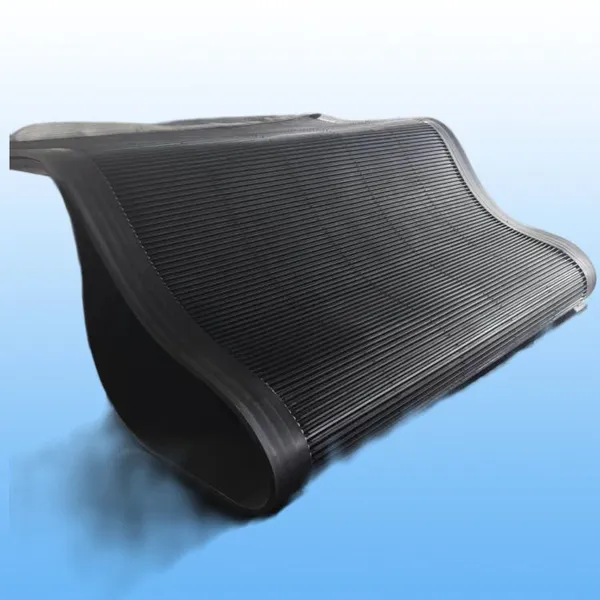
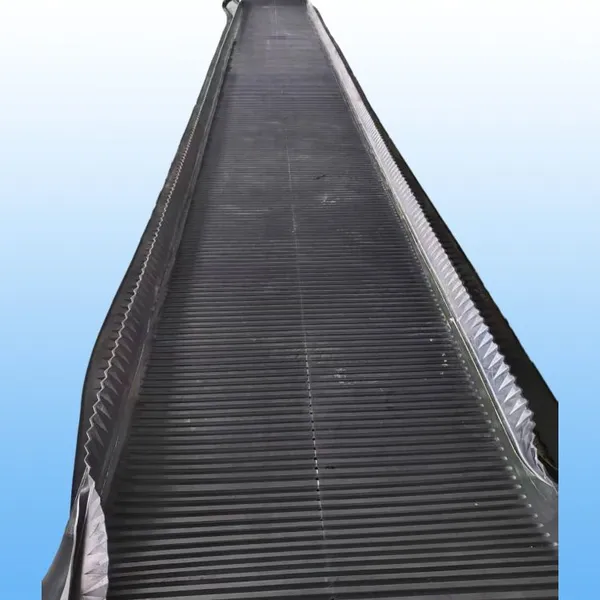
Surface grooves and drainage holes: The surface of rubber filter belts is usually designed with rows of transverse grooves, and one or more rows of drainage holes are provided in the grooves. These designs help to effectively collect and discharge the filtrate during the filtration process, keeping the solid material on the filter belt and achieving solid-liquid separation.
The skeleton layer: High-strength polyester canvas or polyester canvas is used as the skeleton layer, providing the necessary strength and stability for the filter belt, enabling it to withstand the tension and pressure during the filtration process and ensuring that it will not easily deform or break under high-speed operation and heavy load.
Covering adhesive: The covering adhesive can adopt different formulas according to different working conditions to meet various requirements such as acid and alkali resistance, heat resistance, oil resistance, and cold resistance. For instance, ethylene propylene diene monomer (EPDM) rubber has excellent heat resistance and aging resistance, making it suitable for heat-resistant filter belts. Nitrile butadiene rubber (NBR) has good resistance to oils and is often used in oil-resistant filter belts.
Edge design: The edge of the belt is usually designed with a ring-shaped structure of a corrugated apron. This design can effectively prevent the slurry from flowing out from both sides of the filter belt, enhance the sealing between the filter belt and the equipment, and avoid slurry leakage and environmental pollution.
Material properties
Rubber material: Depending on the different usage environments, different rubber materials or their blends can be selected. In addition to the aforementioned ethylene propylene diene monomer (EPDM) rubber and nitrile rubber, natural rubber (NR) has good elasticity and wear resistance, and its cost is relatively low. Chloroprene rubber (CR) has better weather resistance and flame retardancy.
Skeleton materials: Polyester canvas or polyester canvas and other skeleton materials have the characteristics of high strength, acid and alkali resistance, heat resistance, oil resistance, cold resistance, etc. Among them, the most notable feature is that they have a small elongation at a fixed load, good dimensional stability, and are not prone to deformation, which can ensure the shape and dimensional accuracy of the filter belt during long-term use.
Forming and vulcanization process: The forming and vulcanization of rubber filter belts adopt a one-time integral composite process. This process ensures the flatness of the belt body and the stability of its performance, enabling the filter belt to be evenly stressed during use and reducing local wear and deformation.
Classification
Acid and alkali resistant filter belt: Suitable for working environments in contact with acids and alkalis, such as in the phosphate fertilizer, alumina, catalyst and other industries. The covering rubber is made of rubber-plastic blend materials and filled with acid and alkali resistant inert media, which has superior acid and alkali resistance compared to chloroprene rubber. The skeleton material is made of high-strength polyester canvas, which is more resistant to acid and alkali than cotton canvas. The drainage hole area is made of pure rubber, effectively preventing acid and alkali solutions from corroding the skeleton layer and prolonging the service life of the filter belt.
Heat-resistant filter belt: Mainly used for filtering high-temperature materials, with a heat resistance temperature generally ranging from 80℃ to 105℃. The covering adhesive is made of ethylene propylene diene monomer (EPDM) rubber compound with excellent heat resistance and aging resistance. The skeleton layer is made of high-strength polyester canvas, and heat-resistant glass cloth can be laid between the covering adhesive and the skeleton layer. The drainage hole section adopts a pure rubber structure, effectively blocking the influence of high temperature and filtrate on the skeleton material, and extending the service life of the filter belt.
Oil-resistant filter belt: Suitable for filtration environments containing various oily materials. The covering rubber is made of nitrile rubber with high acrylonitrile content, and the skeleton layer is made of high-strength polyester canvas. It has the advantages of low deformation rate of the belt body, high strength and wide application range.
Cold-resistant filter belt: Suitable for working environments with temperatures ranging from -40 ℃ to +70℃. The skeleton layer is made of polyester canvas, and the covering rubber is a blend of rubber and butadiene rubber, featuring high elasticity, impact resistance and cold resistance.
Application fields: Rubber filter belts are widely used in the production filtration processes of dozens of industries such as flue gas desulfurization in thermal power plants, chemical engineering, metallurgy, mineral processing, petroleum, food, mining, alumina, and papermaking. They play a significant role in these industries, enhancing filtration efficiency and reducing filtration costs.

Send Inquiry to This Supplier


You May Also Like
-
Idler Roller;carrier Roller;touch RollNegotiableMOQ: 1 Piece
-
Brush RollerNegotiableMOQ: 1 Piece
-
Electrical Control Cabinet;pneumatic Control Cabinet;power Distribution CabinetNegotiableMOQ: 1 Piece
-
Air Compressor;air PumpNegotiableMOQ: 1 Piece
-
Porous Filter Plate;grating PlateNegotiableMOQ: 1 Piece
-
ox Tendon Board;ox Tendon Scraper Board;cowhide Rubber Plate;cowhide Rubber Scraper PlateNegotiableMOQ: 1 Piece
-
Polyurethane Board;polyurethane Panel;polyurethane Scraper Plate;polyurethane Scraper BoardNegotiableMOQ: 1 Piece
-
Vacuum Pipeline;vacuum LineNegotiableMOQ: 1 Set
-
Water Tank;water Storage TankNegotiableMOQ: 1 Piece
-
Liquid Discharge Tank;gas-water Separator;filtrate TankNegotiableMOQ: 1 Piece


