Home > Electrical & Electronics > Electrical Control System > Bently Nevada 1900/27 Series Vibration Monitor

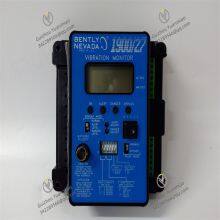
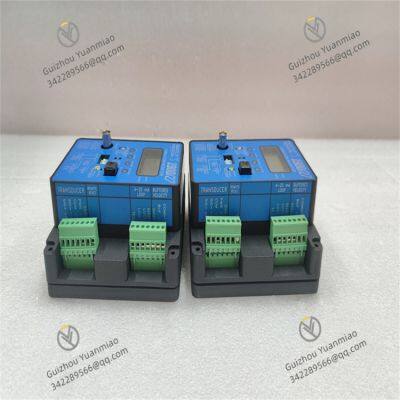
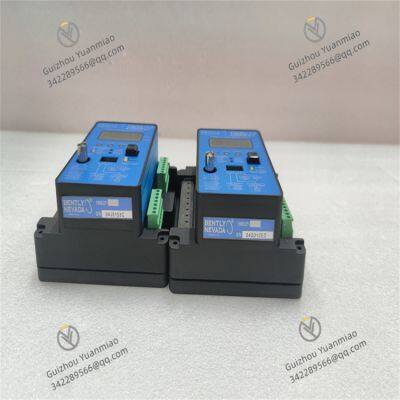
Bently Nevada 1900/27 Series Vibration Monitor

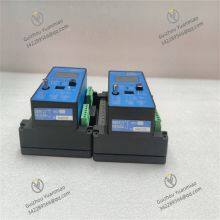
Bently Nevada 1900/27 Series Vibration Monitor photo-1
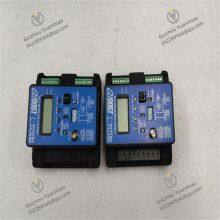
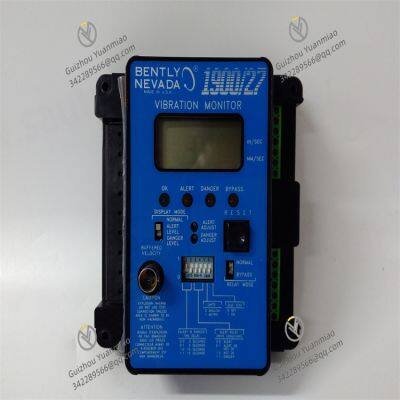
Bently Nevada 1900/27 Series Vibration Monitor photo-2
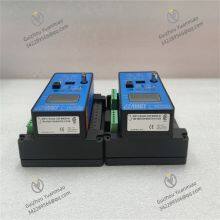
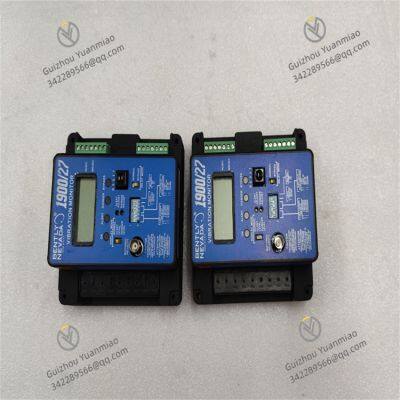
Bently Nevada 1900/27 Series Vibration Monitor photo-3
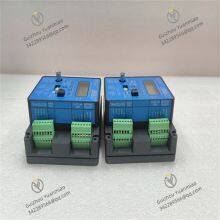
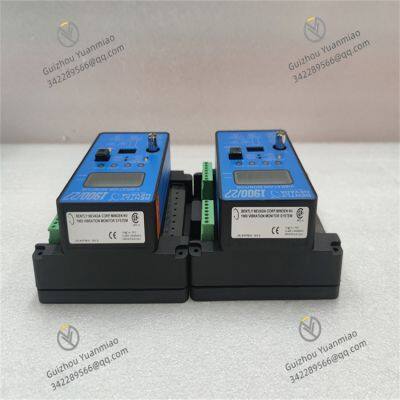
Bently Nevada 1900/27 Series Vibration Monitor photo-4
Bently Nevada 1900/27 Series Vibration Monitor photo-5
Negotiable MOQ: 1 Unit (Price negotiable depending on order volume and customization)
Key Specifications
Get Latest Price
Material:
Other, Global universal model
Condition:
Other, Global universal model
Task:
Other, Global universal model
Payment & Shipping
Payment Methods:
Port of Shipment:
China
Delivery Detail:
Delivery time depends on order quantity.
Material Other, Global universal model
Condition Other, Global universal model
Task Other, Global universal model
Mathematical Model Other, Global universal model
Signal Other, Global universal model
Customized Non-Customized
Structure Other, Global universal model
power supply 24V DC
Operating Temperature -20℃ to +70℃
Humidity 5%-95% RH (non-condensing)

Overview


Bently Nevada 1900/27 is an advanced vibration monitoring device specially designed for industrial application scenarios, playing a key role in ensuring the stable operation of various industrial equipment and improving production efficiency. As a core component in the equipment condition monitoring system, it mainly undertakes the task of real-time and accurate monitoring of the vibration of industrial machinery. Whether it is general mechanical equipment or important machinery that plays a key role in the production process, the 1900/27 can, with its excellent performance, timely detect subtle changes in the vibration state of the equipment, provide a reliable basis for equipment maintenance decisions, effectively avoid production interruptions caused by equipment failures, and ensure the continuity and stability of industrial production. It is widely used in the vibration monitoring of rotating machinery (such as motors, pumps, compressors, etc.) in industries such as electric power, petrochemicals, and manufacturing, and is an important implementation carrier of industrial equipment preventive maintenance strategies.


1900-27


Core Parameters


  • Measurement Range: The displacement measurement range can reach 0.01 to 10000 µm rms, which can fully cover various working conditions from slight vibration to relatively severe vibration of the equipment. It can accurately measure both small vibration fluctuations during normal operation of the equipment and large vibration changes that may occur in the early stage of failure, meeting the monitoring needs of different industrial equipment under various operating conditions.

  • Accuracy: The measurement accuracy is as high as ±0.5% of reading ± 1 µm, which means that extremely reliable and accurate data can be provided within the entire measurement range. The high-precision measurement results help to accurately judge the operating status of the equipment, timely discover potential fault hazards, avoid misjudgment or missed judgment caused by measurement errors, and provide solid data support for equipment maintenance.

  • Input Characteristics: The input sensitivity is 100 mv/g, and it can be adapted to specific models of acceleration sensors such as Bently Nevada 200150 and 190520, ensuring that various vibration signals can be effectively collected. Its maximum withstandable acceleration is 20 g peak. In scenarios where the equipment may encounter instantaneous impacts or drastic changes in vibration, it can still work stably, accurately obtain vibration data, and ensure the continuity of monitoring.

  • Voltage Input Range: It supports a wide range of voltage inputs, with AC voltage ranging from 85 to 264 vac and DC voltage ranging from 110 to 370 vdc. It can adapt to the power supply conditions of different industrial sites, and can operate stably both in conventional power environments and in some special occasions with large voltage fluctuations, greatly improving the applicability of the equipment.

  • Frequency Response: The frequency response range is excellent. The high-pass filter corner is 8 hz, which can effectively filter out low-frequency interference signals and focus on the effective frequency band of equipment vibration; the low-pass filter corner is higher than 4 khz, which can avoid the impact of high-frequency noise on the measurement results, ensure that the collected vibration signals truly reflect the operating status of the equipment, and can also provide reliable monitoring data in complex industrial electromagnetic environments.

  • Output Characteristics: It is equipped with a 4-20 ma standard analog output interface, which can be easily integrated with the factory's control system and data acquisition system to transmit the monitored vibration data to the central control unit in real time, realizing remote monitoring and data recording. At the same time, the module also provides a buffered output with an accuracy of up to ±3% of full scale, providing strong support for application scenarios that require high-precision data. For the 4-20 ma recorder output, the accuracy is controlled within ±5% of full scale, meeting the requirements of most industrial data recording and trend analysis.

  • Environmental Adaptability: The operating temperature range is -20 °C to +70 °C, and the storage temperature range is -30 °C to +90 °C. It can work normally in extreme environments such as high and low temperatures, whether it is next to a hot industrial furnace or on cold outdoor operation equipment, it can run stably. It can withstand a relative humidity of up to 95% (non-condensing), has good moisture resistance, and can reliably perform monitoring tasks in humid industrial workshops or offshore operations and other humid environments.

  • Physical Specifications: The product has a relatively compact size, with length, width and height of 132 mm x 132 mm x 71.1 mm, and a weight of only 400 g. It is easy to install near equipment with limited space or integrate into existing monitoring systems, reducing the impact on the original layout of the equipment and lowering the difficulty of installation and maintenance.


1900-27 (4)

1900-27 (3)


Functional Features


  • Independent Monitoring and Multi-Interface Configuration: As a single-channel, independent, field-installable vibration monitoring device, the 1900/27 can independently complete vibration monitoring tasks without relying on complex external systems. It has a built-in 4-20 ma interface, which is convenient to connect with factory control and automation systems to realize real-time trend analysis of monitoring parameters. At the same time, it is also equipped with an alarm relay contact output, which can be connected to an external alarm device. When it is monitored that the vibration parameters exceed the preset threshold, it can issue an alarm in time to remind the operator to take corresponding measures, effectively preventing the further deterioration of equipment failures.

  • Signal Processing and Display Function: It can receive a single sensor input from a compatible acceleration sensor, accurately process and convert the collected original vibration signal into peak velocity units, which is convenient for users to intuitively understand the vibration of the equipment. The equipment is equipped with a local display screen, which can display the current vibration measurement value in real time, and at the same time provide status indicators, which is convenient for on-site personnel to quickly grasp the operating status of the equipment, whether it is normal operation, early warning or failure status, it can be clearly seen at a glance.

  • Scalability and System Integration: By optional rack buffer output sensor interface module (Tim), the 1900/27 can work with the Trendmaster 2000 system, extending the mechanical protection function to all (or selected) seismic vibration monitoring points of the Trendmaster 2000 system, which greatly improves the function and coverage of the entire monitoring system, meets the diversified needs of equipment vibration monitoring in large industrial equipment clusters or complex production processes, and enhances the scalability and integration of the system.

  • High Precision and Reliability: With advanced signal processing algorithms, the device can conduct in-depth analysis and processing of the collected vibration signals to ensure the accuracy of measurement results. In the industrial environment, the equipment is faced with various interference factors such as electromagnetic interference, temperature changes, and mechanical vibration. The 1900/27 effectively resists these interferences through optimized hardware design and software algorithms, ensures the reliability of monitoring data, and provides a solid guarantee for the preventive maintenance of equipment.


1900-27 (1)

1900-27 (2)


Typical Application Scenarios


  • Motor Monitoring in the Power Industry: In power plants, motors, as core power equipment, their stable operating status directly affects power generation efficiency and power supply reliability. The 1900/27 can be installed in key parts such as motor bearing seats to monitor the vibration of the motor in real time during operation. Once the motor has potential faults such as rotor imbalance and bearing wear, the vibration value will change abnormally. The 1900/27 can quickly capture these changes and transmit the data to the monitoring system of the power plant through the 4-20 ma interface. Based on the monitoring data, operation and maintenance personnel can arrange motor maintenance work in a timely manner to avoid shutdown accidents caused by sudden motor failures and ensure the continuous and stable power production.

  • Protection of Petrochemical Compressors: Compressors in petrochemical production, under high-pressure and high-speed operating conditions, are prone to abnormal vibration due to mechanical wear, gas impact and other factors. The 1900/27 monitors the vibration of the compressor in real time through an adapted acceleration sensor. When the vibration value exceeds the preset warning or danger threshold, the alarm relay contact of the device acts to trigger the on-site sound and light alarm device, reminding the operator to deal with it in time. At the same time, the monitoring data is transmitted to the factory's distributed control system (DCS). Engineers can evaluate the operating status of the compressor according to the data change trend, formulate a reasonable maintenance plan, and prevent production interruptions and safety accidents caused by compressor failures.

  • Equipment Condition Monitoring in Manufacturing: In manufacturing production lines, various mechanical equipment work together, and the failure of any one piece of equipment may cause the entire production line to stop. The 1900/27 can be deployed on key equipment (such as CNC machine tools, large fans, etc.) on the production line to continuously monitor equipment vibration. Connected to the workshop's production management system through the 4-20 ma interface, managers can obtain equipment vibration data in real time and use data analysis tools to evaluate the operating status of the equipment. When abnormal equipment vibration is found, equipment maintenance can be arranged in time to avoid the impact of equipment failure on the production schedule and improve production efficiency and product quality.

Product Tags: 1900/27

Send Inquiry to This Supplier

Message
0/5000
Want the best price? Post an RFQ now!
1Yr
Business license
Business Type
Trading Company
Year Established
2014
Factory Size
1,000-3,000 square meters
Product Certifications
SA8000