Home > Electrical & Electronics > Electrical Control System > ABB DSBC172 57310001-KD Bus Supervision Board

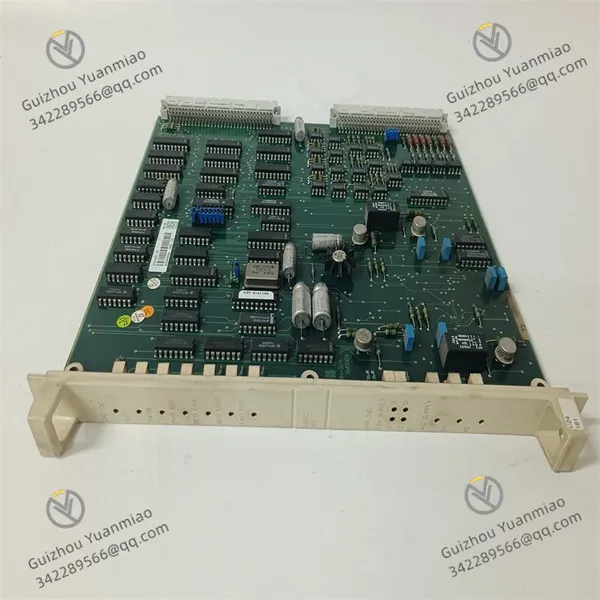
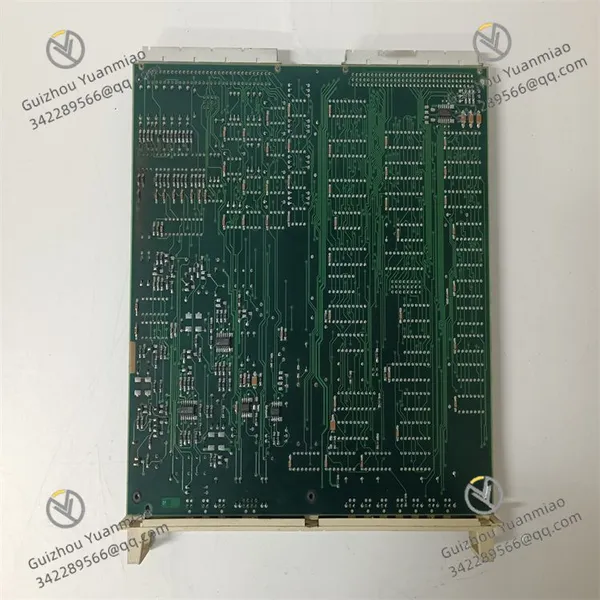
ABB DSBC172 57310001-KD Bus Supervision Board
ABB DSBC172 57310001-KD Bus Supervision Board photo-1
ABB DSBC172 57310001-KD Bus Supervision Board photo-2
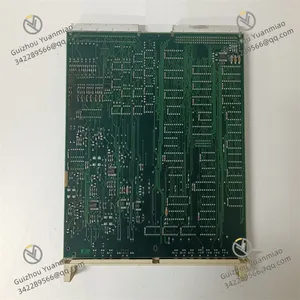
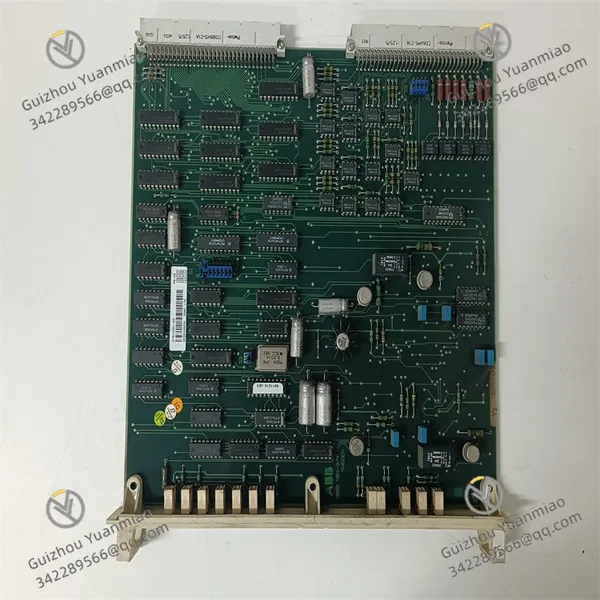
ABB DSBC172 57310001-KD Bus Supervision Board photo-3
Negotiable MOQ: 1 Piece (Price negotiable depending on order volume and customization)
Key Specifications
Get Latest Price
Material:
Other, Global universal model
Condition:
Other, Global universal model
Task:
Other, Global universal model

Payment & Shipping
Payment Methods:
Port of Shipment:
China
Delivery Detail:
Delivery time depends on order quantity.
Material Other, Global universal model
Condition Other, Global universal model
Task Other, Global universal model
Mathematical Model Other, Global universal model
Signal Other, Global universal model
Customized Non-Customized
Structure Other, Global universal model
Dimensions 150mm × 100mm × 50mm
Weight 0.3kg
Power Requirements 24V DC ±10%
ABB DSBC172 57310001-KDI. Basic Overview
The DSBC172 is a high-speed bus communication module. The model 57310001-KD is mainly used to connect high-performance industrial networks (such as EtherCAT and CANopen), enabling real-time data interaction between control systems and devices like servo drives and sensors. With core advantages of high-speed communication capability and high-precision synchronization performance, this module is suitable for scenarios with strict real-time requirements (e.g., robot control, precision motion systems, high-speed production lines).
II. Functional Features1. High-Speed Bus Communication and Protocol Support
  • Core Protocols:

    • EtherCAT: Supports a maximum transmission rate of 100Mbps, meeting the real-time requirements of high-precision motion control (cycle time can be as low as below 1ms).

    • CANopen: Supports a maximum transmission rate of 1Mbps, compatible with sensor and actuator networks in industrial automation.

  • Master/Slave Functions: Can serve as an EtherCAT master or CANopen master/slave, flexibly accessing networks with different topological structures.

2. Real-Time Performance and Synchronization Control
  • High-Precision Clock Synchronization: Integrates a hardware clock synchronization mechanism (such as EtherCAT-specific synchronization protocols) to ensure action consistency of multi-node devices (synchronization error ≤1μs).

  • Data Preprocessing: Built-in data caching and real-time scheduling algorithms reduce communication delay (typical delay ≤200μs), supporting fast transmission of periodic real-time data (e.g., motor position, speed commands).

3. System Integration and Configuration
  • Software Compatibility: Compatible with ABB control system software (such as RobotStudio and AC 800M programming environments), supporting configuration of bus parameters, node mapping, and synchronization strategies through a graphical interface.

  • Hot-Swap Design: Enables module replacement during system operation, reducing downtime (requires coordination with control cabinet power management).

4. Industrial Environment Adaptability
  • Wide Temperature Range: -20°C to +60°C, adapting to harsh industrial environments with high temperatures and dust.

  • Anti-Interference Certification: Complies with CE and UL standards. The electromagnetic compatibility (EMC) design resists electromagnetic interference from devices like frequency converters and motors.

DSBC172 57310001-KD (3)

III. Performance Parameters
Parameter Category Specific Indicators
Communication Protocols EtherCAT, CANopen (supports CiA 301/402 protocols), with optional extension to other real-time protocols (requires customization).
Transmission Rate EtherCAT: Up to 100Mbps; CANopen: Up to 1Mbps (depending on cable length and topology).
Interface Types - EtherCAT: RJ45 interface (supports redundant topology);
- CANopen: DB9 pins or terminal blocks (supports shielded cables).
Node Capacity - EtherCAT: A single master can connect ≥254 slave devices;
- CANopen: A single network supports ≤127 nodes.
Power Requirements 24V DC ±10%, power consumption about 10-15W (depending on the number of interfaces and communication load).
Protection Level Module body IP20 (needs to be installed in a control cabinet), and IP54 protection can be achieved with the cabinet.
Physical Dimensions Approximately 150mm × 100mm × 50mm, weight about 0.3kg (more compact than DSBB110A, suitable for high-density installation).
IV. Installation Method1. Pre-installation Preparations
  • Hardware Environment: Suitable for ABB controller racks (such as AC 800M) or standard DIN rails. Reserve heat dissipation space (module spacing ≥15mm) and keep away from strong electromagnetic sources (e.g., frequency converters, transformers).

  • Tools and Accessories: Screwdrivers, anti-static wristbands, EtherCAT special cables (shielded twisted-pair cables), CANopen terminal resistors (120Ω for bus ends).

  • Safety Notes: Operate with power off, wear anti-static equipment, and avoid touching the circuit board; confirm that the bus type matches the module interface (EtherCAT requires distinguishing the master-slave interface direction).

2. Physical Installation Steps
  • Rack Installation: Insert into the specified slot of the ABB controller rack (such as Slot 3-5), lock with fixing clips to ensure firm contact between the gold fingers and the backplane.

  • Independent Rail Installation: Fix the DIN rail in the control cabinet, snap the module onto the rail, and lock it with clips. Vertical installation is recommended to optimize heat dissipation.

3. Wiring Connections
  • Power Supply Wiring: Connect to the 24V DC power supply (marked "+24V" and "GND"), use 1.5mm² cables, and ensure correct polarity.

  • Bus Wiring:

    • EtherCAT: Connect front-end and rear-end devices through RJ45 interfaces to form a chain topology. No terminal resistors are needed at the ends (handled by the protocol automatically).

    • CANopen: Connect bus cables through DB9 interfaces or terminal blocks. Install a 120Ω terminal resistor at the end. The A/B wires need to be shielded and grounded at a single end.

  • Grounding Treatment: Connect the module grounding terminal to the system grounding bus. The bus cable shielding layer should be connected to the control cabinet grounding post to avoid multiple grounding points.

DSBC172 57310001-KD (2)

V. Debugging Method1. Pre-debugging Inspections
  • Hardware Confirmation: Check that the module is installed without looseness, the wiring has no short circuits (measure the resistance between power terminals with a multimeter ≥100kΩ), and the EtherCAT cable is properly plugged in (RJ45 indicator light is flashing).

  • Software Configuration: Add the module model (DSBC172) in ABB programming software, assign bus addresses (such as CANopen slave addresses 1-127), and set EtherCAT master parameters (such as cycle time and synchronization mode).

2. Power-on and Initialization
  • Indicator Light Status:

    • POWER: Steady on indicates normal power supply.

    • ETHERCAT/CAN: Flashing indicates normal bus communication. Steady on or off may indicate topological errors (EtherCAT) or baud rate mismatch (CANopen).

    • SYNC: Steady on indicates successful clock synchronization. Flashing or off requires checking synchronization parameter configuration.

3. Real-time Testing
  • EtherCAT Jitter Test: Use an oscilloscope to measure the periodic fluctuation of the synchronization signal, requiring an error ≤1μs (typical value 0.5μs).

  • Data Cycle Test: Send periodic commands (such as a 1ms cycle) through the PLC and measure the slave response delay, requiring the overall delay ≤500μs.

  • Fault Injection Test: Simulate bus disconnection and node failures to confirm that the module has error detection and recovery mechanisms (such as automatically skipping faulty nodes and triggering alarm signals).

VI. Common Faults and Handling
Fault Phenomenon Possible Causes Solutions
EtherCAT communication interruption Poor cable contact, topological loop error Check the RJ45 interface indicator light and replace the cable; confirm the EtherCAT master-slave interface sequence (needs to be connected according to the topology diagram).
CANopen node unresponsive Baud rate mismatch, terminal resistor missing Reconfigure the baud rate (such as 1Mbps) and install terminal resistors; use CANopen diagnostic tools (such as PCAN View) to scan node addresses.
Sync light off Clock synchronization parameter error, master fault Check the synchronization mode settings (such as master-slave synchronization or free-run mode), and restart the master module or replace it with a spare.
Module overheat alarm Poor heat dissipation, excessively high ambient temperature Add control cabinet fans to ensure module spacing ≥15mm; detect whether the ambient temperature exceeds 60°C and install air conditioning if necessary.

DSBC172 57310001-KD (1)

VII. Application Scenarios
  1. Robotics and Motion Control:

  • Connect ABB robot controllers with servo drives (such as IRC5 systems) to achieve high-precision synchronization of multi-axis movements (e.g., welding, assembly scenarios).

  • High-Speed Production Lines:

    • In food packaging and electronic component sorting equipment, synchronously control multiple servo motors and sensors (such as encoders, vision cameras) to ensure motion accuracy ≤0.1mm.

  • New Energy Equipment:

    • In lithium battery production lines, coordinate the high-speed operation of equipment like coating machines and winding machines, supporting real-time data collection and fault early warning.

  • Precision Machining Machinery:

    • Multi-axis linkage control for CNC machine tools and laser cutting machines to meet micron-level machining accuracy requirements (e.g., automotive parts processing).

    VIII. Comparison with DSBB110A
    Comparison Dimension DSBC172 (57310001-KD) DSBB110A (57330001-Y)
    Core Protocols EtherCAT, CANopen (real-time protocols) PROFIBUS, Modbus, Ethernet (general protocols)
    Transmission Rate Up to 100Mbps (EtherCAT) Up to 12Mbps (PROFIBUS)
    Typical Applications High-speed motion control, robotics, precision machinery Multi-protocol conversion, process control, distributed system integration
    Synchronization Performance Supports hardware clock synchronization (error ≤1μs) No dedicated synchronization mechanism, suitable for non-real-time scenarios
    Number of Interfaces 1-2 high-speed interfaces (EtherCAT/CANopen) 2-4 general interfaces (PROFIBUS/Modbus/Ethernet)
    Product Tags: DSBC172 , 57310001-KD , 3BSE003127R1

    Send Inquiry to This Supplier

    * Message
    0/5000

    Want the best price? Post an RFQ now!
    Verified Business License
    Business Type
    Trading Company
    Year Established
    2014
    Factory Size
    1,000-3,000 square meters
    Product Certifications
    SA8000