








 Contact Platform Support
 Help Center
Gamma Alumina Catalyst Carrier/support


Related Products
-
 Gamma-Alumina Extruded Trilobular Catalyst SupportUS$ 6300 - 6500MOQ: 1 Ton
 -
1.6-1.8 Sphere Alumina Catalyst Support Gamma Alumina Sphere/ Ball / Oil Drop BallUS$ 6350 - 6500MOQ: 1 Ton
-
1.6-1.8 Sphere Alumina Catalyst Support Gamma Alumina Sphere/ Ball / Oil Drop BallUS$ 6350 - 6500MOQ: 1 Ton
-
HL-KS TYPE Alumina Catalyst CarrierUS$ 6350 - 6500MOQ: 16 Tons
-
HL-MS TYPE Alumina Catalyst CarrierUS$ 6350 - 6500MOQ: 16 Tons
The alumina (Al203) catalyst carriers commonly used in hydrodesulfurization (HDS) catalytic units mainly adopt the following shapes, and the specific selection depends on the mass transfer efficiency and pressure drop requirements of the reactor design:
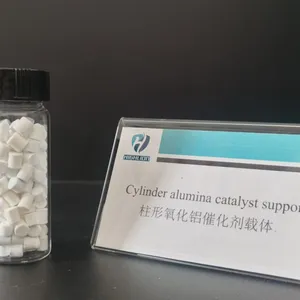
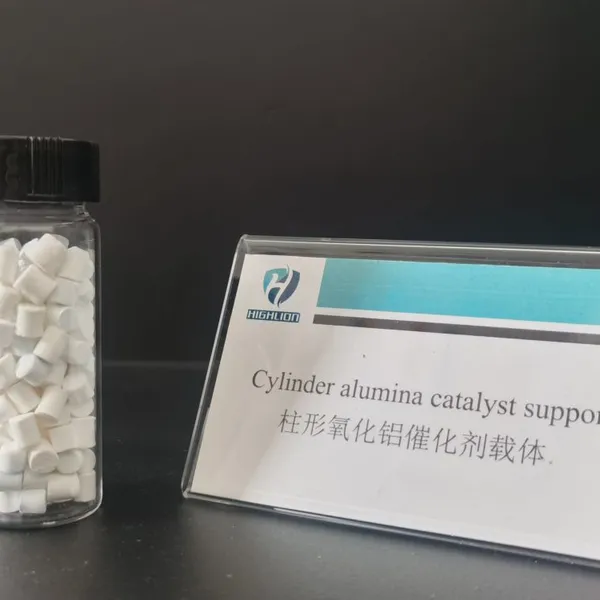
1.**Cylindrical (strip)**
-**The most common shape**, usually 1-3 mm in diameter and 3-10 mm in length.
-**Advantages**: high mechanical strength, easy to scale up, uniform filling, and low pressure drop.
-**Application**: standard choice for fixed bed reactors, such as diesel and gasoline hydrodesulfurization.
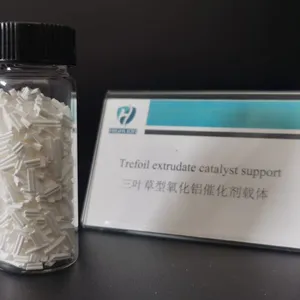
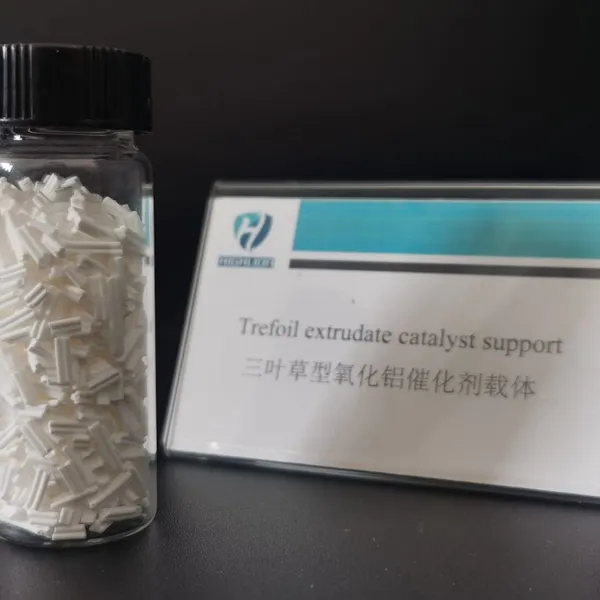
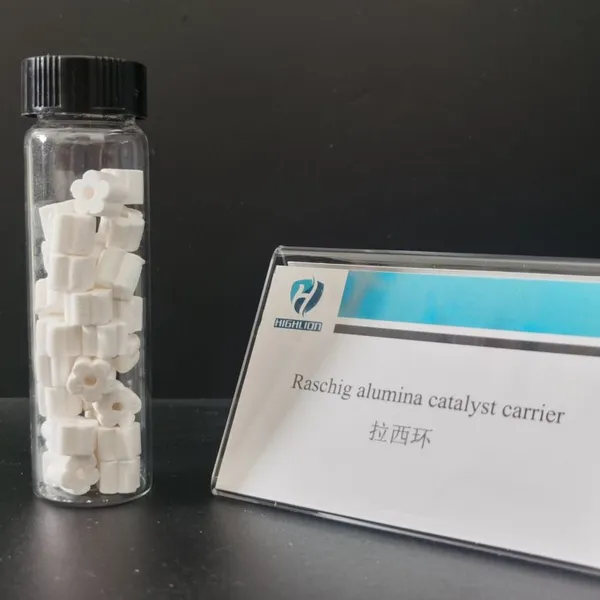
2.**Clover (three-leaf) or multi-leaf**
-**Design features**: the cross-section is three-leaf or four-leaf, increasing the surface area.
-**Advantages**: higher specific surface area and edge effect than cylindrical, improving reaction activity while maintaining low pressure drop.
.**Application**: HDS processes with high activity requirements, such as heavy oil desulfurization.
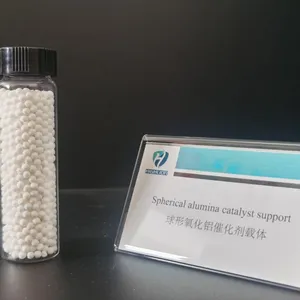
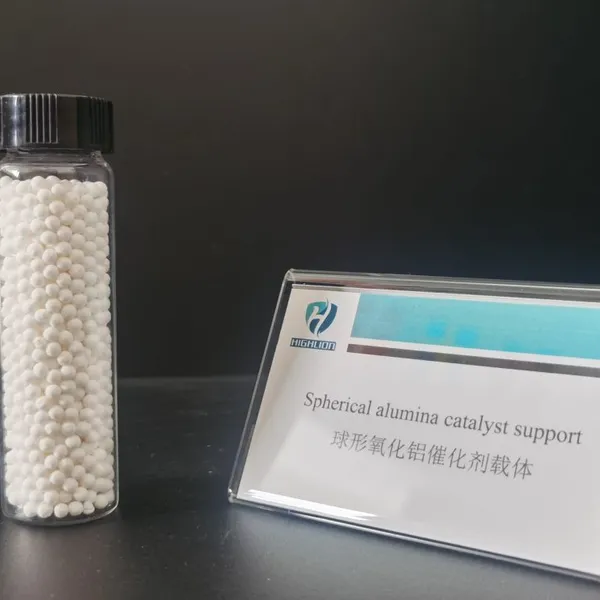
3. **Spherical**
-**Advantages**: Good fluidity, uniform packing density, good durability, suitable for reactors with frequent loading and unloading.
-**Disadvantages**: Specific surface area is usually lower than that of special-shaped carriers.
-**Application**: A few specific processes or moving bed reactors.
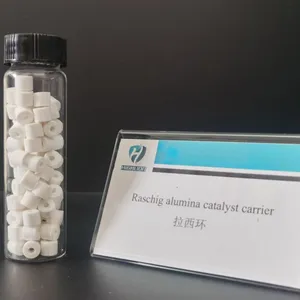
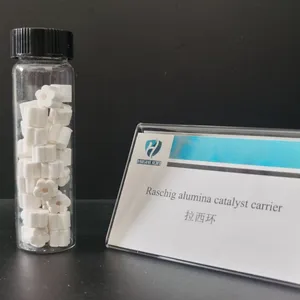
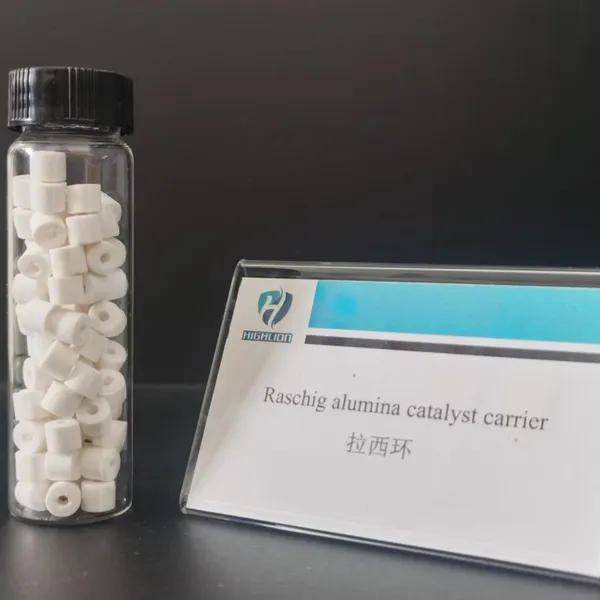
4. **Annular (hollow cylinder)**
-**Advantages**: Low pressure drop, suitable for high gas velocity reaction conditions.
-**Application**: Large-scale devices that need to reduce pressure drop, but low mechanical strength.
###Selection basis:
-**Reactor type**: Fixed bed preferably uses cylindrical or trilobal shape; fluidized bed may require microspherical carrier.
-**Raw material properties**: Heavy oil may require large-pore carrier (such as modified alumina), and light oil can use conventional shapes.
-**Process conditions**: High mechanical strength is required for high-pressure reaction, and shapes with good thermal stability are required at high temperatures.
###Additional Notes:
The performance of alumina carriers is often optimized by doping (such as silicon, phosphorus) or adjusting the pore structure (such as macropores, mesopores), but the shape is still the key factor. The trilobal shape is gradually increasing in modern HDS devices due to the balance between activity and pressure drop.

Send Inquiry to This Supplier


You May Also Like
-
HL-RRB TYPEUS$ 6350 - 6500MOQ: 16 Tons
-
HL-RR TYPE Raschig Alumina CarrierUS$ 6350 - 6500MOQ: 16 Tons
-
HL-FTS Type Sphere Alumina CarrierNegotiableMOQ: 16 Tons
-
HL-BF Type Catalyst CarrierUS$ 6350 - 6500MOQ: 16 Tons
-
HL-CP Type 3-lobe Alumina Catalyst CarrierUS$ 7800 - 8000MOQ: 10 Tons
-
HL-BT Type Cylinder Alumina CarrierUS$ 6350 - 6500MOQ: 16 Tons
-
HL-TS Type Dehydrogenation Catalyst CarrierUS$ 6350 - 6500MOQ: 10 Tons
-
Alumina Powder as CatalystUS$ 1750 - 2000MOQ: 50 Tons
-
Large Pore(Macroporosity) PseudoboehmiteUS$ 2000 - 2100MOQ: 50 Tons
-
Microporous Pseudoboehmite/Small-Pore Pseudo BoehmiteUS$ 1750 - 2000MOQ: 50 Tons


