








 Contact Platform Support
 Help Center
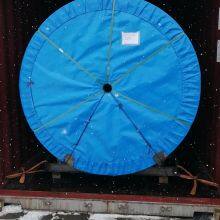
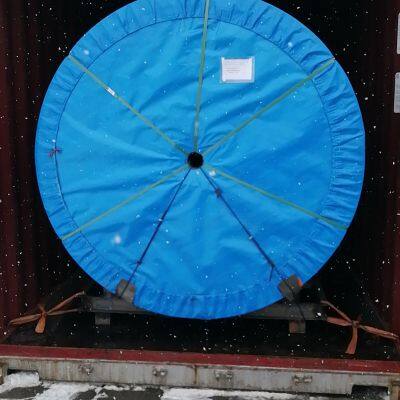
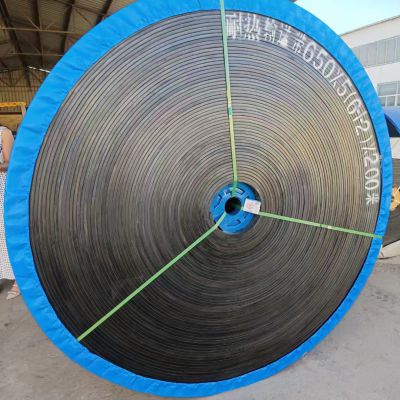
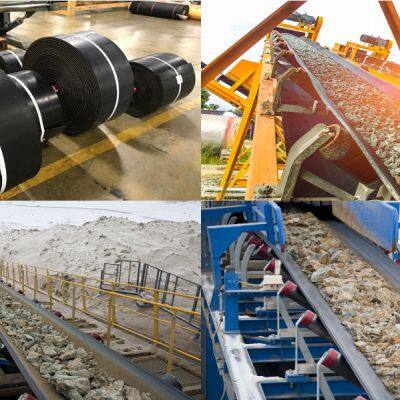
EP100/150/200/300 Wear Resistant Conveyor Belt



Related Products
-
 Durable Industrial EP Rubber Belting Fabric Conveyor Belt For Coal MiningUS$ 5 - 50MOQ: 100 Meters
 -
Heat Resistant Convoyor Belt for SaleUS$ 5 - 50MOQ: 100 Meters
-
Chevron Conveyor BeltUS$ 5 - 50MOQ: 100 Meters
-
Solid Woven Conveyor Belt for Undergroud/coalUS$ 5 - 50MOQ: 100 Meters
-
Sidewall Conveyor Belt With Cleated /EP100/150/200/300 Wear Resistant Conveyor BeltUS$ 5 - 50MOQ: 100 Meters
I. Core Selection Factors for Rubber Conveyor Belts
Before selecting a rubber conveyor belt, clarify the following key requirements to ensure compatibility:
1. Material Characteristics (Critical Premise)
Physical Properties:
Particle size (powder, granular, lumpy): Lumpy materials require thicker cover rubber or impact-resistant belts.
Moisture content: Belts with anti-adhesive surfaces are needed if moisture content >15%.
Temperature:
Normal temperature (0℃): Standard rubber belts.
Medium temperature (60-120℃): Heat-resistant rubber belts.
High temperature (>120℃): Special high-temperature resistant rubber belts (e.g., neoprene, nitrile rubber).
Viscosity: Sticky materials (e.g., wet clay) need anti-stick rubber surfaces.
Chemical Properties:
Corrosiveness: Acid/alkali materials require corrosion-resistant rubber (e.g., fluororubber) to avoid swelling or degradation.
Flammability: Explosive/flammable materials (al dust) need anti-static and flame-retardant rubber belts (surface resistance ≤10⁸Ω).
Mechanical Properties:
Material density: Determines the belt’s load-bearing capacity.
Maximum lump size: Larger lumps require reinforced belt bodies to resist impact.
II. Common Types of Rubber Conveyor Belts & Applications
Rubber Belt Type |
Core Material/Structure |
Key Features |
Suitable Applications |
Standard Rubber Conveyor Belt |
Natural rubber/SBR + cotton canvas core |
Wear-resistant, cost-effective, elastic |
Normal-temperature, non-corrosive materials (coal, sand, grain) |
Heat-Resistant Rubber Belt |
Neoprene/nitrile rubber + high-temp core |
Temperature resistance (60-200℃), anti-aging |
High-temperature materials (sintered ore, cement clinker, furnace slag) |
Acid-Alkali Resistant Rubber Belt |
Fluororubber + corrosion-resistant core |
Resists strong acids/alkalis, no swelling |
Chemical materials (sulfuric acid, caustic soda), electroplating waste |
Patterned Rubber Belt |
Rubber + anti-slip pattern (chevron, diamond) |
Enhanced friction, anti-slip |
Inclined conveying (10-25°) of fertilizers, ores |
Sidewall Rubber Belt |
Rubber base + sidewalls + transverse baffles |
Inclination up to 25-90°, vertical conveying |
Space-constrained, steep-lift scenarios (ports, silos) |
Flame-Retardant Anti-Static Rubber Belt |
Special rubber + anti-static core |
Flame-retardant, static-dissipative |
Explosive environments (coal mines, chemical plants) |
Steel Cord Rubber Belt |
Rubber base + steel cord core |
Ultra-high tensile strength, long-distance |
Long-distance conveying (>1000m) in mines, ports |
III. Step-by-Step Selection Process
Define Core Requirements:
List material characteristics (temperature, particle size, corrosiveness), conveying parameters (distance, speed, inclination), and environmental conditions. Prioritize key needs (e.g., high temperature → heat-resistant belt).
Screen Belt Types:
Eliminate unsuitable options (e.g., standard belts for high temperatures) and narrow down to 2-3 candidates.
Determine Key Parameters:
Belt Width: Calculate based on material flow rate:
Width = Flow Rate / (Speed × Material Bulk Density × Coefficient)
Add 10-20% margin for fluctuations.
Belt Core Layers/Tensile Strength: Calculate tension based on conveying distance and material weight. Choose multi-layer cores for heavy loads or steel cord cores for long distances.
Cover Rubber Thickness:
High wear (lumpy ore): 6-10mm top rubber.
Low wear (powder): 3-5mm top rubber.
Verify Compatibility:
Check if the belt matches roller diameter, tensioning device, and motor power (e.g., steel cord belts require compatible large-diameter rollers).
Evaluate Cost-Effectiveness:
Balance initial purchase cost and long-term maintenance:
Standard rubber belts: Low initial cost, shorter lifespan.
Specialized rubber belts (heat-resistant/acid-resistant): Higher initial cost, longer service life.
IV. Key Selection Tips (Avoid Mistakes)
Avoid over-specification: Don't choose high-temperature/acid-resistant belts for normal-temperature non-corrosive materials (wastes cost).
Prioritize environmental adaptation: Outdoor belts must be weatherproof; wet environments need non-slip rubber.
Comply with industry standards: Flame-retardant belts for mines must meet MSHA/CE certification; food-related applications (if using rubber) need food-grade rubber (FDA/GB compliant).
Reserve margin: Tensile strength, width, and cover rubber thickness should have 10-20% redundancy to handle material or fluctuations.
Consider maintenance: For hard-to-access equipment, select wear-resistant rubber belts to reduce replacement frequency.

Send Inquiry to This Supplier


You May Also Like
-
PVG/PVC Solid Woven Conveyor Belt for UndergroudUS$ 5 - 50MOQ: 100 Meters
-
Factory Price Durable Industrial EP Rubber Belting Fabric Conveyor BeltUS$ 5 - 50MOQ: 100 Meters
-
EP100/150/200/300 Wear/oil Resistant Conveyor BeltUS$ 5 - 50MOQ: 100 Meters
-
PVC/PVG Conveyor Belt for UndergroudUS$ 5 - 50MOQ: 100 Meters
-
Chevron Conveyor BeltUS$ 5 - 50MOQ: 100 Meters
-
EP100/150/200/300 L/H /M Grade Conveyor BeltUS$ 5 - 50MOQ: 100 Meters
-
Chevron Conveyor Belt for Sand/gravelUS$ 5 - 50MOQ: 100 Meters
-
NN100/150/200/300 Wear/oil Resistant Conveyor BeltUS$ 5 - 50MOQ: 100 Meters
-
PVC/PVG680S/800S/1000S/1250Ssolid Woven Conveyor Belt for UndergroudUS$ 5 - 50MOQ: 100 Meters
-
NN100/150/200/300 Wear/oil Resistant Conveyor BeltUS$ 5 - 50MOQ: 100 Meters


