








 Contact Platform Support
 Help Center
Home > Manufacturing & Processing Machinery > Machinery for Food, Beverage & Cereal > Food & Beverage Sterilizer > High Quality Canned Food Autoclave Sterilizing Equipment
High Quality Canned Food Autoclave Sterilizing Equipment
Negotiable
MOQ: 1 set (Price negotiable depending on order volume and customization)
Key Specifications
Get Latest Price
Business Type:
Trading Company
Year Established:
2013
Factory Size:
Below 1,000 square meters

Payment & Shipping
Payment Methods:

Port of Shipment:
China
Delivery Detail:
Delivery time depends on order quantity.
Related Products
-
 High Efficiency Continuous Tunnel Type Water Bathing Pasteurization MachineNegotiableMOQ: 1
 -
High Quality Continuous Water Bathing Pasteurizer MachineNegotiableMOQ: 1
-
Automatic Continuous Water Spraying Pasteurization EquipmentNegotiableMOQ: 1
-
Water Spray Autoclave Retort for Glass Jar Sumpot Plj Retort SterilizerNegotiableMOQ: 1
-
Autoclave Retort Sterilizer Autoclave Mini Food Retort MachineNegotiableMOQ: 1
Product Description
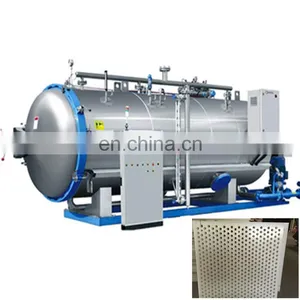
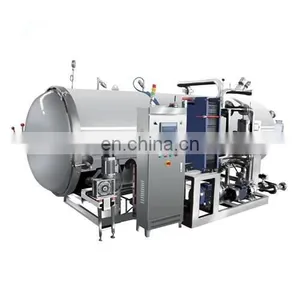
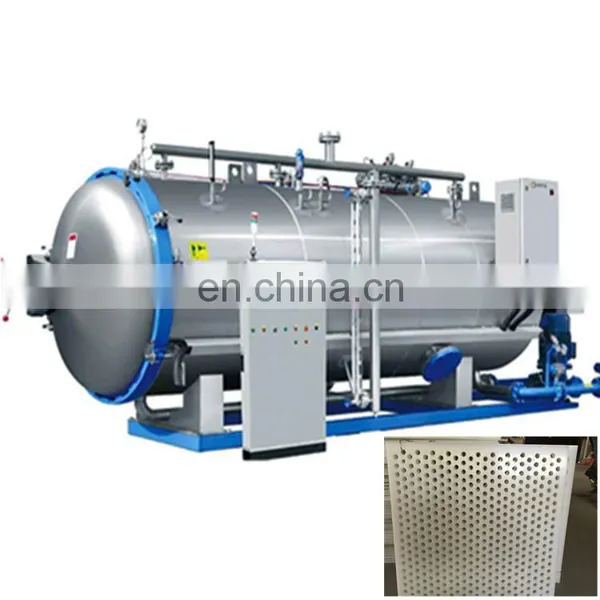
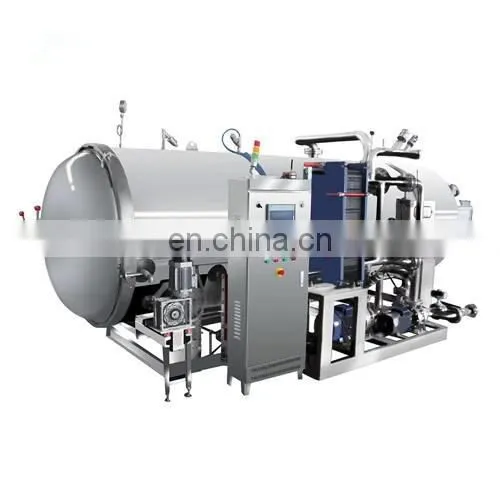
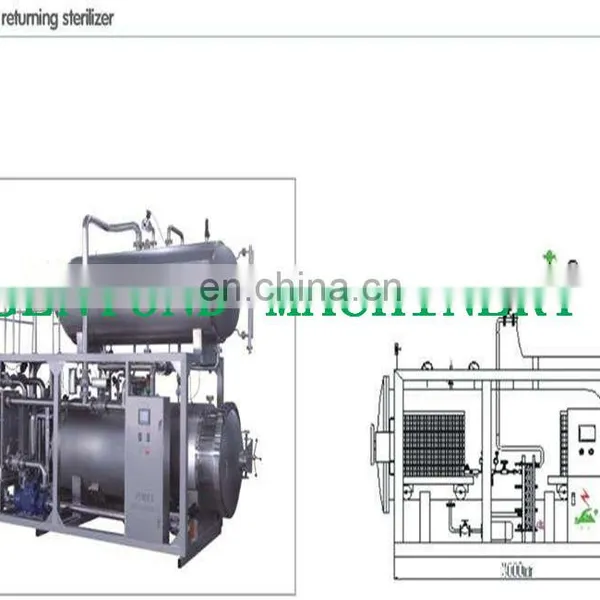
1. Structure: The sterilization pot is composed of a pot body, a lid, an opening device, a locking wedge, a safety interlock device, a track, a sterilization basket, a steam nozzle and a number of nozzles. The lid is sealed with an inflatable silicone rubber temperature-resistant sealing ring, which has a reliable seal and a long service life.
2. Characteristics: It uses steam with a certain pressure as the heat source, which has the characteristics of large heating area, high thermal efficiency, uniform heating, short boiling time of liquid materials, and easy control of heating temperature. The inner pot body (inner pot) of this pot is made of acid-resistant and heat-resistant austenitic stainless steel. It is equipped with a pressure gauge and a safety valve.
3. Use: The sterilizer is mainly used in the food industry, medicine and other fields!
Material |
SUS304 |
Volume |
customized |
Heating |
electric, steam |
Control |
auto, semiauto |
Structure |
as per request |
Model |
as per request |
Control method
1. Manual control type:
2. Electrical semi-automatic control type
3.Computer semi-automatic control type
4.Computer fully automatic control type
Structure
1.Single pot sterilizer
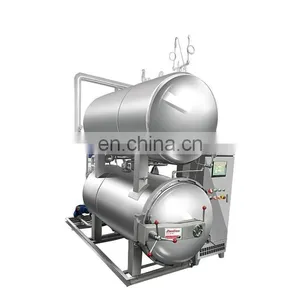
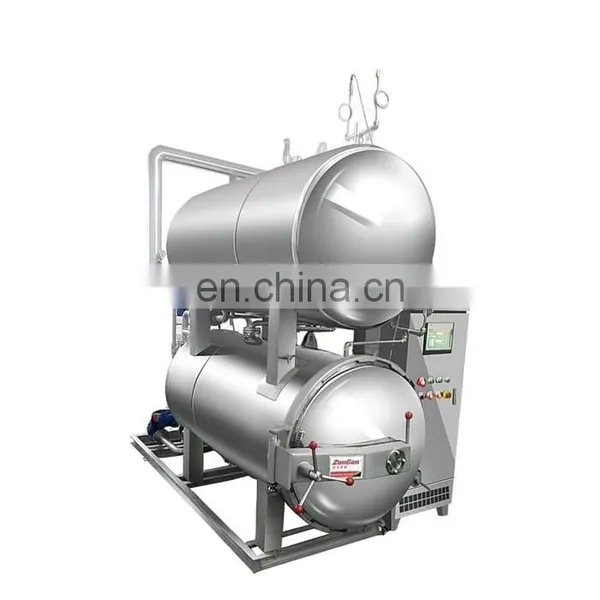
2.Double-layer sterilizer
3.Double pot parallel sterilization pot
4.Vertical sterilization pot
5, electric steam dual-use sterilizer
6.Rotary sterilizer
Detailed Images
There are three types of sterilization:
1. Hot water circulation sterilization: All food in the pot is immersed in hot water during sterilization. In this way, the heat distribution is relatively uniform.
2. Steam-type sterilization: Instead of adding water first, the food is directly heated by steam after it is placed in the pot. Since there is a cold spot in the air during the sterilization process, the heat distribution in this way is not the most uniform.
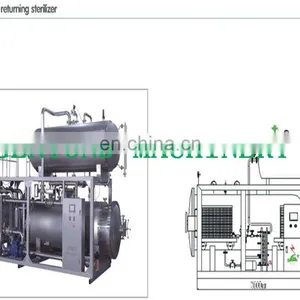
3. Water spray sterilization: This method uses nozzles or spray pipes to spray hot water on food. The sterilization process sprays mist-like waves through nozzles installed on both sides or on the top of the sterilizer. The hot water reaches the surface of the food, so not only the temperature is uniform without dead corners, but also the heating and cooling speed is fast. It can sterilize the products in the pan comprehensively, quickly and stably, and is especially suitable for sterilization of soft-packed food.
Size Information
Capacity and model
Model |
600 |
700 |
800 |
900 |
1000 |
Inner diameter |
0.6 |
0.7 |
0.8 |
0.9 |
1.0 |
Length |
1.5 |
1.7 |
2.3 |
2.5 |
3.0 |
Packing&Shipping
Company Introduction
Zhangjiagang Genyond Machinery Co., Ltd., is directly under the jurisdiction of Genyond Machinery Industrial Group Limited , which is a professional manufacturer and for over 15 years we have been engaged in the research, development, production, sale and service of food processing machinery for dairy products , fruits & vegetables, and also pharmaceutical equipment such as extraction, separation and evaporation etc. We are located in Zhangjiagang, jiangsu Province, with convenient transportation access. Dedicated to strict quality control and thoughtful customer service, our experienced staff members are always available to discuss your requirements and ensure full customer satisfaction. In recent years, our company has introduced a series of advanced equipment including CO2 super critical extraction, essential oil distillation and .......... In addition, we have obtained certificates ISO9001 ......., Selling well in all cities and provinces around China, our products are also exported to clients in such countries and regions as USA, Span, Russia, New Zealand, Japan, Israel, Uzbekistan,Brazil, Indonesia, Malaysia, Philippine, Thailand etc . We also welcome OEM and ODM orders. Whether selecting a current product from our catalog or seeking engineering assistance for your application, you can talk to our customer service center about your sourcing requirements
FAQ
Retort operation instructions
Generally, the canned food factory adopts this type of horizontal sterilization pot when the canned food is heated and sterilized at normal pressure by boiling. This equipment can achieve back pressure sterilization by introducing compressed air. If the cooling needs to be performed in the pot, a water pump must be used to drive the water spray pipe on the top of the pot (or use a water circulation system).
During sterilization, the temperature inside the can will exceed the pressure outside the can (in the pot) because the temperature of the can rises due to heating. Therefore, in order to avoid pressurizing and jumping the cap in glass jars during sterilization, the two ends of the tinplate can project convexly, and the back pressure must be applied, especially for meat cans that require higher sterilization temperature.
The use of back pressure sterilization means that compressed air is passed into the pot to increase the pressure to prevent canned cans and jumping caps. The operation is described as follows: Because compressed air is a poor heat conductor, the steam itself has a certain pressure. Therefore, during the heating process of sterilization, compressed air is not put in, and only when the sterilization temperature is reached, the compressed air is opened into the pot, which increases the pressure in the pot by 0.5 to 0.8 atmospheres. After sterilization, when the temperature is cooled down, the supply of steam is stopped and the cooling water is pressed into the water spray pipe. As the temperature in the pot drops and the steam condenses, the pressure in the pot is reduced by the pressure of compressed air to compensate.
During the sterilization process, attention should be paid to the initial exhaust, and then to release steam to allow the steam to circulate. It can also be deflated every 15-20 minutes to promote heat exchange. In short, the requirements of sterilization conditions must be met. The sterilization temperature, the sterilization pressure, the sterilization time, and the operation method are all specified by the canned product. Sterilizer use, maintenance
1. The standard and inspection basis for the design and manufacture of this equipment: "Steel Pressure Vessel (GB150-1998)" and "Pressure Vessel Safety Technical Supervision Regulations (99 edition)" for manufacturing, testing and acceptance; welding according to Welding regulations for steel pressure vessels (JB / T4709-2000) "; radiographic inspection shall be carried out in accordance with Class III of (JB4730-94).
2. The user should formulate the safety operation rules of the sterilizer according to the sterilization conditions of the production process of the unit and the technical performance of the sterilizer, and strictly implement them. The sterilizer safety operation procedures should at least include:
(1) The operating process index, maximum working pressure, and maximum working temperature of the sterilizer.
(2) Operating methods and procedures and precautions for sterilizers.
(3) During the production operation, items and parts should be inspected, as well as possible abnormal phenomena and preventive measures during operation.
(4) Maintenance methods when equipment is deactivated.
3. It is strictly forbidden to operate the equipment above the design pressure and temperature.
4. Operators who use sterilizers should pass the training and examination and strictly abide by the safety operation regulations and the post responsibility system; if abnormal phenomena are found, they should be dealt with in a timely manner.
5. The sterilizer is equipped with safety valves, pressure gauges, thermometers and other accessories, which must be kept safe, complete, sensitive and reliable. Maintenance and periodic calibration should be added during use. The safety valve trip pressure of this equipment is equal to the design pressure, it should be kept sensitive and reliable, and it should be prevented from being adjusted arbitrarily. Pressure gauge and thermometer accuracy grades are both 1.5 grades. Differences within tolerances are normal. Unleaded seal pressure gauges must not be used. The pressure gauge indications are broken, the scale is not clear, the dial is broken, the pointer does not return to zero after the pressure is released, and the seal is damaged. It should be replaced immediately. The thermometer should be inspected regularly. It should be calibrated with a standard thermometer before use and checked once a year thereafter. Any mercury column that breaks and differs from the standard temperature by more than 0.5 ° C should be sent for repair or replacement.
6. The sterilizer should be inspected regularly, and external inspection should be conducted at least once every six months, and comprehensive inspection should be conducted at least once every year. The preparatory work and inspection items before inspection should be carried out in accordance with "rules" and relevant regulations, and the inspection report should be archived for the record.
7. During use, the sliding and rolling contact parts of the inclined self-locking wedges, rollers, pot ears, swivel flanges, etc. should always be applied with grease and oil to ensure that the friction surface is in a lubricated state.
8. If the sealing ring on the flange surface of the pot is old, if it is damaged or worn too much, it should be replaced in time to ensure the seal and prevent leakage.
9. When the equipment is stopped, the inner and outer surfaces of the sterilization pot and the lid should be cleaned. The exposed processing surface is brushed with rust-proof paint, and the safety detection and control instruments are sealed and protected.

Send Inquiry to This Supplier


3Yrs

Business Type
Trading Company
Year Established
2013
Factory Size
Below 1,000 square meters
Total Employees
201 - 300 People
You May Also Like
-
Cheap Gas Milk PasteurizerNegotiableMOQ: 1
-
Factory Final Manufacturer Instant Coffee Extraction Spray & Freeze Drying Machine Processing Plant Production LineNegotiableMOQ: 1
-
Arabic Bread MachineNegotiableMOQ: 1
-
Genyond Factory Spray Dried & Freeze Dried Instant Coffee Powder Granule Processing Plant Production LineNegotiableMOQ: 1
-
Factory Genyond Vacuum Lyophilization Lyophilized Freeze Dried FD Food Making Machine Lyophilizer Freeze Drying MachineNegotiableMOQ: 1
-
Vacuum Freeze Dryer MachineNegotiableMOQ: 1
-
Genyond Shanghai Manufacturer Food Freezing Drying Equipment Vacuum Freeze Dryer MachineNegotiableMOQ: 1
-
Instant Coffee Freeze DryerNegotiableMOQ: 1
-
0.5 m2 All Scale Vacuum Freeze Dryer/industrial Freeze Dryer/home Use Freeze DryerNegotiableMOQ: 1
-
Small Commercial Lyophilizer Vacuum Freeze Drying Equipment Machine Mini Home Use Freeze Dryer PriceNegotiableMOQ: 1


