








 Contact Platform Support
 Help Center
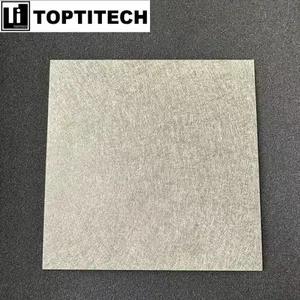
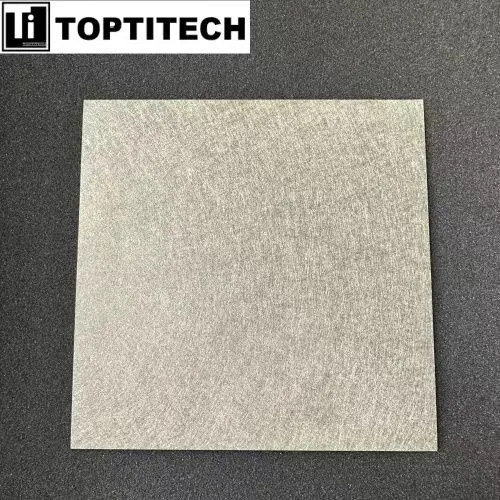
Nickel Felt With Drawn Fiber for PTLs in Hydrogen Production



Related Products
-
 20μm Monel 400 Sintered Filter for Acid Gas FiltrationUS$ 5 - 80MOQ: 5 Pieces
 -
0.2mm Thickness SS316L Perforated Sheet for Fine Liquid FiltrationUS$ 14 - 50MOQ: 5 Pieces
-
20mm SS316L Perforated Hydraulic Suction StrainerUS$ 5 - 20MOQ: 10 Pieces
-
3X6mm Hole Size Pure Nickel Expanded Mesh for Hydrogen ProductionUS$ 5 - 29MOQ: 10 Pieces
-
The Sintered Nickel Felt in GDL in PEMUS$ 5 - 10MOQ: 10 Pieces
Nickel felt with drawn fiber for PTLs in Hydrogen Production
Serving as the core material for the porous transport layer (PTL) in hydrogen electrolyzers, TOPTITECH's nickel felt is 0.8 mm thick and manufactured using innovative precision drawing technology. This process achieves exceptional uniformity in fiber diameter and morphology, with a porosity precisely controlled at approximately 70%.
The drawing process results in exceptionally smooth and consistent fiber surface and diameter, fundamentally resolving the unstable pore structure caused by uneven fiber thickness in conventional felts, thereby ensuring reliable gas-liquid transport within the electrolyzer.
Specifications
Material: Nickel 200 (N6)
Dimensions: 145 × 145 × 0.8 mm
Porosity: ~70%
Fiber Type: Drawn (round fiber)
Manufacturing Process: Sintering
Key Features
1. Precise fiber control achieved through drawing technology
This technology utilizes solid metal drawing, rather than cutting. This uniform fiber diameter enables predictable pore structure behavior, providing an accurate simulation foundation for electrolyzer design.
2. Highly Uniform Pore Network
The uniform fibers form a narrowly distributed pore structure. This uniform structure suppresses local hot spots and bubble blockage, ensuring stable high-current density operation.
3. Optimized Electrochemical Interface
The fibers establish a low-impedance contact with the catalyst layer, resulting in lower electrode contact resistance than traditional nickel felt. The smooth surface also minimizes catalyst particle embedding loss, extending the life of the membrane electrode assembly (MEA).
4. Customizable Product Options
This nickel felt can be customized in thickness and porosity to meet specific customer needs. This allows for use and testing in various devices and application scenarios.
Applications
Proton Exchange Membrane (PEM) Electrolyzer Components
Used as a high-efficiency proton transport layer (PTL), its uniform pores enhance proton conduction and optimize water/gas two-phase flow distribution.
Alkaline electrolyzer electrodes
After surface activation, this material can serve as a 3D electrode substrate, boasting a higher surface area than traditional materials.
Fuel cell gas diffusion layer (GDL)
In fuel cell environments, its corrosion resistance is many times greater than that of traditional carbon paper.
Catalytic reactors
The combination of ultra-high porosity and electrical conductivity significantly improves catalyst dispersion.

Send Inquiry to This Supplier

You May Also Like
-
Stainless Steel Pleated Filter Cartridge With High Strength From TOPTITECHUS$ 1 - 3MOQ: 5 Pieces
-
Porous Metal Explosion-proof Filter ElementUS$ 6 - 8MOQ: 5 Pieces
-
Nickel Foam Plate For Sound Absorbing InstrumentUS$ 5 - 10MOQ: 1 Piece
-
Parallel Filter Element for Oil PurificationUS$ 5 - 9.99MOQ: 5 Pieces
-
20um Micron Parallel Oil Filter Element Stainless SteelUS$ 6.58 - 12.28MOQ: 1 Piece
-
20 Microns Nickel Felt For AEMFC GDLUS$ 5.9 - 11.9MOQ: 1 Piece
-
Nickel Expanded Mesh Metal Wire MeshUS$ 8 - 12MOQ: 1 Piece
-
Pleated Stainless Steel Filter Oil Filter FiltrationUS$ 6 - 19MOQ: 5 Pieces
-
Nickel Mesh Anode in AEM ElectrolyzerUS$ 10 - 20MOQ: 1 Square Meter
-
Sintered Nickel Fiber Paper Nickel Felt For GDLUS$ 2 - 15MOQ: 1 Piece