








 Contact Platform Support
 Help Center
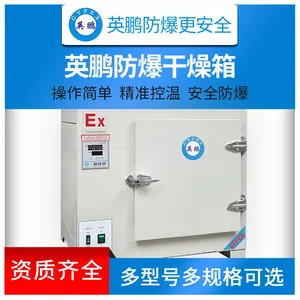
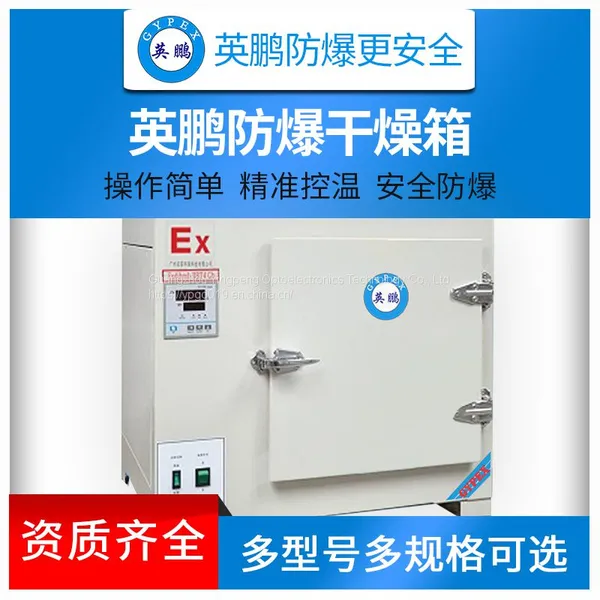
Guangzhou Yingpeng Factory's Explosion-proof Oven (explosion-proof Drying Oven)



Related Products
-
 Guangzhou Yingpeng Industrial Ultrasonic Cleaning Machine, Laboratory Utensil CleanerNegotiableMOQ: 1 Box
 -
Guangzhou Yingpeng Industrial Explosion Proof Ceiling Dehumidifier ManufacturerNegotiableMOQ: 1 Box
-
Guangzhou Yingpeng Industrial Explosion-proof I-shaped Automatic Packaging and Sealing Machine, Yingpeng Explosion-proof Packaging Machine SeriesNegotiableMOQ: 1 Box
-
Guangzhou Yingpeng Industrial Explosion Proof Oven ManufacturerNegotiableMOQ: 1 Box
-
Guangzhou Yingpeng Industrial Explosion Proof Temperature and Humidity Detection TransmitterNegotiableMOQ: 1 Box
Factory explosion-proof oven (explosion-proof drying oven)
product details
Product Details:
Explosion proof features:
The explosion-proof drying oven is made into an explosion-proof structure according to the provisions of GB3836.1-2010 "Explosive Atmospheres - Part 1: General Requirements for Equipment", GB3836.2-2010 "Explosive Atmospheres - Part 2: Equipment Protected by Explosion proof Enclosures" d ", and GB3836.9-2006" Explosion proof Electrical Equipment for Explosive Atmospheres - Encapsulated Electrical Equipment "m". Its explosion-proof symbol is Exdmb II BT4. Therefore, this explosion-proof blast drying oven can be used in explosive hazardous areas where there are or may be Class IIA, IIB, TI~T4 combustible gases, vapors, and air mixed in the factory.
Structure:
The outer shell of this type of drying oven is made of thin steel plate, with the outer surface repainted. The outer shell and inner liner are filled with aluminum silicate fibers to form a reliable insulation layer. Two sets of heaters are installed at the bottom of the studio, with one set of heaters managed by a separate switch for power on/off. The 101A model is equipped with air blowing, while the 202B model has no air blowing.
Usage and precautions:
1. This type of oven should work indoors and be installed smoothly.
2. The power input should be equipped with a dedicated front stage on/off switch and connected to a good grounding wire.
3. The power supply, voltage, and wiring must be checked for accuracy before being powered on for use.
4. When newly purchased or left unused for a long time, it is recommended to bake at a low temperature of 80-100 ℃ for two hours before increasing the temperature to prevent moisture leakage, enhance insulation performance, and extend the lifespan of porcelain components.
5. The thermal element probe for instrument temperature control should be inserted into the working chamber from the temperature measurement hole on the left side of the circuit, and should not be inserted from the center hole of the box top gas valve to avoid affecting its use.
6. When using this drying oven for the first time, please observe it frequently to avoid overheating and damaging the workpiece, resulting in losses.
7. If you feel a slight increase in thermal inertia during use, you can turn off a set of heaters to reduce the heating power and prevent excessive inertia from causing overheating.
8. Take in the baking object: Do not hit the part of the thermostat that extends into the studio to prevent damage to the thermostat and cause it to malfunction.
9. Please specify the baked goods and consult technical personnel when purchasing.
10. If there is a malfunction, please consult a professional electrician for maintenance.
11. When leaving the factory, there are two shelves in the studio, one manual and one certificate of conformity
12. Size, structure, and temperature can be customized.

Send Inquiry to This Supplier


You May Also Like
-
Guangzhou Yingpeng Industrial Explosion Proof Toxic Gas Alarm - Ammonia NH3NegotiableMOQ: 1 Box
-
Guangzhou Yingpeng Industrial Explosion-proof Intelligent Coding Machine, Yingpeng Explosion-proof Inkjet Coding MachineNegotiableMOQ: 1 Box
-
Guangzhou Yingpeng Oil-free Screw Air Compressor, Explosion-proof Air Compressor ManufacturerNegotiableMOQ: 1 Box
-
Guangzhou Yingpeng Printing Factory's Explosion-proof Intelligent Inkjet Printer EXBZ-900-06PMNegotiableMOQ: 1 Box
-
Guangzhou Yingpeng Explosion-proof Air Compressor Manufacturer, Permanent Magnet Variable Frequency Air CompressorNegotiableMOQ: 1 Box
-
Guangzhou Yingpeng Filtered Explosion Proof Air CabinetNegotiableMOQ: 1 Box
-
Guangzhou Yingpeng Explosion-proof Sealing Machine, Upper and Lower Drive Binding MachineNegotiableMOQ: 1 Box
-
Guangzhou Yingpeng Industrial Explosion Proof Binding Machine, Yingpeng Explosion Proof Packaging Machine SeriesNegotiableMOQ: 1 Box
-
Guangzhou Yingpeng Food Processing Explosion Proof Jet Packaging Machine, Yingpeng Explosion Proof Sealing MachineNegotiableMOQ: 1 Box
-
Concrete Cooling and Explosion-proof Ice Machine BL-400EX10T for Guangzhou Yingpeng Nuclear Power Station ProjectNegotiableMOQ: 1 Box


