








 Contact Platform Support
 Help Center
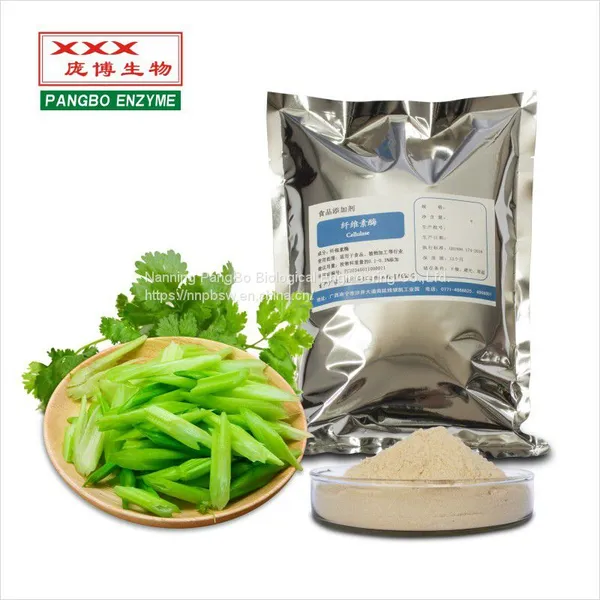
Hemicellulase CAS:9025-56-3


Related Products
-
 Chymotrypsin CAS:9004-07-3 Medical GradeUS$ 10 - 550MOQ: 1 Kilogram
 -
Papain EnzymesUS$ 7 - 150MOQ: 1 Kilogram
-
Trypsin CAS NO.9002-07-7 Food GradeUS$ 50 - 300MOQ: 1 Kilogram
-
Maltogenic Amylase Enzyme for Preservation of Flour ProductsUS$ 20 - 300MOQ: 1 Kilogram
-
Maltogenic Amylase Enzyme for Preservation of Flour ProductsUS$ 20 - 300MOQ: 1 Kilogram
summary:
Hemicellulase is a group of enzymes that degrade cellulose to produce glucose. It is not a single enzyme, but a multi-component enzyme system that plays a synergistic role. It is a complex enzyme. from β- Endoglucanase β- Exoglucanase and β- It is composed of glucosidase, high activity xylanase and other enzyme systems, which act on cellulose and products derived from cellulose.
Product features:
1. Hemicellulose is polymerized from a kind of Heteropoly polysaccharide. A plant often contains several hemicelluloses composed of two or three sugar groups. The sugar groups constituting hemicellulose mainly include D-xylose, D-mannose, D-glucose, D-galactose, L-arabinose, 4-oxmethyl-d-glucuronic acid, and a small amount of L-rhamnose and L-fucose. As enzymes that decompose hemicellulose, they mainly include xylanase, glucanase, mannanase and other complex enzymes. Through the coordinated action of these enzymes, hemicellulose is decomposed into small molecule polysaccharides or monosaccharides.
2. Through microbial fermentation and production, micro filtration, ultrafiltration and other technologies are adopted to improve product enzyme activity, ensure product hygiene and meet food grade requirements. It is safe to use and will not affect the environment.
3. Hemicellulose has hydrophilic properties, which can cause cell wall swelling and give fiber elasticity. In the paper forming process, it is beneficial to improve the fiber structure and the bonding force between fibers, and increase the swelling and flexibility of fibers.
4. The optimum temperature is 40-50 ℃, and the optimum pH is 4.8.
Definition of vitality:
Under the condition of 40 ℃ and ph4.8, the amount of enzyme producing 1mg glucose in one hour is one enzyme activity unit.
Product specifications:
This product conforms to the industrial standard Q / cbef02-1999 of the people's Republic of China
Hemicellulase: 10000 U / g
Product properties: light yellow or white solid powder
Application field:
1. With pectinase and cellulase, citrus juice can be clarified.
2. It is used to treat coffee beans and improve coffee extraction rate.
3. It is used to treat soybean and improve the extraction rate of vegetable oil.
4. It is used for the alcohol fermentation of sake and shochu to improve the utilization rate of raw materials and the fermentation rate.
5. The pulp is pre bleached and high purity cellulose pulp is obtained.
6. Waste treatment is the biological conversion of cellulose materials into single-cell proteins, ethanol or other useful substances.
Service conditions:
1. Liquor making industry: dissolve in warm water below 40 ℃ for 5 minutes, add 0.05-0.07% (calculated by the dry weight of raw materials), and mix the enzyme solution with koji or other production bacteria for fermentation.
2. The optimum amount of enzyme added in the juice industry and other industries must be determined according to the specific production situation. For details, please contact us by letter or telephone.

Send Inquiry to This Supplier


You May Also Like
-
Lactase Food Grade CAS:9031-11-2 β- GalactosidaseUS$ 300 - 400MOQ: 1 Kilogram
-
Lysozyme CAS 12650-88-3 Enzyme Food GradeUS$ 50 - 400MOQ: 1 Kilogram
-
Cellulase Food Grade CAS No.: 9012-54-8US$ 30 - 100MOQ: 1 Kilogram
-
Neutral Protease 9001-92-7 Enzyme Food GradeUS$ 10 - 200MOQ: 1 Kilogram
-
Alkaline Protease CAS:9014-01-1 Bacillus Subtilis Protease Food GradeUS$ 20 - 300MOQ: 1 Kilogram
-
Pancreatin CAS:8049-47-6 Pangbo EnzymeUS$ 10 - 70MOQ: 1 Kilogram
-
LACTASE (NEUTRAL) CAS:9031-11-2 Food GradeUS$ 10 - 80MOQ: 1 Kilogram
-
PEPSIN CAS:9001-75-6NegotiableMOQ: 1 Kilogram
-
SUCRASE CAS:9001-57-4 InvertaseUS$ 10 - 450MOQ: 1 Kilogram
-
PECTINASE CAS:9032-75-1 Food GradeUS$ 10 - 90MOQ: 1 Kilogram


