








 Contact Platform Support
 Help Center
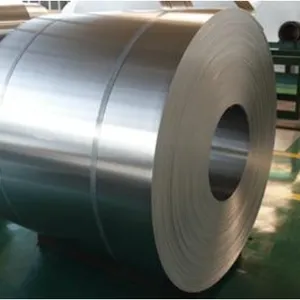
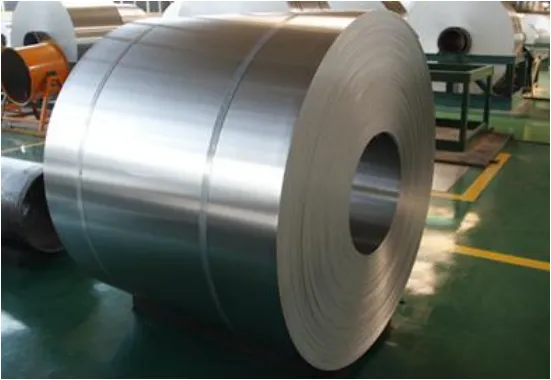
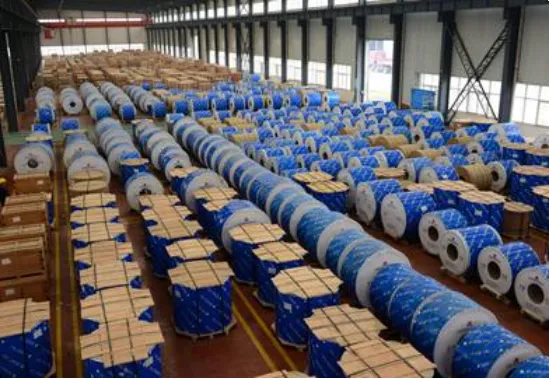
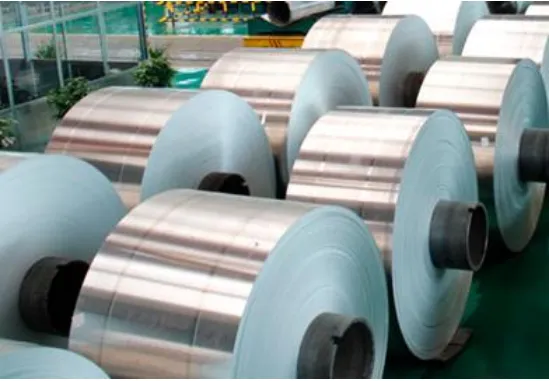
7075 Aluminum Strip 1060 Aluminium Coil-strip Aluminum Coil Can be Customized Thickness 1mm2mm3mm4mm The Maximum Width is 2 Meters



Related Products
-
 1050 Aluminium Coil 1060 Aluminium Coil-strip Aluminum Coil Can be Customized Thickness 1mm2mm3mm4mm The Maximum Width is 2 MetersUS$ 2000 - 2500MOQ: 10 Tons
 -
1100 Aluminium Coil 1060 Aluminium Coil-strip Aluminum Coil Can be Customized Thickness 1mm2mm3mm4mm The Maximum Width is 2 MetersUS$ 2000 - 2500MOQ: 10 Tons
-
1060 Aluminium Coil 1060 Aluminium Coil-strip Aluminum Coil Can be Customized Thickness 1mm2mm3mm4mm The Maximum Width is 2 MetersUS$ 2000 - 2500MOQ: 10 Tons
-
3003 Aluminium Coil 1060 Aluminium Coil-strip Aluminum Coil Can be Customized Thickness 1mm2mm3mm4mm The Maximum Width is 2 MetersUS$ 2000 - 2500MOQ: 10 Tons
-
3004 Aluminium Coil 1060 Aluminium Coil-strip Aluminum Coil Can be Customized Thickness 1mm2mm3mm4mm The Maximum Width is 2 MetersUS$ 2000 - 2500MOQ: 10 Tons
A brief introduction of 7075Al-Zn-MgCu al-Zn-MgCu alloy
Al-zn-mgcu alloy is a heat-treatable alloy, the main strengthening elements are zinc and magnesium, copper also has a certain strengthening effect, but its main role is to improve the resistance to wide corrosion of the material.
Two, the role of each element in 7075 aluminum alloy
(1) Zinc and magnesium: Zinc and magnesium are the main strengthening elements, and they will form N (MgZn2) and T(Al2Mg2Zn3) phases when they exist together. The solubility of N phase and T phase in aluminum is very large, and changes dramatically with the rise and fall of temperature. The solubility of Mgm2 reaches 28% at eutectic temperature, and decreases to 4%~5% at room temperature, which has a strong aging strengthening effect. The increase of zinc and magnesium content can greatly improve the strength and hardness, but reduce the plasticity, stress corrosion resistance and fracture toughness.
(2) Copper: when (Zn): W (Mg)>2.2 and the content of copper is greater than that of magnesium, the strengthening phase S(CuMa2) can be produced by copper and other elements to improve the strength of 7075 aluminum alloy, but the possibility of S phase is very small under the contrary situation. Copper can reduce the potential difference between grain boundary and grain boundary, change the structure of precipitated phase and refine the precipitated phase at grain boundary, but it has little effect on the width of PFZ, and can inhibit the tendency of intergranular cracking, so it can improve the stress corrosion resistance of the alloy. However, when V (Cu)>3%, the corrosion resistance of the alloy deteriorates. Copper can increase the degree of oversaturation of the alloy, accelerate the artificial aging process, enlarge the stable temperature range of G.P zone, and improve the tensile strength, plasticity and fatigue strength of the alloy at 100~200℃. In addition, the United States F.S Iin research such as copper content on the 7 x x x series aluminum alloy, the fatigue strength of found that copper content is within the range is not too high, with the increase of the content of copper cycle strain fatigue resistance and fracture toughness increase, and reduce the rate of crack propagation in the corrosive medium, but the addition of copper has a tendency to intergranular corrosion and pitting corrosion. The influence of copper on fracture toughness is related to (Zn): W (Mg) ratio. When the ratio is small, the higher the copper content is, the worse the fracture toughness is. When the ratio is large, the toughness is still good even if the copper content is high.
(3) Manganese and chromium: adding a small amount of transition elements such as manganese and chromium has a significant effect on the microstructure and properties of the alloy. These elements can be produced during ingot homogenizing annealing particle dispersion, prevent dislocation and grain boundary migration, thus improve the recrystallization temperature of copper aluminum alloy, aluminum zinc magnesium effectively prevent grain grew up, can refine the grain size, and guarantee organizations in hot working and heat treatment after being not recrystallization or partial recrystallization, improved the strength at the same time has good resistance to stress corrosion performance. Chromium is better than manganese in improving stress corrosion resistance. When adding (Cr)=0.45%, its stress corrosion cracking life is tens of times longer than adding the same amount of manganese.
(4) Zirconium: the trend of replacing chromium and manganese with zirconium appears recently. Zirconium can greatly improve the recrystallization temperature of alloy, whether it is hot deformation or cold deformation, after heat treatment can get no recrystallization structure, zirconium can also improve the hardenability, weldability, fracture toughness, stress resistance corrosion performance, etc..
(5) Titanium and boron: titanium and boron can refine the grain of 7075 alloy aluminum plate in the as-cast state, and improve the recrystallization temperature of 7075 aluminum alloy.
(6) Iron and silicon: iron and silicon are harmful impurities in 7×× X series aluminum alloy, mainly from raw materials, as well as tools and equipment used in smelting and casting. These impurities mainly exist in the form of hard and brittle FeAl3 and free silicon. These impurities also form (FeMn)Al4, (FeMn)Si2A3, Al(FeMnCr) and other coarse compounds with manganese and chromium. With the increase of insoluble phase content, the volume fraction of insoluble phase also increases. These insoluble second phase will be broken and elongated during deformation, resulting in banded structure. The particles are arranged in straight lines along the deformation direction and composed of short unconnected strips. Because the impurity particles are distributed in the grain interior or grain boundary, during plastic deformation, pores occur in part of the particle-matrix boundary, resulting in micro-cracks, which become the source of macroscopic cracks, and it also promotes the early development of cracks. In addition, it has a great influence on the growth rate of fatigue crack, and it can reduce the local plasticity in failure.

Send Inquiry to This Supplier

You May Also Like
-
5005 Aluminium Coil 1060 Aluminium Coil-strip Aluminum Coil Can be Customized Thickness 1mm2mm3mm4mm The Maximum Width is 2 MetersUS$ 2000 - 2500MOQ: 10 Tons
-
5052 Aluminium Coil 1060 Aluminium Coil-strip Aluminum Coil Can be Customized Thickness 1mm2mm3mm4mm The Maximum Width is 2 MetersUS$ 2000 - 2500MOQ: 10 Tons
-
5083 Aluminium Coil 1060 Aluminium Coil-strip Aluminum Coil Can be Customized Thickness 1mm2mm3mm4mm The Maximum Width is 2 MetersUS$ 2000 - 2500MOQ: 10 Tons
-
5754 Aluminium Coil 1060 Aluminium Coil-strip Aluminum Coil Can be Customized Thickness 1mm2mm3mm4mm The Maximum Width is 2 MetersUS$ 2000 - 2500MOQ: 10 Tons
-
5454 Aluminium Coil 1060 Aluminium Coil-strip Aluminum Coil Can be Customized Thickness 1mm2mm3mm4mm The Maximum Width is 2 MetersUS$ 2000 - 2500MOQ: 10 Tons
-
5182 Aluminium Coil 1060 Aluminium Coil-strip Aluminum Coil Can be Customized Thickness 1mm2mm3mm4mm The Maximum Width is 2 MetersUS$ 2000 - 2500MOQ: 10 Tons
-
5052B Aluminium Coil 1060 Aluminium Coil-strip Aluminum Coil Can be Customized Thickness 1mm2mm3mm4mm The Maximum Width is 2 MetersUS$ 2000 - 2500MOQ: 10 Tons
-
5086 Aluminium Coil 1060 Aluminium Coil-strip Aluminum Coil Can be Customized Thickness 1mm2mm3mm4mm The Maximum Width is 2 MetersUS$ 2000 - 2500MOQ: 10 Tons
-
7075 Aluminium Coil 1060 Aluminium Coil-strip Aluminum Coil Can be Customized Thickness 1mm2mm3mm4mm The Maximum Width is 2 MetersUS$ 2000 - 2500MOQ: 10 Tons
-
3A21 Aluminium Coil 1060 Aluminium Coil-strip Aluminum Coil Can be Customized Thickness 1mm2mm3mm4mm The Maximum Width is 2 MetersUS$ 2000 - 2500MOQ: 10 Tons


