








 Contact Platform Support
 Help Center
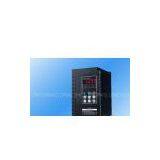
AC Motor Sensorless Vector Variable Control Frequency Inverter Drive for Winding


Related Products
-
 Sensorless AC Motor Vector Control VFD Drive for Vibration FeedersNegotiableMOQ: 1 Piece
 -
Sensorless Vector Controllers AC VFD Drive for Plastic Injection MachineNegotiableMOQ: 1 Kilogram
-
Variable Speed Controls Sensorless Vector Drive for HVAC With Low NoiseNegotiableMOQ: 1 Kilogram
-
AC Sensorless Vector Control of Induction Motor Drive for EscalatorNegotiableMOQ: 1 Piece
-
AC Variable Frequency Motor Inverter Drives for Clean Room FanNegotiableMOQ: 1 Piece
Certification:CE
AC Motor Sensorless Vector Variable Control Frequency Inverter Drive for Winding
Winding is a procedure to take up and package material in roll form, for more efficient handling or in preparation for a subsequent operation. In a typical industrial application, a winder is employed to roll up a continuous or limited length of material such as wire, paper, film, metal, or textiles. The winder and finished roll are referred to by different names in different industries.
|
Industry |
Winder Name |
Roll Name |
|
Paper, Textile, Film |
Winder |
Roll |
|
Wire |
Takeup, Reeler |
Reel |
|
Wire |
Spooler |
Spool |
|
Metal |
Coiler |
Coil |
|
Textile |
Beamer |
Beam |
Wound materials may be stretchable or non-stretchable. Winding of stretchable materials is more complex and critical than non-stretchable materials.
Materials typically wound include:
| Wire Cable | Foils | Textile Materials |
| Paper | Metals | Glass Fiber Materials |
| Business Forms | Textile | Plastic Film |
Generally, plastic film is extensible (stretchable) material, most other materials can be considered non-extensible. Rolls may be wound by applying drive torque at its center or its surface. As a result the two major categories of winders are:
· Center Winders
· Surface Winders
Winder drives are designed to improve the wound package and eliminate material breakage.
Application Challenges
|
· Control of a motor under dynamically changing requirements |
· Speed and torque need to be controlled |
|
· Acceleration to a fixed speed, deceleration to zero speed |
· High process speed |
|
· Changes in speed and torque during operation |
· Wide speed range |
|
· Detailed sequencing for flying splices and roll changing |
· Changes in processed material |
Features of 303 series winding application
|
Features |
Benefits |
|
flexible input methods |
1. Speed input-Take running speed of the motor as the control objective Speed input consists of the main speed input, auxiliary speed input and inching speed input, etc. The actual effective combined speed input can be either of the three or the combination of either of the two. 2. Torque input-Take output torque of the motor as the control objective Set output torque of the motor directly, particularly suited to application fields requiring tension control. |
|
Terminal-Peripheral equipment control |
Control start/stop with the contact or button to simply realize the automation control of the entire equipment system. |
Power range of 303 VFD
Voltage: 3 phase 380VAC(304VAC – 460VAC)
Power: 0.75kw/1HP – 400kw/535HP
Specification of 303 VFD
|
Item |
Specification |
|
Input frequency |
50/60Hz |
|
Output frequency |
0-600Hz |

Send Inquiry to This Supplier

You May Also Like
-
Honeywell 2MLF-DC8A MasterLogic-200 8 Channel Current Output Module, New HoneywelNegotiableMOQ: 1 Piece
-
3 Axis Geomagnetic Sensor Magnetic Field Sensor Magnetometer Holybro DroneCAN RM3100 Professional Grade for Drones/Orientation Measurement ThreeUS$ 30 - 35MOQ: 1000 Units
-
General Purpose ICNegotiableMOQ: 2500 Pieces
-
Latest Electronic Components GEC034US$ 0.5 - 0.8MOQ: 1000 Pieces
-
A76L-0300-0035/TNegotiableMOQ: 10 Pieces
-
Mobile Phone IC Components SpreadtrumNegotiableMOQ: 50000 Units
-
Taiwan All Kinds Of Device For The Bathroom Home SupplyUS$ 0.7 - 1MOQ: 1000 Pieces
-
Best Price Wireless Bluetooth ModuleUS$ 4 - 6MOQ: 2000 Pieces
-
OP277-6 OP227 6AV6643-0BA01-1AX KeypadNegotiableMOQ: 1 Piece
-
AKE390B Industrial 3 Axes Analog Vibration Sensor With Over Current Protection From Reliable Shenzhen SupplierNegotiableMOQ: 1 Set


