








 Contact Platform Support
 Help Center
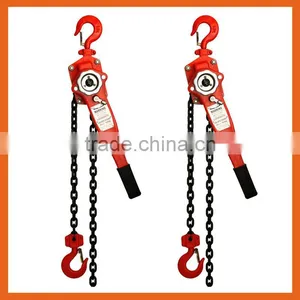
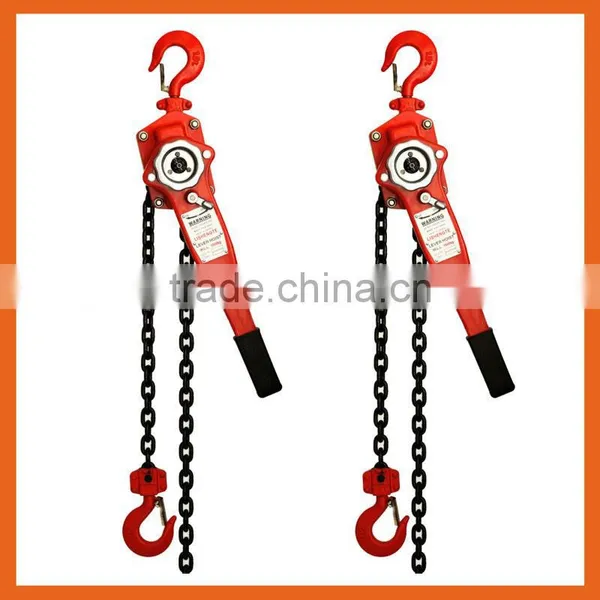
LH Type Lifting Equipment Lever Hoist


Related Products
-
 LL Type Lifting Equipment Lever HoistUS$ 10 - 100MOQ: 1 Piece
 -
LSC Type Lifting Equipment Chain HoistUS$ 10 - 100MOQ: 1 Piece
-
LSA Type Lifting Equipment Chain HoistUS$ 10 - 100MOQ: 1 Piece
-
LSB Type Lifting Equipment Chain HoistUS$ 10 - 100MOQ: 1 Piece
-
Snap Hook for Safety Lanyard YL-H01US$ 0.2 - 5MOQ: 1000 Pieces
Specifications
lever hoist1. capacity range: 0.75t ~ 6t
2. the latest fashionalbe style
3. lightweight robust construction
Features:
1. The latest fashionable style.
2. Lightweight robust construction.
3. Multiple patents protection.
4. Strengthened grade 80 alloy load chain.
5. Minimum effort to raise maximum load.
6. Optional fully machined load sheave.
7. Malleable hook forgings.
8. All gears and shafts running on roller bearings.
9. Durable baking finish protection.
Specifications and Models:
Other Models available:
A lever hoist is a manual device used to lift, lower, or pull a load and to apply or release tension. It utilizes a ratchet and pawl mechanical configuration to incrementally raise or lower a load or to apply or release tension.
A chain hoist is a mechanical device used for lifting heavy loads of objects and equipment. It is made with a pulley, which is held together by a closed chain. The closed chain forms a loop, which makes it easy to be pulled by hand.
Inspection Before Use:
Ensure that the lever hoist name plate plate is clearly visible and that the WLL is legible.
The pre-use inspection for a chain block should include the following:
Load chain
- Inspect chain for wear, gouges, nicks, arc burns, twisted and bent links and corrosion.
- Inspect for correct reeving on 6 tonne units.
Lift wheels & Sheave Wheels
- Inspect lift wheel for foreign material, wear and corrosion.
- Inspect sheaves for wear, freedom of movement and corrosion.
- Inspect dead end pins for wear, tightness and corrosion.
Hooks
- Inspect hooks for signs of opening, cracking, bending, arc burns, welds and corrosion.
- Hooks should swivel freely.
Miscellaneous
- Inspect the frame and covers for deformation, warping, severe denting and other damage.
- Inspect safety catches for condition and operation.
- Measure hook throats for allowable service openings. Inspect hangers (6 tonne hoist) for cracks, gouges, corrosion and other damage.
- Inspect lever handle for overloading or any signs of distortion.
- Check for freewheeling function.
- Ensure raise and lower selections operate correctly.
- Check there is an end stop fitted to the chain.
Care In Use:
- All persons involved in the operation of a lever hoist must read the manufacturers handbook and be completely familiar with all operating and maintenance procedures.
- When operating a lever hoist, always maintain a firm footing and when necessary be secured. Operate the lever hoist from a location that will be clear of the load at all times. People must stay clear of the suspended load. Never use the lever hoist to lift, support or transport people and never lift loads over or near people.
- Before lifting a load, confirm that the lever hoist is in good condition and functioning properly.
- Always keep the load chain well lubricated and protect it from weld spatter and other damaging contaminants.
- Never allow the load chain or hooks to be used as a ground for welding and never touch them with live welding electrodes.
- Never use the lever hoist with twisted, kinked, damaged or worn load chains and never attempt to lengthen the load chain.
- Always use proper slings and attachments in the correct manner and confirm that they are seated properly in the hooks. Also confirm that the safety catch assembly has closed completely and is not supporting any part of the load.
- Never lift more than the rated WLL.
- Slack load chain must be taken up carefully. While checking the balance of the load, lift and lower the load about 100mm to test the brake system before lifting further.
- Never run the load chain out beyond the range of lift.
- Never allow your attention to be diverted when operating the lever hoist and never leave a suspended load unattended.
- Inspect the lever hoist regularly. Never use a lever hoist when malfunctioning or when unusual performance or damage is evident.
- Never adjust or repair a lever hoist unless you are competent in performing hoist maintenance.
- Never modify the lever hoist.
- Never remove or obscure the nameplate on the lever hoist.
- Examine the load chain to ensure that there is no twist. Lever hoists can lift on 2 falls of load chain; twists can arise from the bottom hook being accidentally turned over through the load chains.
- Confirm that the supporting structure is strong enough to support the intended load.
- The changeover lever must be set to the "UP" position when the lever hoist is under a load during hoisting or pulling operations. In some cases with light loads (less than 2% of the WLL) if the changeover lever or hub is set to the neutral position, the free-wheeling system will function, and the lever hoist will not be able to support the load.
- Lifting a load with two lever hoists is not recommended. If the job is unavoidable, keep the load well within the total rated capacity of the two lever hoists and lift with exceptional care while maintaining proper balance, angle and lifting speed.

Send Inquiry to This Supplier

You May Also Like
-
Triangular Type Manual Chain Hoist, Heavy-Duty Hand Chain Lifting HoistNegotiableMOQ: 1 Combo
-
Geared Beam Trolley, Manual Geared TrolleyUS$ 22 - 380MOQ: 20 Sets
-
Non Sparking Chain Hoist,non Sparking Crane,safety Manual Monorail Hoist,crab,freight ElevatorUS$ 697 - 1,300MOQ: 1 Piece
-
Electric Swing Stage Lifting Equipment HoistUS$ 1 - 1,000MOQ: 1 Set
-
LFM-A Manual Chain HoistNegotiableMOQ: 1
-
TH Type Chain Bucket Elevator TH Hoist MachineUS$ 1,000 - 20,000MOQ: 1 Set
-
Mini Lever HoistNegotiableMOQ: 500 Sets
-
2T Light Duty Single Gear With 2 Hooks Hand PullerUS$ 1 - 10MOQ: 500 Pieces
-
Windlass for VesselUS$ 5,500 - 25,000MOQ: 10 Sets
-
Electric Hoist ModelUS$ 35,000 - 100,000MOQ: 1 Set


