








 Contact Platform Support
 Help Center
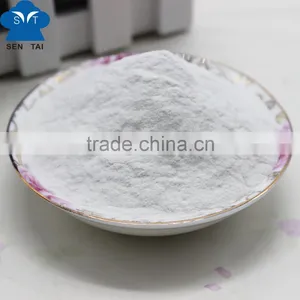
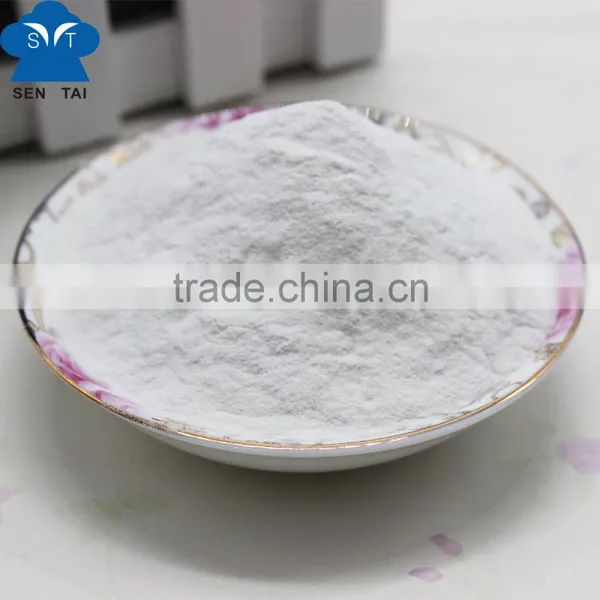
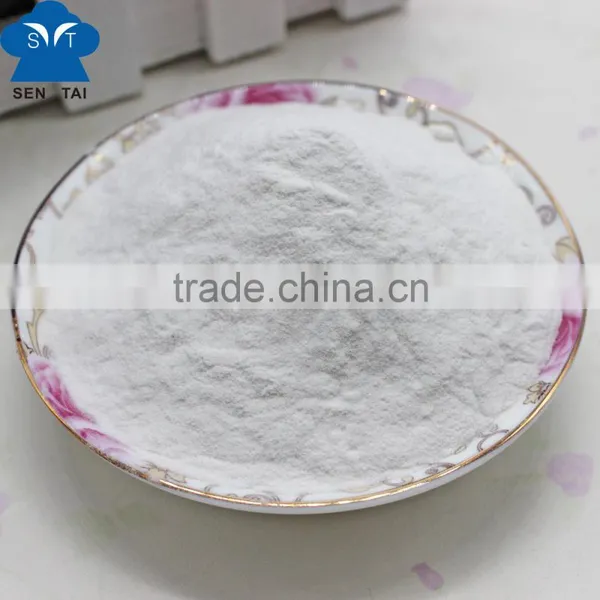
Konjac Powder for Meat Products/thicker Agent


Related Products
-
 Potential Health Benefits of Konjac/konjac Gum ApplicationUS$ 15 - 50MOQ: 200 Kilograms
 -
Applications of Konjac Gum/benefits of Shirataki GumUS$ 18 - 50MOQ: 500 Kilograms
-
Konjac Gum Manufacturer, Konjac Gum for Meat ProductsUS$ 18 - 50MOQ: 100 Kilograms
-
Konjac Root Powder Glucomannan Food Ingredient Food AdditiveUS$ 10 - 45MOQ: 100 Kilograms
-
Konjac Glucomannan Powder Additive for Food Konjac Root PowderUS$ 10 - 45MOQ: 100 Kilograms
Applications of Konjac
Water Solubility
Konjac is readily dissolved in water. Its water solution is a pseudo-plastic liquid, and has a shear thinning characteristic. A particle of Konjac powder consists of extremely long thread-like macromolecules tangled together.
When it comes in contact with water, the water molecules enter and are absorbed into the chain. Once it has entered the chain the particle can swell to about 200 times its original volume, turning the Konjac into a viscous liquid.
Thickener
Konjac has the highest molecular weight, highest density and strongest viscosity of any dietary fiber known to science. The unmodified natural acetylated Konjac glucomannan ‘s can produce extreme viscous solutions. Typically a 1% solution of konajc powder in water can produce 20,000cps to 40,000cps when measured at 30c. This viscosity is the highest of any other natural thickening agent in the market place today.
Konjac interacts synergistically with Carrageenan, Xanthan Gum, Locust Bean Gum and starch. For example, the addition of 0.02 to 0.03% crude Konjac to 1% xanthan gum will raise the viscosity by 2 to 3 times when heated. Konjac – Xanthan Gum gels are cohesive and extremely elastic in nature. Maximum gel strength is seen at a ratio of Konjac and Xanthan Gum between 1:2,5 to 1:4.
The Konjac—Carrageenan interaction is similar to that of Locust Bean Gum—Carrageenan, but is slightly stronger in nature.
Konjac will interact with most starches to produce a remarkable increase in viscosity allowing for an optimization of starch-rich formulations, whether the purpose is a reduction of calories or improvement of texture.
Stabilizer
Unlike Xanthan Gum, Guar Gum or Locust Bean Gum, Konjac is the non-ionic type and therefore can not be influenced by the salt in a system. At ambient temperature, konjac gum remains stable without precipitation even if the pH drops to a level below 3.3. When Konjac Gum is used instead ofLocust Bean Gum in a stabilizer and added to ice cream, cheese and other dairy products, it will stabilize their quality by preventing the development of ice crystals.
Gelling Agent
As a gelling agent, Konjac is quite unique for its ability to form a thermo-reversible and thermo-irreversible gel under different condition.
In the food industry, many kinds of products rely on the gelling property of hydrophilic colloids to form their special shape or structure and to guarantee their timely thaw at a certain temperature. Carrageenan, pectin, gelatin and sodium alginate fall into this category.
Xanthan Gum does not gelatinize when used alone, but it can form a gel at any pH when used in combination with Konjac Gum. At a pH of 5, the two gums show the greatest synergistic effect. Furthermore, when Xanthan Gum and Konjac Gum are used at a ratio of 3:2, the greatest gelatification will be achieved. This gelatification of the compound gum behaves as heat reversible; it also appears in a solid state under room temperature only if it is no higher than 40°c. It will be in a semi-solid or liquid state at 50°c or above. When the temperature drops back to the ambient temperature, it will resume to a solid state. Based on this property of the compound gum, various types of jelly, pudding and fat-free confectioneries can be made by adopting different concentrations of the compound gum and adjusting to different pH values.
Konjac is composed of a repeating polysaccharide chain, with addition of a mild alkali such as calcium hydroxide; Konjac will set to a strong, elastic gel resisting melting even under extended heat condition.
A Konjac solution does not form a gel because its acetyl group prevents the long chains of the glucomannan from approaching each other. However, it does form a gel when heated at a pH of 9-10. This gel behaves stable to heat and it will remain stable under repeated heating at 100°c or even 200°c. In a slight alkaline environment, a konjac solution forms thermo-irreversible gel after cooling from a hot solution. That is why this gel is called a non-reversible gel; whose mechanism is that acetyl deviates from glucomannan in a naked state when heated under an alkali condition. Partial structural crystallization occurs due to the formation of hydrogen bonds between molecules.
When making use of these heated non-reversible properties of Konjac Gum, it has been widely used to make a great variety of foods, such as Konjac cake, konjac chips, Konjac slices, Konjac noodles and imitating foods for vegetarians.
Film Former
Konjac is a powerful film-former—both alone and in combinations with other gums such as carrageenan.
Our factory :

Send Inquiry to This Supplier

You May Also Like
-
Silymarin Milk Thistle Extract FactoryNegotiableMOQ: 1 Metric Ton
-
CHINA Wholesale Genyond Hair-Loss Prevention Hair Growth Hair Oil Rosemary Growth Essential OilNegotiableMOQ: 1
-
Cumin Seed PowderUS$ 4.79 - 4.79MOQ: 100 Kilograms
-
Fuzz Cashmere Comb For Cashmere Sweaters With High QualityUS$ 0.6 - 0.8MOQ: 5000 Pieces
-
Gama Aminobutyric Acid/gaba RiceUS$ 9.5 - 10.5MOQ: 2 Kilograms
-
High Quality Hot Sell Senna PowderNegotiableMOQ: 200 Kilograms
-
Sodium Copper ChlorophyllinUS$ 10 - 50MOQ: 25 Kilograms
-
High Quality Andrographis Paniculata Extract Powder Andrographis Extract Andrographolide PowderNegotiableMOQ: 1 Kilogram
-
Food Grade Sodium Copper Chlorophyllin Powder E141ii Natural Green Pigment for Beverage & CosmeticsNegotiableMOQ: 1 Kilogram
-
High Quality Best Quality Vine Tea Extract Dihydromyricetin DHM Cas Number 27200-12-0US$ 50 - 65MOQ: 1 Kilogram

