








 Contact Platform Support
 Help Center
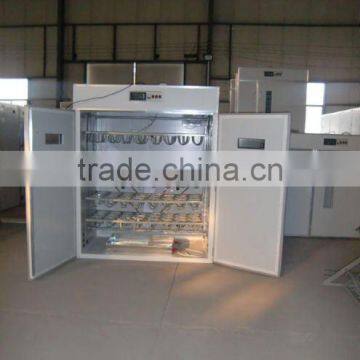
XSA-7 Advanced Full-Automatic Incubator Specially Used For Ostrich Eggs/ Poultry Egg Incubator



Related Products
-
 CE Approved Chicken Egg Incubator Hatching Machine Weiqian 88 IncubatorUS$ 130 - 150MOQ: 1 Set
 -
XSA-3 264pcs Microcomputer Completely Automatic IncubatorUS$ 180 - 275MOQ: 1 Set
-
Full-automatic 88 Chicken Eggs IncubatorUS$ 240 - 260MOQ: 1 Set
-
Chicken Hatchery MachineUS$ 280 - 350MOQ: 1 Set
-
Hot Sale! XSA-3 264pcs Chicken Egg IncubatorUS$ 195 - 300MOQ: 1 Set
Specifications
* Fully-automatic egg turning system* Electronic thermostat
* Incubator controls its own humidity
* Observation window
Model Descripton |
|
|
|
|
| ||
Model | Egg Incubator Holding Capacity(PCS) | Voltage | Power Consumption | Dimension | |||
(length*width*height) | |||||||
Chicken eggs Pingeon eggs | Duck eggs | Goose eggs | Quail and other birds eggs | (Meter) | |||
Turkey eggs |
| ||||||
Ostrich | Ostrich eggs:24 pcs | 756 | 432 | 2652 | 220V 50HZ | 300W | 1.35*0.87*1.31 |
Ostrich incubator characteristics:
1.Dual energy source:Electricity or coal.
2.Fully automatic in temperature and humidity control,automatically alarm when parameters going abnormal,automatic in eggs turning.
3.Dual-purpose,suitable for both incubation and hatchinery.
Ostrich incubation technique
Ostrich incubation period(time), incubation temperature,humidity,and transferring to hatcher date | |
Incubation period | 42 days (Generally) |
Incubation temperature | 97-98 F(36.1-36.7°C) |
Incubation humidity | 20-40% RH |
Transfer to hatcher date | 40th day(reference only) |
Hatcher condition | (96.8-98.0°F ,36.0-36.7°C) |
Tips for incubating ostriches in an incubator
1. collecting eggs and store eggs, choose hatching eggs
Collect the ostrich eggs twice daily.Wear latex gloves when collecting eggs.If the eggs are gathered from the nest each day,greater egg production should result. There is no need to disinfect the eggs,just clean with fine sandpaper if they are dirty.Store the ostrich eggs with the large end up(with the air-cell end up)in the environment of 16-18°C(60-64F°).During storage,the eggs should be turned once every day.Try not to store the ostrich eggs for more than 7 days,otherwise the hatchability will decrease to some extent.Only choose ostrich eggs with normal size and normal weight.Discard eggs which are dirty,shell-cracked,double yolked,misshapen,oversized or undersized.
Common ostrich eggs parameters:Length:150mm Diameter:1135mm Weight:1300-1700g
Discard eggs whose weight is less than 1000g or more than 2000g.
2. set the eggs into ostrich incubator
Before setting the eggs,adjust and operate the incubator for 1-2 days for observation,until the temperature and humidity get stable.The eggs should be first warmed to room temperature before being set.Always set the eggs with the large end up.Only clean and sound eggs should be set.Dirt and manure should be gently scraped off or removed with sandpaper. Remember not to use cloth to wipe the eggs because this may force bacteria deeper into the pores of the egg shell,and cause infection.If washing is needed for heavily dirtied eggs,use warm water containing a sanitizing agent,such as ammonium compounds or compounds containing chlorine,iodine or synthetic phenol.
3. candling ostrich eggs
Candling should be done at weekly intervals to observe the embryonic development process and to identify infertile and dead eggs. Before transfer to hatcher, it is advised to candle the eggs, too. If the incubation process is going in the correct way, a dark shadow should be seen in the egg, and as the time going, the shadow will become darker.
4. Hatching period
When incubated for 40 days, or when the chicks have internally pipped, the hatching eggs should be transferred to hatcher for hatching preparation. In this period, the chorioallantois breath transfers to lung breath. If there is an oxygen deficiency, the embryos could die from suffocation. After transferred to hatcher, more fresh air is available and heat dissipation is better, which will help the embryo to pass the critical stage.
Usually 24 to 48 hours later after internal pipping, the chicks will hatch out. Umbilical cord breaking is very important after breaking shell. If Umbilical cord breaking is not smooth, bacteria are easy to infect the chicks. Self-hatching chicks usually have good umbilical cord breaking, without bleeding. In this case, some iodine can be coated to umbilical cord, and then use infected gauze to tape it up.
Only when the chick ostriches are dry can they be transferred to brooder.

Send Inquiry to This Supplier

You May Also Like
-
Egg Hatchery Incubator Machine for Poultry HatchingNegotiableMOQ: 1
-
2016 New Style High Quality Egg Incubator for Factroy Directly PriceNegotiableMOQ: 1 Piece
-
96 Chicken Egg Incubators for SaleUS$ 80 - 120MOQ: 1 Piece
-
Professional Industrial Chicken Incubators for Sale 008613673685830NegotiableMOQ: 1 Set
-
Our Company Want Distributor Dual Water Automatic Heating 756 Duck Egg Incubator UsedUS$ 400 - 900MOQ: 1 Set
-
Chicken Mini Egg IncubatorsUS$ 1 - 260MOQ: 1 Piece
-
Quail InubatorUS$ 700 - 900MOQ: 1 Set
-
2016 New Type Automatic Computer Control Incubator Prices IndiaUS$ 300 - 900MOQ: 1 Set
-
HC-R232A Chick Master Egg Incubator Price/incubators Hatching Eggs/egg Incubators Price Automat IncubNegotiableMOQ: 1
-
2000-3000 Eggs Incubator Chicken Duck Egg Incubating MachineNegotiableMOQ: 1


