Home > Security & Protection > Alarm & Security Systems > Alarm > UL CE Approved Magnetic Contact

UL CE Approved Magnetic Contact

UL CE Approved Magnetic Contact photo-1
UL CE Approved Magnetic Contact photo-2
US$ 1 - 10 MOQ: 1000 Sets
Key Specifications
Get Latest Price
Place of Origin:
Zhejiang, China
Brand Name:
Sentek
Usage:
Other, door/window
Payment & Shipping
Payment Methods:
Port of Shipment:
Ningbo
Delivery Detail:
Delivery time depends on order quantity.
Place of Origin Zhejiang, China
Brand Name Sentek
Usage Other, door/window

Specifications

Magnetic Contact
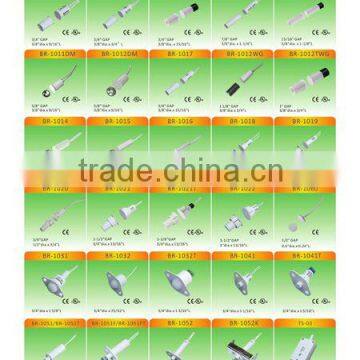
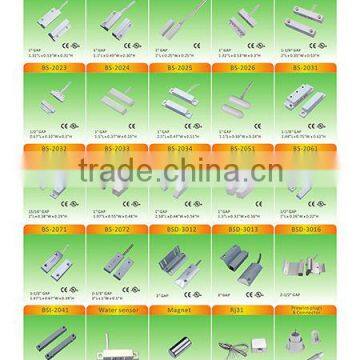
recessed, surface mount and overhead door sizes
Regular, Wide Gap, SPDT, DPDT, and High Security

Magnetic Contact


Alarm contacts allow you to secure the most vulnerable parts of your house -- the doors and windows. By installing hardwired contacts you can make sure that your alarm system keeps an eye on any locations where an intruder might force their way in. Recessed, surface mount and specialty sensors give you the option to choose the exact type of contact you need for your application.


Magnetic contacts are the first line of defense in the burglar alarm industry. They are inexpensive, very reliable, and in most cases out of sight. While PIR's and other interior detectors are an excellent back up, it is the contact that immediately triggers the alarm system when the door or window is open. Contacts should be used on all entry sights because a PIR will pick up the intruder after they are inside.


How do reeds and magnets work and why they work ?


A reed switch is the heart of a magnetic contact. It is nothing more than a simple switch that turns on and off with a magnet.

A reed switch in a closed loop system works on a simple process. When you put the magnet near the reed the two blades inside the glass will close at the same time. When the magnet is withdrawn the reed blades will open causing the circuit to open and the alarm to be triggered. In an open loop the opposite occurs. The reed is open with the magnet near it and closes with the magnet moved away. A supervised system may require a single pole double throw (SPDT) contact. This is a three wire contact, when the magnet is moved away the current, or lack of, will switch to the other pole.


How to fit magnetic contacts ?


Introduction

Magnetic contacts are two part devices comprising a reed switch and a magnet. They are almost exclusively fitted as normally closed devices (NC) where the reeed switch is held closed circuit by the magnet. On removing the magnet the reed switch goes open circuit. Magnetic contacts are available in a multiple of design variations ranging from small diameter flush fitting versions to heavy duty roller-shutter door surface mounted versions. The operating gap (the distance from the magnet to the switch) varies from around 15mm for small contacts to 65mm for large contacts. The contacts are also available as pre-wired versions (connected into a local junction box) or with terminals (usually 5 terminals, 2 for alarm and the other 3 for looping in other detectors).

Magnetic contacts are wired using 4 core cable (2 for alarm and 2 for tamper). More than one magnetic contact can be connected to a zone using one length of 4 core and if required magnetic contacts and powered detectors (e.g. PIRs) can be wired to the same zone but in this case 6 core cable will be required for the powered detectors.

When positioning magnetic contacts bear in mind the following.

  • The contact should be fitted at or very near to the opening edge of the door or window i.e. not near the hinge.
  • It is usually preferable to fit the contact near the top of the door or window in order to prevent moisture ingress and/or physical damage. Obviously with roller shutter doors and the like, the contact has to be fitted where it will be most effective.
  • Do not position the contact where there is a lot of play in the door when closed, also make sure that all doors and windows stay shut when closed - you may have to reposition the door catch to eliminate any excessive play.

Fitting Mgnetic Contacts

This section describes the physical fitting of variouds types of magnetic contact. The electrical connections are described below.
  • Surface mounted magnetic contacts
  • Flush mounted magnetic contacts

Fitting a single surface mounted magnetic contact - terminal type

This describes the fitting of a single magnetic contact, i.e. wired at the end of a series or connected directly to the control panel.

The contact as supplied comprises a magnet (fitted to the moving part e.g. door) and a reed switch (fitted to the static frame). The switch part is fitted with 5 terminals (2 for alarm and 3 for the looping-in of other detectors - see wiring below.

  1. Decide on the positioning of the contact bearing the following in mind.
    • The contact should be fitted at or very near to the opening edge of the door or window i.e. not near the hinge.
    • It is usually preferable to fit the contact near the top of the door or window in order to prevent moisture ingress and/or physical damage.
    • Do not position the contact where there is a lot of play in the door when closed, also make sure that all doors and windows stay shut when closed - you may have to reposition the catch to eliminate any excessive play.
  2. Run the cable from the control panel through any holes in walls to the magnetic contact.
  3. Connect the cable to the contact as shown in the diagram (core colours are arbitrary). Do not strip more of the outer sheath than is necessary.
  4. Make a small notch in the edge of the switch (opposite side to the arrow - if present) such that when the switch is secured to the door the cable will be trapped.
  5. Screw the switch to the frame such that when the magnet is fixed to the door or window it is in close proximity to the switch. If the contacts are marked with arrows then these should point to each other. Note: it is usually possible to fit the contacts at right angles to each other i.e. the top face of one part facing the side of the other. It is best to check with a continuity tester if an unorthodox positioning is required.
  6. Fix the magnet to the door or window and check (using a continuity tester or connecting to a zone on the panel) that the switch opens/closes in response to the door opening/closing.
  7. Secure the cable at a point close to the switch and then secure the cable back to the panel. Work towards the panel such that any slack is at the panel end.
  8. Connect the alarm cores into the 2 zone terminals and the tamper cores into the global tamper circuit - see below.

UL CE approved Magnetic Contact

Fitting surface magnetic contacts - pre-wired type

Pre-wired magnetic contacts are connected into the alarm system using a junction box between the detector and the alarm circuit. The same considerations for positioning the contacts is as previously mentioned.

UL CE approved Magnetic Contact

Fitting Flush Magnetic Contacts

This procedure describes the fitting of 20mm terminal type flush contacts, but the procedure is similar for other variations including pre-wired types which should be connected through a junction box.

Flush magnetic contacts are fitted into the edge of the door (magnet) and the dooor frame (switch) and as such can only be fitted to wooden doors They are wired in the same way as surface contacts. The following describes how to fit a 20mm flush magnetic contact.

  1. Decide whereabouts on the door to fit the contact bearing in mind the following.
    • Do not fit a flush magnetic contact near the bottom of an external door - damp will almost certainly rise up inside the frame and corrode the contacts.
    • Ensure that there is sufficient space to drill a hole through the back of the door frame to access the rear of the switch.
  2. Mark the position of the switch on the door edge. The easiest way to do this is to push a small screwdriver between the door and frame with the door shut and rock the screwdriver from side to side to leave matching indentations in the door edge and frame.
  3. Using a 20mm spade bit, drill a hole in the door edge to slightly deeper than the depth of the magnet. drill a corresponding hole in the door frame to the depth of the switch plus around 15mm to allow for the wiring connections.
  4. The contacts are fitted with a flanged faceplate. If the gap between the door and frame is sufficient, the flange need not be recessed. Where there is insufficient clearance or if desired, the flange should be recessed.

To recess the flange; push the magnet and switch into their respective holes and mark round the flange. Remove the switch and magnet and remove approximately 2mm of wood from the face of the door edge and frame such that when the magnet and switch are pushed in their faces are flush with the surrounding wood.

Connecting Multiple Magnetic Contacts

It is possible to connect more than one magnetic contact to a zone using the wiring diagram below. It can be quite difficult to get the wiring neat between the detectors.

The diagram shows surface contacts being chained together but the same wiring principle applies to flush contacts and pre-wired contacts using junction boxes.

UL CE approved Magnetic Contact

Note: The above diagram shows all 4 cores being cut and and connected to terminals, however, it is possible to cut just one of the alarm cores and one tamper core at each detector and just run the others past. A bit tricky but can be done with practice.


Tips for installing :


When installing contacts remember the best gaps come when you mount the reed and magnet in parallel or head to head. You can also align the reed side and magnet in an "L" position. Always avoid putting a magnet and reed in a "T." The reason a "T" position mounting does not work well is because all magnets and reeds have a small neutral spot so if you set it this way and there is any shift in the surface of your installation you are more likely to get a false alarm.

One other point manufacturers request is care. A magnetic contact uses a glass reed switch in the center of the contact. Please make sure holes are not too tight for recess. You are more likely to get a bad contact by pushing a recess into a tight hole than you are by drilling carefully


SENTEK Magnetic Contacts consist of the most common recessed, surface mount and overhead door sizes used in the security industry.


UL CE approved Magnetic ContactUL CE approved Magnetic Contact


Send Inquiry to This Supplier

Message
0/5000

Want the best price? Post an RFQ now!
Business Type
Manufacturer, Trading Company
Year Established
2005
Factory Size
5,000-10,000 square meters
Total Employees
101 - 200 People

Recommended Categories

Explore top categories and find suppliers for your specific needs