








 Contact Platform Support
 Help Center
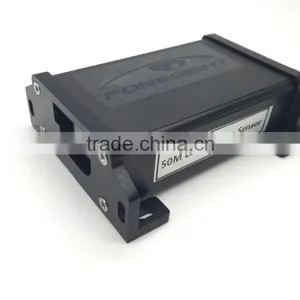
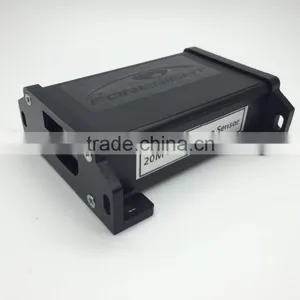
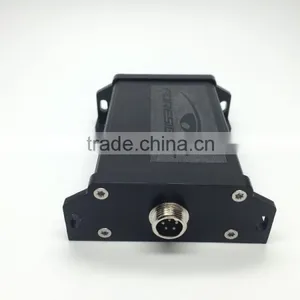
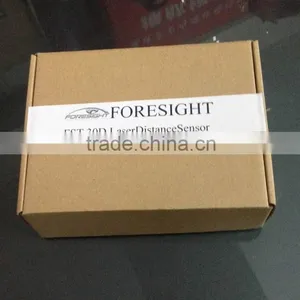
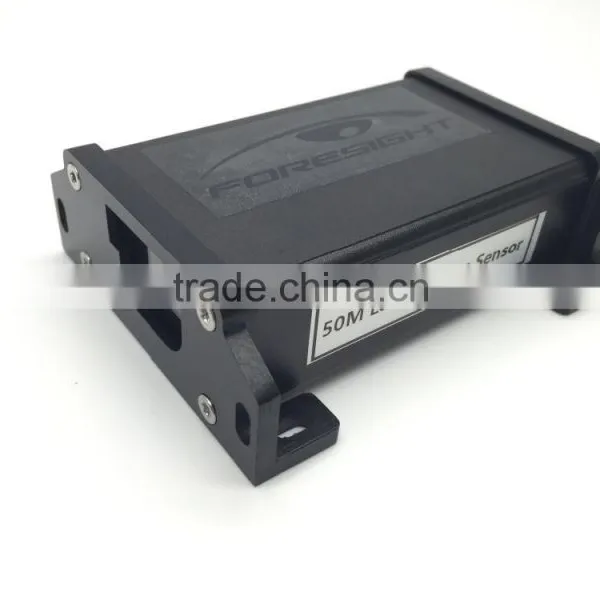
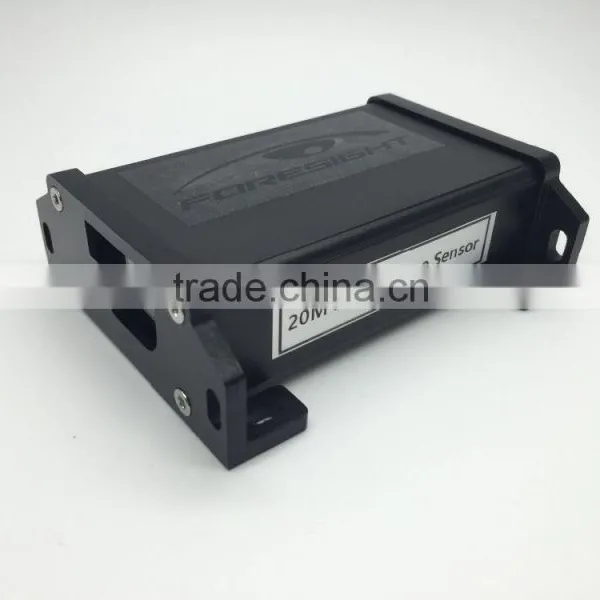
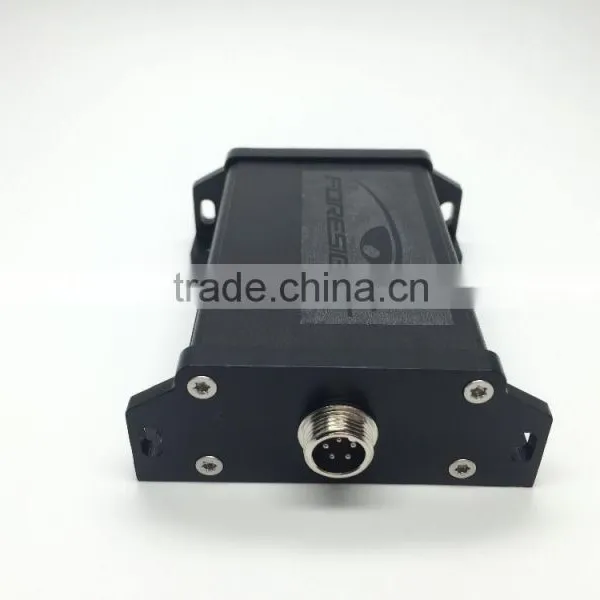
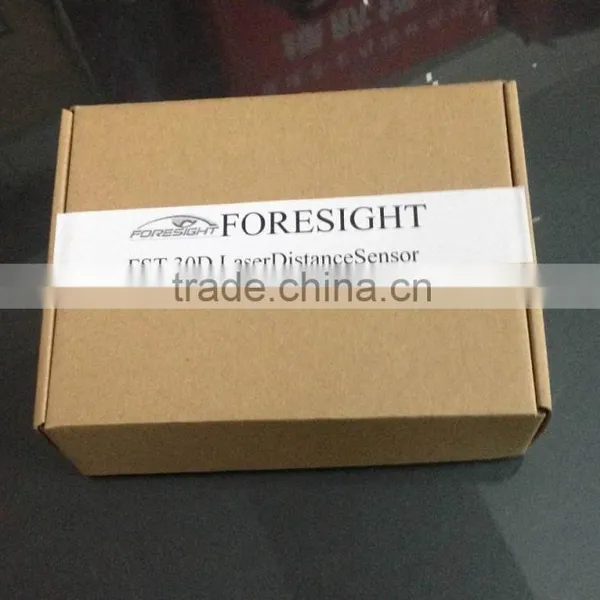
RS232 Output Laser Distance Meter


Related Products
-
 Laser Rangefinder With RS232/4-20Ma OutputNegotiableMOQ: 1 Piece
 -
High Frequency Laser Distance Sensor for Auto Collision-proofNegotiableMOQ: 1 Unit
-
Explosion-Proof Distance Measusrement SensorNegotiableMOQ: 1 Piece
-
Digital Output RS232/RS485 Communication Port Distance Measurement SensorNegotiableMOQ: 1 Piece
-
Laser Distance Sensor for Height MeasuringNegotiableMOQ: 1 Piece
Applications:
1. Road traffic
2. Automotive anti-collision
3. Construction survey and design
4. Levelmaterial level detection
5. Robot arm control
6. Fixed length control of container crane spreader
7. Security monitoring
8. Military applications
Power Supply |
5V or +6V-24V |
Measurement Accuracy |
+/-1mm* |
Measurement rage(no reflector |
0.03-70m |
Measurement time |
0.05-0.5s |
Laser Grade |
Ⅱ |
Output Mode |
RS232 Port |
Laser type |
635nm,<1mw |
Dimensions |
28*57*80mm |
Weight |
120g |
Operation temperature |
-10 C°~40 C° |
Storage temperature |
-25 C°~60 C° |
Protect Grade |
IP54 |
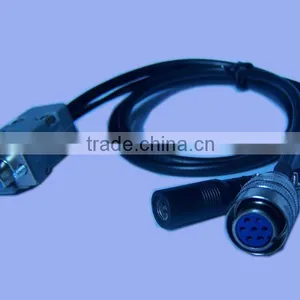
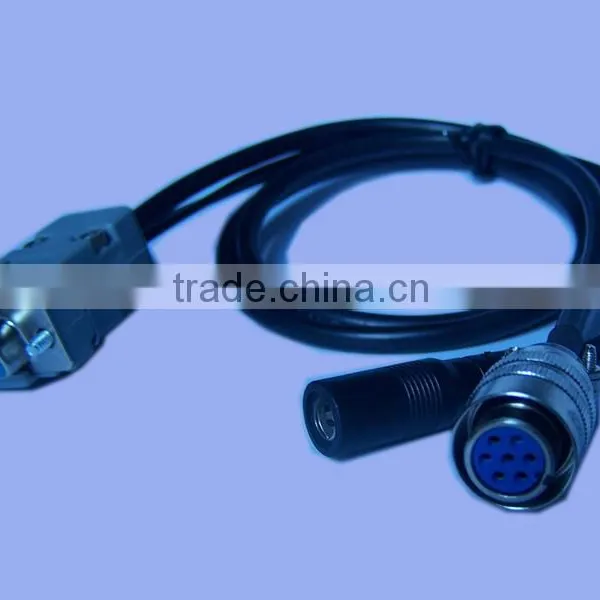
1.Cable connecting definitions
Red Line------Positive +6~+32VDC
Black Liine-----Negative GND
White Line-----TX,
Green Line----RX;
Yellow Line------DGND;
Kindly Prompt: If need to DB9 Female head, so RX,TX and G will be corresponding to connection to Second, Third and Fifth base pin of DB9 head separately.
2 Operating Steps
Communication:
· Uart: 19200, 8N1
· Send command of “O”: turn on the laser
· Send command of “C”: turn off the laser
· Send command of “D”: measure distance and return the results
On what kind of targets can be measured?
All opaque targets can be measured. Reliable measurements on transparent targets are not possible.
How is the measurement rate influenced?
The measurement rate is influenced by the target. If the laser light is well reflected by the target, fast measurement rates can be achieved (up to 0.15s in tracking mode).
Does dust influence the measuring process?
If dust overcasts the main part of the laser beam, then your
measurement will be influenced in a negative way. However, this situation can only be found in extreme dusty environment like cement hopper etc.
Is it possible to measure to a moving target?
Yes it is possible. The measured distance is the mean value between the distance at start and end of the measuring process.
What is the Measuring Accuracy?
The measuring accuracy corresponds to the ISO-recommendation ISO/R 1938-1971 with a statistical confidence level of 95% (i.e. ±twice the standard deviation, refer to diagram right. The typical measuring accuracy relates to average conditions and is ±1.5mm for the DLS(H) 15 and ±3.0mm for the DLS(H) 30. This is valid for the tracking mode.
The maximum measuring error relates to unfavorable conditions such as:
- highly-reflecting surfaces (e.g. reflector tapes)
- operating at the limits of the permitted temperature range, adaptation to ambient temperature interrupted
- very bright ambient conditions, strong heat shimmer
The maximum measuring error can be up to ± 2 mm for the DLS(H) 15 and ± 5 mm for the DLS(H) 30.
The DLS-A devices do not compensate changes of the environment conditions. If the environment conditions differ from 20°C, 60% rel. humidity and 953mbar air pressure, the accuracy can be influenced if the measuring distances is longer as 150m.
The effects caused by environment condition are described in:
B.Edlen: “The Refractive Index of Air, Metrologia 2”, 71-80 (1966)
Is the Laser Light eye safe?
Class II lasers are low power (< 1mW), visible light lasers that could possibly cause damage to a person's eyes. Some examples of Class II laser uses are: classroom demonstrations, laser pointers, aiming devices and range finding equipment. If class II Laser beams are directly viewed for long periods of time (i.e. > 15 minutes) damage to the eyes could result. Avoid looking into a Class II Laser beam or pointing a Class II laser beam into another person's eyes. Avoid viewing Class II laser beams with telescopic devices. Realize that the bright light of a Class II Laser beam into your eyes will cause a normal reaction to look away or close your eyes. This response is expected to protect you from Class II Laser damage to the eyes.
Can I connect the DLS device to a Siemens PLC?
Yes, you can connect a DLS device with the RS422 interface to a Siemens S7 PLC. Please find a detailed example in the application section. (AN2010)

Send Inquiry to This Supplier

You May Also Like
-
YHJ-100J(A) Mining Intrinsically Safe Laser RangefinderNegotiableMOQ: 1 Piece
-
Automatic Laser Distance Sensor Low PriceNegotiableMOQ: 1 Set
-
Speed Finder Instrument Laser MeasurerUS$ 60 - 165MOQ: 100 Units
-
Laser Explore 450M Waterproof Multi Function Telescope Laser Rangefinder 450mUS$ 59.00 - 59.00MOQ: 1 Piece
-
China Laser Rangefinder Handheld Long Distance Laser Rangefinder Ultrasonic Distance Measurer Meter Range FinderUS$ 1 - 100MOQ: 100 Pieces
-
40m-120m Laser Distance Meter Rangefinder Laser MeasureUS$ 14 - 25MOQ: 10 Pieces
-
Laser Distance Meter Digital Laser Distance MeterNegotiableMOQ: 1 Piece
-
Laser Distance Measurer With Backlit DisplayUS$ 30 - 50MOQ: 100 Pieces
-
Laser Distance Meter HP800NegotiableMOQ: 1 Piece
-
Laser Distance MeterNegotiableMOQ: 20 Pieces


