








 Contact Platform Support
 Help Center
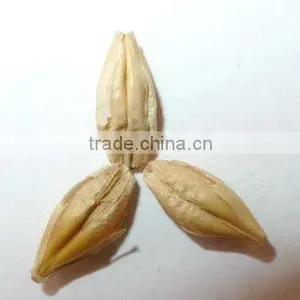
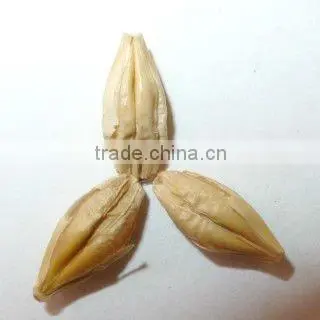
Organic Hulled Barley


Related Products
Specifications
organic hulled barley1. NOP,USDA,JAS certified by BCS,ECOCERT
2.Can offer hulled barley,roasted,milled,or barley flour etc
organic hulled barley
1. NOP,USDA,JAS certified by BCS,ECOCERT
2.Can offer hulled barley,roasted,milled,or barley flour etc process
YOYO JIANG + 86 13614280520
Nutritional value per 100 g (3.5 oz)
Energy
1,474 kJ (352 kcal)
Carbohydrates
77.7 g
- Sugars
0.8 g
- Dietary fiber
15.6 g
Fat
1.2 g
Protein
9.9 g
Thiamine (Vit. B1)
0.2 mg (15%)
Riboflavin (Vit. B2)
0.1 mg (7%)
Niacin (Vit. B3)
4.6 mg (31%)
Pantothenic acid (B5)
0.3 mg (6%)
Vitamin B6
0.3 mg (23%)
Folate (Vit. B9)
23 μg (6%)
Vitamin C
0.0 mg (0%)
Calcium
29.0 mg (3%)
Iron
2.5 mg (20%)
Magnesium
79.0 mg (21%)
Phosphorus
221 mg (32%)
Potassium
280 mg (6%)
Zinc
2.1 mg (21%)
Barley is a cereal grain derived from the annual grass Hordeum vulgare.
Barley has many uses. It serves as a major animal fodder, as a base malt for beer and certain distilled beverages, and as a component of various health foods. It is used in soups and stews, and in barley bread of various cultures. Like wheat and rye, barley contains gluten that makes it an unsuitable grain for consumption by those with celiac disease.
Algicide
Barley straw, in England, is placed in mesh bags and floated in fish ponds or water gardens to help reduce algal growth without harming pond plants and animals. Barley straw has not been approved by the EPA for use as a pesticide and its effectiveness as an algicide in ponds has produced mixed results during university testing in the US and the UK.[26]
[edit] Animal feed
Half of the United States' barley production is used as an animal feed.[27] Barley is an important feed grain in many areas of the world not typically suited for maize production, especially in northern climates - for example, northern and eastern Europe. Barley is the principal feed grain in Canada, Europe, and in the northern United States.[28] A finishing diet of barley is one of the defining characteristics of Western Canadian beef used in marketing campaigns.[29]
[edit] Alcoholic beverages
A large part of the remainder is used for malting, for which barley is the best suited grain.[30] It is a key ingredient in beer and whisky production. Two-row barley is traditionally used in German and English beers. Six-row barley was traditionally used in US beers, but both varieties are in common usage now.[31] Distilled from green beer,[32] whisky has been made primarily from barley in Ireland and Scotland, while other countries have utilized more diverse sources of alcohol; such as the more common corn, rye and wheat in the USA. In the USA, a grain type may be identified on a whisky label if that type of grain constitutes 51% or more of the ingredients and certain other conditions are satisfied.[33]
Non-alcoholic drinks such as barley water[3] and barley tea (called mugicha in Japan)[34] have been made by boiling barley in water. Barley wine was an alcoholic drink in the 18th century. It was prepared by boiling barley in water, then mixing the barley water with white wine and other ingredients like borage, lemon and sugar. In the 19th century a different barley wine was made prepared from recipes of ancient Greek origin.[3]


Send Inquiry to This Supplier

You May Also Like
-
Mineral Water / Spring Mineral Water / WaterUS$ 0.2 - 0.6MOQ: 3000 Cartons
-
Nutrition Rice Food Processing MachineryUS$ 100 - 30,000MOQ: 1 Set
-
Singflo Beer Pumps Tap Soft Juice Value Drink Dispenser TapUS$ 0.2 - 5MOQ: 100 Pieces
-
The Best Selling Ice-cream Mochi Refining Machine Made In ChinaUS$ 2,100 - 4,500MOQ: 1 Set
-
CUSTARD FLAVORNegotiableMOQ: 1
-
Natural Water of Kume-jima Okinawa 500mL BottleUS$ 80 - 100MOQ: 42240 Pieces
-
Quality Proof Indicator for Frozen FruitsUS$ 65 - 130MOQ: 4 Pieces
-
Fluffl Nacho BusinessNegotiableMOQ: 1
-
Tomato Powder Production LineUS$ 20,000 - 20,000MOQ: 1 Set
-
Ice Wine or Red Wine Plastic PackageUS$ 5 - 10MOQ: 100 Pieces


