








 Contact Platform Support
 Help Center
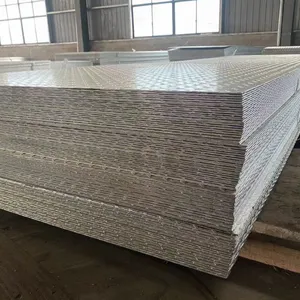
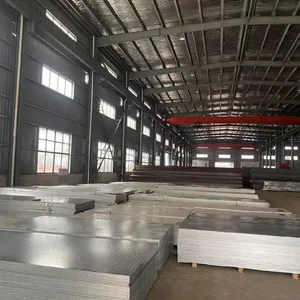
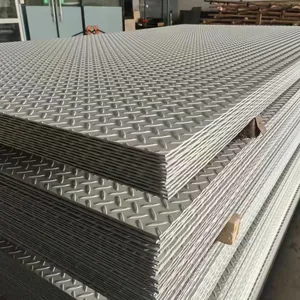
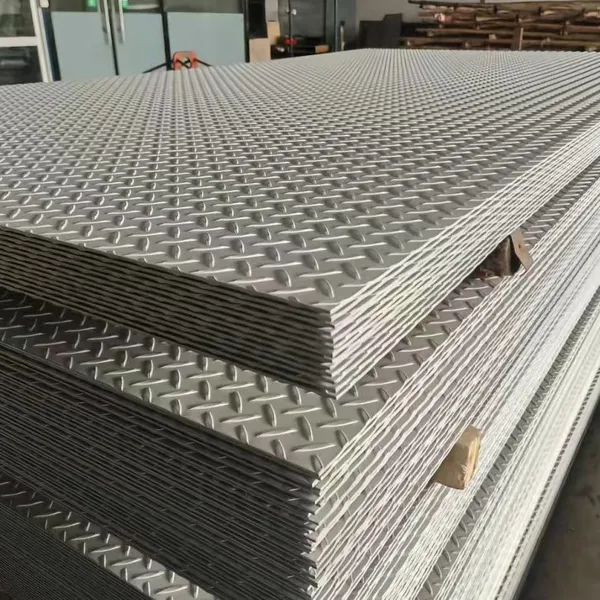
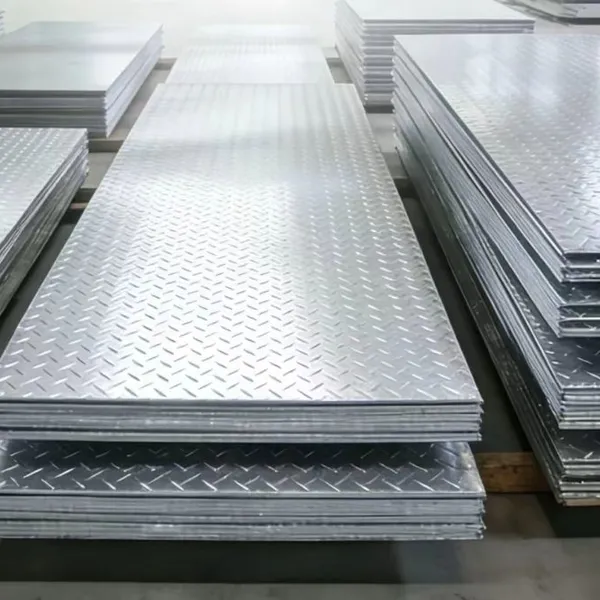
Steel Sheet & Plate & Checkered Steel Plate,GB/T 33974-2017、GB/T 700-2006、GB/T 3190-2020、GB/T 13912-2020



Related Products
-
 Steel Sheet & Plate & Checkered Steel Plate,GB/T 33974-2017、GB/T 700-2006、GB/T 3190-2020、GB/T 13912-2020NegotiableMOQ: 5 Metric Tons
 -
Steel Sheet & Plate & Checkered Steel Plate,GB/T 33974-2017、GB/T 700-2006、GB/T 3190-2020、GB/T 13912-2020NegotiableMOQ: 5 Metric Tons
-
Steel Sheet & Plate & Checkered Steel Plate,GB/T 33974-2017、GB/T 700-2006、GB/T 3190-2020、GB/T 13912-2020NegotiableMOQ: 5 Metric Tons
-
Steel Pipe & Tube & Cast Iron Pipe,GB/T13295-2019、GB/T12772-2016、GB/T8492-2014、ISO2531、EN545、ASTM A999NegotiableMOQ: 5 Metric Tons
-
Steel Pipe & Tube & Cast Iron Pipe,GB/T13295-2019、GB/T12772-2016、GB/T8492-2014、ISO2531、EN545、ASTM A999NegotiableMOQ: 5 Metric Tons
1. Product Overview
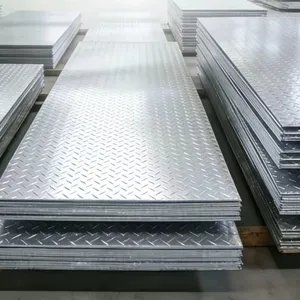
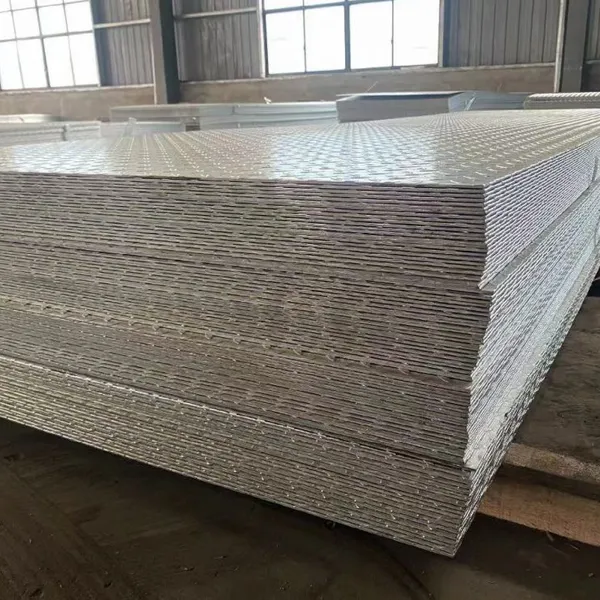
Patterned plates, also known as anti-slip plates, checkered plates or tread plates, are special metal plates with continuous and regular raised patterns rolled on the surface of carbon steel and aluminum alloy substrates through an integral hot rolling embossing process. The product is integrally formed without splicing or pasting, featuring uniform grain and strong three-dimensional effect. It possesses multiple advantages including anti-slip, wear resistance, compression bearing, drainage, dust prevention and decorative aesthetics. Compared with ordinary flat plates, the core advantage of patterned plates lies in the concave-convex surface structure, which thoroughly solves the problems of easy slipping, water and dust accumulation, and insufficient bearing capacity of flat plates. It is a core special material for anti-slip and load-bearing scenarios in industrial, construction, transportation and municipal engineering fields. This product series excludes stainless steel materials, focusing on cost-effective carbon steel patterned plates and lightweight aluminum alloy patterned plates, suitable for most civil and industrial general scenarios.
2. Implementation Standards & Production Specifications
All products are produced in strict accordance with current national standards with mature craftsmanship, precise dimensions and qualified performance. Official quality inspection reports are available to support project acceptance.
General National Standard: GB/T 33974-2017 Hot Rolled Checkered Steel Plates and Strips, replacing the old version GB/T 3277, standardizing all production indicators such as pattern shape, dimensional tolerance, mechanical properties and appearance quality
Carbon Steel Material Standard: GB/T 700-2006 Carbon Structural Steel, GB/T 1591-2018 High Strength Low Alloy Structural Steel
Aluminum Alloy Material Standard: GB/T 3190-2020 Chemical Composition of Wrought Aluminum and Aluminum Alloys, GB/T 3880-2012 General Industrial Aluminum and Aluminum Alloy Plates and Strips
Anti-corrosion Treatment Standard: Hot-dip galvanizing process complies with GB/T 13912-2020 Metallic Coatings-Technical Specifications for Hot-Dip Galvanized Coatings on Iron and Steel Parts
3. Core Material Classification & Detailed Characteristics
This product is divided into two main series: carbon steel patterned plates (main industrial type) and aluminum alloy patterned plates (lightweight special type), with no stainless steel options. The two materials have distinct performance and application scenarios, which can be flexibly selected according to service environment and load-bearing requirements.
3.1 Carbon Steel Patterned Plate (Q235B, Q355B)
Carbon steel patterned plate is the most widely used, cost-effective and high-load-bearing mainstream product in the market, including two core materials: ordinary carbon steel Q235B and high-strength low-alloy Q355B, suitable for most heavy-load and high-frequency service scenarios.
3.1.1 Q235B Carbon Steel Patterned Plate
As a universal mainstream material, Q235B features good toughness, excellent plasticity, easy cutting and welding, and low brittleness. With mature production technology, it has no pores, peeling, cracks or other defects. It has moderate hardness and good daily wear resistance, supporting secondary processing such as bending, hole punching, cutting and splicing to adapt to various special construction requirements. It maintains stable mechanical properties at room temperature without low-temperature brittle fracture, fully meeting the anti-slip and load-bearing needs of civil and ordinary industrial projects. With affordable price and sufficient stock, it is the preferred material for engineering procurement and conventional construction.
3.1.2 Q355B Low-Alloy Patterned Plate
As an upgraded high-strength version, Q355B contains manganese, silicon and other alloying elements. Its overall strength, compression resistance and impact resistance are increased by more than 30% compared with Q235B, with better fatigue resistance and deformation resistance. It is not easy to deform or collapse under long-term heavy pressure, frequent rolling and impact loads, greatly extending the service life. It is suitable for heavy-duty industrial and outdoor open-air scenarios, capable of withstanding rolling by forklifts, trucks and mechanical equipment, serving as the preferred material for heavy-duty engineering projects.
3.1.3 General Advantages & Disadvantages of Carbon Steel
Advantages: strong load-bearing capacity, impact resistance, wear resistance, easy processing, ultra-high cost performance, wide adaptability and convenient construction. Disadvantages: bare plates are prone to oxidation and rust, requiring galvanizing or painting anti-corrosion treatment in humid and open-air environments.
3.2 Aluminum Alloy Patterned Plate (5052, 6061)
Aluminum alloy patterned plate is a special lightweight plate rolled from high-quality industrial aluminum. It features light weight, inherent rust resistance, no need for complex anti-corrosion treatment, clean appearance and delicate texture.
3.2.1 5052 Aluminum Alloy Patterned Plate
As a classic anti-rust aluminum material, 5052 has excellent plasticity, bending resistance and fracture resistance, with outstanding atmospheric corrosion resistance and moisture resistance. It has a smooth surface without oxidation black spots, easy to clean and maintenance-free, suitable for lightweight, low-load and well-ventilated humid scenarios.
3.2.2 6061 Aluminum Alloy Patterned Plate
As a high-strength aluminum alloy material, 6061 improves overall hardness and load-bearing capacity on the basis of light weight with stronger deformation resistance, meeting medium load-bearing requirements. It retains all the advantages of aluminum alloy including rust resistance, aesthetics and light weight, making it the preferred material for high-end decoration and transportation equipment interior.
3.2.3 General Advantages & Disadvantages of Aluminum Alloy
Advantages: light weight, permanent rust resistance, exquisite appearance, maintenance-free anti-corrosion, moisture-proof and strong plasticity. Disadvantages: the overall load-bearing capacity is lower than carbon steel, not suitable for heavy rolling and ultra-high load scenarios.
4. Main Pattern Types & Applicable Scenarios
Manufactured in strict accordance with national standard technology, the products are mainly available in three patterns: lentil, diamond and round bean. All patterns feature uniform depth, regular arrangement and firm protrusions without fading, shallow patterns or broken patterns. Each pattern has unique advantages in anti-slip performance, drainage effect and load-bearing capacity.
4.1 Lentil Pattern (Code B, Heavy-Duty Main Type)
Featuring strip-shaped lentil protrusions with high grain height, large protruding area and solid three-dimensional structure, it has the strongest anti-slip performance, optimal load-bearing capacity and best drainage effect. The wide pattern gaps allow rapid sliding of ponding, oil stains and sediment without water or dirt accumulation. It maintains excellent anti-slip performance even in harsh environments with humidity, oil pollution, dust and rain and snow. The plate has stable overall structural performance with strong rolling and impact resistance, free from deformation and wear under long-term heavy load.
Applicable scenarios: heavy-duty walkways in industrial workshops, factory stair treads, shipyard decks, truck and semi-trailer floorboards, forklift passageways, outdoor overpass treads, sewage plant platforms, humid processing workshops and other harsh, heavy-load and high-frequency service scenarios.
4.2 Diamond Pattern (Code L, Universal All-Match Type)
With continuously regular diamond protrusions and uniform distribution, the plate surface is flat and beautiful with balanced anti-slip performance, combining practicality and decoration. Compared with lentil patterns, it has higher flatness, presenting a neat and elegant overall effect after splicing without abruptness. It delivers excellent daily anti-slip, dust-proof and scratch-resistant effects, adapting to most conventional scenarios.
Applicable scenarios: ordinary factory platforms, indoor and outdoor stairs, equipment base backing plates, municipal walkways, warehouse floors, community stairways, anti-slip panels for ordinary mechanical equipment and other general scenarios.
4.3 Round Bean Pattern (Code Y, Decorative Comfort Type)
With granular round protrusions, it has soft touch without sharp edges, providing moderate anti-slip force and high walking comfort. The plate surface is delicate and flat with a simple and beautiful visual effect, focusing on safety, comfort and decoration.
Applicable scenarios: public walkways in shopping malls, office building stairs, schools, hospitals, indoor decorative countertops, anti-slip backing plates for light equipment and other crowded scenarios focusing on beauty and walking comfort.
5. Complete Specification Parameters & Weight Standards
All specifications refer to the net substrate thickness (excluding pattern protrusion height) without false thickness marking. Dimensional tolerances are strictly controlled within national standard ranges, supporting spot supply of standard sizes and customized fixed-length cutting.
5.1 Thickness Specifications
Conventional thickness: 1.5mm, 2.0mm, 2.5mm, 3.0mm, 4.0mm, 5.0mm, 6.0mm, 8.0mm, 10mm, 12mm, 14mm, 16mm
Best-selling thickness: 2.5mm, 3.0mm, 4.0mm, 5.0mm, 6.0mm
Pattern height standard: The pattern protrusion height is no less than 20% of the substrate thickness with full and solid grains to ensure reliable anti-slip performance
Thickness tolerance: ±0.3mm for thin plates ≤3mm; ±0.4–0.6mm for thick plates >3mm, complying with national acceptance standards
5.2 Width Specifications
National standard width: 1000mm, 1250mm, 1500mm, 1800mm
Customizable width: maximum 2000mm, supporting arbitrary width cutting
5.3 Length Specifications
National standard length: 2000mm, 4000mm, 6000mm, 8000mm
Custom service: arbitrary length and size cutting according to construction requirements with zero loss processing
5.4 Theoretical Weight Reference (Carbon Steel Density: 7.85g/cm³)
General calculation formula: Weight(kg) = Thickness(mm) × Width(m) × Length(m) × 7.85
Weight per square meter reference: 2.5mm (21.1-21.3kg), 3.0mm (25.3-25.5kg), 4.0mm (33.4-34.0kg), 5.0mm (41.8-42.2kg), 6.0mm (50.1-50.8kg)
6. Core Product Performance Advantages
6.1 Superior Anti-Slip Performance
The three-dimensional raised patterns on the surface greatly increase contact friction. The friction coefficient is ≥0.6 on dry ground and ≥0.4 on humid and slightly oily ground, effectively preventing personnel slipping and small equipment displacement, fully ensuring operational safety and complying with industrial safety anti-slip standards.
6.2 High Load-Bearing & Compression Resistance
Adopting integral hot rolling technology, the plate has dense internal structure without looseness or interlayers and extremely high overall stability. Q235B meets light and medium load requirements, while Q355B low-alloy material can withstand 2-5MPa pressure, supporting long-term rolling by forklifts, trolleys and heavy equipment without bending, collapsing or deformation.
6.3 Wear Resistance & Long Service Life
The raised patterns serve as the primary wear-resistant layer. Daily wear only consumes the surface layer of the grains without affecting the overall substrate structure, effectively extending the service life. Its wear resistance is more than 50% higher than ordinary flat plates, enabling long-term stable use in high-frequency service scenarios.
6.4 Drainage & Anti-Fouling, Easy Maintenance
The concave-convex patterns form natural flow guide gaps, allowing rapid sliding of ponding, rainwater, oil stains, dust and sediment without residual water or dead corners for dust accumulation, eliminating hidden dangers of damp mildew and slipping. Daily cleaning only requires simple flushing and wiping with extremely low maintenance costs.
6.5 Easy Processing & Convenient Construction
With good toughness and moderate hardness, the plates support direct secondary processing such as cutting, welding, bending, punching, grinding and assembly, adapting to various special construction scenarios such as stairs, platforms, bottom plates and cover plates, featuring simple installation, short construction period and strong adaptability.
6.6 Integrated Practicality & Decorativeness
The plate surface has regular three-dimensional grains and tough texture. It is not only a functional anti-slip and load-bearing material, but also an architectural decorative material that can replace ordinary flat plates to improve the overall aesthetics of the site, suitable for industrial style and minimalist style construction scenarios.
7. Surface Treatment Processes & Applicable Scenarios
7.1 Hot-Rolled Black Raw Plate (Bare Plate)
It is the original factory hot-rolled state without additional processing, featuring the highest cost performance and low price. Suitable for ordinary indoor industrial scenarios with dry and non-corrosive environment, it is ideal for batch engineering procurement and can be painted for anti-corrosion as required.
7.2 Hot-Dip Galvanized Treatment (High Anti-Corrosion Type)
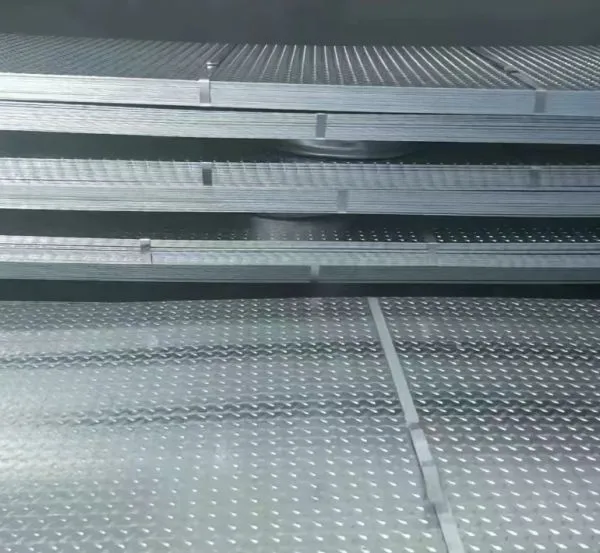
Adopting high-temperature hot-dip galvanizing process with zinc layer thickness ≥85μm, the zinc layer is uniform with strong adhesion, no missing plating, peeling or falling off. It can effectively isolate oxidation by air and water vapor with excellent rust and corrosion resistance, extending the service life by 3-5 times. It is the preferred process for outdoor open-air, humid, rainy, snowy and slightly corrosive environments.
7.3 Paint Anti-Corrosion Treatment (Custom Color Type)
Custom industrial paints such as black, gray, yellow and red are available with flat paint surface and strong adhesion, providing both anti-corrosion rust prevention and warning decoration effects. Suitable for factory passages, safety walkways and warning areas, it balances practicality and aesthetics.
7.4 Polishing & Oxidation Treatment (Aluminum Alloy Exclusive)
Aluminum alloy plates are polished and anodized with bright and delicate surface, anti-oxidation, anti-blackening and easy cleaning. Featuring high-end texture, it is suitable for indoor decoration, equipment interior and high-end transportation equipment scenarios.
8. Full-Range Application Fields
8.1 Industrial Field
Factory workshop operation platforms, equipment load-bearing backing plates, forklift passageways, production line anti-slip floors, boiler platforms, shipbuilding workshops, mechanical processing workshops, warehouse treads, material stacking platforms, sewage plants and ordinary anti-slip areas of chemical workshops.
8.2 Construction Engineering Field
Industrial factory stair treads, steel structure stairs, fire stairs, scaffold pedals, trench cover plates, foundation pit protection pedals, roof anti-slip platforms, outdoor building walkways, community stairways and public treads of commercial buildings.
8.3 Transportation & Logistics Field
Floorboards of trucks, semi-trailers and dump trucks, floors of passenger buses and coaches, logistics loading and unloading platforms, airport walkways, station anti-slip floors, bridge maintenance platforms and road guardrail pedals.
8.4 Municipal & Civil Field
Urban pedestrian overpasses, crossing stairs, municipal manhole cover backing plates, park landscape platforms, public walkways of schools and hospitals, shopping mall anti-slip floors, indoor and outdoor decorative anti-slip plates and anti-slip backing plates for light equipment.
9. Product Quality Standards & Appearance Acceptance
9.1 Appearance Quality
The plate surface is flat without warping, deformation, obvious scratches, peeling, bubbles or cracks. The patterns are evenly arranged with full and consistent depth, no broken patterns, missing patterns or partial shallow patterns. The cutting edge is flat without burrs with regular corners and no collision deformation.
9.2 Dimensional Tolerance
The tolerance of length and width is controlled within ±5mm, the thickness tolerance complies with national standards, and the diagonal error is extremely small with high splicing fit, enabling direct construction without secondary trimming.
9.3 Mechanical Properties
All mechanical indicators including tensile strength, yield strength and elongation meet national standard requirements without hidden dangers of brittle fracture and deformation, ensuring stable load-bearing, impact resistance and wear resistance.
10. Packaging, Delivery & Shipment
10.1 Packaging Method
Finished products are fully wrapped with moisture-proof and rust-proof film and reinforced with outer steel strip binding, 2-5 tons per bundle to prevent collision, wear and moisture rust during transportation. The end of each plate is clearly marked with specifications, material, model and production date for easy inventory and use.
10.2 Delivery Service
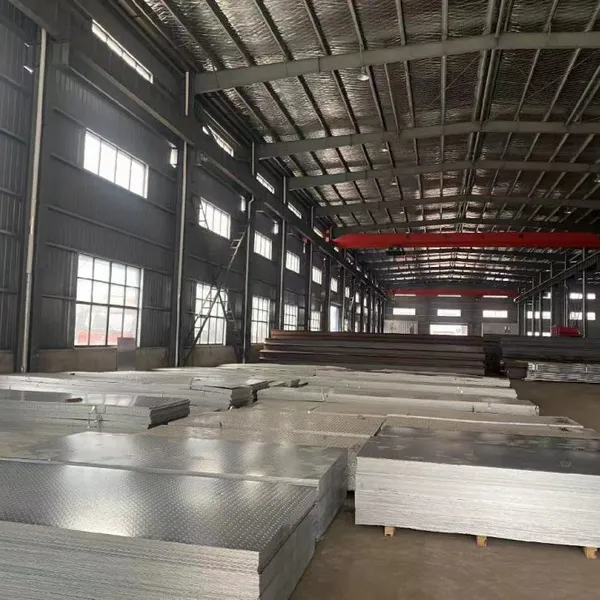
A large number of standard sizes are in stock with same-day order receiving and delivery. Custom sizes are processed rapidly with short construction period and high efficiency. Full truck delivery and LTL logistics services are available nationwide. Complete quality certificates, material sheets and test reports are provided before delivery to support project acceptance.
10.3 Shipment cycle
5-7 working days.

Send Inquiry to This Supplier



You May Also Like
-
Steel Pipe & Tube & Cast Iron Pipe,GB/T13295-2019、GB/T12772-2016、GB/T8492-2014、ISO2531、EN545、ASTM A999NegotiableMOQ: 5 Metric Tons
-
Steel Pipe & Tube & Cast Iron Pipe,GB/T13295-2019、GB/T12772-2016、GB/T8492-2014、ISO2531、EN545、ASTM A999NegotiableMOQ: 5 Metric Tons
-
Steel Pipe & Tube & Cast Iron Pipe,GB/T13295-2019、GB/T12772-2016、GB/T8492-2014、ISO2531、EN545、ASTM A999NegotiableMOQ: 5 Metric Tons
-
Steel Pipe & Tube & Cast Iron Pipe,GB/T13295-2019、GB/T12772-2016、GB/T8492-2014、ISO2531、EN545、ASTM A999NegotiableMOQ: 5 Metric Tons
-
Steel Pipe & Tube & Cast Iron Pipe,GB/T13295-2019、GB/T12772-2016、GB/T8492-2014、ISO2531、EN545、ASTM A999NegotiableMOQ: 5 Metric Tons
-
Steel Pipe & Tube & Cast Iron Pipe,GB/T13295-2019、GB/T12772-2016、GB/T8492-2014、ISO2531、EN545、ASTM A999NegotiableMOQ: 5 Metric Tons
-
Steel Pipe & Tube & Cast Iron Pipe,GB/T13295-2019、GB/T12772-2016、GB/T8492-2014、ISO2531、EN545、ASTM A999NegotiableMOQ: 5 Metric Tons
-
Steel Pipe & Tube & Cast Iron Pipe,GB/T13295-2019、GB/T12772-2016、GB/T8492-2014、ISO2531、EN545、ASTM A999NegotiableMOQ: 5 Metric Tons
-
Steel Pipe & Tube & Precision Steel Tube,10#、20#、35#、45#、16Mn、20Cr、40Cr、42CrMoNegotiableMOQ: 5 Metric Tons
-
Steel Pipe & Tube & Precision Steel Tube,10#、20#、35#、45#、16Mn、20Cr、40Cr、42CrMoNegotiableMOQ: 5 Metric Tons


