








 Contact Platform Support
 Help Center
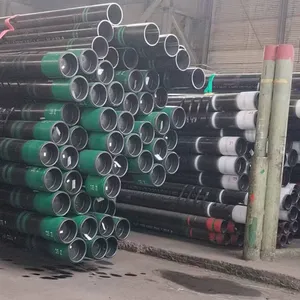
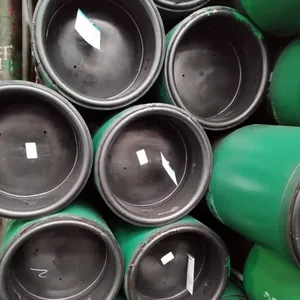
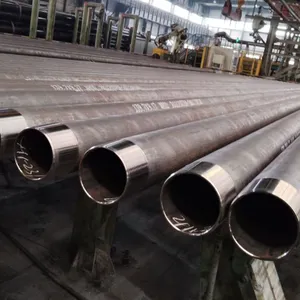
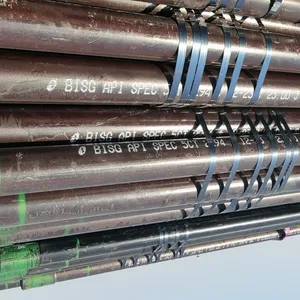
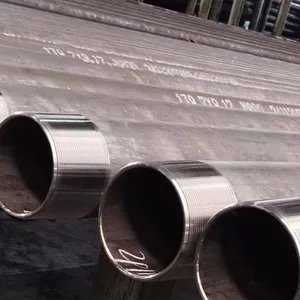
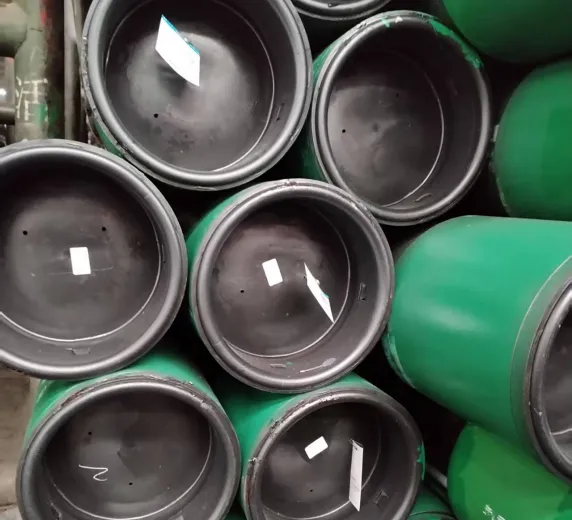
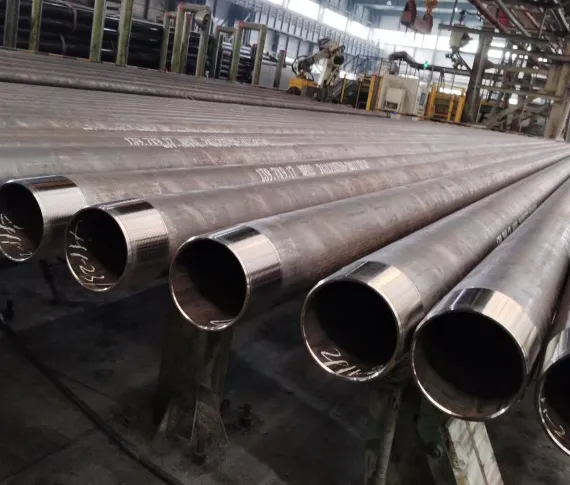
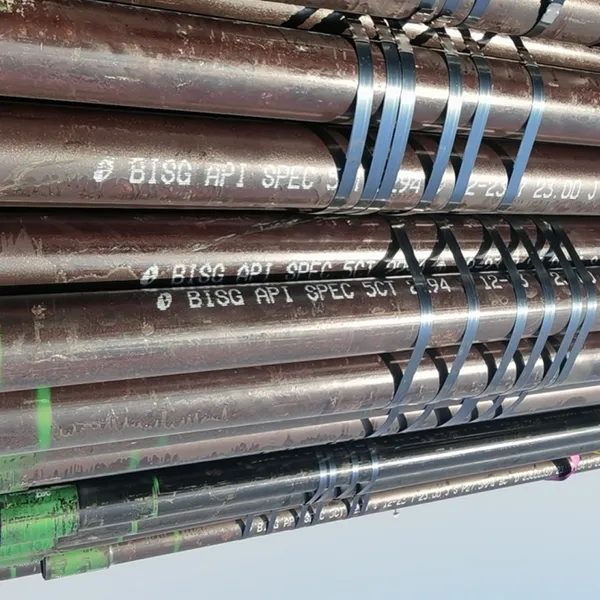
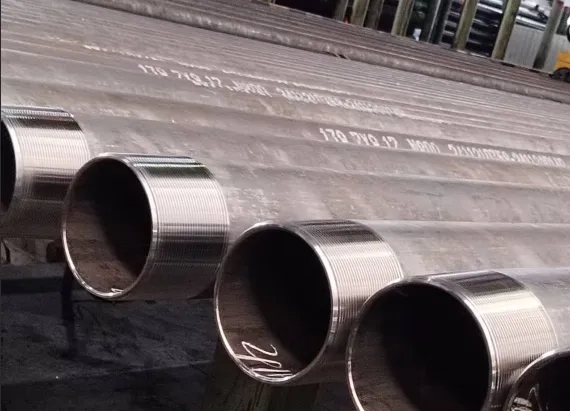
Baotou Steel API 5CT OCTG 13 3/8 Inch 339.72mm K55 J55 N80 L80 P110 Seamless Steel Casing

Product Spotlights



Related Products
-
 K55 J55 N80 L80 P110 Seamless Steel Casing Baotou Steel 5'' 5 1/2'' 7'' 9 5/8'' 11 3/4'' 13 3/8'' Oil Casing & TubingNegotiableMOQ: 30 Metric Tons
 -
13 3/8 Inch Casing K55 Seamless Steel Casing BTC R3 Casing Pipes for Oil DrillingNegotiableMOQ: 30 Metric Tons
-
Baotou Steel L80 N80 Casing 9 5/8 Inch Casing Pipes 32.3 36 Lb/ft 40 43.5 47 53.5 58.4 Ppf Seamless Steel CasingNegotiableMOQ: 30 Metric Tons
-
339.72mm Casing K55 J55 Seamless Steel Casing BTC R3 Casing Pipes for Oil DrillingNegotiableMOQ: 30 Metric Tons
-
Baotou Steel 244.48mm Casing N80 Seamless Steel Casing SC LC R3 Casing Pipes for Oil DrillingNegotiableMOQ: 30 Metric Tons
Baotou Steel API 5CT OCTG 13 3/8 inch 339.72mm K55 J55 N80 L80 P110 seamless steel casing
(1) : Oil casing is a kind of steel pipe used to support the wellbore of oil and gas wells, ensuring the normal operation of the entire oil well during the drilling process and after completion.
Each well requires several layers of casing depending on the drilling depth and geological conditions.
After the casing is lowered into the well, cement cementing should be used. Unlike oil pipes and drill pipes, it cannot be reused and is a disposable consumable material.
Therefore, the consumption of casing accounts for more than 70% of all oil well pipes.
Casings can be classified according to their usage into: conduits, surface casing, technical casing and oil layer casing.
(2) Classification: Different types of casing used in the oil extraction process: Surface oil casing - protects the well from contamination by shallow water and shallow gas layers, supports wellhead equipment and maintains the weight of other layers of the casing.
Technical oil casing - separates the pressure at different levels to ensure the normal flow of drilling fluid and protect the production casing, facilitating the installation of anti-burst devices, leak prevention devices and tailpipes within the well.
Oil layer casing (production casing)- It is used to extract oil and gas from underground reservoirs to protect drilling and stratify drilling mud.
When oil casing is produced, its outer diameter is usually between 114.3 millimeters and 508 millimeters.
① Guide sleeve: mainly used for drilling in the ocean and desert to separate seawater and sand, ensuring smooth drilling progress.
② Surface casing: mainly used for the first drilling, drilling through soft formations on the surface to bedrock. In order to isolate this part of the formation from collapse, surface casing is needed for sealing. Main specifications of surface casing: 508 mm (20 inch),406.4 mm(16 inch),339.72 mm(13-3/8 inch)、273.05 mm(10-3/4 inch),244.48 mm(9-5/8 inch),etc.
The depth of the lower pipe depends on the depth of the soft formation, generally ranging from 80 to 1500 meters. It can withstand both external and internal pressures, and is generally made of K55 or N80 steel grade.
③ Technical casing: Used in the drilling process of complex formations, when encountering collapsed layers, oil layers, gas layers, water layers, leakage layers, salt paste layers and other complex parts, technical casing sealing is required, otherwise drilling cannot proceed. Some wells have deep and complex formations, and the depth of the well can reach several kilometers. These deep wells require several layers of technical casing, which have high requirements for mechanical and sealing properties. The steel grades used are also relatively high. In addition to K55, N80 and P110 steel grades are more commonly used. Some deep wells also use Q125 or even higher steel grades. The main specifications of technical casing are: 339.72 mm(13-3/8 inch),273.05 mm(10-3/4 inch),244.48 mm(9-5/8 inch), 219.08 mm (8-5/8 inch),193.68 mm(7-5/8 inch),177.8 mm(7 inch),etc.
④ Oil layer casing: When drilling to the target layer (oil and gas bearing layer), oil layer casing is needed to completely seal the oil and gas layer and the upper exposed layer, and the inside of the oil layer casing is the tubing. The oil reservoir casing has the deepest depth in various types of casing, and its mechanical and sealing performance requirements are also the highest. Steel grades such as K55, N80, P110, Q125, V150, etc. are used. The main specifications of oil casing include 177.8 mm (7 inch), 168.28 mm (6-5/8 inch), 139.7 mm (5-1/2 inch), 127 mm (5 inch), 114.3 mm (4-1/2 inch), etc.
(3) Oil casing is the lifeline that maintains the operation of oil wells. Due to different geological conditions, the underground stress state is complex, and the combined effects of tensile, compressive, and torsional stresses act on the pipe body, which puts high demands on the quality of the casing itself. Once the casing itself is damaged for some reason, it may lead to a reduction in production or even scrapping of the entire well.
Based on the strength of the steel itself, casings can be divided into different steel grades.Steel grades include J55, K55, N80, L80, C90, T95, P110, Q125, and V150. API specifies three lengths: R-1 (4.88~7.62m), R-2 (7.62~10.36m), and R-3 (10.36~14.63m). Different well conditions and depths require different steel grades. In corrosive environments, the casing itself must also have corrosion resistance. In areas with complex geological conditions, the casing must also have resistance to crushing. Casing end processing methods include: short round thread (SC,STC), long round thread (LC,LTC), buttress thread (BC,BTC), and special threads. In oil well drilling, it is mainly used to support the wellbore during and after drilling to ensure the drilling process and the normal operation of the entire oil well after completion.
(4)Performance: The solutions to the poor toughness of oil casing are: firstly, to avoid high-temperature brittleness by rapidly cooling after tempering, thus obtaining toughness; and secondly, to improve toughness by incomplete austenitizing of the steel through sub-temperature quenching, thereby effectively removing harmful elements and impurities. The first method has relatively strict requirements for heat treatment equipment and requires additional costs.
(5)Low-temperature quenching, which is performed at a lower temperature than conventional quenching, reduces quenching stress and thus reduces quenching deformation. This ensures smooth operation of heat treatment production and provides excellent raw materials for subsequent machining processes such as thread cutting.
(6)Note: Given that mechanical abrasion accelerates the corrosion of oil casing, it is recommended to add a rubber ring to the tubing coupling or a centralizer to areas with severe well deviation to prevent the tubing from scratching the casing or contacting the casing on one side during operation and water injection.
(7) Chemical composition: casing steel grade and chemical composition:
The steel grades of the casing are:H40、J55、K55、M65、N80、L80、C90、C95、T95、P110、Q125、V150. J55 and K55 have the same yield strength, the difference being that K55 has a higher tensile strength.
The N80 series is divided into N80-1 and N80Q.
L80 is divided into L80-1, L80-9Cr and L80-13Cr.
C90 is divided into C90-1 and C90-2.
Q125 is divided into Q125-1, Q125-2, Q125-3 and Q125-4.
V150 is a non-API high-strength steel grade, mainly used in deep and ultra-deep wells.

Send Inquiry to This Supplier


You May Also Like
-
API 5CT Casing Baotou Steel Seamless Steel Casing With Buttress ThreadNegotiableMOQ: 30 Metric Tons
-
Inner Mongolia Baogang Group OCTG N80 P110 339.72mm Seamless Steel Casing 13 3/8 CasingNegotiableMOQ: 30 Metric Tons
-
Inner Mongolia Baogang Group API 5CT N80 K55 Casing 9 5/8 Seamless Steel CasingNegotiableMOQ: 30 Metric Tons
-
Baotou Iron and Steel Group BISG API 5CT LC SC BTC Thread L80 J55 Casing 13 3/8 Inch Seamless Steel CasingNegotiableMOQ: 30 Metric Tons
-
Baotou Steel API 5CT 13 3/8 Inch Seamless Steel CasingNegotiableMOQ: 30 Metric Tons
-
Bao Steel BISG 244.48mm 339.72mm API 5CT Casing LC SC BTC Thread K55 N80 Seamless Steel CasingNegotiableMOQ: 30 Metric Tons
-
Baotou Steel OCTG API 5CT EUE EU NU 2 3/8 2 7/8 3 1/2 4 1/2 Inch Seamless Steel TubingNegotiableMOQ: 30 Metric Tons
-
Baotou Steel OCTG API 5CT EUE EU NU 60.32 mm 73.02 mm 88.9 mm 101.6 mm 114.3 mm Seamless Steel TubingNegotiableMOQ: 30 Metric Tons
-
Baotou Steel API 5CT OCTG K55 J55 N80 L80 P110 Seamless Steel Casing for Oil DrillingNegotiableMOQ: 30 Metric Tons
-
Baotou Steel API 5CT OCTG Seamless Steel Casing and TubingNegotiableMOQ: 30 Metric Tons


