








 Contact Platform Support
 Help Center
Changsha C60 Grouting Material, Non-shrinkage and Slightly Expansive Grouting Material, High-strength General-purpose Grouting Material




Related Products
-
 Direct Shipment From the Manufacturer of High-strength Non-shrinkage Cement-based Grouting Material for Building Foundation PitsUS$ 95.38 - 104.62MOQ: 33 Tons
 -
Non-shrinkage and Micro-expansion Grouting Material for Spike Anchoring Mortar With High Compactness, Excellent Waterproof Performance and High Compressive StrengthUS$ 110.77 - 120MOQ: 33 Tons
-
Hunan Bridge Anchor Bearing Plates, Anchor Bearing Plates Matching With Transportation Standards, Manufacturer Supply of Prestressed Anchor Bearing PlatesUS$ 0.92 - 1.23MOQ: 1 Piece
-
in Stock of Prestressed Anchor Accessories, Hoop Rings for Precision Rolled Spiral Reinforcement, Prestressed Spiral Reinforcement for Bridges and High - Speed RailwaysUS$ 1.23 - 1.54MOQ: 1 Piece
-
Supply of Bridge Prestressed Anchors Yjm15 Series Working Anchors, Working Wedges, and Fine-threaded Steel Anchors in HunanUS$ 2.31 - 3.23MOQ: 10 Sets
Grouting material
Fast-hardening, non-shrinking, non-toxic building material
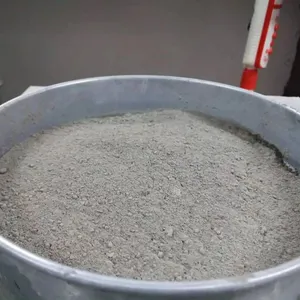
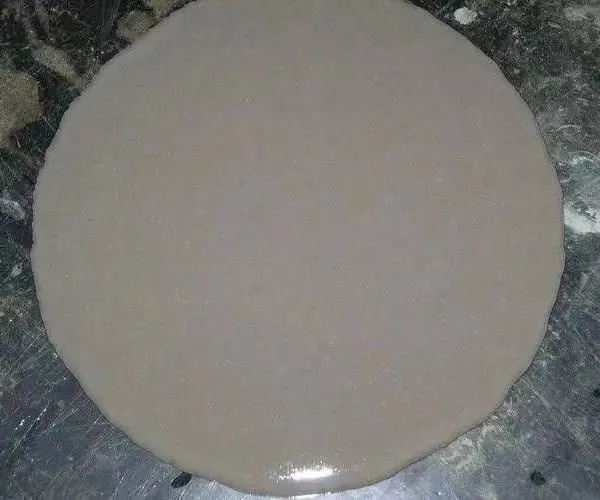
Grouting material is prepared by using high-strength materials as aggregates, cement as a binder, and supplemented with high-fluidity, micro-expansion, anti-segregation and other substances. At the construction site, add a certain amount of water and stir well before use.
Grouting material has the characteristics of good self-flowing property, fast hardening, early strength, high strength, non-shrinking, micro-expansion; non-toxic, harmless, non-aging, no pollution to water quality and the surrounding environment, good self-compaction, rust prevention, etc. In terms of construction, it has the advantages of reliable quality, cost reduction, shorter construction period and convenient use. It fundamentally changes the stress condition of the equipment base, so that it can evenly bear the full load of the equipment, thus meeting the installation requirements of various mechanical and electrical equipment (heavy equipment and high-precision grinding machines). It is an ideal grouting material for the era of pad-free installation.
Product features
Features of high-strength non-shrinking grouting material
1. Early strength and high strength: The compressive strength can reach over 30 - 50Mpa in 1 - 3 days.
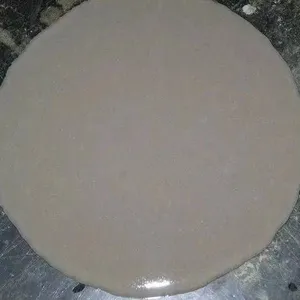
2. High self-flowing property: It can fill all voids and meet the requirements of secondary grouting of equipment.
3. Micro-expansion property: Ensure close contact between the equipment and the foundation, and no shrinkage after secondary grouting. High bonding strength, and the bonding force with steel bars is not less than 6Mpa.
4. Can be constructed in winter: Allowed to carry out outdoor construction at an air temperature of -10℃.
5. Strong durability: This product is an inorganic cementitious material, and its service life is longer than that of the foundation concrete. After millions of fatigue tests and 50 freeze-thaw cycle tests, the strength has no obvious change. The strength is significantly improved after being soaked in engine oil for 30 days.
Product applications
1. Suitable for grouting of equipment foundations such as machine bases and anchor bolts.
2. Reinforcement, emergency repair and strengthening of beams, slabs, columns, foundations, floors and roads of buildings.
3. Can be used for the anchoring of anchor bolts and steel bars and structural reinforcement.
4. Fixing of construction joints in reverse construction method of subway, tunnel, underground and other projects.
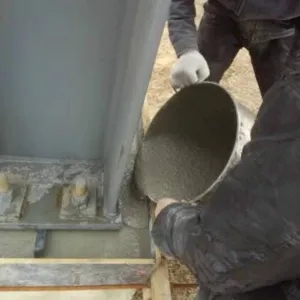
5. And secondary grouting for the fixed connection between steel structures (rails, steel frames, steel columns, etc.) and the foundation.
Reference dosage
Calculate the actual usage based on the reference dosage of 2.28 - 2.4 tons per cubic meter.
Preparations before construction
1. Machine mixing: Concrete mixer or mortar mixer;
2. Manual mixing: Mixing trough and several shovels;
3. Several buckets;
4. Several platform scales;
5. Chute;
6. High-level funnel, grouting pipe and pipe joints;
7. Grouting booster;
8. Formwork (steel formwork, wooden formwork);
9. Straw bags, rock wool quilts, etc.;
10. Cotton yarn, tape.
Grouting construction
Step 1: Foundation treatment
The foundation surface should be roughened. Clean the foundation surface, and there should be no debris such as gravel, laitance, floating ash, oil stains, and release agents. The foundation surface should be fully wetted 24 hours before grouting, and the accumulated water should be removed 1 hour before grouting.
Step 2: Formwork support
1. Set up the formwork according to the grouting construction drawing. Seal the joints between the formwork and the foundation, and between the formwork and the formwork with cement slurry, tape, etc., to ensure that the overall formwork does not leak water.
2. The horizontal distance between the formwork and the periphery of the equipment base should be controlled at about 100mm to facilitate grouting construction.
3. The elevation of the top of the formwork should be 50mm higher than the upper surface of the equipment base.
4. If grout leakage occurs during grouting, it should be dealt with in time.
Step 3: Preparation of grouting material
1. Generally, add water and stir the general reinforcement type according to the standard of 13 - 14%, and add water and stir the pea gravel reinforcement type according to the standard of 9 - 10%.
2. It is recommended to use mechanical mixing. The mixing time is generally 1 - 2 minutes (it is strictly prohibited to use a hand - held drill - type mixer). When mixing manually, first add 2/3 of the water consumption and mix for 2 minutes, then add the remaining water and stir until uniform.
3. The amount of each mixing should be determined according to the usage amount to ensure that the material is used up within 40 minutes.
4. When using on - site, it is strictly prohibited to add any admixtures or external additives to the HGM grouting material.
Step 4: Grouting construction method
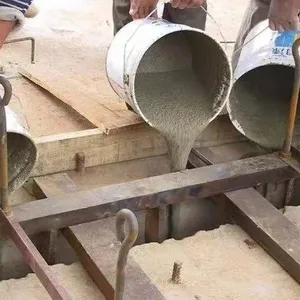
1. For long equipment or track foundations, segmented construction should be adopted.
2. Diagrams of several common grouting methods
3. When performing secondary grouting, the following requirements should be met.
①. During secondary grouting, grouting should be carried out from one side or multiple points on two adjacent sides until it overflows from the other side to facilitate air exhaust during the grouting process. Do not grout from all four sides simultaneously.
②. Once grouting starts, it must be carried out continuously without interruption. And try to shorten the grouting time as much as possible.
③. It is strictly prohibited to vibrate during the grouting process. If necessary, a grouting booster can be used to push the HGM grouting material along the bottom of the grouting layer. It is strictly prohibited to push from the middle or upper part of the grouting layer to ensure the uniformity of the grouting layer.
④. After the equipment foundation grouting is completed, a 45 - degree bevel should be cut outward along the equipment edge 3 - 6 hours after grouting to prevent cracks from occurring at the free end. If the edge - cutting treatment cannot be carried out, use a trowel to smooth the surface of the grouting layer 3 - 6 hours after grouting.
⑤. When the thickness of the grouting layer exceeds 150mm, pea gravel reinforcement type high - strength non - shrinkage grouting material should be used.
⑥. When the grouting volume of the equipment foundation is large, mechanical mixing should be used for the pea gravel reinforcement type grouting material to ensure the grouting construction.
Step 5: Maintenance
1. Within 30 minutes after grouting is completed, immediately cover it with a wet straw mat or rock wool quilt and keep it moist.
2. During winter construction, the curing measures shall also comply with the relevant provisions of the current > (GB50204).
3. After the grouting material reaches the formwork removal time, equipment installation can be carried out. For the specific time, refer to the "Relationship Table between Formwork Removal and Curing Time and Ambient Temperature".
4. After the equipment foundation grouting is completed, if there is a part to be removed, it can be gently removed with a trowel or a shovel 3 - 6 hours after the grouting is completed, that is, before the grouting layer hardens.
5. Do not transmit the vibration of the running machine to the equipment foundation. The machine should be shut down for 24 - 36 hours after the secondary grouting to avoid damaging the unhardened grouting layer.
It is precisely because the strength of the grouting material is high, far exceeding that of cement, and it changes the shrinkage characteristic of cement during curing, so it is called high - strength non - shrinkage grouting material!
The grouting material has different models, such as CGM, HGM, etc. These are determined according to the standards of different building research institutes and do not represent the quality of the products. Specific usage needs to be tested.

Send Inquiry to This Supplier


You May Also Like
-
Changsha Steel Bar Sleeves, National Standard Straight Thread Connecting Sleeves, Reversible Thread Reducing Sleeves, Physical ManufacturerUS$ 0.25 - 0.31MOQ: 1 Piece
-
New Prestressed Steel Strands From Hunan With Complete Specifications, Guaranteed Quality and Timely DeliveryUS$ 846.15 - 861.54MOQ: 33 Tons
-
Professional Production of Precision Rolled Threaded Steel Anchors, High - Speed Railway Bridge Accessories, Backing Plates, Connectors, and Precision Rolled NutsUS$ 0.25 - 0.31MOQ: 1 Piece
-
Anchor Cable Steel Backing Plate, Anchor, Anchor Cable Bearing Body, Prestressed Steel Backing Plate From Changsha, Hunan. Precision Rolled Anchoring Backing Plate for BridgesUS$ 3.23 - 3.85MOQ: 10 Sheets
-
Changsha Prestressed Locking Clip Anchor, M15.24 Strand Tool Jack, Anchor Cable Working ClipUS$ 0.28 - 0.34MOQ: 100 Pieces
-
Prestressed Anchorage Devices for Bridges, Slopes and Foundation Pits in Liuyang, Including P-anchors, Round Anchors and Flat Anchors, at Fixed Ends and Tensioning Ends, Multi-hole Anchorage DevicesUS$ 2.46 - 3.08MOQ: 10 Sets
-
Hunan Prestressed Steel Strand Tensioning End Clamps 12.7 - 15.24mm Working WedgesUS$ 0.25 - 0.31MOQ: 100 Pieces
-
Wholesale of Hunan Bridge Prestressed Anchorage Devices, Working Anchorage Devices, and Multi-hole Mine Anchorage DevicesUS$ 3.85 - 4.62MOQ: 10 Sets
-
Changsha Prestressed Steel Strand, Specifications 15.2/17.8, In-stock Mine-used Steel StrandUS$ 938.46 - 953.85MOQ: 33 Tons
-
Manufacturer of Hunan Prestressed Plastic Corrugated Pipes for Highway and Bridge Construction Protection and Embedded Steel Strand ThreadingUS$ 0.4 - 0.46MOQ: 1000 Meters


