Home > Electrical & Electronics > Electrical Control System > MOTOROLA MVME188A CPU Board

MOTOROLA MVME188A CPU Board

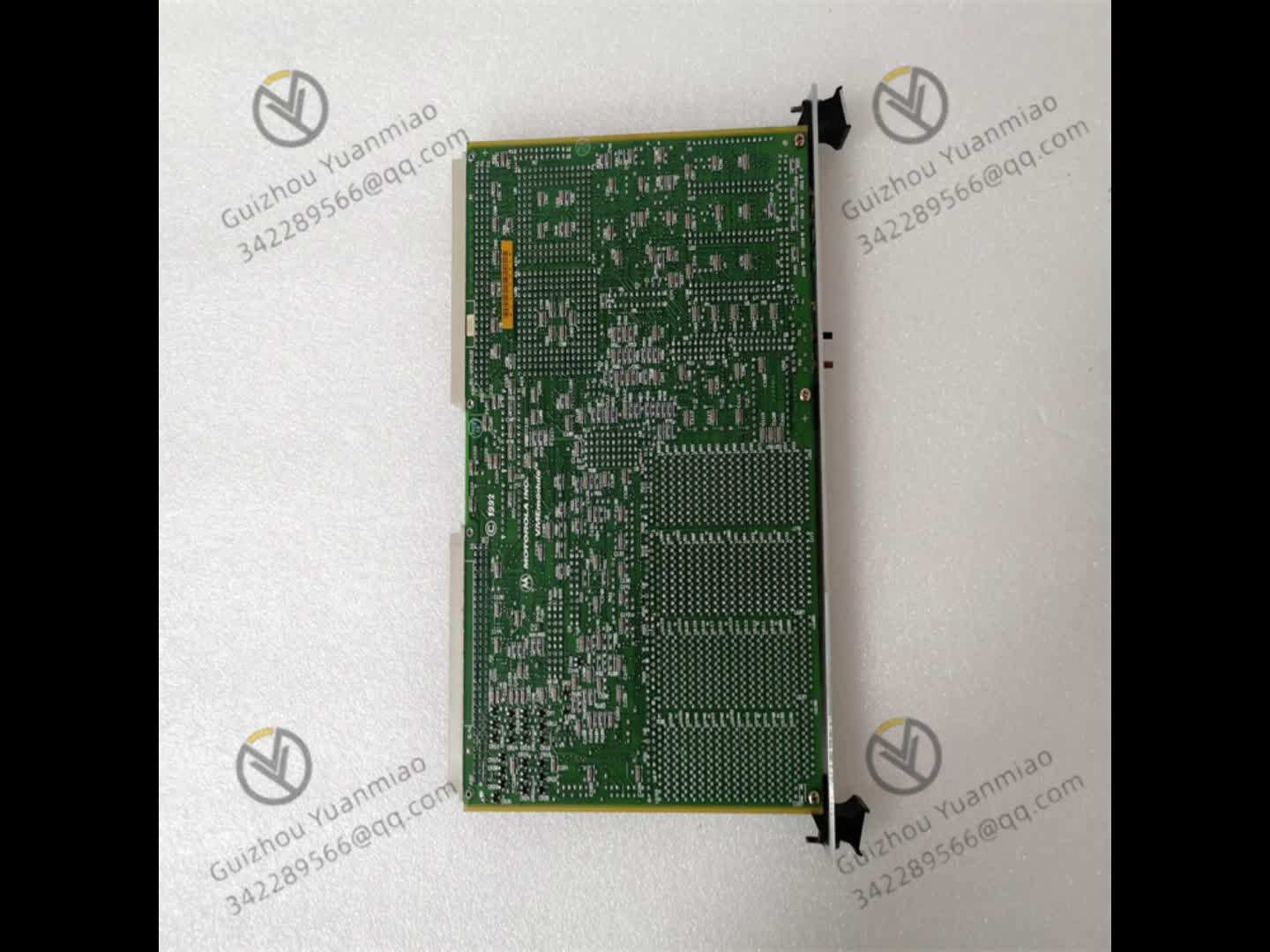
MOTOROLA MVME188A CPU Board photo-1
Negotiable MOQ: 1 Piece (Price negotiable depending on order volume and customization)
Key Specifications
Get Latest Price
Material:
Other, Global universal model
Condition:
Other, Global universal model
Task:
Other, Global universal model
Payment & Shipping
Payment Methods:
Port of Shipment:
guizhou
Delivery Detail:
Delivery time depends on order quantity.
Material Other, Global universal model
Condition Other, Global universal model
Task Other, Global universal model
Mathematical Model Other, Global universal model
Signal Other, Global universal model
Customized Non-Customized
Structure Other, Global universal model
Operating Temperature -40℃~+70℃
Relative Humidity 5%~95% (non-condensing)
Dimensions 238mm × 160mm × 25.5mm
Storage Temperature -55℃~+85℃

I. Overview


The MOTOROLA MVME188A is an industrial-grade VMEbus (VersaModule Eurocard bus) signal interface module launched by Motorola. As an early classic bus adaptation and signal conversion unit in the MVME series, its core positioning is "a core for signal conditioning, conversion, and VMEbus interconnection in embedded control systems under harsh industrial environments". It mainly serves fields with extremely high requirements for signal processing stability, bus compatibility, and environmental adaptability, such as power system signal acquisition, chemical equipment status monitoring, rail transit signal transmission, and upgrading of outdated industrial control systems. It undertakes the key tasks of "on-site analog/digital signal conditioning - format conversion - VMEbus data interaction - signal interconnection between devices".


With its core advantages of "industrial-grade signal processing accuracy + standardized VMEbus compatibility + wide-temperature and harsh environment-resistant design + strong adaptability to outdated systems", this module has irreplaceable value in scenarios such as upgrading outdated industrial control systems (e.g., adding bus adaptation functions to traditional sensors/actuators without VME interfaces) and multi-device signal interconnection (e.g., realizing bidirectional data interaction between different types of signal devices and VME hosts). Its core role is to solve the three major pain points in industrial control: "difficulty in heterogeneous signal compatibility", "outdated equipment without bus interfaces", and "signal distortion in complex environments". Through high-precision signal conditioning circuits, standardized VMEbus interfaces, and industrial-grade protection design, it achieves accurate acquisition of on-site weak signals (analog acquisition accuracy ≤ ±0.2% F.S.) and stable conversion (signal conversion delay ≤ 10μs), avoiding system misjudgments caused by inaccurate signal processing or bus adaptation failures (a single misjudgment may cause production process interruption or equipment misoperation), and ensuring the signal transmission reliability and bus interconnection stability of industrial control systems.


II. Technical Specifications


(1) Signal Processing and Conversion Parameters

CategorySpecific Parameters
Analog Signal ProcessingInput Channels: 4-channel single-ended analog input (compatible with voltage/current signals, switched via hardware jumpers); Input Signal Types: Voltage 0-10V DC, 4-20mA DC (output signals of industrial standard sensors); Acquisition Accuracy: ±0.2% F.S. (at 25℃), Temperature Drift ≤ 100ppm/℃ (-40℃~+70℃); Signal Conditioning: Built-in RC filter circuit (cutoff frequency 1kHz) to suppress high-frequency interference and improve signal-to-noise ratio (≥ 60dB).
Digital Signal ProcessingInput Channels: 8-channel isolated digital input (compatible with dry/wet contacts, wet contact voltage 24V DC); Output Channels: 8-channel isolated digital output (relay output, contact rating 2A/250V AC, 2A/30V DC); Isolation Voltage: Isolation voltage between input/output channels and ground ≥ 2500Vrms, avoiding signal crosstalk and ground loop interference.
Signal Conversion PerformanceAnalog-to-Digital Conversion (A/D): 12-bit resolution, maximum single-channel sampling rate 10kHz, supporting continuous sampling and triggered sampling (trigger modes: software trigger, external hardware trigger); Digital-to-Bus Signal Conversion: Supports bidirectional conversion between TTL level and VMEbus signal, conversion delay ≤ 10μs to ensure real-time performance.

(2) VMEbus and Interface Parameters

CategorySpecific Parameters
VMEbus CompatibilityBus Standard: Compatible with VMEbus Rev. A specification, 32-bit address/data multiplexed bus; Bus Rate: Up to 16MB/s, compatible with early VME hosts (e.g., MVME162 series single-board computers); Bus Function: Supports VMEbus slave device mode, realizing data interaction with the host via the bus (upload of signal acquisition data, reception of control commands).
External InterfacesSignal Interface: The front panel is equipped with 1 25-pin D-type connector (integrating 4-channel analog input, 8-channel digital input/output), using gold-plated contacts (contact resistance ≤ 30mΩ) to improve connection reliability; Debugging Interface: 1 9-pin RS-232 serial port (maximum baud rate 9600bps), used for module parameter configuration and fault diagnosis.
Module InterconnectionSupports multi-module cascading (up to 4 modules with different addresses set via VMEbus address jumpers), realizing signal channel expansion (e.g., expanded to 16-channel analog input, 32-channel digital I/O after cascading), adapting to the needs of multi-measurement point scenarios.

(3) Physical and Environmental Parameters

CategorySpecific Parameters
Physical SpecificationsDimensions: 238mm (length) × 100mm (width) × 25.5mm (height), conforming to 3U VME standard card size, can be installed in 19-inch standard VME cabinet (3U height); Weight: Approximately 350g; Installation Method: Installed via VMEbus slot, equipped with standard positioning holes, compatible with VME cabinet slide rails.
Environmental AdaptabilityOperating Temperature: -40℃~+70℃ (industrial wide-temperature range), supporting low-temperature startup (no preheating required for startup at -40℃, startup time ≤ 20s); Storage Temperature: -55℃~+85℃; Humidity: 5%~95% RH (non-condensing, conforming to IEC 60068-2-3 standard); Vibration Resistance: 8g (10Hz~2000Hz, conforming to IEC 60068-2-6), capable of withstanding continuous vibration during industrial equipment operation; Shock Resistance: 40g (1ms pulse, conforming to IEC 60068-2-27), resisting instantaneous impact during equipment handling and maintenance.

(4) Power Supply and Reliability Parameters

CategorySpecific Parameters
Power Supply RequirementsSingle-channel +5V DC power supply, operating current ≤ 250mA (in full configuration), supporting wide voltage input range (4.75V~5.25V); Equipped with overcurrent protection (current limiting triggered when ≥ 350mA) to prevent damage to the module's core circuit due to power supply abnormalities.
Reliability IndicatorsMean Time Between Failures (MTBF) ≥ 150,000 hours (Telcordia SR-332 standard, at 25℃); Design Life: ≥ 10 years; Electromagnetic Compatibility (EMC): Conforms to EN 55022 Class A and EN 55024 standards, Electrostatic Discharge (ESD) protection ±6kV (contact discharge)/±12kV (air discharge); Fault Diagnosis: Built-in hardware-level fault indicator lights, supporting status display of power supply, bus connection, and signal channel faults.

MVME117A


III. Functional Features


(1) Industrial-Grade Signal Processing, Ensuring Transmission Accuracy


High-Precision Signal Conditioning and Conversion

The analog channel is equipped with built-in RC filter and signal amplification circuits, which can amplify and condition on-site weak 4-20mA current signals (e.g., output from pressure sensors), suppress high-frequency interference (such as electromagnetic noise generated by frequency converters), with an acquisition accuracy of ±0.2% F.S., ensuring a signal transmission distortion rate ≤ 0.1%; The 12-bit A/D converter supports a sampling rate of 10kHz, which can quickly capture dynamic signal changes (such as voltage fluctuations in power systems), adapting to the needs of real-time monitoring scenarios.


Isolation Protection and Anti-Interference Design

Digital input/output channels adopt optocoupler isolation (isolation voltage 2500Vrms), effectively blocking ground loop interference (such as signal crosstalk caused by ground potential differences between different devices); Analog channels are equipped with common-mode rejection circuits (common-mode rejection ratio ≥ 80dB), which can still stably acquire signals in the high-electromagnetic environment of chemical workshops, avoiding fluctuations in collected data caused by interference.


(2) Standardized VMEbus Compatibility, Adapting to Multiple Systems

Seamless VMEbus Interconnection

It strictly complies with the VMEbus Rev. A specification, supports 32-bit address/data multiplexed bus, and can be directly inserted into the VME slot of MVME series VME hosts (e.g., MVME162, MVME147, etc.) without additional adapter cards, realizing high-speed data interaction with the host (bus rate 16MB/s). For example, in a power monitoring system, the voltage and current signals collected by the MVME117A can be uploaded to the MVME162 host in real-time via the VMEbus for the host to perform data analysis and control decision-making.


Multi-Module Cascading Expansion

By setting different VME addresses via hardware jumpers (supporting cascading of 4 modules), the number of signal channels can be expanded (e.g., 16-channel analog input and 32-channel digital I/O can be achieved after cascading 4 modules), adapting to multi-measurement point scenarios (such as temperature and pressure signal acquisition of multiple reactors in a chemical workshop). During the expansion process, there is no need to modify the host program, and only module addresses need to be configured, reducing the difficulty of system integration.


(3) Wide-Temperature and Harsh Environment Resistance, Stable Operation


Industrial-Grade Environment Adaptation

Core components (A/D converters, optocouplers, filter capacitors, etc.) all adopt wide-temperature models with a range of -40℃~+70℃; The circuit board is coated with thin-type three-proof paint (moisture-proof, dust-proof, anti-corrosion), which can operate stably in outdoor power control cabinets in Northeast China (at -30℃ in winter) and coastal chemical workshops (high humidity and high salt spray), with a module failure rate ≤ 0.5% per year.


Low Power Consumption and High Reliability

It is powered by a single +5V supply, with power consumption ≤ 1.25W (in full configuration), adapting to the limited power supply resources on industrial sites; Key interfaces (D-type connectors) use gold-plated contacts, with a plug-in life ≥ 1000 times and contact resistance ≤ 30mΩ, avoiding signal interruption caused by interface oxidation and reducing the frequency of later maintenance.


(4) Strong Adaptability to Outdated Systems, Reducing Upgrade Costs


Compatibility with Traditional Industrial Signals

It supports industrial standard analog signals such as 0-10V DC and 4-20mA DC, as well as 24V DC dry/wet contact digital signals. It can be directly connected to traditional industrial sensors (e.g., PT100 temperature sensors, pressure transmitters) and actuators (e.g., solenoid valves, relays). VMEbus functions can be added to outdated systems (e.g., traditional PLC systems without bus interfaces) without replacing on-site equipment, and the upgrade cost is 60% lower than replacing the entire system.


Simplified Debugging and Maintenance

The front panel is equipped with 3 types of indicator lights: power (green, steady on = normal power supply), bus (yellow, blinking = normal bus communication), and fault (red, steady on = module fault). On-site personnel can quickly judge the module's operation status through the indicator light status; The debugging serial port supports reading module acquisition data and fault codes through terminal software (e.g., HyperTerminal), enabling fault troubleshooting without disassembling the equipment, shortening downtime (from an average of 1.5 hours to 30 minutes).


IV. Common Faults and Solutions


Common Fault PhenomenaPossible CausesSolutions
Module cannot be recognized by VME host1. VME address jumper conflict (duplicate address with other VME modules); 2. Poor contact of VMEbus slot; 3. Failure of module bus controller1. Power off and reset the module address jumpers (set a unique address according to the manual, e.g., 0x2000-0x20FF); 2. Unplug the module, clean the dust in the VME slot with a compressed air can, wipe the module's gold fingers with alcohol cotton (to remove the oxide layer), then reinsert and fasten it; 3. If the above operations are ineffective, replace the module with the same model (prefer original accessories).
Distorted or fluctuating analog acquisition data1. Unshielded signal cable or poor grounding; 2. Fault of filter circuit in analog channel; 3. Excessive on-site electromagnetic interference1. Replace with industrial-grade shielded cables, ensure both ends of the cable shield are grounded (grounding resistance ≤ 4Ω), and avoid laying parallel to high-voltage cables; 2. Check the module's filter capacitor (e.g., 10μF/16V capacitor), if the capacitor is bulging or leaking, replace it with the same model; 3. Install an EMC filter (e.g., 220V to 5V power supply with filter) at the module's power input end to suppress external interference.
No action of digital output1. Burned contacts of output relay; 2. Fault of optocoupler in digital output channel; 3. Load power exceeding relay capacity1. Power off and measure the on-off status of the relay contacts (normally open when not activated, closed when activated). If the contacts are stuck or burned, replace the relay (matching model: 2A/250V AC); 2. Use a multimeter to measure the voltage at the optocoupler output end (normally 5V high level, 0V low level). If the voltage is abnormal, replace the optocoupler (e.g., TLP521); 3. Check the load power. If it exceeds 2A, add an intermediate relay to expand the load capacity and avoid directly driving high-power equipment.
Module power indicator not on1. Input voltage not meeting the standard (lower than 4.75V or higher than 5.25V); 2. Poor contact of power interface; 3. Fault of module power circuit1. Use a multimeter to detect the input voltage, ensure it is within the range of 4.75V~5.25V DC. If the voltage fluctuates greatly, install a voltage stabilizer (e.g., LM7805); 2. Check the power connection line, reinsert and fasten it. If the cable is aging, replace it with a power cable of the same specification (24AWG); 3. Measure the fuse at the module's power input end (e.g., 0.5A fuse). If it is blown, replace the fuse. If it blows again, the module's power circuit needs to be repaired (e.g., replacing the voltage regulator chip).
Failure to acquire digital input signals1. Input signal voltage not meeting the standard (24V DC not connected for wet contacts); 2. Fault of optocoupler in input channel; 3. Open circuit of signal cable1. Check the wet contact power supply, ensure the input voltage is 24V DC (error ±10%). For dry contacts, an external 24V DC power supply is required (in series with a 1kΩ current-limiting resistor); 2. Input a 24V DC signal with a signal generator, measure the voltage at the optocoupler input end. If the voltage is normal but there is no output, replace the optocoupler; 3. Use a multimeter to check the continuity of the signal cable. If there is an open circuit, replace the cable and rewire, avoiding cable damage due to extrusion.
Some modules cannot communicate after cascading1. Duplicate module address jumpers; 2. Incorrect module insertion order during cascading; 3. Unconnected VMEbus terminal resistor1. Power off and check the address jumpers of cascaded modules one by one, ensuring each module has a unique address (e.g., Module 1: 0x2000, Module 2: 0x2100); 2. According to VMEbus specifications, insert the module with the lowest address into the VME slot closest to the host, and arrange the cascaded modules in sequence; 3. Connect a 75Ω terminal resistor to the VMEbus terminal of the last module (matching bus impedance) to reduce communication faults caused by signal reflection.
Product Tags: MVME188A

Send Inquiry to This Supplier

Message
0/5000
Want the best price? Post an RFQ now!
1Yr
Business Type
Trading Company
Year Established
2014
Factory Size
1,000-3,000 square meters
Product Certifications
SA8000