








 Contact Platform Support
 Help Center
Home > Chemicals > Plastic & Polymer > Plastic Materials > DAIKIN FEP Neoflon NP-40 FEP Granules Powder Engineering Plastic
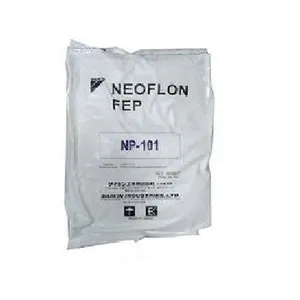
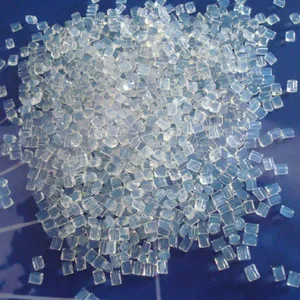
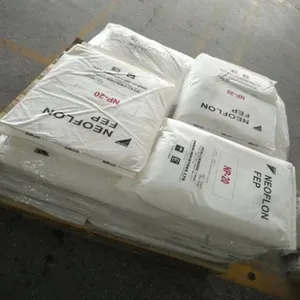
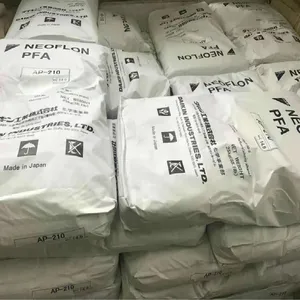
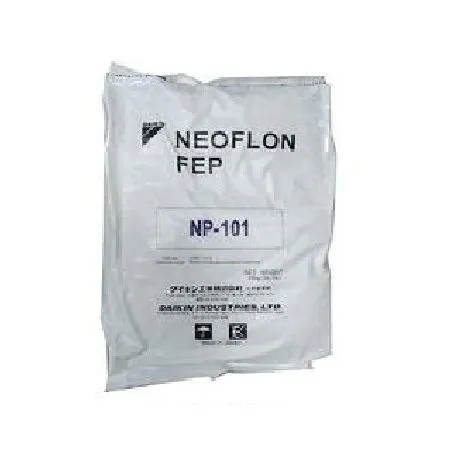
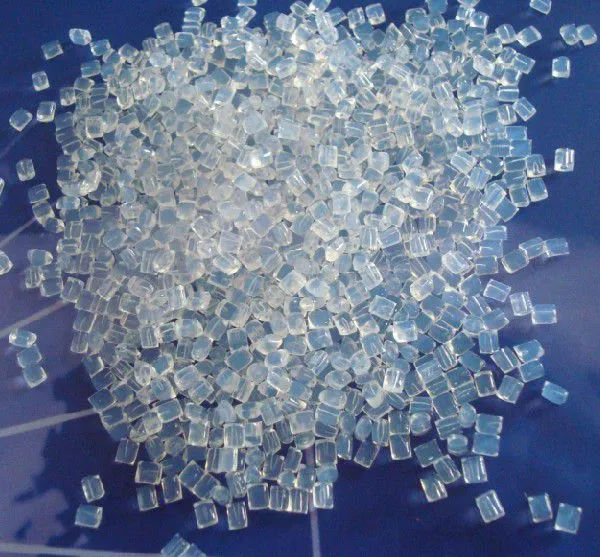
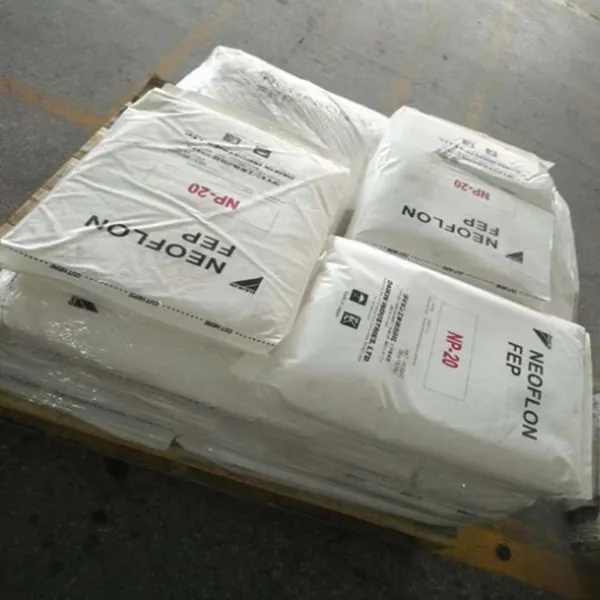
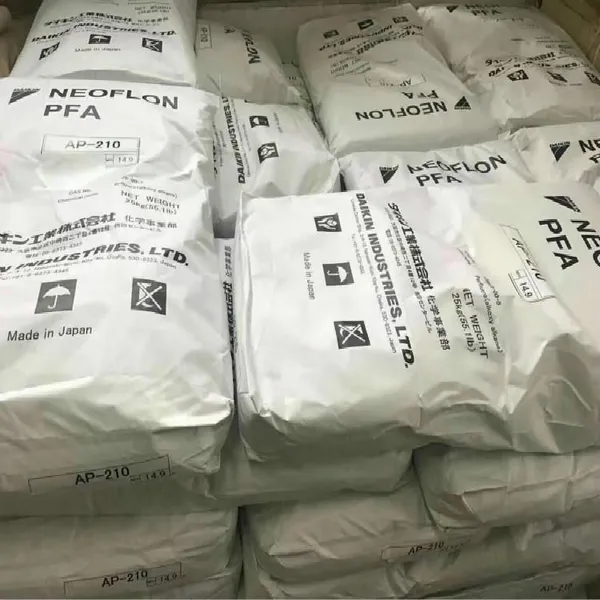
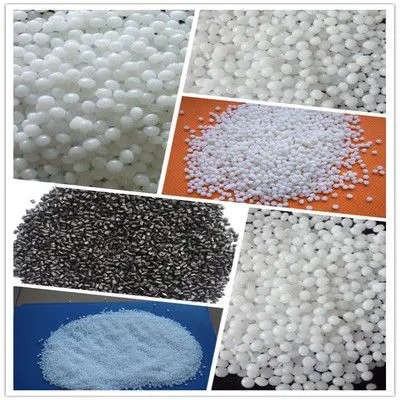
DAIKIN FEP Neoflon NP-40 FEP Granules Powder Engineering Plastic
US$ 2.50
25 - 999 Kilograms
US$ 1.50
≥1000 Kilograms
Key Specifications
Get Latest Price
Material:
FEP
Color:
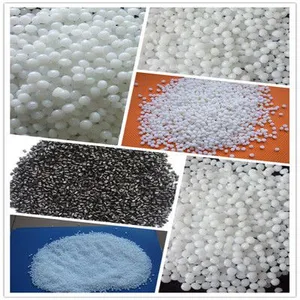
Natural/Black
Feature:
High Temperature Resistance

Payment & Shipping
Payment Methods:


Port of Shipment:
China
Delivery Detail:
Delivery time depends on order quantity.
Related Products
-
 Solvay ECTFE Halar 350 DA/350 LC Ectfe Resin Virgin Pellet/Powder Ectfe Plastic GranulesUS$ 1.50 - 2.50MOQ: 25 Kilograms
 -
Solvay ECTFE Halar 7518/Halar 7518LC Ectfe Granules Virgin Pellet/Powder Resin Engineering PlasticUS$ 1.50 - 2.50MOQ: 25 Kilograms
-
Solvay ECTFE Halar 6014/6514/6614/6914 Virgin Pellet/Powder Resin Plastic MaterialUS$ 1.50 - 2.50MOQ: 25 Kilograms
-
Solvay ECTFE Halar 513 LC Plastic Granules Virgin Pellet/Powder Ectfe Raw MaterialUS$ 1.50 - 2.50MOQ: 25 Kilograms
-
Solvay PFA Hyflon P7310 Perfluoropolymers/PFA Virgin Pellet/Powder Resin Engineering PlasticUS$ 1.50 - 2.50MOQ: 25 Kilograms
Model Number
FEP Neoflon NP-40
Brand Name
DAIKIN
Place of Origin
Japan
Application
film grade
color
NC
Grade
injection molding grade
material
FEP
Brand
DAIKIN
Model number
FEP Neoflon NP-40
Certificates
COA/ MSDS
Package
25Kg/Bag
Product Description
Feel free to contact us with any questions.
If you have any doubt about the price, we can give a proper discount by different
purchasing quantity. English name: FEP (Fluorinated ethylene clone) FEP is made by copolymerization of tetrafluoroethylene and hexafluoropropene. The
content of hexafluoropropene is about 15%. It is a modified material of polytetrafluoroethylene. Full name: fluorinated ethylene-propylene copolymer (perfluoroethylene-propylene copolymer), referred to as poly (perfluoroethylene-propylene), also abbreviated as F46. FEP has a melting point of 580 ° F and a density of 2.15g/CC (g/cm3). It is a soft plastic with lower tensile strength, wear resistance and creep resistance than many engineering plastics. It is chemically inert and has a low dielectric constant of about 2.1 in a wide temperature and frequency range. This material does not ignite and can prevent the spread of flame. It has excellent weather resistance, low friction coefficient, and can be used from low temperature to 392 ° F. The material can be made into granular products for extrusion and molding, powder for fluidized bed and electrostatic coating, and water dispersion. Semi-finished products have films and plates. Bar and single fiber. The FEP distributed in the U.S. market includes DuIPont's Teflon brand, Daikin's Neoflo brand, and Hoechst Cellanese's IHoustaflow brand. Its main purpose is to make the inner village of pipes and chemical equipment, the surface layer of drums, and various wires and cables, such as aircraft hook line, booster cable, alarm cable, flat cable and oil well logging cable. FEP film has been seen as a thin coating for solar collectors. F46 resin not only has the characteristics similar to polytetrafluoroethylene, but also has the good processing properties of thermoplastic. Therefore, it makes up for the difficulty in processing PTFE and makes it a substitute for PTFE. It is widely used in the production of wires and cables in the transmission lines of electronic equipment used at high temperature and high frequency, the connecting lines inside electronic computers, aerospace wires and their special purpose installation lines, oil pump cables and the insulation layer of the winding lines of submersible motors. According to the processing needs, F46 can be divided into three types: granular, dispersion and paint. Granular materials can be used for molding, extrusion and injection molding according to their melt index; The dispersion solution is used for impregnation and sintering; The paint is used for spraying, etc. 1. Structural characteristics of PFEP Like polytetrafluoroethylene, F46 resin is also a completely fluorinated structure. The difference is that part of the fluorine atoms in the main chain of F46 are replaced by trifluoromethyl (- CF3), as shown in the following figure: picture PTFE structure picture FEP structure It can be seen that although F46 resin and polytetrafluoroethylene are composed of carbon and fluorine elements, and the carbon chain is completely surrounded by fluorine atoms, there are branches and side chains on the main chain of F46 macromolecules. This difference in structure has no significant impact on the upper limit of temperature range of materials under long-term stress. The upper limit temperature of F46 is 200 ℃, while the maximum service temperature of PTFE is 260 ℃. However, this structural difference makes F46 resin have a fairly definite melting point and can be processed by general thermoplastic processing methods, which greatly simplifies the processing process. This is what polytetrafluoroethylene does not have. This is the main purpose of modifying polytetrafluoroethylene with hexafluoropropylene. 2. Performance of PFEP The content of hexafluoropropylene in F46 has a certain effect on the properties of the copolymer. At present, the content of hexafluoropropylene in F46 resin is usually about 14%~15% (mass fraction). 2.1. Physical properties At present, there is no feasible method to determine the molecular weight of F46 resin. However, its melting viscosity at 380 ℃ is lower than that of polytetrafluoroethylene, which is 103~104Pa. s. It can be seen that the molecular weight of F46 is much lower than that of PTFE. The melting point of F46 varies with the composition of the copolymer. When the content of hexafluoropropylene in the copolymer increases, the melting point decreases. According to the results measured by differential thermal analysis, the melting point of domestic F46 resin is mostly between 250~270 ℃, which is lower than that of polytetrafluoroethylene. F46 resin is a crystalline polymer with lower crystallinity than polytetrafluoroethylene. When F46 melt slowly cools to the temperature below the crystal melting point, macromolecules will recrystallize with crystallinity between 50% and 60%; When the melt is rapidly cooled by quenching, the crystallinity is small, between 40% and 50%. The crystal structure and morphology of F46 are spherulite, which varies with the resin, processing and molding temperature and heat treatment methods. 2.2. Electrical insulation performance The electrical insulation performance of F46 is very similar to that of PTFE. Its dielectric coefficient is almost constant in the wide range from deep cold to the maximum operating temperature, from 50Hz to 1010Hz UHF, and very low, only about 2.1. The dielectric loss tangent changes with frequency, but it does not change with temperature. The volume resistivity of F46 resin is very high, generally greater than 1015 Ω. m, and changes slightly with temperature, and is not affected by water and moisture. Arc resistance is greater than 165s. The breakdown field of F46 increases with the decrease of thickness. When the thickness is greater than 1mm, the breakdown field strength is above 30KV/mm, but does not change with the change of temperature. 2.3. Thermal performance The heat resistance of F46 resin is only inferior to that of polytetrafluoroethylene, and it can be used continuously in the temperature range of - 85~+200 ℃. Even under the limit of - 200 ℃ and+260 ℃, its performance will not deteriorate and can be used for a short time. The thermal decomposition temperature of F46 resin is higher than the melting point temperature, and significant thermal decomposition occurs only when the temperature is above 400 ℃. The decomposition products are mainly tetrafluoroethylene and hexafluoropropylene. Due to the fact that F46 macromolecules usually have the same terminal groups that will decompose at temperatures above the melting point, proper ventilation must also be paid attention to when processing at temperatures above 300 ℃. F46 is quite stable below the melting point temperature, but the mechanical strength loss is large at 200 ℃. The increase of melt index can be used to analyze the decrease of melt viscosity and the thermal decomposition of copolymer. F46 is still not completely hard and brittle at - 250 ℃, and still has a small elongation and certain flexibility, which is even better than polytetrafluoroethylene, and is inferior to all other types of plastics. 2.4. Chemical resistance The chemical resistance of F46 is similar to that of polytetrafluoroethylene, and has excellent chemical resistance. Except for the reaction with fluorine element, molten alkali metal and chlorine trifluoride at high temperature, it will not be corroded when contacting with other chemicals. 2.5. Mechanical properties Compared with PTFE, F46 has a slightly higher hardness and tensile strength, and a slightly higher friction coefficient. F46 has good creep resistance at room temperature; However, when the temperature is higher than 100 ℃, the creep resistance is less than that of PTFE. 2.6. Other performance F46 resin has excellent oxidation resistance in the atmosphere and high atmospheric stability. The irradiation resistance of F46 is better than that of polytetrafluoroethylene and slightly inferior to that of polyethylene. In air and at room temperature, the minimum absorbed dose for F46 to begin to change its performance is 105-106rad (103-104Gy), so it can be used as an irradiation resistant material. |
||||||||
Company Profile
Shanghai XLJ Plastic Industry Co., Ltd
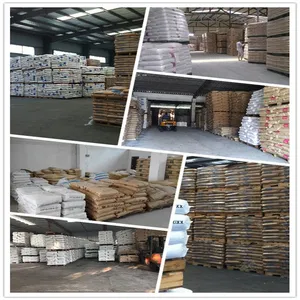
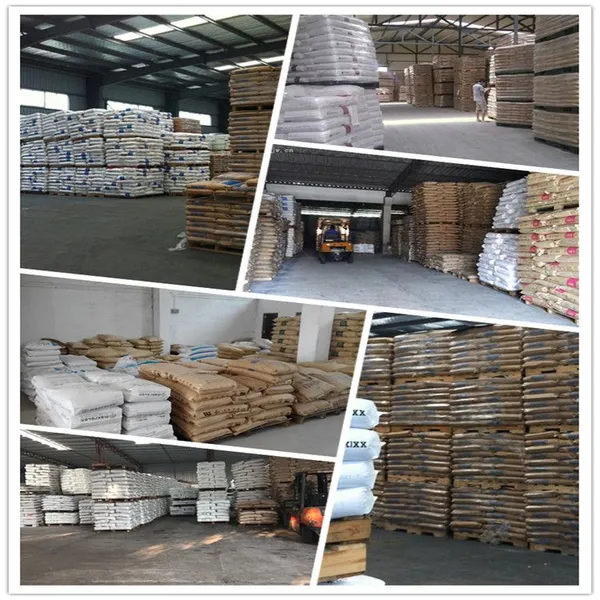
Shanghai XLJ Plastic Industry Co., Ltd is specialized in supplying and exporting plastic raw material for about 10 years.
Our main materials are: PA,PBT,POM,PC/ABS,POM.The products are mainly applied to plastic processing industry, such as aerospace, electronics and electrical, medical supplies and equipments, photoelectric communication, water treatment, transports, consumer products and other industries etc.The mainly customers of our company are among the fields of electronics, automobiles, home appliances, daily necessities etc. We are equipped with 5,000 square meters warehouse,has a large inventory and continuously stable supply capacity.As a professional supplier, we can offer you a wide range of materials ,fast quotation and and efficient customer service
Packing & Delivery
FAQ
Q:About delivery time
5-7 days after advance payment
Q:About payment term
We 'd like to use T/T as the term of payment, 50% deposit and balance payment after see copy of BL,about L/C term can be communicate.
Q: What is the shipping terms?
Flexible shipping terms: FOB, EXW, CFR, CIF.
Flexible shipping terms: FOB, EXW, CFR, CIF.
Q:How many tons product we export each month?
500 tons
Q:How many tons fit a container?
10 tons fit a 20ft container, 25 tons fit a 40HQ container

Send Inquiry to This Supplier


Business Type
Manufacturer
Year Established
2014
Factory Size
1,000-3,000 square meters
Annual Export Value
Above US$100 Million
You May Also Like
-
DAIKIN PFA Neoflon AP-202 Perfluoropolymers/PFA Virgin Pellet/Powder Resin Engineering PlasticUS$ 1.50 - 2.50MOQ: 25 Kilograms
-
Dupont Hytrel TPEE 5556 Thermoplastic Polyester Elastomer TPEE Raw Material Polymers PlasticUS$ 2.00 - 3.00MOQ: 25 Kilograms
-
Dupont Hytrel TPEE 4556 Thermoplastic Polyester Elastomer TPEE Raw Material Polymers PlasticUS$ 2.00 - 3.00MOQ: 25 Kilograms
-
Dupont Hytrel TPEE 3078 Thermoplastic Polyester Elastomer TPEE Raw Material Polymers PlasticUS$ 2.00 - 3.00MOQ: 25 Kilograms
-
Dupont Hytrel TPEE 6358 Thermoplastic Polyester Elastomer TPEE Raw Material Polymers PlasticUS$ 2.00 - 3.00MOQ: 25 Kilograms
-
Solvay PPS Ryton R-4-230NA Polyphenylene Sulfide PPS ResinsUS$ 3.00 - 3.50MOQ: 25 Kilograms
-
Solvay PPS Ryton R-7-02 Polyphenylene Sulfide PPS ResinsUS$ 3.00 - 3.50MOQ: 25 Kilograms
-
Toray PPS Torelina A504X90 Polyphenylene Sulfide PPS ResinsUS$ 3.00 - 3.50MOQ: 25 Kilograms
-
Toray PPS Torelina A310MX04 Polyphenylene Sulfide PPS ResinsUS$ 3.00 - 3.50MOQ: 25 Kilograms
-
Toray PPS Torelina A503 Polyphenylene Sulfide PPS ResinsUS$ 3.00 - 3.50MOQ: 25 Kilograms


