Material
Other, Global universal model
Certification
CE, Other
Function
Other
Condition
New
Task
Other, Global universal model
Mathematical Model
Other, Global universal model
Signal
Other, Global universal model
Customized
Non-Customized
Structure
Other, Global universal model
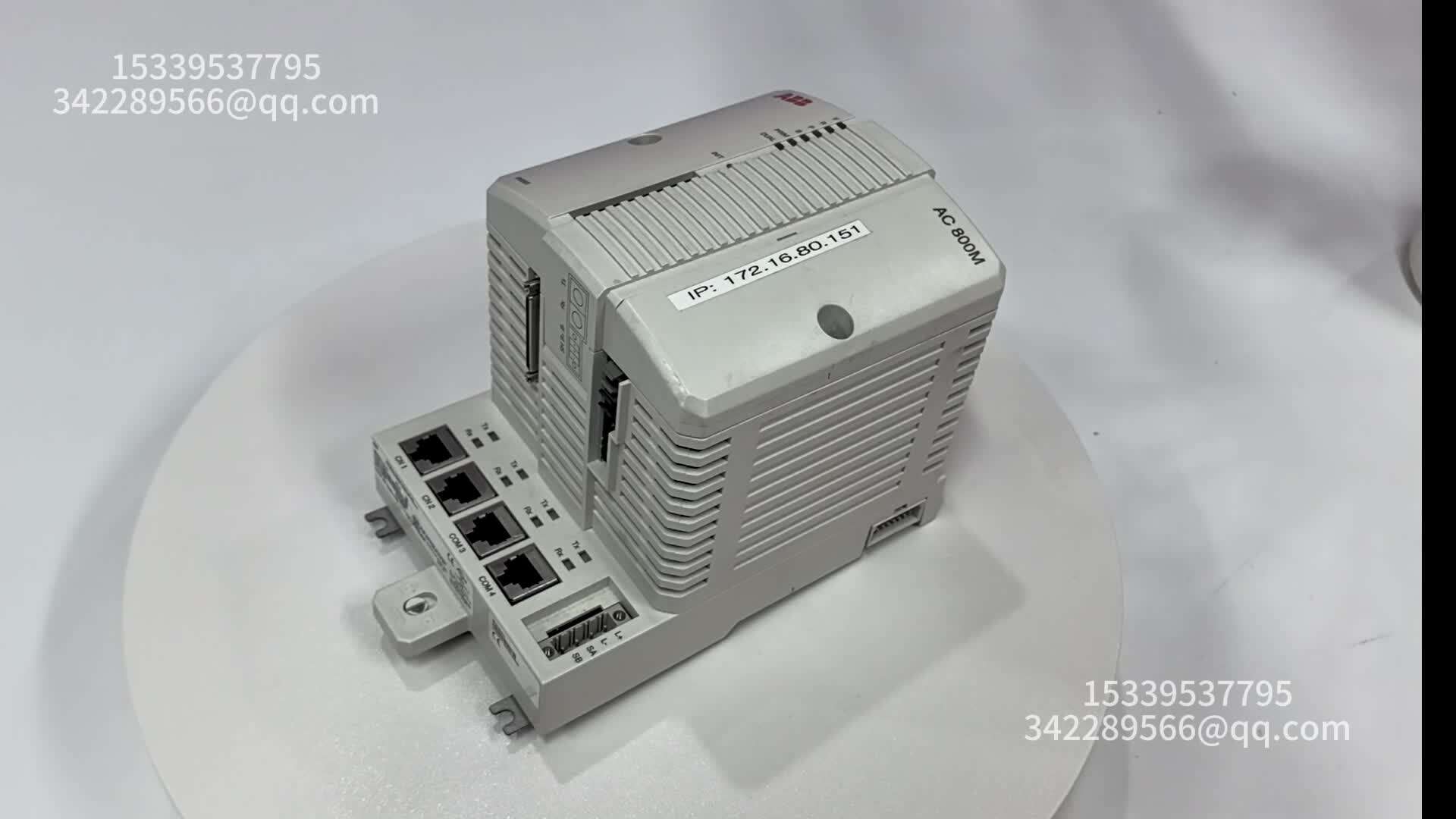
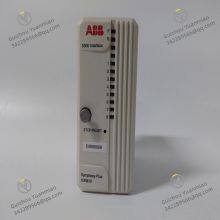
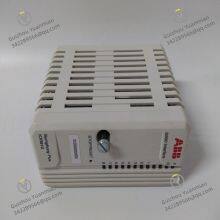
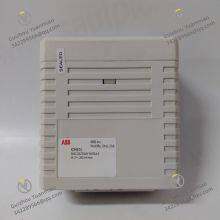
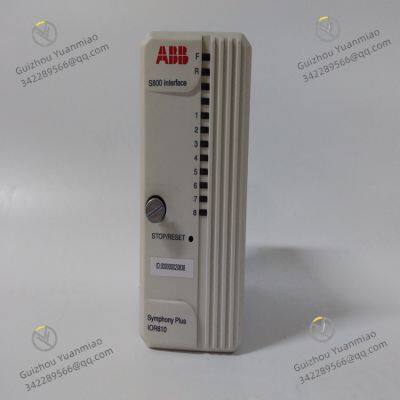
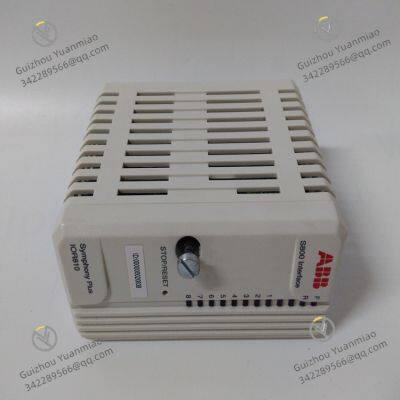
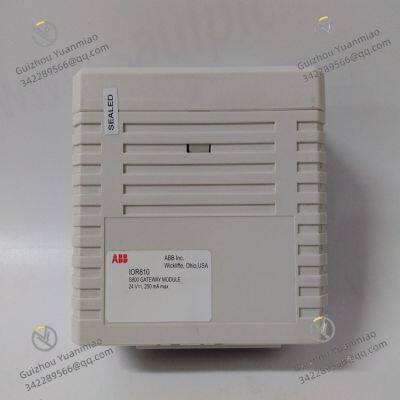
The ABB IOR810 P-HB-IOR-80010000 is a core gateway module in the S800 I/O product series within ABB's industrial automation sector. Specifically designed for compatibility with the HN800 network (ABB's dedicated industrial communication network), it primarily functions as a "data transfer and protocol adaptation" bridge between the S800 distributed I/O system and upper-level control systems (such as ABB AC 800M and AC 800XA). It is a critical hardware component that ensures efficient collection and stable transmission of industrial on-site I/O signals, and is widely used in process industries, discrete manufacturing, and other scenarios where strict requirements for control accuracy and system reliability exist.
I. Basic Specification Parameters
As an industrial-grade gateway module, this product strictly adheres to the unified standards of ABB's S800 I/O series in terms of physical structure, power adaptation, and environmental resistance. This ensures compatibility with other modules in the same series and stable operation in complex industrial environments:

II. Core Electrical and Communication Performance
The core value of the IOR810 module lies in its in-depth compatibility with the HN800 network and efficient data transmission capabilities, enabling seamless integration between the I/O layer and the control layer. The specific performance parameters are as follows:
1. Communication Interfaces and Network Compatibility
The module's interface design focuses on "HN800 network connection" and "local I/O expansion," covering the core data transmission needs of industrial on-site operations:
HN800 Network Interface: Equipped with 2 RJ45-form HN800 network ports (supporting redundant connections to improve network reliability) with a fixed communication rate of 100Mbps full-duplex and a maximum transmission distance of 100 meters (using Cat5e or higher-grade network cables). It supports "ring topology" or "bus topology" for the HN800 network and can connect up to 32 nodes (including other IOR810 modules or HN800-compatible devices), meeting the distributed networking needs of medium-to-large industrial sites.
Local I/O Expansion Interface: Integrates 1 S800 I/O bus interface (based on ABB's dedicated I/O bus protocol), which can directly connect to S800 series I/O sub-modules (such as analog input module AI810, analog output module AO810, digital input module DI810, etc.). A single module can expand up to 16 I/O sub-modules, supporting signal collection and control for various I/O types, including analog signals (voltage/current), digital signals (switch signals), and pulse signals.
Diagnostic Interface: Equipped with 1 RS232 debugging interface (for local parameter configuration and fault diagnosis), supporting module firmware upgrades, network parameter settings, and real-time status monitoring via ABB Control Builder M software.
2. Communication Protocols and Data Processing
Protocol support focuses on the "ABB control system ecosystem" while maintaining a certain degree of openness to ensure smooth data flow across different levels:
Core Protocols:
HN800 Network Protocol: A dedicated protocol developed by ABB for industrial on-site I/O communication, supporting "cyclic data transmission" (e.g., real-time I/O signals, configurable transmission cycles from 1ms to 100ms) and "acyclic data transmission" (e.g., module configuration commands, fault diagnosis information). It features low latency (typical latency <1ms) and high reliability (CRC data verification).
S800 I/O Bus Protocol: Used for communication with local S800 I/O sub-modules, supporting plug-and-play functionality for sub-modules (automatic identification of module type and address) without the need for manual jumper configuration.
Upper-Level System Compatibility Protocol: Indirectly supports communication with ABB AC 800M and AC 800XA controllers via the HN800 network, using ABB's dedicated "Control Network" protocol to enable bidirectional interaction of I/O data with the controller (e.g., uploading collected on-site signals to the controller and sending control commands from the controller to the I/O sub-modules).
Data Processing Capability: A single module supports concurrent transmission of up to 1024 I/O signal points (including analog and digital signals), with data filtering (to eliminate abnormally fluctuating signals) and caching (temporarily storing the latest 100 sets of key data during network interruptions to avoid data loss). The data transmission accuracy is ≥99.999% (meeting industrial-grade data reliability requirements).
3. Environmental Adaptability and Reliability
The module incorporates multiple hardware optimizations to address complex industrial on-site conditions such as high/low temperatures and electromagnetic interference:
Temperature Adaptation Range: Operating temperature ranges from -40°C to +70°C (wide-temperature design enables stable operation in scenarios such as outdoor control cabinets in frigid regions and high-temperature metallurgical workshops); storage temperature ranges from -40°C to +85°C (facilitating long-term inventory storage or cross-regional transportation).
Anti-Interference Capability: Features EMC (Electromagnetic Compatibility) protection, complying with IEC 61000-6-2 (industrial environment anti-interference standards). It can resist common-mode interference (≤250V) and differential-mode interference (≤100V) generated by on-site motors and frequency converters, ensuring error-free and packet-loss-free data transmission.
Power Stability: Supports a voltage fluctuation range of 24V DC ±20% (power supplies on industrial sites often fluctuate due to load changes; this design prevents module downtime caused by unstable voltage). It also includes overcurrent protection (maximum input current 1A) and reverse polarity protection (automatically cuts off the circuit if the positive and negative poles are reversed to prevent module damage).
Reliability Indicators: Mean Time Between Failures (MTBF) ≥ 100,000 hours (based on ABB's industrial-grade component selection and rigorous reliability testing, significantly reducing maintenance frequency). It supports "hot swapping" (under the premise of power-off or compliance with hot-swap operation specifications), allowing module replacement without interrupting the entire I/O system.

III. Core Functions and Application Scenarios1. Core Function Positioning
The ABB IOR810 module essentially serves as a "connection hub" between the S800 I/O system and the HN800 network, primarily undertaking four core functions:
HN800 Network Access and Data Forwarding: Acting as a "gateway" for S800 I/O sub-modules, it converts on-site I/O signals collected by sub-modules (e.g., temperature, pressure, valve switch status) into the HN800 protocol format and forwards them to upper-level AC 800M/AC 800XA controllers. Simultaneously, it receives control commands issued by the controller (e.g., adjusting valve opening, starting/stopping pumps), converts them into the S800 I/O bus protocol, and sends them to the corresponding sub-modules, forming a closed loop of "collection-transmission-control."
Local I/O Management and Configuration: Supports centralized management of connected S800 I/O sub-modules via Control Builder M software, including module address assignment, signal range setting (e.g., 0~20mA analog input corresponding to 0~100°C), and alarm threshold configuration (e.g., triggering an alarm when temperature exceeds 90°C). It also enables real-time monitoring of sub-module status (e.g., module faults, signal disconnections).
Network Redundancy and Fault Tolerance: Equipped with dual HN800 ports to support "ring redundancy" networking. If one network link fails, data is automatically switched to the other link for transmission with a switching time <100ms, ensuring uninterrupted network communication. It also supports "module redundancy" (requiring 2 IOR810 modules to be configured); if the primary module fails, the standby module automatically takes over to ensure continuous operation of the I/O system.
Fault Diagnosis and Alarm: Incorporates a comprehensive diagnostic mechanism that continuously monitors the module's own status (power supply, temperature, network connection), sub-module status (communication anomalies, signal over-range), and HN800 network status (link interruptions, data packet loss). It provides intuitive status feedback via 4 LED indicators (power light, HN800 communication light, I/O bus light, fault light) and can upload fault information to the controller or monitoring system. This allows maintenance personnel to quickly locate issues (e.g., determining whether a fault is caused by a network link failure or sub-module damage via fault codes).
2. Typical Application Industries and Scenarios
With its in-depth compatibility with the HN800 network and high reliability, this module is widely used in process industries, discrete manufacturing, and other fields—particularly suitable for medium-to-large distributed control scenarios:
Petrochemical and Natural Gas: In oil refineries and natural gas processing plants, it connects S800 I/O sub-modules (e.g., AI810 for collecting reactor temperature, DI810 for monitoring valve switches) and accesses the HN800 network via the IOR810. It transmits data to the AC 800XA control system to enable precise control and safety monitoring of reaction processes (e.g., automatically triggering pressure relief valves when pressure exceeds safe limits).
Metallurgy and Steel: In blast furnaces and continuous rolling production lines of steel plants, it is compatible with S800 digital output modules (DO810) to control motor start/stop. Via the IOR810 and HN800 network, it uploads data such as motor operation status and rolling temperature to the AC 800M controller, supporting real-time production scheduling and fault early warning (e.g., stopping the motor promptly when abnormal motor current is detected).
Power and Energy: In boiler control systems of thermal power plants, it connects S800 analog input modules to collect boiler water level and steam pressure data. It accesses the HN800 network via the IOR810 and collaborates with the AC 800XA controller to enable automatic water level adjustment (e.g., starting feedwater pumps when water level is too low). It also supports integration with SCADA systems for remote monitoring and data tracing.
Water Treatment and Environmental Protection: In large sewage treatment plants, it collects signals such as influent pH value, turbidity, and effluent flow rate via S800 sub-modules. The IOR810 forwards this data to the HN800 network and upper-level control systems to enable automatic adjustment of chemical dosage (e.g., increasing alkali dosage when pH is too low) and start/stop control of aeration equipment, ensuring compliance with water treatment process standards.
Discrete Manufacturing (Automotive/Electronics): In automotive welding production lines, it connects S800 pulse input modules (PI810) to collect robot operation position signals. Via the IOR810 and HN800 network, it collaborates with the AC 800M controller to enable coordinated control of robots and conveyors, ensuring welding accuracy and stable production rhythms.

IV. Installation and Compatibility Precautions1. Installation Requirements
Environmental Conditions: The installation environment must meet the following criteria: temperature -40°C~+70°C, relative humidity 5%~95% (no condensation). Installation in areas with high dust concentration, corrosive gases (e.g., chlorine, hydrogen sulfide), or strong magnetic fields (e.g., near large transformers) should be avoided. The module must be installed in a control cabinet with an IP54 or higher protection rating, and the cabinet should be equipped with ventilation holes or cooling fans (the module's surface temperature can reach up to 60°C during operation; dense installation with other high-heat-generating equipment should be avoided).
Power Connection: A 24V DC power supply that meets specifications must be used. The positive pole of the power supply should be connected to the module's "+24V" terminal, and the negative pole to the "0V" terminal. Reverse connection is strictly prohibited (reverse connection triggers overvoltage protection; the power supply must be disconnected before reconnection). It is recommended to connect a 1A fuse in series with the power circuit to prevent power supply failures caused by module short circuits.
Network Wiring: HN800 network ports must use Cat5e or higher-grade shielded network cables. The shield layer should be grounded at one end (grounding resistance ≤4Ω) to enhance anti-interference capabilities. For ring topology networking, ensure correct connection of the HN800 ports of the head and tail modules (refer to the ABB HN800 Network Wiring Manual) to avoid network loop errors.
Grounding Requirements: The module housing must be reliably grounded via the DIN rail or dedicated grounding terminals (grounding resistance ≤4Ω). The cross-sectional area of the grounding cable should be no less than 2.5mm² to ensure effective discharge of static electricity and electromagnetic interference to the ground.
2. Compatibility Instructions
System Compatibility: Only compatible with ABB AC 800M V4.0 and above, and AC 800XA V6.0 and above control systems. It requires ABB Control Builder M V5.0 or above software for configuration and debugging, and is not compatible with control systems of other brands (e.g., Siemens S7, Rockwell ControlLogix).
Module Matching: Only supports connection to ABB S800 series I/O sub-modules (e.g., AI810, AO810, DI810, DO810, PI810) and is incompatible with I/O modules of other series such as S700 and S900. A single IOR810 module can connect up to 16 S800 sub-modules, and sub-modules must be installed in the order of "power module → signal module" (the power module provides independent power to the sub-modules).
Firmware Version: The module's firmware version must be compatible with the firmware version of the upper-level controller (e.g., AC 800M V6.0 requires IOR810 firmware V3.2 or above). Incompatible firmware versions will cause communication failures. Firmware can be upgraded via the RS232 interface or Control Builder M software (stable power supply must be ensured during the upgrade process to avoid firmware damage due to power outages).