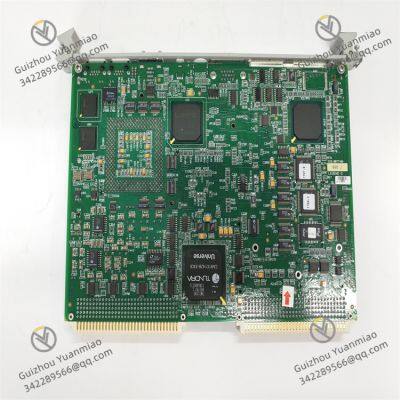
I. Overview
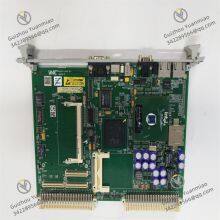
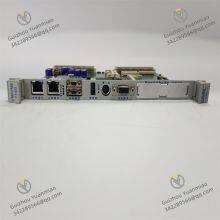
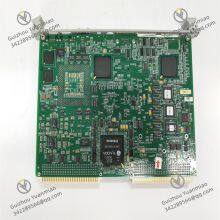
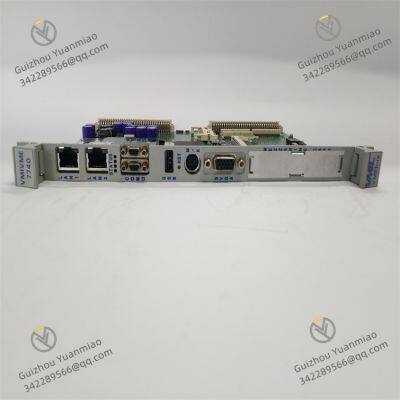
VMIC VMIVME-7740-850 350-007740-850 L is a high-performance VMEbus module card, which is meticulously crafted by GE and designed specifically to cope with harsh industrial environments. As an important member of GE's VMEbus series products, it builds a powerful and flexible platform for data acquisition, processing, and control applications with its excellent performance and reliable quality. This module card adopts a single-slot VMEbus 6U size design, integrating rich functions in a compact space, effectively saving system space while ensuring the convenience of installation and maintenance.

II. Functional Features
(1) Powerful Processor Performance
Driven by high-performance chips: VMIVME-7740-850 is equipped with an Intel Pentium III Socket 370 processor, operating at a speed of up to 850 MHz, with 32-bit addressing capability and a 64-bit data bus. Its superscalar architecture allows the execution of three instructions per clock cycle, combined with a dynamic branch prediction unit, independent instruction and data caches, and MMX™ technology, which significantly improves data processing efficiency. In industrial automated production lines, in the face of the real-time processing needs of a large amount of equipment status data and process parameter data, the Pentium III processor can respond quickly to ensure the precise control of the production process by the system.
Assisted by large-capacity cache: It is equipped with a 256 Kbyte advanced transfer high-speed cache (on-chip full-speed L2 cache) and adopts a dual independent bus architecture. The L2 cache has the same frequency as the processor clock, which greatly reduces data reading latency, increases data transmission bandwidth, provides strong support for the processor to quickly obtain data, and effectively ensures the efficient operation of the system in complex data operation scenarios.
(2) Diversified Memory and Storage Configurations
High-capacity memory expansion: Through a 144-pin SODIMM slot, it can support up to 512 Mbyte of SDRAM. The on-board DRAM and VME bus are connected via a dual-port, ensuring fast data transmission between memory and the bus, and meeting the requirements for large amounts of data storage and fast reading/writing in industrial applications. In data acquisition systems, it can timely store massive amounts of sensor data, avoid data loss, and lay a foundation for subsequent data analysis and processing.
Optional flash storage: It provides up to 192 Mbyte of IDE CompactFlash memory (optional), which can be conveniently accessed through an auxiliary IDE port. The BIOS of the module also supports booting from flash memory, providing more flexibility and reliability for system startup and data storage, especially suitable for industrial scenarios that require frequent updates of system programs or variable data storage capacity requirements.

(3) Rich I/O Interfaces and Communication Capabilities
Graphic display output: With the Chips & Technology AGP graphics adapter, it realizes high-resolution graphics and multimedia-quality video output. The adapter is equipped with 4 Mbyte of internal synchronous DRAM and a high-bandwidth 64-bit data interface, supporting a maximum screen resolution of 1,600 x 1,200 x 64,000 colors (single-view mode). In industrial monitoring systems, it can clearly present equipment operating status, production process screens, etc., facilitating operators to grasp the system situation in real-time.
Dual Ethernet connections: Through dual Intel 82559 Ethernet controllers, it supports 10BaseT and 100BaseTX interfaces, not only achieving high-speed and stable network communication but also supporting remote Ethernet booting. With BootWare® from Lanworks Technologies, the module can be remotely booted using NetWare, TCP/IP, or RPL network protocols, facilitating centralized management and maintenance of equipment in industrial network environments and improving system deployment and operation efficiency.
Diverse serial ports: It is equipped with two high-performance 16550-compatible serial ports. The serial channels are equipped with 16-byte FIFO and support a baud rate of up to 56 Kbyte/s, which can stably connect various serial devices such as sensors and intelligent instruments, realizing data interaction and collaborative work between different devices, and expanding the application range of the module in industrial control networks.
Supplementary other interfaces: It has a front-panel Universal Serial Bus (USB) connection for convenient connection of various USB devices; on-board Ultra-DMA-33 hard disk drive and floppy disk drive controller with VMEbus P2 input/output interface for flexible connection of storage devices; PS/2 keyboard and mouse ports on the front panel provide a convenient human-computer interaction method for equipment operation; a built-in real-time clock can accurately record system running time, and a micro-speaker is used for system status prompts, further improving the functional system of the module.
(4) Special Designs for Industrial Applications
Triple modular redundancy design: Drawing on the advanced Triple Modular Redundancy (TMR) structure, it has three identical and independent system branches. During operation, the three branches execute control programs in parallel. For digital input/output signals, a patented hardware voter is used for "two-out-of-three voting"; for analog signals, the median selection processing method is adopted. Taking continuous petrochemical production as an example, once a single point of failure occurs in one branch, the other two normal branches can quickly take over the work, ensuring that the production process is not affected, greatly reducing the risk of system shutdown due to a single point of failure, and effectively ensuring the continuity of industrial production.
Comprehensive self-diagnostic function: The module integrates a comprehensive self-diagnostic function, which can monitor its own sub-circuits, modules, and functional circuits in real-time. During operation, it can promptly detect and report operational errors, and store all diagnostic information. These diagnostic data are crucial for programmers to optimize the execution of the controller and for maintenance personnel to quickly locate and repair fault points, significantly improving the reliability and maintainability of the system. During equipment maintenance, maintenance personnel can quickly determine the faulty module based on diagnostic data and perform targeted replacement, reducing equipment downtime.
Advantages of modular design: Based on the modular design concept, it can be flexibly configured according to the actual needs of different industrial application scenarios. Whether it is a simple single-machine control or a complex multi-machine linked automated production line, it can meet diverse control requirements by reasonably combining different functional modules. In the automated production lines of automobile manufacturing enterprises, with the update of vehicle models and the optimization of production processes, the system functions can be quickly expanded and upgraded by adding corresponding modules, improving production efficiency and product quality. When a module fails, maintenance personnel do not need to carry out large-scale disassembly and debugging of the entire system, but only need to accurately locate the faulty module and replace it, effectively reducing equipment downtime, minimizing the impact of equipment failures on production, and lowering enterprise production and operation costs.

III. Performance Parameters
Power supply requirements: The stable operating voltage is [X] VDC, and the operating current is [X] A, ensuring continuous and stable power supply in various industrial environments and guaranteeing the normal operation of the module.
Dimensions and weight: The dimensions are 263 × 58 × 28 mm, and the weight is approximately 4.3 kg. The compact size and reasonable weight design facilitate installation and layout in industrial equipment without imposing excessive burden on the overall structure of the equipment.
Adaptability to working environment: It can withstand temperature changes in [specific range], vibration of [specific value], and impact of [specific value], and can operate stably in harsh industrial environments such as high temperature, low temperature, and strong vibration, meeting the usage requirements of different industrial scenarios.
IV. Application Fields
(1) Industrial Automated Production Lines
Production process control: In automated production lines such as automobile manufacturing and electronic equipment manufacturing, it collects various information in real-time, such as equipment operating status and product quality inspection data. Through rapid processing and analysis of these data, it precisely controls the operation of various equipment on the production line, such as controlling the movement of robotic arms and adjusting the speed of conveyor belts, ensuring efficient and stable operation of the production process, and improving product production efficiency and quality.
Equipment fault monitoring and early warning: Using powerful data processing capabilities and self-diagnostic functions, it conducts real-time monitoring of key equipment on the production line. By analyzing changes in equipment operating parameters, it predicts potential faults of the equipment in advance and issues early warning information in a timely manner, so that maintenance personnel can take measures in advance to avoid production line shutdown due to sudden equipment failures and reduce production losses.
(2) Energy and Power Industry
Power station monitoring: In thermal power plants, hydropower plants, and other power stations, it is used to monitor the operating parameters of generators, such as speed, voltage, current, and temperature. Based on changes in these parameters, it adjusts the operating status of power generation equipment in real-time to ensure stable operation of the generator and output of high-quality electric energy. At the same time, it realizes intelligent control of auxiliary equipment in the power station, such as cooling systems and lubrication systems, improving the overall operating efficiency of the power station.
Substation automation: In substations, it realizes remote monitoring and control of various power equipment, such as circuit breakers, disconnectors, and transformers. It communicates with the main station of the power system through the Ethernet interface, timely uploads equipment operating status information, and receives control commands from the main station, realizing unattended or minimally attended substations, and improving the automation level and reliability of the power system.
(3) Transportation Field
Intelligent transportation systems: In urban traffic management systems, it is used to process traffic flow monitoring data, vehicle positioning information, etc. By analyzing these data, it optimizes the timing scheme of traffic lights, realizes intelligent traffic signal control, and alleviates urban traffic congestion; at the same time, it can conduct real-time monitoring and scheduling of public transport such as buses and subways, improving the operational efficiency of public transport and providing convenience for citizens' travel.
Rail transit control: In rail transit systems such as subways and light rails, it conducts real-time monitoring and control of train operating status. Based on information such as the train's position and speed, it reasonably arranges the running interval of trains to ensure safe and on-time operation of trains; at the same time, it can realize centralized control and management of rail transit station equipment, such as automatic ticket vending machines, turnstiles, and ventilation systems, improving the intelligence level of rail transit operations.