








 Contact Platform Support
 Help Center
Introduction to Milling Tool and Their Application




Related Products
-
 Carbon Fiber Composite Materials PCD Milling CutterUS$ 1 - 99MOQ: 5 Pieces
 -
Types of Milling Cutters and Processing CharacteristicsUS$ 1 - 99MOQ: 6 Pieces
-
Forming Compound Milling CutterNegotiableMOQ: 5 Pieces
-
PCD Welding Integrated Face Milling CutterUS$ 1 - 100MOQ: 5 Pieces
-
PCD Form Milling Cutter for Piston Pin HoleUS$ 1 - 100MOQ: 5 Pieces
End mills
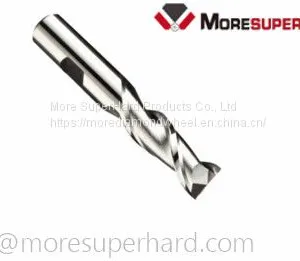
End mills are the most common milling cutters. End mills are available in a wide variety of lengths, diameters, and types. A square end mill is used for most general milling applications. It produces a sharp edge at the bottom of pockets and slots.
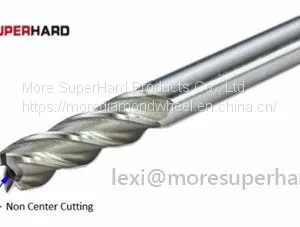
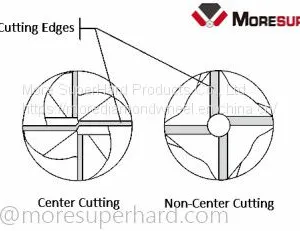
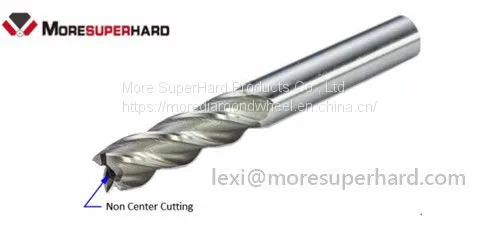
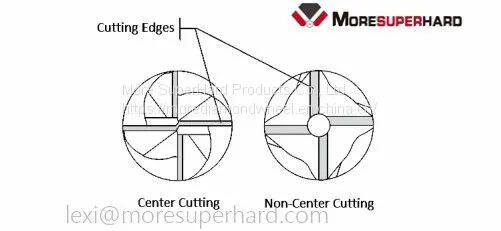
End mills can be center cutting and non-center cutting. As their name implies, center cutting end mills have cutting edges on both the end face of the cutter and the sides. Center cutting end mills are essential for plunge milling.
Non-center cutting end mills have cutting edges only on the sides and are used only for side milling. These tools are identified by a small hole at the center.
Roughing end mills have serrations in the teeth to quickly remove large amounts of material without creating vibration. The serrations produce many small chips and a rough finish.
Ball end mills produce a radius at the bottom of pockets and slots. Ball end mills are used for contour milling, shallow slotting, contour milling and pocketing applications.
Flutes
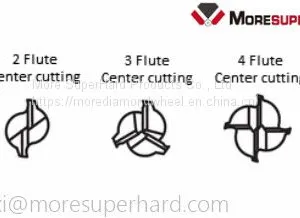
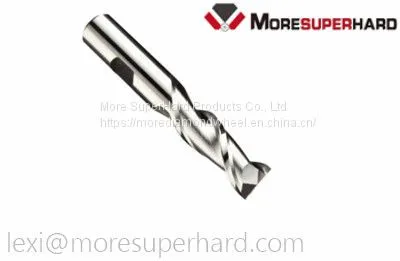
Spiral-shaped cutting edges are cut into the side of the end mill to provide a path for chips to escape when an end mill is down in a slot or a pocket. The most common options are 2, 3, or 4 flutes. The more flutes, the more cutting edges but the narrower the channel for chip evacuation.
An important consideration when choosing the number of flutes is called “chip load”. “Chip load” is a measurement of the thickness of material removed by each cutting edge during a cut.
The number of flutes you choose depends on the material you want to cut and the capabilities of your machine. A material like aluminum produces large chips compared to other materials. For that reason, 4 flute end mills are rarely used with aluminum because the flutes can get jammed with chips and break the cutter. For harder materials, you want to use more flutes. Having more flutes reduces chip load and improves surface finish. While the number, direction and type of flutes that a cutting tool has can vary widely, the tools most commonly used have two flutes and are up-cut spirals to move the chips up out of the cut.
· Two Flute: Has the greatest amount of flute space, allowing for more chip carrying capacity in softer materials. Used primarily in slotting and pocketing of non-ferrous materials like aluminum where chip removal is a concern.
· Three Flute: Allows for better part finish in harder materials. The three flutes provide for greater strength and the ability to pocket and slot both ferrous and non-ferrous materials.
· Four Flute/Multiple Flute: Ideal for finish milling. The extra flutes allow for faster feed rates to produce a much finer finish than two or three flute tools. However, the reduced flute space may cause problems with chip removal.
The most common flute numbers for general milling operations are two (better space for chip ejection) and four (better surface finish).
Applications for End Mills
|
Side Milling
|
Face Milling
|
Slot Milling
|
Plunge Milling |
Ramping
|
|
|
|
|
|
Machining of an edge surface on the part. |
Machining of a top face on the part.
|
Machining between two edge surfaces. |
Axial feeding into a part along the Z axis. Requires a center cutting end mill. |
Axial feeding into a part along the Z axis as well as X or Y. Requires a center cutting end mill. |

Send Inquiry to This Supplier

You May Also Like
-
PCD Milling for Motor CasingUS$ 1 - 100MOQ: 2 Pieces
-
Prevention Measures for Chipping and Breakage for Small Diameter End MillsUS$ 1 - 99MOQ: 5 Pieces
-
How to Choose the Face Milling Cutter for the Processing of Automobile Cylinder Block and CylinderUS$ 1 - 99MOQ: 5 Pieces
-
Angle and Function of Drill BitUS$ 1 - 99MOQ: 5 Pieces
-
the Relationship Between Cutting Elements and ChipsUS$ 1 - 99MOQ: 5 Pieces
-
the Difference Between Cbn Cutter and Ceremic CutterUS$ 1 - 99MOQ: 10 Pieces
-
Diamond PicksUS$ 1 - 99MOQ: 5 Pieces
-
Disadvantages of Coated ToolsUS$ 1 - 99MOQ: 6 Pieces
-
Tools Used for TurningUS$ 1 - 99MOQ: 5 Pieces
-
the Case of CBN Cutter Processing NozzleUS$ 1 - 99MOQ: 5 Pieces


