








 Contact Platform Support
 Help Center
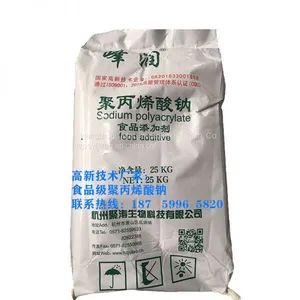
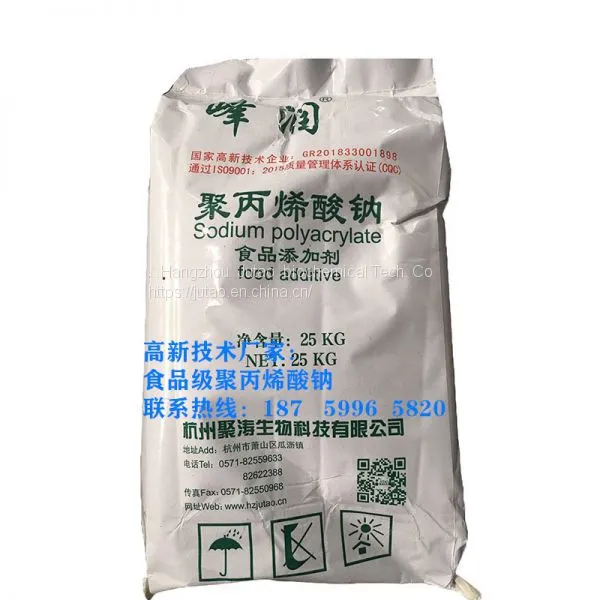
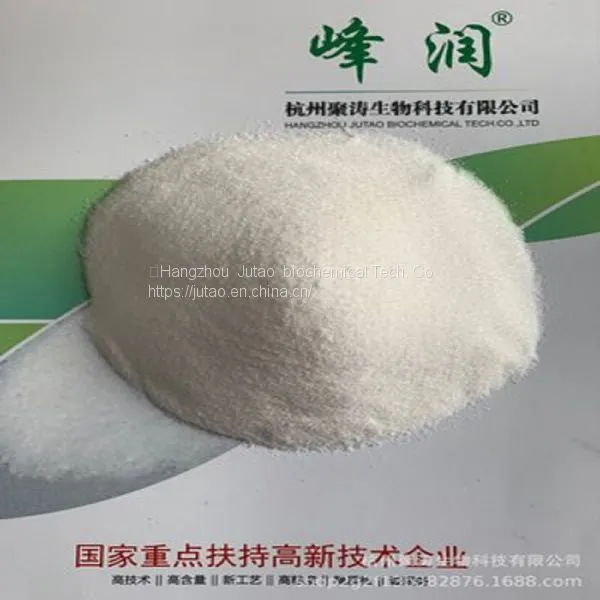
Sodium Polyacrylate

Related Products
-
 Sodium Polyacrylate Thickening AgentUS$ 2600 - 2700MOQ: 1 Bag
 -
Rice Flour Reinforcing AgentUS$ 2600 - 2700MOQ: 1 Ton
-
Surface Products Compounded With Improver, Such as Ramen, Stewed Noodles and Other Raw and Wet Noodles for StrengtheningUS$ 2600 - 2700MOQ: 1 Ton
-
Hygroscopic Viscosifier of Cat LitterUS$ 2500 - 2600MOQ: 1 Ton
-
FlocculantUS$ 2500 - 2600MOQ: 1 Ton
1. The English name of sodium polyacrylate is sodim polacrylate, abbreviated PAAS or PAA Na, and the structural formula is [- ch2-ch (COONa)] n -. CAS:9003-04-7
The use of sodium polyacrylate: Noodle gluten, steamed bread smooth, molding, water retention, sodium polyacrylate, wide use and low price.
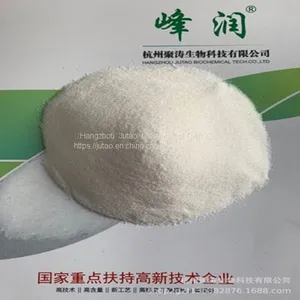
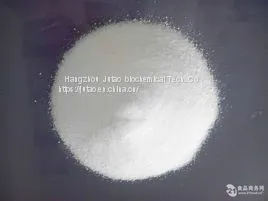
2. Properties of sodium polyacrylate: white crystalline powder. Odorless and tasteless. After dissolving in water, it is a colorless and transparent solution, which expands when encountering water and has strong hygroscopicity. It is easy to dissolve in caustic soda aqueous solution and insoluble in organic solvents such as ethanol and acetone. The long-term viscosity has little change and is not easy to corrupt. Due to different neutralization degree, the pH of aqueous solution is generally 6-9. Can ionize, with or without corrosiveness. It is easy to dissolve in the aqueous solution of sodium hydroxide, but in the aqueous solution of calcium hydroxide and magnesium hydroxide, with the increase of the number of alkaline earth metal ions, it dissolves first and then precipitates.
3. Characteristics of sodium polyacrylate: water soluble straight chain polymer. The small relative molecular weight is liquid, and the large one can be solid. Polymer compounds with hydrophilic and hydrophobic groups. The viscosity of 0.5% solution is about PA · s. The viscosity is not due to water swelling (such as CMC, sodium alginate), but due to the ionic phenomenon of many anionic groups in the molecule, which makes the molecular chain grow and the viscosity increase, forming a high viscosity solution. Its viscosity is about 15-20 times of CMC and sodium alginate. Heat treatment, neutral salts and organic acids have little effect on its viscosity, but the viscosity increases when it is alkaline. Strong heat to 300 degrees does not decompose. Because it is an electrolyte, it is easy to be affected by acid and metal ions, and its viscosity is reduced. Metal ions (such as aluminum, lead, iron, calcium, magnesium and zinc) are formed at sufficient amounts of two or more to form their insoluble salts, resulting in molecular crosslinking and gelation. However, when the amount of divalent metal ions is small, it is still a solution, so it can be used as a washing aid to prevent the redeposition of dirt. Precipitation may occur below pH = 4.0. With the increase of molecular weight, sodium polyacrylate can be transformed from colorless dilute solution to transparent elastic colloid or even solid.
Food safety: sodium polyacrylate has been used for thickening, strengthening and preservation of various foods since 1960s in foreign countries. It is a food additive approved by FDA of the United States and Ministry of health of Japan. In 2000, it was also officially approved as a food grade thickener by the Ministry of health of China.
4. Limit of sodium polyacrylate: in accordance with China's food additive standards. 2.0 for all kinds of food, 0.2% according to the Japanese regulations.
5. Function of food grade sodium polyacrylate:
1. Thickener. It has the following functions in food:
(1) Enhance the binding power of protein in raw flour.
(2) The starch particles are combined with each other, dispersed and permeated into the protein network structure.
(3) The dough is compact and glossy.
(4) Form stable dough colloid to prevent the exudation of soluble starch.
(5) The water retention is strong, so that the moisture is evenly maintained in the dough to prevent drying.
(6) Improve dough extensibility.
(7) The oil components in the raw materials are stably dispersed into the dough.
2. As an electrolyte, it interacts with protein, changes protein structure, enhances viscoelasticity of food and improves tissue.

Send Inquiry to This Supplier

You May Also Like
-
Dough Sticks and Flax Ball Leavening AgentUS$ 2000 - 2100MOQ: 1 Ton
-
99% Purity Sodium Carboxymethyl Cellulose High Purity Cmc Powder Detergent Grade Cas 9004-32-4US$ 100 - 2000MOQ: 1 Ton
-
Polymer Thickening AgentUS$ 100 - 3,800MOQ: 1 Metric Ton
-
Thickening Agent For Textile PrintingNegotiableMOQ: 1 Metric Ton
-
Thickening Agent for Liquids DyestuffUS$ 10 - 20MOQ: 100 Kilograms
-
Sodium Polyacrylate Thickening AgentUS$ 2,600 - 3,650MOQ: 5 Tons
-
Polyacrylamide Water Thickening AgentUS$ 1,500 - 1,800MOQ: 1 Ton
-
Seaweed Extract Thickening Agent and StabilizerUS$ 15 - 20MOQ: 500 Kilograms
-
Food Grade Collagen Thickening AgentUS$ 5 - 10MOQ: 100 Kilograms
-
Thickening Agent for Pigment Dye JL-PTFUS$ 1.3 - 2.89MOQ: 5 Tons