








 Contact Platform Support
 Help Center
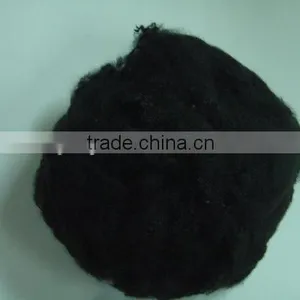
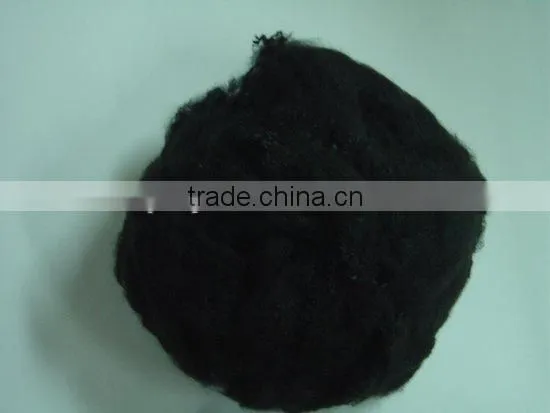
Black Viscose Stape Fibre


Related Products
-
 Viscose Black FibreNegotiableMOQ: 20 Tons
 -
7d 15d Hollow Conjugate Fibre for FillingNegotiableMOQ: 8 Tons
-
Hollow Conjugated Silicon Fiber-fibre FillNegotiableMOQ: 8 Tons
-
Textile Recycling-hollow Conjugated Silicon FiberNegotiableMOQ: 8 Tons
-
Recycled Hcs -hollow Conjugated Silicon Fiber -sofa FiberNegotiableMOQ: 8 Tons
Specifications
black viscose stape fibreblack viscose fiber
RAYON staple fiber
natual BRIGHT RAW WHITE VISCOSRE FIBRE
viscose rayon fiber
black viscose stape fibre
black viscose fiber
RAYON staple fiber
natual BRIGHT RAW WHITE VISCOSRE FIBRE
viscose rayon fiber
Viscose Rayon is a manufactured regenerated cellulose fibre. As it is produced from naturally occurring polymers, it is neither a truly synthetic fibre nor a natural fibre; it is a semi-synthetic or artificial fibre. It usually has a high lustre quality giving it a bright sheen. Short cut viscose fibre is commonly used in applications requiring moisture absorbency like nappies.
Viscose fibre was discovered in 1891 by English scientists, Cross and Bevan. It was heralded as the new fibre to replace silk and is sometimes called artificial silk. This fibre has been produced widely all over the world, usually in countries which have a plentiful supply of trees, as it is this which provides the raw material for the fibre. The raw material is actually wood pulp, but also short cotton fibre, unusable for spinning, is also a raw material. The first commercial production in America was opened in 1910 by the American Viscose Company and the fibre became known as viscose rayon, with other producers following suit. The first use for the fibre was in car tyres as reinforcing. Massive volumes for the fibre were never achieved due to the invention of other cheaper fibres, such as Polyester and Nylon. Wood is pulped into sheets of cellulose and steeped in an alkali solution. After this process the sheets are shredded into cellulose crumbs and treated with carbon disulphide, which changes the chemical structure of the cellulose. This is then dissolved in a solution of sodium hydroxide, to make a thick solution (hence the name viscose). This solution is then machine forced through spinnerets, to produce viscose fibre in a wet spun process. The resulting fibre is then dried, crimped and cut to the required length.
recision or short cut fibres in a range of decitex sizes and cut lengths are used for reinforcement in a wide variety of industrial applications. These include the manufacture of adhesives, castings, composites, filters, lead acid battery plates, paints, paper, sealants and refractories. Fibres are available in a range of synthetic and natural materials depending on the end use.
Viscose
There are several fibres made from the naturally occurring polymer cellulose, which is present in all plants. Mostly cellulose from wood is used to produce the fibres but sometimes cellulose from short cotton fibres, called linters, is the source. By far the most common cellulosic fibre is viscose fibre.
Viscose is defined by BISFA as being "a cellulose fibre obtained by the viscose process". It is known as rayon fibre in the USA. Although several cellulosic fibres had been made experimentally during the 19th century, it was not until 1905 that what has become the most popular cellulosic fibre, viscose, was produced.
Production
Viscose fibres are made from cellulose from wood pulp. The cellulose is ground up and reacted with caustic soda. After an ageing waiting period, the ripening process during which depolymerisation occurs, carbon disulphide is added. This forms a yellow crumb known as cellulose xanthate, which is easily dissolved in more caustic soda to give a viscous yellow solution. This solution is pumped through a spinneret, which may contain thousands of holes, into a dilute sulphuric acid bath where the cellulose is regenerated as fine filaments as the xanthate decomposes.
Properties and End-Uses
Viscose fibres, like cotton, have a high moisture regain. It dyes easily, it does not shrink when heated, and it is biodegradable. It is used in many apparel end-uses, often blended with other fibres, and in hygienic disposables where its high absorbency is of great advantage. In filament yarn form it is excellent material for linings. It is used very little in home furnishing fabrics but in the industrial field, because of its thermal stability, a high modulus version is still the main product used in Europe to reinforce high speed tyres.
| Item | viscose staple fiber | |
| color | raw white in semi-dull and bright,black and dyed viscose staple fiber | |
| specification | 1.2d,1.5d,2d*51mm,3d*60mm,4.25*60mm | |
| character | flame retardant,milk protein. | |
| application | Viscose fiber is mainly used for weaving,knitting,threading and embroidery;suitable for production of high-grade clothing fabrics lining,underwear,knitting t-shirt,decorative cloth,nonwovenfabric,embroidry products,crochet productes and packing,etc. |
|
;
2. viscose rayon fibres spec
Viscose Staple Fiber Quality Standard
Batch NO. |
20120822D2-(13338002D) |
Lustre |
Bright |
|
Specification |
1.33detx×38mm |
Grade |
The First Grade |
|
NO. |
ITEM |
UNIT |
VALUE |
|
Classify Index |
1 |
Conditioned Tenacity |
CN/dtex |
2.32 |
2 |
Conditioned Tenacity CV |
% |
8.7 |
|
3 |
Wet Tenacity |
CN/dtex |
1.23 |
|
4 |
Conditioned Elongation Rate in Break |
% |
21.8 |
|
5 |
Fiber Length Deviation Rate |
% |
1.3 |
|
6 |
Over Length |
% |
0.3 |
|
7 |
Double Length |
mg/100g |
0 |
|
8 |
Spinning Faults |
mg/100g |
3.6 |
|
9 |
Residue of Sulfur |
mg/100g |
5.3 |
|
10 |
Whiteness |
% |
84.4 |
|
11 |
Smeary,Yellow Fiber |
mg/100g |
0 |
|
Test Index |
12 |
Titer |
Dtex |
1.38 |
13 |
Fiber Length |
mm |
38.5 |
|
14 |
Oil Pick Up |
% |
0.26 |
|
15 |
Moisture Regain |
% |
9.68 |
|
Rayon fiber is used in a wide range of applications including textiles and nonwoven products.
In the textile sector, Sateri's viscose staple fiber is used to improve comfort and appearance. They are:
- Soft and silky to the touch
- Moisture-absorbing
- Non-allergenic
- Anti-static
- Easy to dye and excellent at retaining color brilliance
Viscose Rayon is a manufactured regenerated cellulose fibre. As it is produced from naturally occurring polymers, it is neither a truly synthetic fibre nor a natural fibre; it is a semi-synthetic or artificial fibre. It usually has a high lustre quality giving it a bright sheen. Short cut viscose fibre is commonly used in applications requiring moisture absorbency like nappies
Precision Cut Viscose Rayon Semi-synthetic fibres
Precision or short cut fibres in a range of decitex sizes and cut lengths are used for reinforcement in a wide variety of industrial applications. These include the manufacture of adhesives, castings, composites, filters, lead acid battery plates, paints, paper, sealants and refractories. Fibres are available in a range of synthetic and natural materials depending on the end use.
In the nonwoven sector, viscose staple fiber provides high absorbency, high purity and bio-degradability, thus making it ideal for use in baby wipes, feminine hygiene products, medical pads and household wipes.
Viscose Rayon is a manufactured regenerated cellulose fibre. As it is produced from naturally occurring polymers, it is neither a truly synthetic fibre nor a natural fibre; it is a semi-synthetic or artificial fibre. It usually has a high lustre quality giving it a bright sheen.
Viscose rayon is most commonly used in the production of standard paper and speciality papers. As the material is 100% biodegradable it is also globally accepted for use in environmentally friendly applications. It has been used in oil well drilling operations to replace non-biodegradable synthetic fibres.
spining1.2d,1.5d,3d
color: rayon fiber white and black,semil-dull,bright
Flame Retardant,raw white ,dyed
black viscose fiber
RAYON staple fiber
natual BRIGHT RAW WHITE VISCOSRE FIBRE
viscose rayon fiber

Send Inquiry to This Supplier

You May Also Like
-
100% Viscose FabricNegotiableMOQ: 2400 Meters
-
New Fashionable Printed 100 Spun Rayon FabricUS$ 3 - 10MOQ: 1 Meter
-
Fashion Polyester Viscose FabricUS$ 1.6 - 2.7MOQ: 2000 Yards
-
FSC Certified 100% Viscose Pure Smooth Crepe Viscose Fabric For Women's Scarf Or HijabsUS$ 2.5 - 3.5MOQ: 1100 Yards
-
Spot Supply of Various Specifications of Fashionable Rayon Polyester Spandex Denim FabricNegotiableMOQ: 1 Meter
-
Flower Digital Print Viscose Chiffon Fabric Sublimation Printing FabricUS$ 2.8 - 3.8MOQ: 50 Meters
-
Comfortable Rayon Fabric,flower Pattern Fashion Wedding Dress Rayon Fabric,beauty Garment Sell Rayon FabricUS$ 0.1 - 10MOQ: 1000 Meters
-
2016 Top Quality China Supplier Printing Knitting Jersey Rayon Challis FabricUS$ 4 - 5MOQ: 400 Kilograms
-
Rayon/viscose Crepe Fabric for WomenUS$ 0.9 - 1.9MOQ: 1000 Meters
-
Top Dyed Colored Viscose Staple FiberUS$ 2.5 - 2.9MOQ: 10 Tons


