








 Contact Platform Support
 Help Center
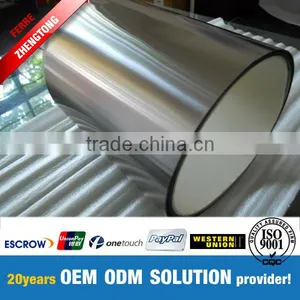
Customized Hot Rolled Tungsten Foil


Related Products
-
 Tungsten Rods Ground Rods Ground Tungsten Rod FactoryUS$ 5 - 150MOQ: 10 Pieces
 -
Wholesale Carbide Rods Ground Rods Ground Carbide RodsUS$ 5 - 150MOQ: 10 Pieces
-
Drill Bits Making Using Extruded Carbide RodsUS$ 10 - 80MOQ: 1 Kilogram
-
Surface Finished Tungsten Carbide RodsUS$ 10 - 80MOQ: 1 Kilogram
-
Wholesale Tungsten Carbide RodsNegotiableMOQ: 1 Kilogram
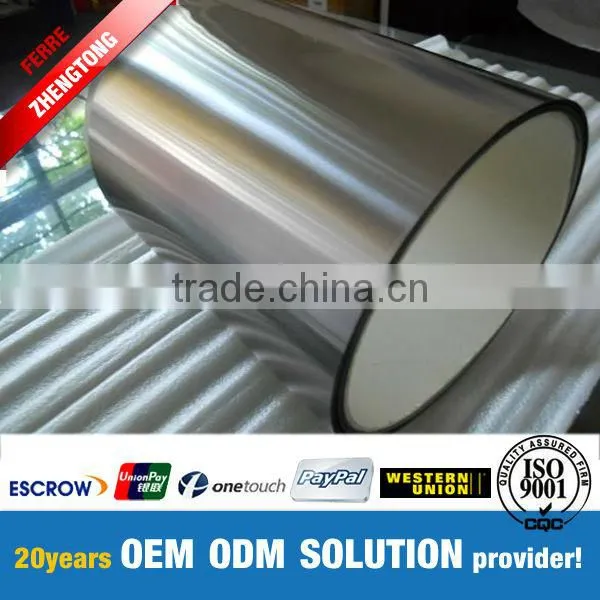
Customized Hot Rolled Tungsten Foil
Hot Rolled Tungsten Foil Description:
Zhengtong Factory specializes in producing tungsten high purity foil and sheets
in many thicknesses and sizes for numerous industrial uses and provides health
and occupational safety information for this product.
Tungsten foil is made from certified tungsten 99.95% purity by high-precision
equipment "hot-cold"method using the most advanced technology chemical.
Customized tungsten foil is accepted.
Most tungsten foil is applied:
- In the aerospace and nuclear powder;
- In industrial chemistry;
- In the manufacture of heat exchangers;
- In electrial engineering and electronics, as well as in vacuum tubes.
Hot Rolled Tungsten Foil Display:
Q:What is cemented carbide ?
A: Cemented carbide is a hard material used in machining tough materials such as carbon steel or
stainless, as well as in situations where other tools would wear away, such as high-quantity
production runs. Most of the time, carbide will leave a better finish on the part, and allow faster
machining. Carbide tools can also withstand higher temperatures than standard high speed steel tools.
Q:What are the key properties of cemented carbides I should be concerned with when selecting a grade for my application?
A: The key properties of cemented carbides that define their performance level for different
applications include abrasion resistance (directly related to the hardness of the grade), fracture
strength, and fracture toughness. In general, the abrasion resistance or hardness of any grade is
inversely proportional to its fracture toughness. Very often grade selection involves finding the best
compromise between abrasion resistance and toughness. In some instances strength and
corrosion resistance can be important factors in the grade selection process.
Q: Which properties are important in metal cutting applications?
A: Depending upon the type of metalcutting operation (turning, milling, drilling, etc.), different
combinations of properties is needed in order to obtain optimum results. For example, in turning
and drilling applications the cutting tool is in continuous contact with the workpiece. Hence, for
these applications, abrasion resistance and strength are the most important properties to consider.
However, in operations such as milling, which invariably involve interrupted cutting, and hence high
impact forces, toughness can be an important factor. Grades employed for metalcutting applications
are usually based on fine to medium hard phase grain sizes (0.5 to 1.5 mm) and low to medium
Co contents (6 to 15 wt.%).
Q: Which grades are useful in metal forming applications?
A: In contrast to metalcutting (where abrasion resistance and strength are of paramount importance),
cemented carbides used in metalforming applications will invariably be subject to high impact and
shock forces. Hence, grades used for metalforming applications must possess high toughness
levels with adequate abrasion resistance and strength. Grades employed for metalforming
applications are typically based on coarse grain sizes (3 to 8 mm) and high binder contents (15 to 30 wt. %).
Q: Which grades are useful in earth drilling or boring applications?
A: In many respects the characteristics of the grades employed for earth drilling and boring represent a
compromise between the characteristics that are important for metalcutting and those that are important
for metalforming applications. Grades for earth drilling and boring must possess the highest toughness
levels for any given abrasion resistance level, while simultaneously possessing adequate strength levels.
The best compromise is usually arrived at by using grades that are based on coarse grain sizes
(3 to 8 mm) and relatively low Co levels (6 to 16 wt. %).
Q: How can I choose the most suitable products for my applications?
A: 1.Correct installation site depends on specific size and drawings. Especially for dies processing,
drawings can ensure the finished products are qualified.
2. Processing objects and working environment is determined by cemented carbide grades.
Products' lifetime can be greatly extend if grades are right.

Send Inquiry to This Supplier

You May Also Like
-
Carbon Fiber Used for the Sewage and Water TreatmentNegotiableMOQ: 10 Kilograms
-
Brass Coated Steel Cord for Making Tyre 2*0.30mm Belt/ Steel Conveyor Belt Steel Cord /Tear-Resistant Dipped Steel Cord Fabric for Conveyor BeltUS$ 1 - 200MOQ: 10 Kilometers
-
Black Metal & ProductsNegotiableMOQ: 2500 Tons
-
High Grade Hollow Grouting Anchor Bolt Self Drilling Tunnel Rock Ahchor Bolt PriceNegotiableMOQ: 1 Piece
-
Wodon Chromium Carbide Hardened Wear Components With Super Wear ResistanceCHF 300 - 300MOQ: 1 Square Meter
-
Low Price Q195 Q235 A36 Carbon Steel Wire Annealed WireUS$ 400 - 1000MOQ: 1 Ton
-
O-type Fisheye Perforated Corrosion-resistant Alligator Mouth Anti-slip Welded Plate Grip Bracket Grid, Suitable for Outdoor WalkwaysUS$ 20 - 100MOQ: 1 Piece
-
Aluminium Foil /Lamination FoilUS$ 2,900 - 3,600MOQ: 20 Tons
-
GrilleNegotiableMOQ: 50 Pieces
-
Tungsten Heavy AlloyUS$ 1 - 1,000MOQ: 5 Kilograms


