








 Contact Platform Support
 Help Center
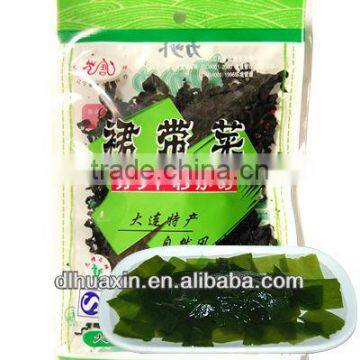
Japanese Sea Fresh Wakame


Related Products
Specifications
1.Good For Health2.Seasonings And Other Forms In Daily cooking
3.No GMOs
4.Get natural iodine
5.An Edible Ocean Plant
Good For Health
Seasonings And Other Forms In Daily cooking
No GMOs
Get natural iodine
An Edible Ocean Plant
About Wakame
Seaweeds are large algae that grow in salt water all over the world. There are three main types of seaweed: green, brown and red. Wakame is a brown seaweed, but when boiled, it changes color to bright green.
The Latin name for wakame is Undaria pinnatifida, and it is one of the most commonly eaten seaweeds in Japan.
Harvesting Wakame
In Japan, wakame is harvested from winter through spring and into summer in some colder areas. Fresh wakame can be found in markets during this harvest season, and dried wakame is available in Japan year-round. In North America, dried wakame can be found in Asian and natural food stores (the Atlantic equivalent of wakame is alaria).
Most of the wakame eaten in Japan is cultivated on ropes in the open sea and harvested several months later, but fishing communities also still cut and gather wakame that grows naturally on rocks not far from shore. And people like Nanami’s grandmother still wade into the surf to gather wakame that washes ashore in early spring.
Cooking with Wakame
Dried wakame needs to be soaked in lukewarm water for about 20 minutes to be rehydrated; it will swell to about twice its size! After soaking, cut away any midrib or other tough sections (not necessary if your wakame is the pre-chopped variety). If you want your wakame to turn bright green, drop it into boiling water, then remove with tongs or a slotted spoon and quickly rinse in cold water. You can also drop chopped wakame into soup just before serving. Wakame is high in nutrients and should not be boiled or simmered for more than a minute, or it will lose these important nutrients. Wakame has a nice crisp texture and is delicious in soups and salads. Click on the link at the left for a PDF file of Koshigoe, Kamakura, wakame recipes.
Eating Wakame
Wakame is eaten in many forms—chopped in soups and salads, minced and mixed with salt and sesame seeds as a rice topping, toasted and dried as snack food, and even sweetened in candies.


Send Inquiry to This Supplier

You May Also Like
-
Whole Mushroom Slice Mushroom in Brine or in SO2 in Drum SETA Preservada en TamborNegotiableMOQ: 1 Twenty-Foot Container
-
Seasoned Seaweed Furikake Rice Seasoning Korean/Japanese Style Nori Komi Sesame Sprinkle for Rice Sushi OnigiriNegotiableMOQ: 100 Cartons
-
Fresh Mushroom (WWWdotSULEN-INDdotCOM)NegotiableMOQ: 50 Bags
-
Chinese Round Shape Purple Laver for Cooking SoupUS$ 11 - 12MOQ: 10 Kilograms
-
Shiitake in Brine, Brined Mushrooms, Edible Fungi, 50% Closed CapsNegotiableMOQ: 18 Tons
-
IQF Frozen Chanterelles Mushroom Cantharellus CibariusUS$ 1300 - 2500MOQ: 10 Metric Tons
-
10 Sheets Sushi Ingredient Dried Laver SeaweedUS$ 0.42 - 0.75MOQ: 200 Cartons
-
Yaki Sushi Nori 50 Sheets Grade CNegotiableMOQ: 100 Cartons
-
99% Cell-Wall Broken Ganoderma Lucidum Spore Powder/Lingzhi (Ruishi)Mushroom SporeUS$ 200 - 500MOQ: 10 Kilograms
-
Korean Roasted Seaweed(Yaki Sushi Nori) 100 Sheets / Seafood / SeaweedNegotiableMOQ: 1 Bag


