








 Contact Platform Support
 Help Center
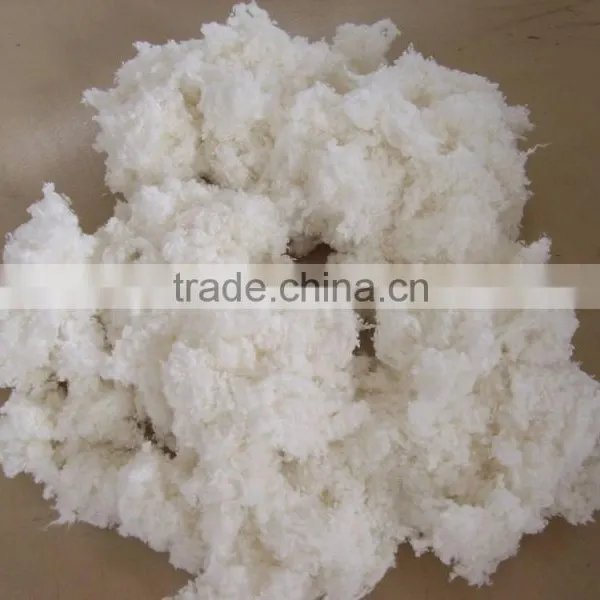
Cotton Linter

Related Products
Specifications
Cotton LinterLinter Specifications:
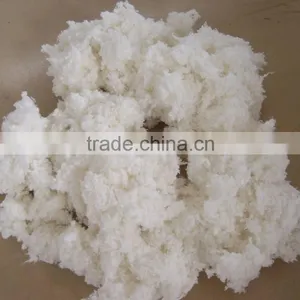
1st cut linter
2nd cut linter
inter Extraction
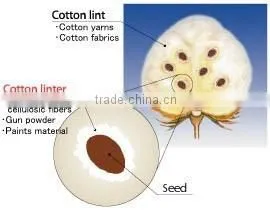
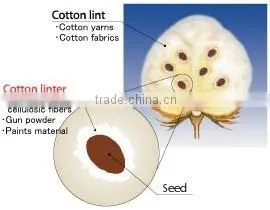
In India, linter is available in the First Cut and the Second Cut variety – depending on the process of extraction. First Cut has a longer fibre length than the Second Cut and is extracted with the aid of sophisticated ginning machines. The process involves super cleaning of raw cotton where fibres are extracted and baled. Alternatively, linter is passed through the de-linting machine – where the First Cut larger fibres are obtained. When passed for the second time to extract the remaining short fibres, it is called the Second Cut.
After removal of linters, cotton seed is converted into food for people, feed for livestock, fertilizer and mulch for plants. First Cut consists of longer, more resilient fibres and are used in a number of nonwoven products. Second Cuts are made up of short fibres to produce high grade bond paper and as a source of cellulose in the chemical industry. After removal of linters, the remainder of the cotton seed is converted into food for people, feed for livestock, fertilizer and mulch for plants.
Linter Specifications
Packaging
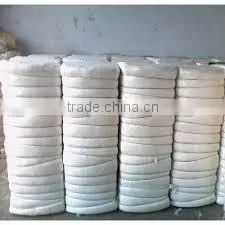
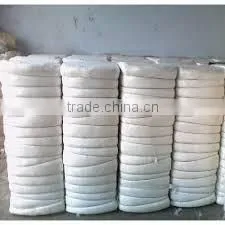
Linter is compressed by hydraulic press to be packaged in bale form with weight varying from 140-220 kgs. They are hygienically wrapped in white cotton cloth with 10-12 plastic straps. A 1X40FCL container can load upto 150 bales and approximately 24 tons of cotton.
Application
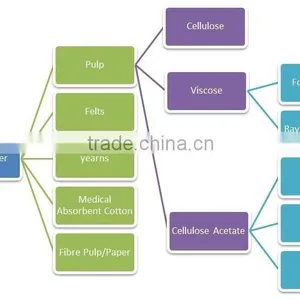
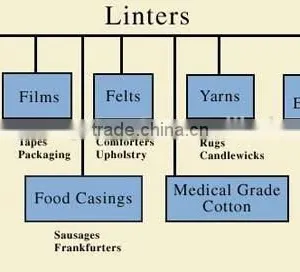
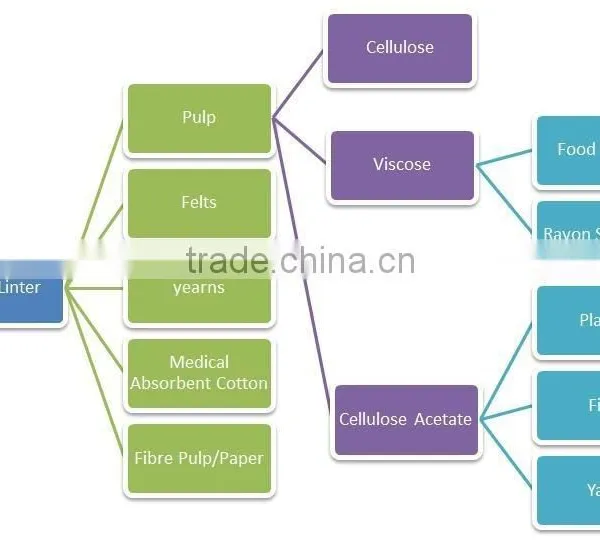
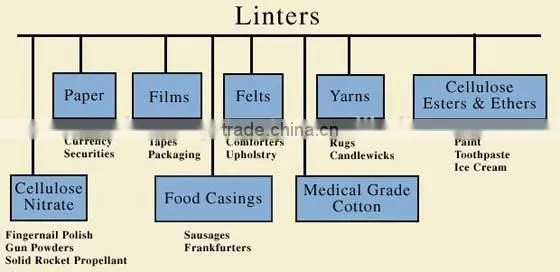
Linter is traditionally used in the manufacture of paper and as a raw material in the manufacture of cellulose. Linter is almost pure cellulose and provides for making plastics, explosives, archival papers and other products. This includes fade-resistant high-quality paper products that also need neutrality and stability. These are heavier weight papers where the finish varies from a coarse surface for paint to a smooth surface for graphic work.
First cut linters are linters of the highest grade with more resilience and length, and are used in manufacturing non-chemical products, such as medical supplies, twine, and candle wicks. Second-cut linters (short fibres or fuzz), removed in further delinting steps, are incorporated in chemical products, found in various foods, toiletries, film, and paper. These are valued for their bulk and purity and used for archival papers and other securities. They are processed into batting for padding mattresses, furniture and automobile cushions. As a refined product, cotton linter also has medical, cosmetic and other uses.
Gin Motes & Gin Mote Fibres
Another by-product of the gin is motes. Motes are small, immature seeds with attached fibre that are removed at a different stage of the gin stand than the mature seeds. The fibre can be removed from the motes using a delinting machine. This fibre is called gin mote fibre and is used in nonwoven products.

Send Inquiry to This Supplier

You May Also Like
-
 Distributors Wanted Factory Price Diode Laser White Hair RemovalUS$ 100 - 7,000MOQ: 1 Set
 -
Nd:yag and Alexandrite Laser White Hair RemovalUS$ 1 - 1MOQ: 1 Set
-
Long Pulse Laser White Hair RemovalNegotiableMOQ: 1 Set
-
10 Laser Bars Unhairing Permanent 808nm Diode Laser White Hair RemovalUS$ 1 - 5,000MOQ: 1 Set
-
Long-pulsed Nd YAG Laser 1064nm for Hair Removal in Dark Skin 755nm Alex Laser for Hair Removal in White SkinUS$ 3700 - 6500MOQ: 1 Piece
-
Professional Laser Hair Removal for White HairUS$ 1 - 5,000MOQ: 1 Unit
-
Laser IPL Permanent Hair Removal for White HairUS$ 1 - 2,990MOQ: 1 Unit
-
Good Quality Laser Hair Removal for White HairUS$ 1 - 2,800MOQ: 1 Set
-
Express China Laser Hair Removal White Hair for WholesalesUS$ 1 - 10,000MOQ: 1 Set
-
2016 Professional Diode Laser Hair Removal for White HairUS$ 1,000 - 9,000MOQ: 1 Set


