








 Contact Platform Support
 Help Center
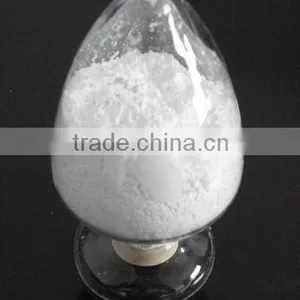
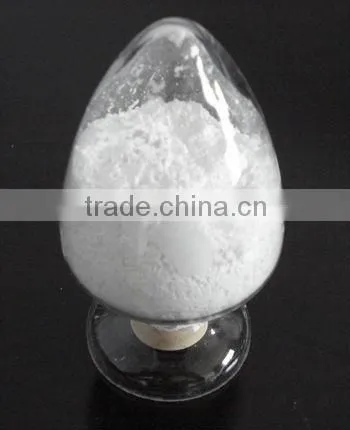
ZSM-5 Molecular Sieve


Related Products
Specifications
Our company use hydrothermal synthesis method to produce it, and got the national patent of it.ZSM-5 has a high silicon to aluminum ratio. Whenever an Al3+ cation replaces a Si4+ cation, an additional positive charge is required to keep the material charge-neutral. With proton (H+) as the cation, the material becomes very acidic. Thus the acidity is proportional to the Al content. The very regular 3-D structure and the acidity of ZSM-5 can be utilized for acid-catalyzed reactions such as hydrocarbon isomerization and the alkylation of hydrocarbons. One such reaction is the isomerization of meta-xylene to para-xylene. Within the pores of the ZSM-5 zeolite, para-xylene has a much higher diffusion coefficient than meta-xylene. When the isomerization reaction is allowed to occur within the pores of ZSM-5, para-xylene is able to traverse along the pores of the zeolite, diffusing out of the catalyst very quickly. This size-selectivity allows the isomerization reaction to occur quickly in high yield.[7]
ZSM-5 has been used as a support material for catalysis. In one such example, copper is deposited on the zeolite and a stream of ethanol is passed through at temperatures of 240 to 320 °C as a vapour stream, which causes the ethanol to oxidize to acetaldehyde; two hydrogens are lost by the ethanol as hydrogen gas. It appears that the specific pore size of ZSM-5 is of benefit to this process, which also functions for other alcohols and oxidations. The copper is occasionally combined with other metals, such as chromium, to fine tune the diversity and specificity of the products, as there is likely to be more than one. Acetic acid is an example of one possible byproduct from hot copper oxidation.
| specification | data |
| CRYSTAL FORM | ZSM-5 |
| RELATIVE CRYSTALLINITY | >90% |
| RATIO OF SILICATE TO ALUMINIUM | 20-40 |
| Na% | <0.1 |
| N-HEXANA ADSORPTION mg/g(p/po=0.1-0.2) | >100 |
| SPECIFIC SURFACE m2/g | >400 |
| DIEMENSION OF CRYSTAL nm | <200 |
| LOSS ON DRYING | <0.5 |


Send Inquiry to This Supplier

You May Also Like
-
Oblique Installing Cartridge Dust Collector/Cartridge Dust Collectors/ Dust Filter Cartridge FiltersUS$ 500 - 2000MOQ: 1 Set
-
Industrial-grade Zinc Stearate Powder Release Agent for Plastic Injection MoldingUS$ 2 - 5MOQ: 1000 Kilograms
-
Chemical AuxiliariesNegotiableMOQ: 2400 Kilograms
-
Sodium Gluconate CAS 527-07-1 25kgUS$ 100 - 2000MOQ: 1 Ton
-
Zeolite Carbon Sieves 3a 4a 13x Adsorbent for Oxygen Concentrator Generator Molecular SieveNegotiableMOQ: 1
-
Modified Starch for Paper IndustrialUS$ 630 - 650MOQ: 5 Tons
-
NA Cmc Powder Food GradeUS$ 550 - 3,690MOQ: 5 Tons
-
Diapers Baler Hydraulic Pressing Baling MachineUS$ 3,200 - 3,250MOQ: 1 Set
-
Leather Wall Panel for Background and Ceiling PanelUS$ 3 - 6MOQ: 200 Pieces
-
AC Blowing Foam Blowing Agents of AzodicarbonamideUS$ 2,100 - 2,680MOQ: 1 Ton


